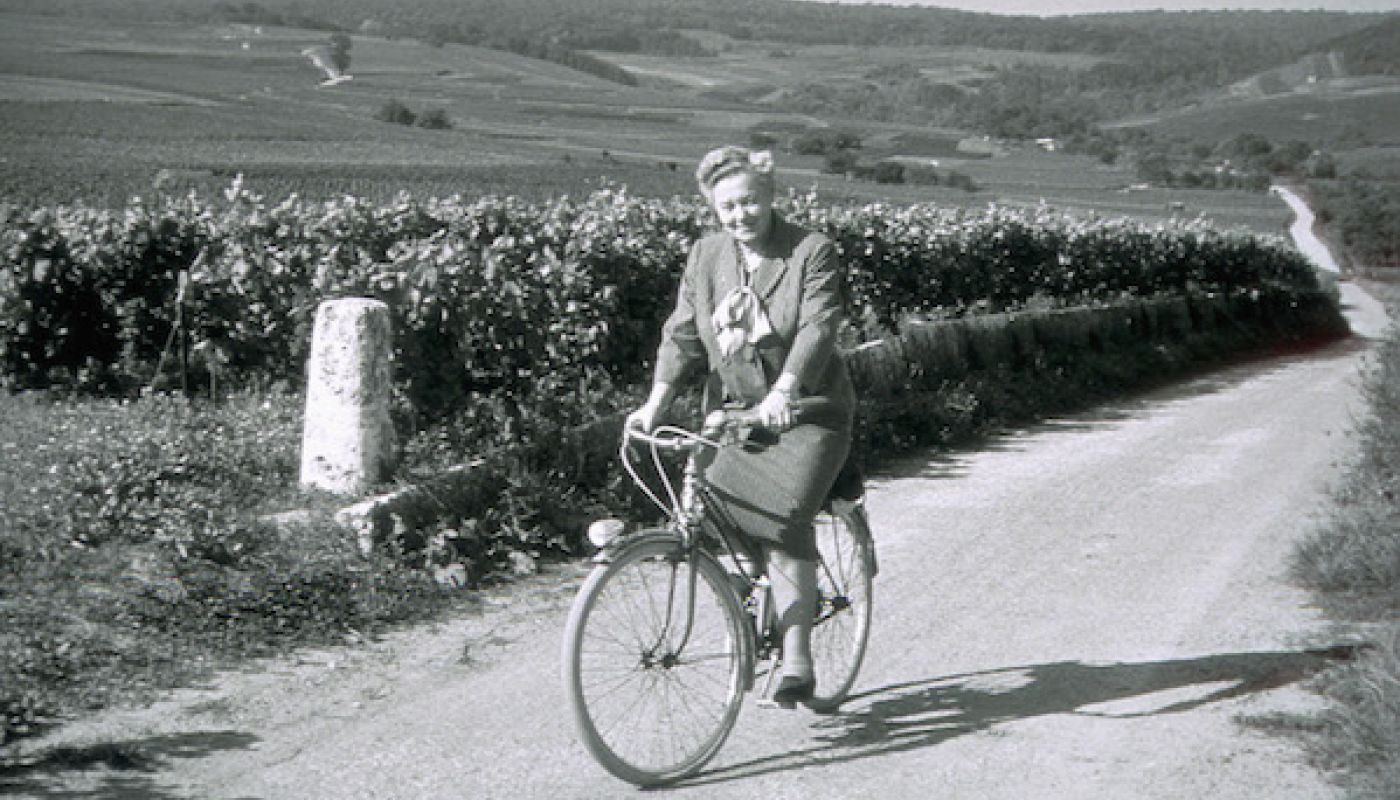
Madame Lily Bollinger, the bicycle-riding woman who came up with the most quotable quote about when one should drink champagne (always, but cleverly put), was adamant that her family’s champagne house should never produce a rosé. She associated it with Paris’s deeply suspect maisons closes and saw it as fit only for women with the worst sort of reputation.
She ran Bollinger until 1971 and died in 1977. The first Bollinger rosé was a Grande Année vintage-dated wine made in the hot summer of 1976 that was launched in the mid 1980s. It was not until 2008 that a non-vintage Bollinger Rosé saw the light of day.
Most champagne houses, however, have long included a rosé in their range of wines, so that the category now comprises about 10% of all champagne produced. Once it was very obvious that, with a handful of exceptions, most of them regarded rosé champagne as a sort of off-cut whose quality didn’t really matter. But all this has changed, perhaps because of the rise in popularity of rosé still wine, perhaps because warmer summers have improved the quality of the dark-skinned Pinot grapes that are an essential ingredient, or perhaps chefs de cave just got round to caring about this particular string to their bow.
Champagne drinkers have noticed the upgrade. As Dominique Demarville put it last June when he was still at Veuve Clicquot, ‘rosé is now more than a fashion. Much more than 10 or 15 years ago, people are looking at rosé as a serious champagne. We have a lot of people who are fans of rosé specifically, and we have a few collectors who are deliberately looking for old rosés.’
I must say that when I have been lucky enough to taste a collection of both colours of really mature vintages of two of the most luxurious champagnes of all, Roederer Cristal and Dom Pérignon, it has been the old rosés that have lingered longest in the memory: extraordinary wines such as Cristal Vinothèque Rosé 1995 and Dom Pérignon Rosé P2 1990 and 1995. See Rosé champagnes – the tasting notes and Mr Dom Pérignon’s life in bottles.
These are two of the exceptional rosé prestige cuvées that have always been made with extreme care. The standard way of making champagne pink has been simply to add a small proportion of still red wine to the blend of white prepared for the all-important second fermentation in bottle. A more demanding method is to make the wine pink closer to the way that all fine still rosé is made: by macerating dark-skinned Pinot grapes very briefly with the white wine must so as to tint it. At the end of this year Demarville will move to the house most often associated with this maceration method for its rosé, Laurent-Perrier.
Those who take the easier, blending route sometimes reproach rosé champagne made by maceration for being too tannic, too chewy from the effect of the Pinot grape skins. And it is certainly true that Laurent-Perrier’s current non-vintage rosé, based on the 2013 crop and disgorged a year ago, has a little bite on the finish, as does its prestige pink Cuvée Alexandre 2004, but the little bite is far from excessive, and arguably makes the wines rather suitable for drinking with food. (Champagne can be such a great accompaniment to a wide range of dishes; it’s presumably only because there are so many other wines to choose from that we tend to corral champagne in the aperitif slot.)
Another pink champagne, brand new in this case, in which maceration plays a part, is Roederer’s pungent, reductive Starck Brut Nature Rosé 2012, the debut vintage of a wine that has also been made in 2015 and 2018 and will be launched next month. This is a co-operation between the designer Philippe Starck, a natural wine fan, and Roederer’s celebrated champagne magician Jean-Baptiste Lécaillon, who explained recently in Reims that this is the same blend as the slightly austere Starck Brut Nature 2012 with a bit of Pinot from the village of Cumières. The pink version with its additional fruitiness seemed even better balanced to me than the slightly austere white version.
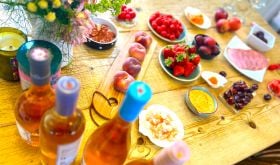
Michel Fauconnet at Laurent-Perrier, from whom Demarville is taking over, maintains that when making his rosés he was always more interested in the aroma than the colour, but of course colour is a vital attribute in any rosé – and that too has been changing. When Krug launched a rosé version of this most luxurious of champagnes in the 1980s, it was the palest of salmon pinks. It ignited a fashion for extremely pale rosé champagnes, some almost indistinguishable by either eye or palate from the white version, its colour not unlike that of many Provençal still pinks.
But over the last few years I have seen the colours of pink champagne visibly deepen, and include a wide range of different hues. The hugely respected winemaker of Rare (ex Piper- and Charles Heidsieck) Régis Camus told me, ‘colour is a very delicate question because that’s what you see first; it used to be unstable'. Although I found a rather tomato-like tinge in his 2007 rosé, Camus says he’s looking for a blueish tinge, ‘like the light coming into Reims cathedral’.
He, like many other champagne blenders, seeks out Pinot Noir from the village of Les Riceys in the Aube département in the far south of the Champagne region, whose Pinot is so famous that it has its own appellation for still wine. For this veteran chef de cave, ‘Riceys is the only source of colour that lasts.’ The blossomy 2007 was the debut vintage of Rare rosé (Rare being the prestige-only brand spun out of Piper-Heidsieck relatively recently). The 2008 released in June is much finer with a pure, mineral streak. It’s also paler.
Those who blend their pink champagnes (as opposed to following the maceration route) differ quite widely in how much red wine they choose to include in the blend. Demarville used as much as 14% in both Veuve Clicquot rosé vintage 2008 and the 2008 version of the house’s prestige cuvée La Grande Dame, with the source of the Pinot Noir being rather smarter in the latter case. The red wine imprint was so strong that the wines almost had the same deep orange as Aperol, and (I don’t think this was autosuggestion) tasted reminiscent of bitters on the finish.
At the other end of the scale is Philipponnat’s Clos des Goisses Juste-Rose 2008, ‘only just pink’, the palest pink champagne I have ever seen and based on their famously steep, walled vineyard in Mareuil-sur-Aÿ. According to Charles Philipponnat, ‘it’s pale because we want to age it forever'.
Some stunning rosés
There are also some even more exceptional wines at even more exceptional prices. See Rosé champagnes – the tasting notes.
Bérêche, Campania Remensis Extra Brut 2014
£70 Huntsworth Wine, London W8
Billecart-Salmon, Cuvée Elisabeth Salmon 2007
£149 Uncorked, London EC2
Bollinger, Grande Année 2007
£97.09 The DrinkShop, Kent
Leclerc Briant NV
£55 Berry Bros & Rudd
A R Lenoble, Terroirs Chouilly-Bisseuil NV
€47.90 Vinos Dulces, Barcelona
Philipponnat, Cuvée 1522 2008
£375 for six in bond Justerini & Brooks
Louis Roederer 2013
£55 Berry Bros & Rudd
Veuve Clicquot 2008
£57.50 Four Walls Wine, Sussex
More stockists from Wine-Searcher.com. Reviews of all these wines in our tasting notes database.