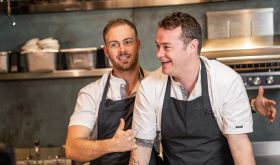
Michael Whiteman is a physically striking example of a lifetime well spent in the American hospitality business.
Aged 78, with an enviably full head of hair and a quick, wry smile, he has influenced it since he created the first edition of Nation Restaurant News in New York in 1967. A meeting with the late restaurateur Joe Baum led to the formation of their consultancy business, Baum + Whiteman, and together they opened Windows on the World and the Rainbow Room as well as introducing the concept of food courts across the US and then the rest of the world.
For the past 10 years, Whiteman has also been personally involved in another project. Starting at the beginning of each year, he accumulates pieces of paper about the changing nature of restaurants in the US that he finds interesting, and drops them into a folder. By June, with the folder overflowing, he begins to cull them and by November he assembles what he has discerned into a number of trends for the coming year. His predictions for 2017 are more numerous and potentially more inimical to the restaurant business than any published previously.
Over a breakfast roll and black coffee in his London hotel, Whiteman explained his thinking, headlined under point 2 as ‘restaurants without seats, seats without restaurants’. This move goes beyond the ‘uberisation’ of food delivery that Whiteman first recognised in 2015 with the entry of Amazon, Google and Uber into the food delivery business, each of them taking a slice of what had been the restaurateur’s traditional gross profit.
And what Whiteman sees happening could pose a threat to what I and many others have believed was the restaurant industry’s otherwise foolproof safeguard against the ever-increasing influence of the internet: that while every form of retail could easily make the transition, restaurants were firmly lodged in the bricks and mortar world. No longer, it would appear.
This threat is twofold. ‘First of all’, Whiteman explained, ‘this threat comes from independent start ups and even chain restaurants starting their own kitchens in off-beat locations staffed by professional chefs. These businesses are no-seats restaurants whose sole purpose is the delivery of a variety of top-class food directly to the consumer. Upscale Dominos, if you like.’
Whiteman then rattles off a few of the increasingly busy players in this sector. ‘There is Panera Bread based out of St Louis while in New York, David Chang, the chef who made Momofuko famous, has two very different delivery companies, Ando and Maple. Green Summit offers up to eight different restaurant brands and menus from two kitchens, one in Manhattan, the other in Brooklyn (London’s equivalent, Deliverance, closed its doors earlier this year, a victim perhaps of being too early to the market).
Then there is the challenge being posed by start-up companies uniting home cooks to prepare food in their domestic kitchen, meals which are then delivered to people’s dining rooms – Whiteman’s example of seats without restaurants. Into this category, he cited Yuma out of Montreal, Umu Kitchen in New York, Trybe in London and Foodieshares in Los Angeles.
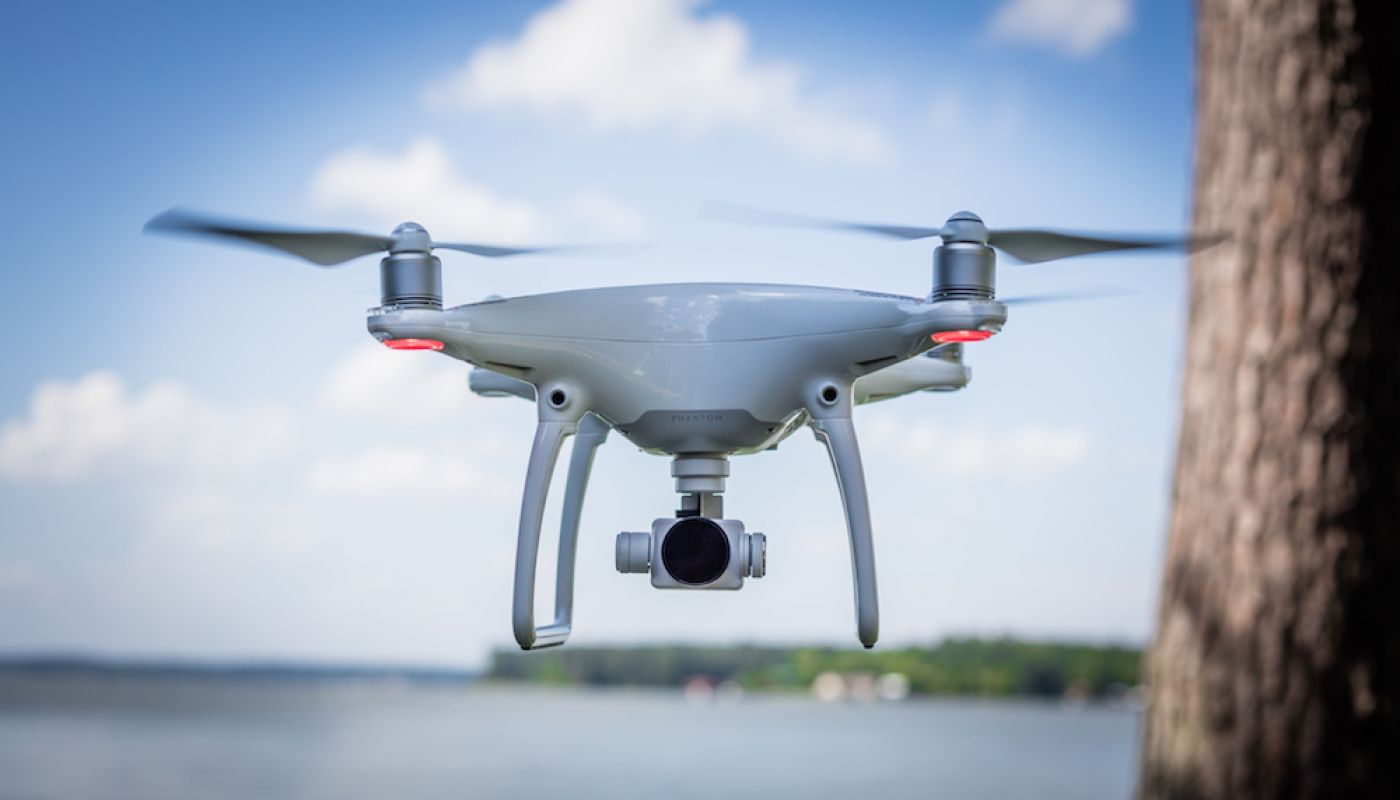
Finally, there are two other sources of competition. The first being pioneered by Airbnb unites those travellers in search of a more local food experience with those able to cook and offer their dining room, a service also pioneered across Europe by VizEat. Then, there is the latest development from Virginia Tech, where Google is experimenting with using drones to deliver Chipotle burritos to hungry students.
In Whiteman’s opinion more than $2 billion of venture capital has been invested so far into the food delivery companies, whose number will be consolidated as the field does or as several are bought up by what he refers to as the ‘big gorilla tech companies’. Some he imagines will be consolidated into the already crowded field of reservation apps.
There are other certain trends that he sees continuing. The rise of vegetarianism across the US (although he does foresee a long-overdue decline in the consumption of kale); the opening of ‘vegetable butchers’ shops’ such as The Herbivorous Butcher in Minneapolis, YamChops in Toronto and Suzy Spoon’s Vegetarian Butcher in Sydney, Australia. And, as in London, the rise of small, artisan butchers selling top-quality meat looks set to continue.
Whiteman confessed when prompted that he would probably never himself invest in a restaurant. ‘It’s a silly business which is markedly thin on talent and where even the gross margins are pretty thin, too. It is tantamount to making shoes to order but all your main ingredients are perishable.’
But there seems to be no shortage of clients and Whiteman was only too keen to talk about his two very different current customers. The first, a large steakhouse under the New Yorker Hotel will finally open over 18 months late in March 2017 as a type of restaurant ‘this city never seems to tire of’ in Whiteman’s opinion. The second is the far more adventurous Junzi Kitchen started by a group of PhD students in Yale, Connecticut.
This association ties in with Whiteman’s final point, that food innovation is no longer the prerogative of restaurateurs as it was 30 years ago since too many restaurants have become too big or too corporate to initiate change. Instead, today the money is backing young entrepreneurs making insect bars, seaweed noodles, bone broth pouches, and people experimenting with pulses, fermented products and – like Toby Fairbrother in BBC Radio 4’s The Archers – innovative beverages. This seems to be a worldwide phenomenon.