
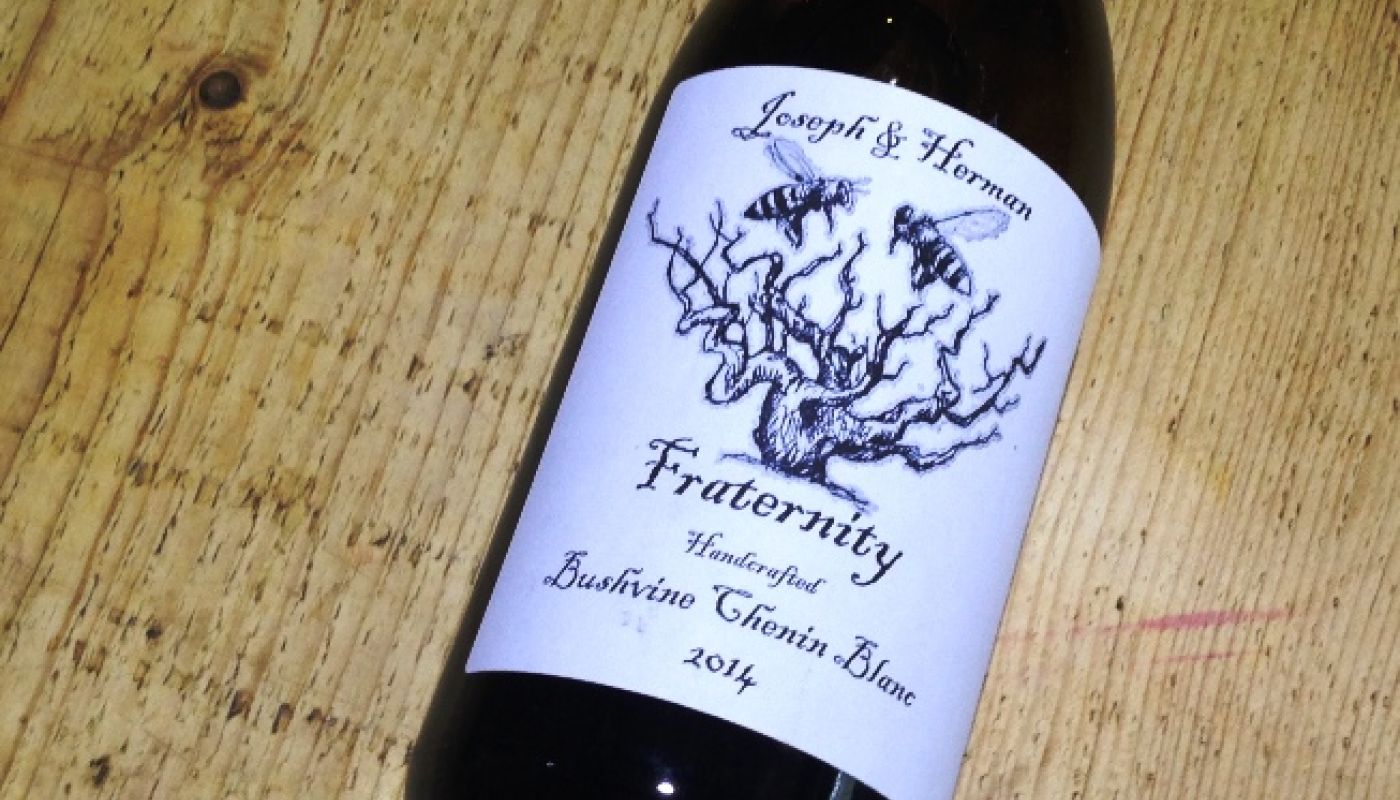
In February, Erica Platter wrote to tell us about the extraordinary stories of Zimbabweans who were, against all odds, rising through the ranks of serving staff in South Africa to become top sommeliers at some of the most celebrated restaurants in the country. One story in particular caught my attention. Tongai Joseph Dhafana grew up in a tiny bush town called Gweru, where I was born. His first job was working as a mill operator in a cement factory in a place I knew well. It is a bleak spot, about 20 km from town, where the thick dust of the cement covers every living thing within miles and shrouds the surrounding bush in a pall of deathly grey. Gweru is a dusty, dry place anyway, often plagued by drought, a thirsty little place where at best you might find a warm, cheap beer packaged in a brown plastic carton called a scud. Wine, along with elegance and beauty, is about as far removed from Gweru and her cement factory as snow is from the Sahara.
My interest in Joseph was further piqued when part of his story involved someone from my childhood. With these unexpected little emotional connections in place, when I heard that Joseph Dhafana had made some wine, I was determined to taste it. Thanks to Erica, I got in touch with him, and through an elaborate chain of people involving a Cape Town aunt, a cousin on a business trip, parents emigrating from Johannesburg to the UK, and a flurry of emails and phonecalls, we somehow managed to get six bottles of Joseph & Herman, Fraternity Chenin Blanc out to rural Buckinghamshire. It was worth the drama. It also prompted me to sharpen my focus on Chenin Blanc at the most recent tasting organised in London by WOSA.
Chenin Blanc might just be South Africa's finest white grape. Ignoring the mass-produced, commercial-yeasted, pineapple-fruited big brands that have graced our cheap pub wine lists for years (£16 a bottle, about US$20 or €18), and avoiding the ludicrously overoaked, Oz-Chardonnay-wannabe styles that seemed to dominate 10 years ago, Chenin Blanc grown on South African soils becomes a thing of great complexity and great beauty. But it's not by trying to emulate the Loire, or anywhere else, that South African Chenin has found its own voice. Thanks to the likes of pioneering visionaries such as Rosa Kruger, South African wine producers have been seeking out old vineyards, off-beat regions, and trying to understand how their terroir and this grape variety bring out the best in each other. This isn't Vouvray with a South African accent. This is Steen.
The name Steen, the old-fashioned and for years much-sneered-at synonym for Chenin Blanc in South Africa (due to its association with cheap, sweet, workhorse whites), seems to be experiencing a very small but determined revival. A handful of producers, including Adi Badenhorst and David Sadie, have started to use the word on their labels, sometimes with Chenin Blanc on the label as well, sometimes without. As is so often the case, it's the game-changers leading the charge, not just exploring new ground, but also determined to embrace the past and bring the best of it into the present – old vines, old grape varieties and old names.
There were a couple of things that I found during this Chenin splurge. One is that these wines must not be served too cold. I tasted several wines at the 'Chenin focus' table, where they were almost fridge-cold, and then again at the producers' tables, where they were closer to 10 °C (50 ºF). In every single instance, the wine blossomed both on the nose and on the palate at the higher temperature. The second is that most good South African Chenins could do with decanting. Again, on several occasions, having just poured my sample, I ended up chatting to someone, and the change in the glass between the first immediate sniff/taste and the second, five or so minutes later, was remarkable. One glass was abandoned for 10 minutes and it made me realise that these Chenins really aren't quaffing wines, however delicious. They deserve time and attention.
Scores for most of the 62 wines below are almost embarrassingly high. In my defence, I really did cherry-pick. With limited time, I wanted to taste the best Chenins I could seek out, so skipped over the Chenins that were clearly the more commercial offerings. The wines below are among the crème de la crème. I didn't just focus on varietal Chenin and was persuaded to taste a few non-Chenins, so I have split my tasting notes into three groups: pure Chenin, Chenin blends, and varieties other than Chenin. Within these groups they are listed in alphabetical order by producer (sur)name.
VARIETAL CHENIN BLANC

100% Chenin Blanc. RS 1.8 g/l, pH 3.44, TA 6.3 g/l.
Bit of...
Single vineyard. Vines planted in 1956. RS 2.3 g/l, pH 3.38...
An old turn-of-the-century Cape vermouth, revived by Adi...
100% Chenin Blanc. Left on pre-fermentation lees.
Amazing nose...
100% Chenin Blanc. RS 1.8 g/l, pH 3.3, TA 6.1 g/l. Bottled June...
100% Chenin Blanc. RS 7 g/l, pH 3.17, TA 6.13 g/l.
Sandalwood and...
100% Chenin Blanc. Wine (rather than juice) from Bottelary ...
100% Chenin Blanc. RS 4.2 g/l, pH 3.54.
Vanilla-streaked nose...
100% Chenin Blanc, RS 5.5 g/l, pH 3.25, TA 6.3 g/l.
Refreshing...
100% Chenin Blanc. RS 3.5 g/l, pH 3.32, TA 5.8 g/l.
Full...
100% Chenin Blanc, vines 22 to 49 years old. 5% wood, fermented...
100% Chenin Blanc. RS 2.5 g/l, pH 3.3, TA 6.1 g/l.
Smells very...
100% Chenin Blanc. RS 2.2 g/l, pH 3.39, TA 6.4 g/l. Some new oak...
100% Chenin Blanc. RS 2.4 g/l, pH 3.4, TA 5 g/l.
Lovely, layered...
100% Chenin Blanc. RS 2.7 g/l, pH 3.36, TA 5.5 g/l.
Bit sweaty...
A jointly made wine, by one of Erica Platter's Zim Somms, Joseph...
100% Chenin Blanc. RS 4.5 g/l, pH 3.31, TA 5.9 g/l.
Nutty. Also...
100% Chenin Blanc. RS 4.9 g/l, pH 3.45. From seven parcels of...
100% Chenin Blanc from three vineyards, 35- to 46-year-old vines...
100% Chenin Blanc. RS 2.5 g/l, pH 3.43, TA 6.3 g/l.
Hint of nuts...
91% Chenin Blanc, 9% Verdelho. RS 1.9 g/l, pH 3.33, TA 6.1 g/l. ...
RS 147 g/l, pH 3.47, TA 9.3 g/l. 100% Chenin Blanc. 100%...
Whole-bunch pressed (in a champagne press), 10 months in old oak...
100% Chenin Blanc. RS 2.9 g/l, pH 3.19, TA 6.2 g/l.
Full-on...
Whole-bunch pressed (in a champagne press), 10 months in old oak...
This block is the Montpellier clone. Whole-bunch pressed (in a...
100% Chenin Blanc. RS 2.3 g/l, pH 3.37, TA 6.1 g/l. 75%...
100% Chenin Blanc. RS 2.3 g/l, pH 3.55, TA 5.2 g/l.
Very pretty...
100% Chenin Blanc. RS 2.7 g/l, pH 3.42, TA 6.3 g/l.
Stony...
100% Chenin Blanc. RS 2.8 g/l, pH 3.2, TA 6.5 g/l.
Rounded...
100% Chenin Blanc. RS 4.1 g/l, pH 3.25, TA 6.3 g/l.
Smoky honey...
100% Chenin Blanc, from bushvines planted in 1966. They made...
100% Chenin Blanc, old bushvines. The first vintage of this wine...
100% Chenin Blanc. RS 2 g/l, pH 3.58, TA 4.6 g/l.
Nose warms up...
100% Chenin Blanc. RS 4.53 g/l, pH 3.33, TA 6.17 g/l.
Rich, pure...
100% Chenin Blanc. RS 3.4 g/l, pH 3.3, TA 6.8 g/l. 32- to 41...
100% Chenin Blanc. RS 3.9 g/l, pH 3.08, TA 7.8 g/l. Vines from...
100% Chenin Blanc. RS 3.5 g/l, pH 3.6, TA 5.8 g/l. Bit of...
A cooler vintage than 2015. Bottled July, released in October.
V...
CHENIN BLANC BLENDS
93% Chenin Blanc, 7% Viognier. RS 4.3 g/l, pH 3.48, TA 6.4 g/l.
N...
70% Chenin Blanc, 20% Chardonnay, 10% Viognier. RS 3.3 g/l, pH 3...
40% Chenin Blanc, 30% Sauvignon Blanc, 10% Sémillon, 10%...
40% Chenin Blanc (two blocks), 17% Clairette Blanche, 13%...
34% Grenache Blanc, 17% Ferñao Pires, 17% Chenin Blanc, 13%...
95% Chenin Blanc, 5% Grenache Blanc. RS 2.9 g/l, pH 3.54, TA 5.4...
43% Chenin Blanc, 31% Viognier, 17% Grenache Blanc, 9% Roussanne...
56% Chenin Blanc, 17% Viognier, 14% Sauvignon Blanc, 13%...
65% Chenin Blanc, 17% Sauvignon Blanc, 13% Chardonnay, 5%...
87% Chenin Blanc, 13% Sémillon. RS 2 g/l, pH 3.43, TA 5.7 g/l.
R...
65% Chenin Blanc, 17% Viognier, 9% Clairette Blanche, 9%...
35% Chenin Blanc, 23% Roussanne, 19% Viognier, 15% Clairette...
82% Chenin Blanc, 11% Viognier, 7% Roussanne. RS 1.72 g/l, pH 3...
74% Chenin Blanc, 23% Viognier, 3% Roussanne. RS 3.1 g/l, pH 3...
33% Roussanne, 23% Sémillon, 20% Chardonnay, 18% Chenin Blanc, 6...
39% Chenin Blanc, 26% Viognier, 10% Verdelho, 9% Grenache Blanc...
65% Sauvignon Blanc, 30% Chenin Blanc, 5% Sémillon. RS 4.6 g/l...
45% Chenin Blanc, 15% Chardonnay, 14% Muscat de Frontignan, 14%...
OTHER VARIETIES
Although on the label this is a non-varietal, non-vintage wine...
100% Sémillon. RS 3.6 g/l, pH 3.17, TA 6.6 g/l. Her first...
90% Sémillon, 10% Sauvignon Blanc. The story, according to their...
100% Sémillon. RS 1.9 g/l, pH 3.36, TA 5.6 g/l. 112-year-old...
Biodynamic. The two single vineyard blocks are 4 km apart at...













