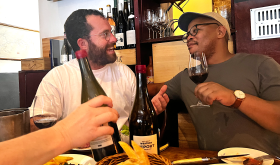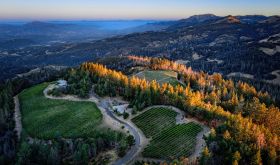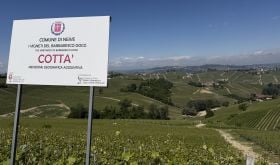
Recently one of the most admired producers of Rioja, Artadi, announced that they would no longer be calling their wines Rioja. This highly publicised step was taken not because Artadi was finding the rules of the Consejo Regulador, the wine’s governing body, too restrictive (the usual criticism of a European wine appellation), but as a mark of protest at how the Consejo is run.
Carlos, son of Juan Carlos López de Lacalle who runs Artadi, thinks the name Rioja no longer has any value. He points out that the Rioja appellation is the second biggest in the world. Only La Mancha, Don Quixote’s plains that sprawl south of Madrid, cover a bigger area than that allowed to make wine called Rioja. And he is particularly concerned at what he sees as a focus on producing inexpensive rioja. The major British supermarkets, for instance, are currently offering a range of riojas at £5 a bottle – a far cry from the vineyard-designated, hand-crafted wines of Artadi, now sold simply as ‘Spanish wine’.
López de Lacalle, and many other less vociferous quality-conscious wine producers, would love to see those who run their wine region acknowledge different quality levels, ideally a terroir-based approach such as that embraced in France, Germany and parts of Italy with its single-vineyard crus.
Bordeaux, for example, covers a bigger area than Rioja, but is divided into nearly 60 different appellations of varying status. Consumers have learnt that a wine labelled with the village name Pauillac is likely to be superior to one labelled with the name Médoc, the region in which Pauillac is located – but most wines labelled Médoc are of higher quality than most of those labelled simply Bordeaux. In Rioja the finest examples share an appellation with the cheapest supermarket special offer.
Last November the respected Spanish wine producer Telmo Rodriguez called together his peers for a discussion in Madrid of the current wine scene in Spain and the result last month was a petition signed by 150 leading wine professionals (and not just Spanish ones) constituting ‘a manifesto in defence of terroir’. According to the English version published on spanishwinelover.com, the signatories see themselves as explicitly fighting ‘strategies based on high production and low prices’.
They would like to see a sort of official quality pyramid such as is common elsewhere in Europe with the most basic wines qualifying for, say, the Rioja designation, which could be further refined by village and then vineyard in upward incremental steps.
One could hardly say that the Rioja Consejo reacted in a conciliatory fashion toward Artadi’s long-heralded departure. In their official riposte they warn, ‘this sets the stage for self-seeking voices to highlight purported dissidences which look to fostering potential splits or encouraging others to pronounce demagogic smears.’ In the same statement, the Consejo claims to be in the process of considering more geographically specific ‘recognition for unique wines on the basis of their origin’.
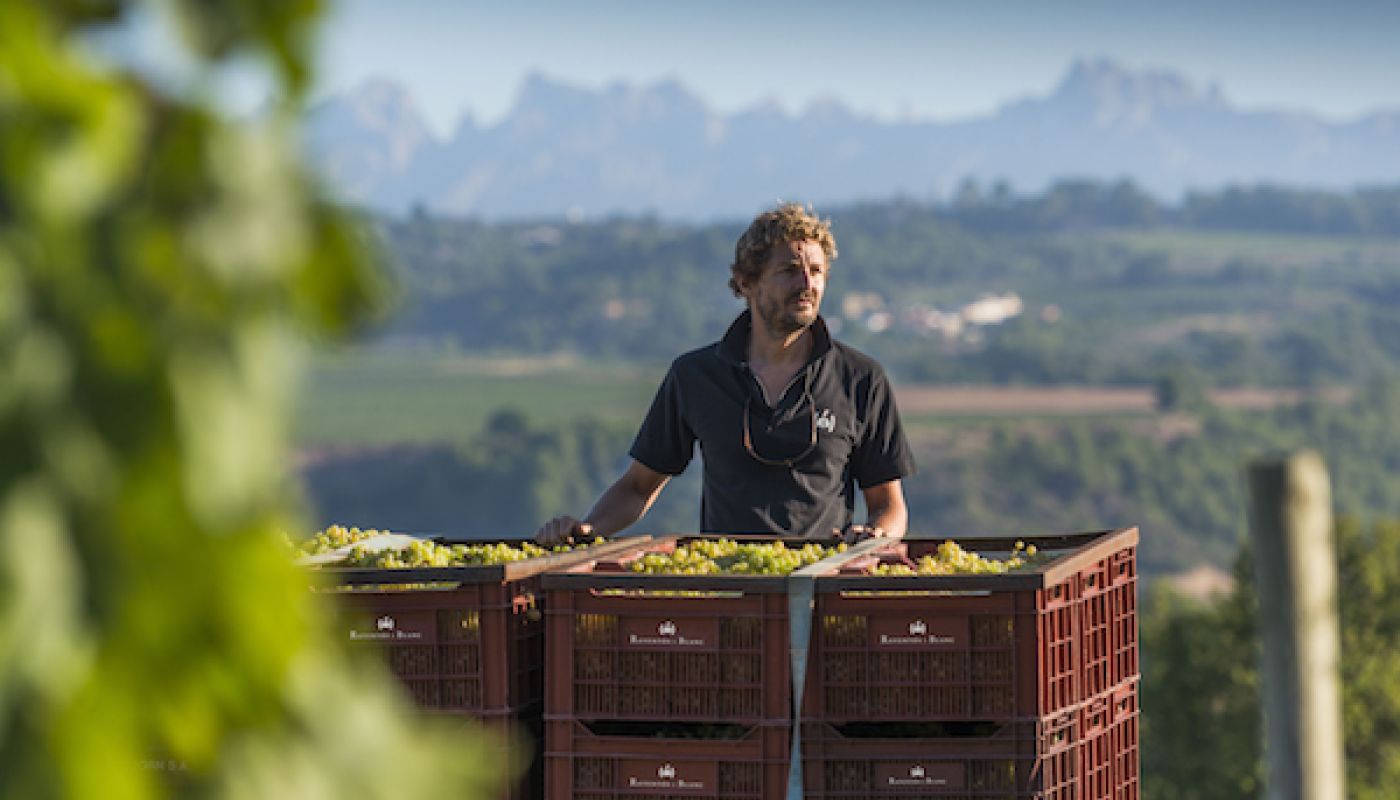
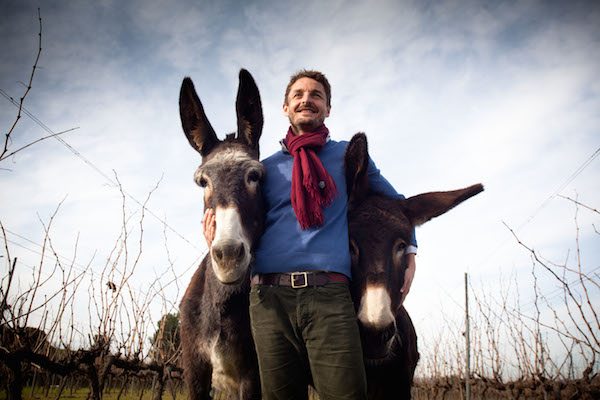
But for an increasing number of ambitious Spanish wine producers, the pace of change is just too slow and Artadi is far from the only one to quit their official original appellation. The most notable perhaps was Pepe Raventós of Raventós i Blanc (pictured above and below) who, tired of the commoditisation of Cava, is now producing particularly distinctive sparkling wines in the heart of Cava country in north-east Spain. He has managed to establish a brand new, much smaller, appellation, Conca del Ríu Anoia, with much stricter production rules than those of Cava.
I was in Champagne recently and the name Raventós i Blanc kept coming up – even in this region whose generic success has been the envy of wine producers the world over. Even here there is some disgruntlement. Claude Giraud of the small family Pinot Noir specialist of Aÿ wonders aloud whether the Champagne appellation also isn’t too big. ‘There’s lots of inertia in Champagne. Where are we heading? How will Champagne prepare itself for 2030?’
Giraud is a bit of an agent provocateur. Even more than other Champenois, who are all too aware of the recent sales success of Prosecco and the massive production volumes of Cava, he is more willing than most of his neighbours to acknowledge the quality of some wines in the category known even in France as ‘le sparkling’. He even went to the lengths of making a 90-minute film about some superior producers: Raventós i Blanc in Catalunya, Ca’del Bosco of Franciacorta, Jacky Blot of the exceptional Domaine de la Taille aux Loups in the Loire – and Gusbourne in Kent and Sussex. The subversive name of his film is The Path of Humility.
He mischievously chose to launch his visual reminder that ‘champagne producers are operating in a world market’ on Global Champagne Day last October and claims that all the French wine writers invited to the launch rang at the last minute to say they were unable to attend. He suspects that pressure was applied by the Champagne equivalent of Rioja’s Consejo Regulador. ‘Everyone has seen my film but no one speaks of it’, he told me.
I was keen to know how aware the Champenois are of England’s increasingly confident English sparkling wine industry. Apparently the first major investment in England by a champagne house, Taittinger’s acquisition of 69 hectares of potential vineyard land in Kent announced last December, was not given huge coverage in Champagne. Perhaps the locals thought this was merely evidence of Pierre-Emmanuel Taittinger’s eccentricity.
But apparently two stories related to English fizz were widely reported: the surprising results of the comparative blind tasting with champagne I reported on here last year, and the fact that chef Gordon Ramsay was importing English sparkling wine to serve in his new, highly publicised restaurant in Bordeaux.
The many wine producers around the world chafing at the policies of their generic bodies may be slightly consoled by a working paper just published by the American Association of Wine Economists. The economists have calculated, much to my amazement I must admit, that the generic advertising funded by the charges mandatorily imposed on producers (varying in Bordeaux from €5.65 per hl of basic Bordeaux to €12.43 per hl of Pauillac) does actually do some good. By measuring opinion about the image of Bordeaux in seven European countries, they found ‘positive and significant spillover effects from the umbrella reputation (Bordeaux) which, when significantly positive, vary from a minimum of 5% to a maximum of 15% of additional favorable quality opinions’.
Good value?
DELICIOUSNESS FROM DISSIDENTS
Artadi, Viña El Pisón
Telmo Rodriguez, Altos Lanzaga
Raventós i Blanc, Textures de Pedra
Henri Giraud, Fût de Chêne
See our 124,000+ tasting notes database for reviews of these wines. (Recent notes on Henri Giraud wines to come.)