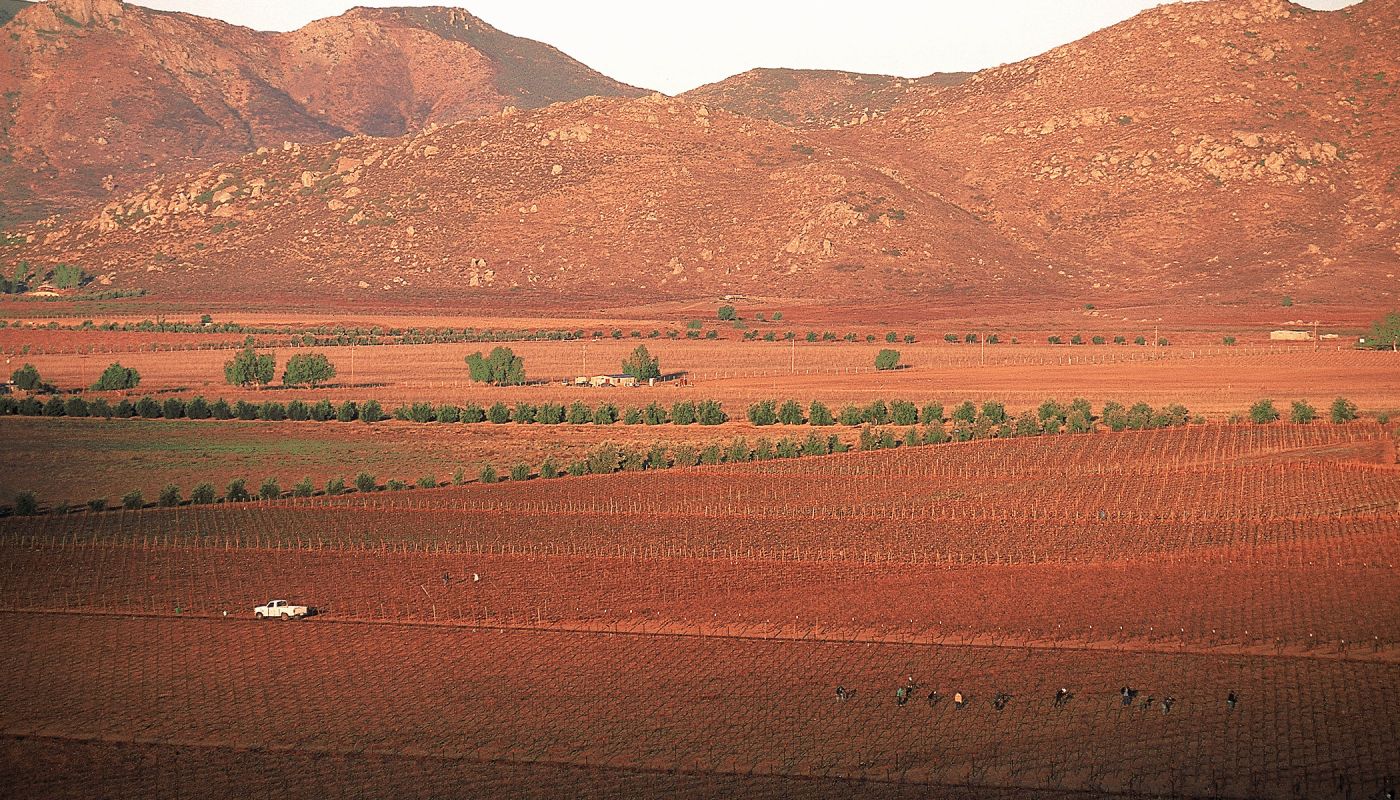
Baja California is Mexico's leading wine region, but it's also an increasingly arid, semi-desert zone and severely impacted by a lack of water (see photo above, of the Valle de Guadalupe). Combined with rapid growth of the Mexican wine industry, the region is in a difficult place (Luis Cetto, CEO of the country's largest producer L A Cetto, told me in 2020 that, in 20–25 years, ‘Baja is not going to do it for us’) so it's perhaps fitting that the most recent World Congress of Vine and Wine was hosted here, at the port city of Ensenada.
Pau Roca, OIV director general, spoke there about the urgent need to take steps to ensure the future of winemaking worldwide. According to the OIV World Wine Production Outlook, the 2022 harvest was ‘characterised by extreme heat and record-breaking drought that sped up ripening in vineyards all over the globe ... almost two-thirds of the European territory was in a state of drought or on alert due to heat waves and extremely low rainfall: this has been the worst drought in the last 500 years. And Europe was not the only region impacted: from East Africa to California, extreme temperatures have been recorded this year.’
Irrigation: no longer a swear word
Researcher Hernán Ojeda was one of the presenters in Ensenada. A specialist in viticulture and grape quality with INRAE (France's National Research Institute for Agriculture, Food and the Environment), he is based in the Languedoc, the southern French wine region that has experienced continuous drought since the 2000s. Ojeda feels that soil tillage and adapting canopy management are no longer sufficient: ‘Carefully managed drip irrigation is the way forward. It's the only solution for preserving quality and yield. Irrigation is no longer a swear word’, he comments.
In 2010 Ojeda launched Irri-Alt'Eau, a programme developed with local co-operative wineries to irrigate vines with reprocessed wastewater from the tourist resort of Narbonne-Plage, and in 2022, 80 ha (198 acres) of vines were treated this way. Could this idea be replicated elsewhere? ‘It's a source of hope, a solution that doesn't use water resources needed by the population’, he notes cautiously, pointing out that peak tourist season and the resulting additional water consumption coincides with high summer, when Languedoc vines struggle with extreme heat and irrigation can be beneficial.
The trouble with tourism
Over a million visitors beat a path to Baja every year, generating an annual income figure of US$180 million, according to state governor Marina del Pilar, speaking at the OIV congress. A short drive from the conference centre is Valle de Guadalupe, an upscale Mexican wine tourism mecca and birthplace of some of the country's best-known estates. However, they are not always easy to find, as some of the famous names have removed their signage from Highway 3 – also known as La Ruta del Vino – in an attempt to respect the rural landscape and distance themselves from what one described as ‘Insta-tourism.’
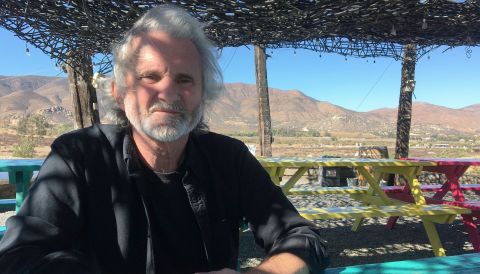
UK-born Phil Gregory is a Mexican natural-wine pioneer. He has seen dramatic changes in Valle de Guadalupe since he founded Vena Cava here in 2005. It's late October, yet some of his vines are displaying bright green foliage more appropriate to spring, due to the unseasonably clement weather. ‘The winters are now often so warm that the vines barely go dormant, and in the spring they don’t know when to wake up, which sometimes leads to very uneven development of bunches of grapes on the same plant – and that doesn’t help winemakers at all’, observes Gregory.
Other vines on his property have simply given up the fight, producing yields so insignificant that he now sources fruit from other growers. Although the native grasses and cacti on his land are drought-tolerant, the vines here need regular watering, something which has become increasingly difficult for him to do. In Vena Cava's case, the water shortage is largely due to lack of rain in recent years, but in other parts of the valley, overuse of water is the problem. Baja's wine industry has expanded rapidly since the late 1990s, and the Valle de Guadalupe groundwater has been extracted to a critical point.

Meanwhile, construction in the neighbourhood is mushrooming, with hordes of brand-new haciendas, restaurants and tasting rooms vying to welcome visitors. There are plans to build a large luxury resort near his estate – ‘a Banyan Tree!’ he exclaims in exasperation, no doubt envisioning the added demand on a resource that is already in such short supply.
Nearby at El Mogor, Ana-Sofia Badan and her brother Juan are similarly concerned. Loud club music emanates from their neighbour Ojá, a drinking and dining destination catering to a dressy, gas guzzler-driving crowd. It's out of keeping with the bucolic serenity of this diversified ranch with its regenerative farming, carob and olive trees irrigated with reused water, produce garden and herds of sheep and cattle.
Back in 1987 when Ana-Sofia's uncle Antonio made his first vintage, there were only a handful of companies producing wine in Baja; today, according to trade body Provino, there are 180 commercial operations. ‘More regulated soil and water usage would encourage a kinder, more efficient agriculture’, observes Ana-Sofia, pouring Arrebol 2021, a distinctive, bright pinkish-red rosé made from dry-farmed Garnacha vines planted by Russian immigrants in the 1930s. ‘There are regulations but they aren't backed up, so people are taking advantage and building without due thought and care. These are fast, short-term projects designed to take advantage of this gold rush.’
The sea, and other solutions
In Baja, the local authorities talk of strategic plans to supply the valley's wine growers with water. A frequently cited option involves piping in recycled water to the rural farm areas from Tijuana, although, as Gregory observes, the cost of electricity to purify the water and the distance between Tijuana and the Valle de Guadalupe (at least 100 km/62 miles) might conspire against this.
Some believe that the sea might be part of the answer (around 60 private desalination plants south of Ensenada generate water for agriculture), but others express doubts about the feasibility: ‘The cost of desalination may be too high. Piping treated water from Tijuana would seem to be the most workable solution for the region’, said Casa Pedro Domecq general director Martin Skelton when I spoke to him at the congress. ‘We're mindful that there are villages in the valley with acute water shortages. Logically, we'll come to the point where there will be a meeting of minds between the public and private sectors to co-finance a suitable alternative source of water – hopefully very soon.’
Meanwhile, Baja-based growers continue to seek solutions. Some are trialling techniques to optimise irrigation, mulching to reduce soil temperature and water evaporation, adapting their plant-management practices to limit berry damage from sunburn and heat (by using meshing, for example), modifying the design of their vineyards and adjusting their vinification processes.
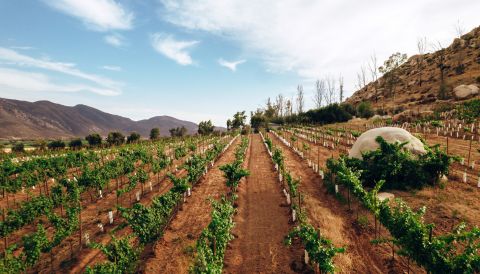
Valley veteran Bodegas Domecq has installed vineyard sensors and underground irrigation systems, and is conducting experimental plantations at higher elevations to identify varieties with better resistance to disease and drought. ‘Every year now is atypical. We have less water, higher temperatures, and heatwaves during the flowering and maturing season’, laments Domecq winemaker Alberto Verdeja, taking a break from presenting his latest vintages at the conference. ‘Five years from now, if we don't do anything, there'll be nothing here.’
At 82, Casa Magoni founder Camillo Magoni is the elder statesman of Baja winegrowing; 2022 was his 58th harvest. Ten years ago, he would start harvesting in mid September; today, he begins picking the crop at his estate in the last week of July. In his quest for answers, he is farming an experimental vineyard at La Morita water-treatment plant in Tijuana, irrigating 800 vines with treated wastewater from the city. Presenting to a group on a post-congress trip to Casa Magoni, he declares the results to be very promising.
Magoni has also been working on a study with INIFAP (Mexico's National Institute for Forestry, Agriculture and Livestock Research) to compare injected irrigation with the more commonly used drip method. Injected irrigation involves supplying water at 50 cm (20 in) underground instead of dripping it onto the soil at the surface, and guess what: findings indicate that the injected method produces better results, including reduced evaporation, less weed growth, increased water efficiency, higher fruit yields, heavier berry and cluster weights, and greater volumetric water content in the soil.
A long to-do list
Australian wine industry strategist and advisor Peter Hayes presented a paper at the congress on sustainable water use in vineyards. He commented that there are many ongoing studies, much published information and considerable industry know-how that already allows progress towards sustainability goals, and in his opinion, ‘growers are increasingly attuned to sustainability issues, and many are actively engaged in sustainability initiatives and schemes.’
However, there is no 'one-size-fits-all' solution: ‘Responses have to be designed with and for the communities, their economies and market situation, and the agro-ecological zone or region within which they are situated.’ For Hayes, priorities to focus on include water and energy (for pumping and irrigation, and refrigeration for wineries), security and sustainability, adaptation and innovation for a circular economy and 'net zero' targets, ecological diversity and natural resource conservation, and industry resilience in the face of extremes of weather. Quite a to-do list, then.
The last word went to Roca: ‘Climate change is real, and it is undoubtedly one of the most relevant challenges for our sector. Weather anomalies are becoming the new normal, and we should probably recognise their regularity instead of treating them as emergencies. The resilience and adaptability of the vine and wine sector is therefore the key to its own future. Policy makers around the world must develop a long-term vision on these issues and seek to improve and encourage the adoption of sustainable practices for vine growing and winemaking.’
While at its 20th General Assembly in Ensenada, the OIV adopted 35 resolutions relating to viticulture, oenology, economy and law, and security and safety. It also planted 25,000 trees in Valle de Guadalupe to offset the carbon footprint of the congress.