
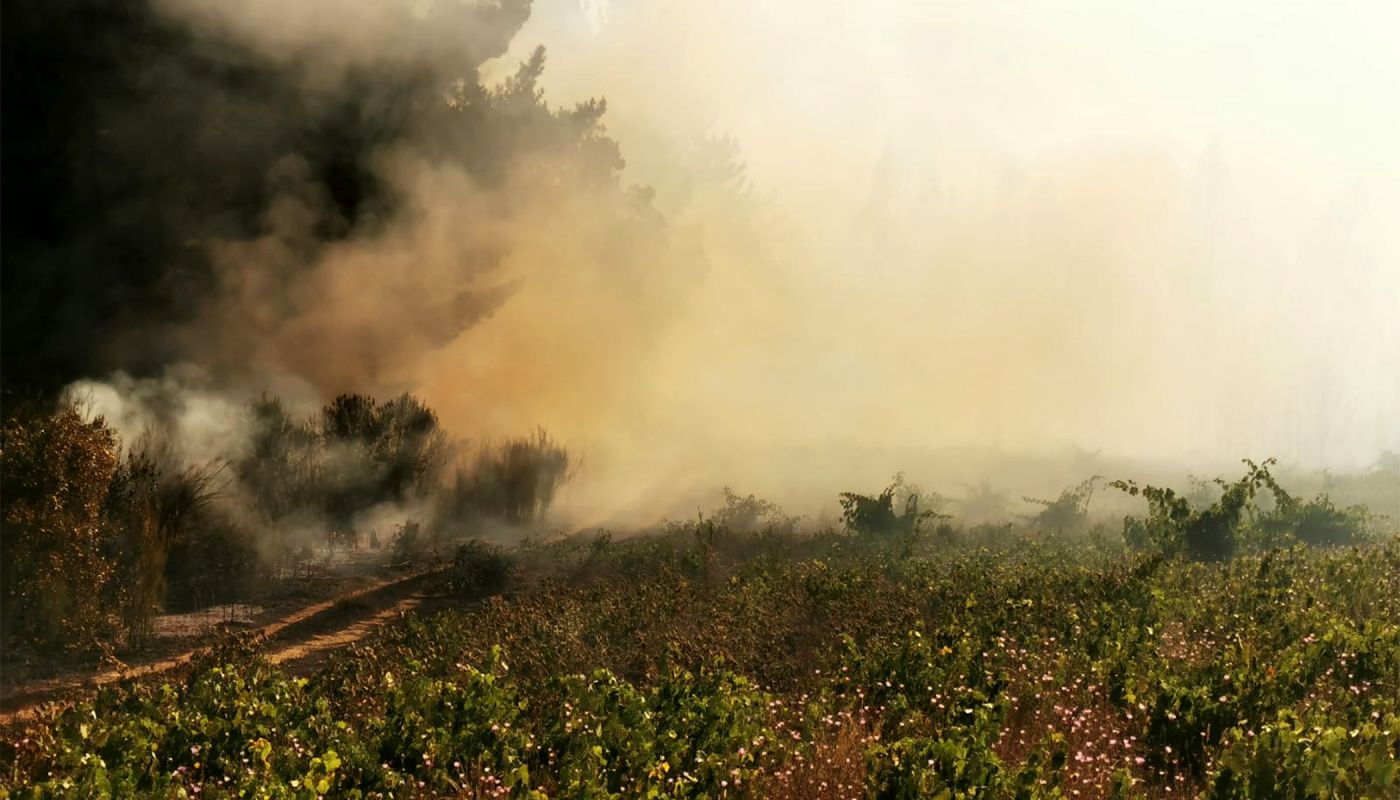
Devastating wildfires have swept through the historic heartland of Chile’s wine industry. Itata, home to some of the world’s oldest vineyards, has been ravaged (for a second time) by the fires. So far, 24 people are known to have died, more than 3,500 have been injured and thousands of homes are destroyed. Current figures estimate that over 150,000 ha (370,658 acres) of land have been directly affected.
It is a cruel and brutal blow to a region that has undergone a remarkable revival over the past decade. A treasured part of Chile’s vinous heritage, Itata was marginalised and maligned for many years, yet its recent renaissance has been arguably the most exciting movement in Chile’s recent wine history. Itata’s revival can be likened to that of the Swartland in South Africa and its forward-thinking producers who catapulted the country’s wines and grabbed the attention of the global wine industry. Home to País and Moscatel vines that are well over 200 years old as well as centenarian Cinsault, Itata’s heritage and its potential have garnered the attention of small and large producers alike.
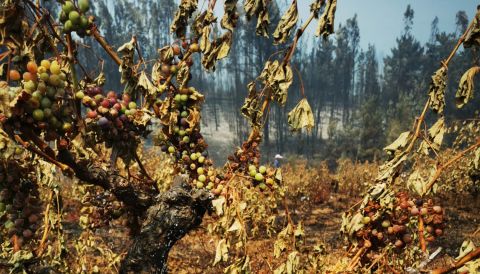
‘This has been so distressing to see the dreams and work of so many small producers burnt to ashes’, says Ana María Cumsille, one of Chile’s most renowned winemakers, who makes wines in the region in conjunction with local growers. Itata is composed of a patchwork of smallholdings, with over 5,000 growers and an average holding of 1.5 ha (3.7 acres), a far cry from the large estates and vineyards further north.
Derek Mossman of Garage Wine Company makes wines in Itata as well as Maule, which has also been affected (to a much lesser degree). ‘Personally, we have been very fortunate thus far’, he reports. ‘It is so sad for the youngsters who have fallen in love and regenerated the old vineyards of their parents. Also, for the entrepreneurs who have created a pole of interest for wine and food and tourism in and around Guarilihue [one of the villages at the centre of the revival]. We need these companies to maintain their presence and revive themselves.’
Itata is a region that means a great deal to me personally. I lived in Chile for several years and first visited the region 20 years ago when it was largely unknown to those outside the country. My Master of Wine research paper in 2016 was an investigation into the potential for development and investment in the region. Two of my conclusions were that they needed to capitalise on tourism as well as increase producer associativity. Just seven years later and the advance in both areas has been astonishing and Itata has blossomed. It is heart-breaking to see some of the key personnel in its revival be affected so tragically, one of those being Leo Erazo, who makes wines under several labels including Rogue Vine and A Los Viñateros Bravos.
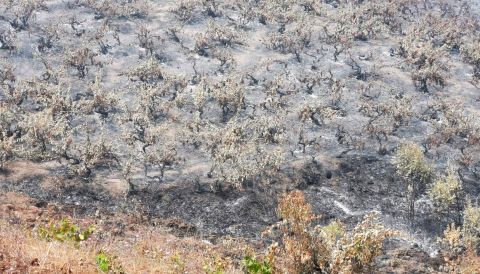
‘In our case, we have lost pretty much everything’, Erazo tells me. ‘So the best-case scenario, the absolute best case, is that we lose two years of harvest. And I don’t know how many companies in the world can actually survive like that. When you miss your production for two years it’s very hard to see what to do.’ I asked Erazo if the old vines could survive the damage, ‘I walked the vineyards to assess the damage in each block. The fire really moves in different ways and there are degrees of burning and damage. Definitely there are some vineyards that won’t recover – the trunks have burnt literally to charcoal. I had a parcel of Moscatel planted in the 1870s that was next to the eucalyptus, and that will not recover. While other parcels saw the fire spread through very quickly, so you see more than anything scorched leaves. The wind plays a big part, too. My guess is that from the 90% of production that we have lost, half of the vines will recover and half will need to be replanted.’
Mossman reflects on the 2017 wildfires and subsequent recovery, ‘Old vines are more resilient than most people think. After 2017 we began a programme of revival where we resuscitated vineyards burned or abandoned after the fires. When customers learned of this work, they offered to pay en primeur to grow the programme. We created a special label and hope others can do something similar. We now work various vineyards where the life force of the old roots created new shoots which depended upon the burned trunks for support as they grew. There is work in this revival but it is worthwhile as the old, deep roots are what lend the complexity to these wines.’
Revival and regeneration are key for Itata, yet the most pressing and fundamental issue is prevention: why is this happening and what can be done about it? This region is one of the centres of forestry in Chile, the countryside marked by swathes of eucalyptus and pine-tree plantations, once heavily subsidised to incentivise planting. It is an incredibly sensitive issue in the region and has been for decades. An adult eucalyptus tree consumes around 100 litres (26 gal) of water per day, leaving the forest floor parched and acting as a tinder box. Many point to the lack of regulation regarding forestry plantations and an antiquated decree (Decreto 701) promoting plantations as issues that need to be addressed. (See The perils of monoculture written just after the 2017 fires.)
‘Someone in authority has to realise there is simply not enough water in the water table for so many non-native trees’, Mossman says. ‘Planting has to be controlled. The forestry companies could do so much more creating better firebreaks. Chile must learn to selectively embrace regulation – there is no other way.’ Erazo believes a potential solution may lie not just with regulation within Chile but also from outside. ‘I think we need to seriously look at some sort of sustainable certification and regulation. The wood produced ought to comply with a thorough protocol that forestry companies must comply with, which has to be socially responsible and include sustainable fire management among other steps. Just as we have with palm oil, cocoa and coffee. Those purchasing Chilean wood should demand these standards and boycott those that don’t conform with the regulations.’

Climate change cannot be ignored within this discussion, yet many within the region are convinced this is not the only reason for the fires. Rodrigo Díaz, the governor of Bío-Bío, has stressed that he doesn’t just think but knows that many of these fires have been started intentionally. Enzo Pandolfi, from Pandolfi Price winery, also has suspicions. ‘We don’t know for a fact that these fires are intentional, but it is certainly odd’, he says.
The support shown within Chile during these current fires for those affected has been heart-warming. Many initiatives to raise money for those affected have been put in place, such as wine tastings, events and auctions. What we non Chileans can do is wherever possible purchase the wines to show support for the producers. The website www.wip.cl has a list of initiatives and events for those within Chile and outside to donate. Anyone wanting further information can use the Contact link at the bottom of any page on this site, marking the message for my attention.
The 46 tasting notes below are grouped by style/colour and then ordered alphabetically by producer (sur)name. You can reorder the wines within those groups if you prefer.
Sparkling

90% Cinsault, 10% Pinot Gris.
Lots of red fruits open the nose...
White
Moscatel, Sémillon, Torrontel.
Fascinating nose, jasmine and...
Attractive nose, subtle floral hints, jasmine and white peach...
Joint project of winemakers Fernando Almeda (ex Miguel Torres)...
Intriguing nose, not floral as you might expect, more...
35% Risesling, 28% Chasselas, 24% Sémillon, 13% Moscatel.
A...
Attractive mealy and cereal, fresh nose with a saline note. Nice...
Red
100% Cinsault.
Appealing nose, reds fruits, earthy – great...
60% Garnacha, 30% Cariñena, 10% País.
Meaty nose, savoury as...
Deep, inky and with balsamic notes. Rich and dense but with a...
Blue fruits on the nose, deep and dark and almost cola – has...
Fresh and waxy nose, rose hip and sweet red fruits. Approachable...
A subtle wild-floral note on the nose. A sweet, ripe red-fruit...
Waxy with a white-pepper and herbal note on the nose. Super...
Lovely red fruits, super-vibrant. Taut tannins and a cooked...
Relatively mute on the nose. The palate is juicy, with red and...
Wonderful pure nose, mulberry, crushed raspberry and a subtle...
Field blend: 80% País, 20% San Francisco.
Quite the nose...
Red-fruit-led nose, cranberry and rose hip. Waxy palate with...
A fresh and pure nose, with both dark- and red-fruit notes. A...
100% Cinsault.
Subtle herbal notes on the nose. Ripe dark fruits...
Coconut, raspberry pip and violet aromas. The fruit on the...
98% Cinsault, 2% Syrah.
Dark fruits on the nose – a little...
Joint project of winemakers Fernando Almeda (ex Miguel Torres)...
Quite perfumed, floral and spiced nose. Distinctly floral...
A deep cherry-cola nose, spiced plums, inky, dark and brooding...
Slightly volatile note, balsamic and spice. A tight palate with...
Wild forest-fruit aromas. The palate is powerful and dense with...
Appealing and inviting nose, red and dark fruits. The palate is...
Forest fruits, a slight herbal note on the nose. Ripe and rich...
85% Cinsault, 15% País.
Appealing and inviting nose, sweet...
100% Cinsault from Ránquil.
Vibrant and juicy, inviting nose...
Liquorice and crushed strawberries on the nose. A tense palate...
65% País, 35% Carignan.
Stewed red fruits and spice on the nose...
100% Carignan.
Slight volatility on the nose. The palate is...
Cinsault. Super-smoky and volcanic nose, tight and with a red...
Cinsault. Smoky and flinty, graphite nose – ashy, ripe red...
País. Smoke, volcanic with a red-fruit note, rose hip and spice...
Red and dark fruits on the slightly wild nose. Packed full of...
60% País, 40% Cinsault.
Liquorice, spice, and a herbal note...
Dark-cherry nose, with a slight hint of stewed prunes. Good...
70% Cinsault, 20% País, 10% Carignan.
Attractive dark-fruit nose...
A fresh, appealing, red-fruit-led nose – rose hip and pine cones...
Good typicality on the nose, red fruits, liquorice and an earthy...
Ripe mulberry fruits on the nose. The palate has sweet red...
Quite shy on the nose. The palate has good freshness, firm and...













