See tasting notes on nearly 160 Tasmanian wines.
Two things surprised me most about my first chance to explore Tasmania's wine country. The first was quite how small the wine industry is there. I had been hearing about how its cool climate was providing an island of salvation for wine producers on the increasingly torrid mainland, and expected to find vines going into the ground at a feverish rate. In fact Tasmania's grand total of vineyards is only 1,500 hectares, hardly more than England's current tally. 'More wine is spilt on the mainland each year than the entire island produces', according to Sheralee Davies, chief executive of Wine Tasmania and a veteran of the much bigger wine industry on what some Tasmanian winemakers call 'the North Island'.
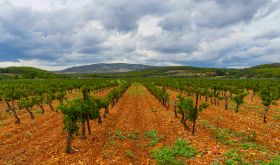
The other thing that surprised me – how dry Tasmanian wine country is – may explain the brake on vineyard expansion, despite the fact that Tasmanian grapes command very much higher prices than those grown on the mainland. Western Tasmania may be wetter than anywhere else in Australia but the eastern part was tinder dry and parched to a pale corn colour earlier this month. Hobart vies with Adelaide for the title of driest capital in Australia. Most of the vineyards in the south east of the island around Hobart – in the Derwent and Coal River Valleys and Huon – and on the warm east coast north of here, would not survive without irrigation. Although the Tasmanian premier Lara Giddings officially acknowledges that 'wine is a critical part of Tasmania's future', more official investment is needed in making irrigation water more widely available before vineyard plantings can expand significantly.
For the moment, mainlanders are snapping up some of Tasmania's viticultural jewels, encouraged by the fact that a Tasmanian Shiraz, Glaetzer Dixon, Mon Père 2010 from Frogmore Creek's winemaker, won the coveted national Jimmy Watson trophy this year. Brown Brothers of Victoria across the Bass Strait bought the dominant Tasmanian wine company Tamar Ridge in September 2010, renaming it Tasmanian Wine Estates. (The two biggest companies, Brown Brothers' acquisition and the Flemish-owned Kreglinger with its Ninth Island brand, account for more than half of all the island's production.) Another of Australia's first-rate family companies, Yalumba of South Australia, had already acquired the Jansz sparkling wine operation, and last year the award-winning Tolpuddle vineyard in the Coal River Valley was acquired by Shaw + Smith of Adelaide Hills, an area once viewed as one of Australia's coolest wine regions.
Mainland sparkling wine producers such as Domaine Chandon and the big company now called Accolade which produces such admired fizz as Arras and Bay of Fires have been sourcing their base wines from Tasmania for years now. All of these companies recognised that Tasmania's cooler (if not necessarily wetter) climate could reliably provide them with racier, more refreshing wines than their current vineyards on the mainland were likely to in the future.
Ross Brown of Brown Brothers admits however that Whitlands, one of the vineyard areas they had developed in Victoria, was actually too cool, and provided suitably ripe Pinot Noir only two years in every five. What the more maritime climate of Tasmania can offer is fruit that ripens reliably every year but retains a very attractive level of natural acidity (adding acid is routine in most Australian mainland wine regions). This makes Tasmanian wines well balanced and good candidates for ageing.
Like many Tasmanian wine producers, Brown Brothers are chiefly interested in the island's Pinot Noir, believing this will be the next big thing in Australia. Crucially, Pinot Noir is not replicable (unlike Brown Bros' previous investment in Pinot Gris/Grigio plantings in Victoria) in the hot inland wine regions on the mainland that can churn out wine relatively cheaply. Pinot Noir accounts for about half of all the vines in the ground in the island's wine regions: around Hobart in the south east, in the damper north east and on the warmish east coast.
Chardonnay is the second most planted variety but with only about half as much vineyard as Pinot Noir, and an even higher proportion of it than of Pinot Noir goes into base wines for sparkling wine. In a way this is a shame as Tasmania's still Chardonnay can be stupendous. It is no accident that Penfolds now depend almost entirely on Tasmanian fruit for their top Chardonnay Yattarna. The view of the Derwent shown above was taken from Derwent Estate, which supplies a very considerable proportion of Yattarna's Chardonnay. Accolade's top-of-the-range Eileen Hardy Pinot Noir is now 100% Tasmanian and Tasmania, with Yarra Valley, is a major component in Eileen Hardy Chardonnay.
The still Pinots are certainly very promising, with good freshness, only medium body and attractive, dry finishes. Of about 160 licensed vine growers fewer than 30 actually make wine themselves, and for the moment, a very high proportion of the wine grown on the island is vinified by one of two contract wineries, which may have a rather blanding effect on its character.
But the wines produced by some of the most ambitious of the new wave of young smallholder-winemakers such as Joe Holyman of Stoney Rise and his friends Vaughn Dell and Linda Morice of Sinapius have an intensity that transcends the norm – as do the wines of young Canadian Conor Van Der Reest, who is doing his best to transform Moorilla Estate into a modern Tasmanian landmark to match its sister establishment, the extraordinary MONA – betting billionaire David Walsh's snook-cocking art gallery just outside Hobart.
If Tasmania produces any seriously ordinary wine of any variety, I failed to find it. I found some outstanding Riesling, although this relatively minor variety is giving way to the inexplicable fashion for Pinot Grigio, and to Sauvignon Blanc, which has become the island's third most planted variety, thanks to the current Australian thirst for this varietal. In general the island's growers find it difficult to ripen Cabernet and Merlot, but one admirable exception is Swiss incomer Peter Althaus of Domaine A, who has long gone his own way, particularly in the vineyard.
One big difference between Tasmanian wine producers and their counterparts on the mainland is that they manage to sell everything they produce. No embarrassing surpluses here. Only 40 producers sell outside Tasmania and only about a dozen export – although, as throughout the rest of the Australian wine industry, the focus has been shifting towards Asia. Under Peter Althaus's guidance, one ex Red Army general has constructed a perfect copy of Hobart's Government House on his estate in China. Still Tasmanian wines that may be found outside Australia include Apsley Gorge, Josef Chromy, Domaine A, Frogmore Creek, Stefano Lubiana, Nocton Park, Stoney Rise and Tamar Ridge. Many of the favourite wines I tasted on the island listed below will be difficult to find, unfortunately.
Bagdad Hills Shiraz 2010
Bay of Fires, Arras Blanc de Blancs 2001
Josef Chromy, Delikat SGR Riesling
Derwent Estate Chardonnay 2007
Domaine A, Stoney Vineyard Merlot 2005 and Cabernet Sauvignon 2006
Frogmore Creek Riesling 2007, FGR Riesling 2010 and 2011, Chardonnay 2009 and Evermore Pinot Noir 2009
Glenayr, (Tolpuddle Vineyard) Pinot Noir 2008
Hardy's Eileen Hardy Chardonnay 2009 and Pinot Noir 2009
Moorilla Estate, Muse Gewurztraminer 2010 and Pinot Noir 2009
Sinapius Riesling 2010, Chardonnay 2010 and Pinot Noir 2010
Stefano Lubijana, Collina Chardonnay 2008
Pipers Brook Vineyard, Reserve Pinot Noir North East 2006
Pooley Wines, Late Harvest Riesling 2010
Pressing Matters Pinot Noir 2010 and R69 Riesling 2010 and R139 Riesling 2010
Stoney Rise, Holyman Pinot Noir 2010 and Chardonnay 2010
Tamar Ridge, Kayena Vineyard Pinot Noir 2009 and Botrytis Riesling 2009
Tower Estate, Panorama Vineyard Pinot Noir 2010
Waterton, R15 2008 and Botrytis Riesling 2010
For stockists see wine-searcher.com and see my full tasting notes and Nick on eating out in and around Hobart.