Is Brunello really back?
Throughout the releases of the 2014 Bordeaux vintage, a couple of the players in this game forgot something, something not exclusive at all to the wine trade, something that is part of any commerce that involves the end consumer, the private customer: people like to buy stuff. The chaps at Apple appear to understand this very well: do I really need an iphone 6? My iphone 5 is fine. As was my 4, 3. No, but I want one, and I want an iwatch too. I covet them: that’s where it starts.
A while back, not so long ago, people wanted to buy bordeaux. Some wanted the best, some wanted lots of it. With a little blip (well, quite a big one) at the end of 2008, when the wine market froze, or rather blocked like a toilet without the capacity to flush away the volumes required of it, 2005 to 2011 were very easy times for a wine merchant, particularly so for those with access to bordeaux. A few current merchants probably wouldn’t exist today were it not for the boom of those years and a few of their employees might well be in different careers.
From late 2005 the market for bordeaux was as buoyant as I have ever seen it (although older and wiser merchants will have seen it all before). Selling 2005s, 2009s and 2010s was not so very different from shooting fish in a barrel. Selling the weaker vintages on a relative-value basis wasn’t much harder. People wanted to own bordeaux. If you were in a position to supply it, then commerce came your way. Easy. But then the mind-set changed, and bordeaux was no longer the darling it was. In June 2011 the market collapsed. Demand fell away, prices followed. Three difficult vintages on the spin added to the emptiness. Bordeaux was a basket case and – worse – its customers held a grudge. Bordeaux-bashing was born (probably not for the first time – see above).
The few canny investors who saw this coming switched from bordeaux into burgundy. In the real world, one where buyers do so to actually drink their wines, consumers with cellars full of 2009 and 2010 bordeaux started looking for something else and burgundy was the obvious choice for those long on claret. The 2010 vintage, praised by all, helped out, although prices for a region already considered expensive by many, moved up further for 2011 and 2012. While many, myself included, see no problem in premier cru Vosne-Romanée costing more than Château Palmer, consumers have long memories, and a few of the more commercially minded Burgundians drew the same sort of criticism that was normally aimed at their Bordelais counterparts. A dozen bottles of 2002 Vosne-Romanée aux Malconsorts from Domaine Cathiard cost less than £400 in bond on release, while the 2012 came out at £1,920 per dozen in bond.
Moreover, there is also the issue of volume with burgundy. While there is no shortage of good wine at village level, especially in the Côte de Beaune, buying the swanky wines from the swanky growers in the Côte de Nuits is a little tricky to say the least. This problem was exacerbated by the string of small crops: 2010, 2011, 2012 and 2013 are all short vintages and, while some producers spin the heartache more than others, Burgundian cellars have looked on the empty side for the past few years.
This presented the merchants with a serious problem: what to sell. It’s all very well offering the fine and the rare but the issue is the rare bit. Which is where bordeaux comes in so handy – Mr Cathiard makes somewhere between 300 and 400 cases of Malconsorts; Château Lafite can easily turn out 20,000 cases or more of the grand vin if they open the taps.
Last year the cannier merchants spotted an opening: Barolo. I’m going to step back a bit here and remove my love for the region, the wine, the people and the food and stick to the commercial angle. In the 2010 Barolo vintage you have a merchant’s dream: wine of some considerable quality, wine with a story. Wines that, from producer to producer, are made in relatively small quantities, which is marketable, although collectively there’s quite a bit of it. And, without the market-makers that Bordeaux has, you can stick a bit more margin on it. If you made the effort to go there and meet the vineyard owners and winemakers, they actually wanted to sell you the wine rather than give you a Gallic shrug and tell you that there was none for sale. It worked. There are some quite brilliant 2010 Barolos – wines that will stand up to the very best of bordeaux or burgundy – but that’s not the point of this. The point is more simple: there were some very profitable 2010 Barolos if you could source them well.
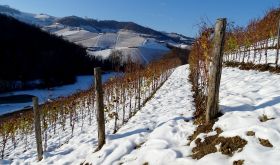
Which brings us to Brunello. I first visited Montalcino in 2014, six months before the 2010s were due to be released. And I could smell a bit of something, I could sense that the coals were about to catch on the barbecue. While Brunello is not, in my view, as noble as Barolo, there is some serious wine made in Montalcino. There is a lot of less serious wine, and indeed a bit of dross, but the comparisons, from a commercial point of view, between Barolo and Brunello di Montalcino are many, and the plus-points for a merchant are exactly the same: work with lots of growers and there is some quantity, quantity that can be sold on with some profit attached.
But I have this theory, one proved to an extent by the sales of the 2014 Bordeaux châteaux that were priced correctly: people want to buy bordeaux again. People want to buy stuff, yes. But in the wine world, people want to buy stuff that they understand, which is to say wines with names that their mates understand, wines that their mates will covet. Wines that will make them smile when they look at their stocklist. And it’s the understanding that is key. I first visited Piemonte (that’s where Barolo is – there are guys selling the wines who don’t even know that much) in 2007, have been back five times since, and I just about understand it. Relatively speaking, I’m in the expert league but, compare it with Bordeaux or Burgundy and I’ve only just got rid of my learner plates. Brunello? I’ve been once. I’ve worked out that I like the traditionally made wines and that, for my palate, cooler vintages are better. I’ve worked out that Valdicava is your Tuscan Tertre Roteboeuf and, well, that’s about all I’m prepared to nail to the mast.
Your average punter, for want of a better way of putting it, needs a little bit more than this and I have a feeling that those who may be looking at their cellars full of 2010 Brunello may just be asking themselves: ‘Wot is all this lot then?’ And the chaps that sold it to them will probably have to look it up themselves if asked.
Most of the top wine from Bordeaux has been at the wrong price for the past five years – probably longer. The prices are slowly correcting, though: the Bordeaux system, derided by so many, actually works – it’s a marketplace, and, given time, the axes of supply and demand will always meet. The 2014s that were released at the right prices found this meeting point, found their market, and found it quickly.
So while Brunello may be back, and Barolo very much on the stage, that’s only because bordeaux has been away, and a supporting act has been required. 2014 burgundy looks pretty good and there is a decent amount of it. 2015 is looking good at this stage for bordeaux (though there is some way yet for the race to run). And when bordeaux comes back, well … Elvis returns.