See also Chinese wine – the tasting notes and some comment.
After a gap of five years I went back to China earlier this month. Visitors of a more serious bent may go to China in search of answers to the future of Africa, or the planet (at whom the relatively recent poster campaign urging 'Deliver Clean Energy towards a Harmonious World' is presumably aimed). I went in search of wine.
On my first forays in 2002 and 2003 I had been struck by the relatively low quality of Chinese wine, and by what an extraordinarily high proportion of it tasted like very, very thin, not quite clean, red bordeaux. Wine made from grapes was still a pretty marginal phenomenon in China five years ago but in the meantime China has become the world's sixth most important grower of grapevines. The number of Chinese with aspirations to a western lifestyle has, to use a hackneyed but in this case thoroughly justified phrase, grown exponentially. And wine is now seen as an increasingly familiar accoutrement to that lifestyle.
A company such as Great Wall is said to fill about 150 million bottles of wine a year now. As an admirer of Chinese determination and organisation, I was expecting to see real progress in wine quality. But I have to admit that although I found the wines listed below to be superior to the norm, they were no more than competent, and overall I was disappointed that the norm did not seem to have changed much in five years.
Some of China's best wine educators and professional wine buyers kindly conducted a pre-tasting and eventually gathered 15 reds, a white and a pink for me to taste, blind, in Shanghai's International Wine Centre, a one room office converted into a wine school on the 24th floor of one of the hundreds of skyscrapers that had sprouted in Pudong since my last visit. This month you can see the river from it, but it is already clear where another two or three office blocks will eventually block the view. My fellow tasters had rejected three quarters of what they had initially tasted, but some of the chemical and occasionally rotten odours I found in some of the selected wines took me back to the dark days of 1970s Britain when only about one in two bottles smelt clean.
In most of the rest of the world a fiercely competitive market and a global wine glut have combined to eradicate wine faults. But the Chinese market is so vast, and so relatively undeveloped and unschooled, that there seems to be little consumer pressure to improve the quality of what is sold in the straight-sided bordeaux shaped wine bottles that are de rigueur there. It may not help that the domestic Chinese wine market is dominated by a handful of large companies such as Cofco's Great Wall, Changyu, Dynasty and Dragon Seal, nor that distribution is so regionalised in China, where deals with local officials, not to mention layers of hotel and restaurant staff, are essential to progress.
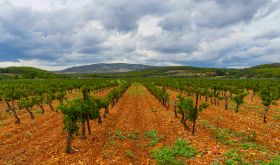
Another problem is the weather. Summer and early autumn rain dogs most vineyards except for those in the far west, five hours' flight from Shanghai and a very long and expensive haul back to the major cities. Shandong on the east coast has been the focus for a high proportion of Chinese wine operations but vine diseases are a perennial problem in this humid climate and alcohol levels often need to be boosted by adding sugar, or chaptalisation. At least growers there do not have to painstakingly bank up every vine every autumn to protect them from potentially fatally cold winters. A high proportion of Chinese viticulture has depended crucially on cheap labour to do this, although one of the most progressive producers Grace Vineyard has already successfully mechanised the banking up (if not yet the spring unbanking) operation in view of the continued migration from China's still primitive villages to super-sophisticated cities. With an eye on the future, in the new vineyards they are planting near the terracotta warriors of Xi'an in Shaanxi province southwest of their base in Shanxi, the coal mining province southwest of Beijing, they are, innovatively for China, leaving enough room for tractors between the vine rows.
The great majority of China's wine grapes are grown by farmers who have never tasted a drop of wine in their lives and are never likely to. Their chief concern is to deliver as large a crop to the wine producer as possible. Irrigation (before the summer rains arrive) and heavy addition of fertilisers are common. Winters are long and the growing season is relatively short. Vines tend to be vigorous and in some areas may find themselves sharing a plot with beans or bok choy. The overall result is wines lacking in body and vinous interest. Those looking for lower alcohol wines would not reproach Chinese wine which rarely reaches 13% – except for its lack of flavour.
Another deep-seated problem is the quality of winemaker training. Students at China's wine academies tend to be taught all about chemistry and winemaking hardware but can emerge garlanded with honours having tasted remarkably little, and certainly no foreign, wine. Fongyee Walker, the Cambridge-educated co-founder of Dragon Phoenix Fine Wine Consulting of Beijing (www.longfengwines.com), told me that at a winemaker get-together in Shandong the professionals managed to down a whole bottle of Chardonnay without even noticing it was badly corked.
As so often in new wine regions, far more effort has gone into shipping fiendishly expensive oak barrels from distant France than into ensuring that the fruit is of a quality to warrant them. I saw stacks of them at Grace, still wrapped in cling film because the 2007 season was too cold and wet to yield wine of sufficiently high quality to fill them.
The vast majority of vines planted are (still) Cabernet and Merlot and it is effectively impossible to import cuttings to supplement the official stocks of French vine material. The market seems to have been schooled to expect wine to be red, watery, bone dry, often rather tannic and tough (destemming is not routine) and too often less than pristine. Is it any wonder that I fear wine may not catch on in China? Especially since a bottle of wine costs about 20 times as much as a bottle of beer – even though taxes on domestic wine are well under half the nearly 50% levied on imports. Every day millions of Chinese must try their first bottle of wine and be desperately disappointed.
www.grapewallofchina.com told me he had seen a label that admitted to some Chilean wine content. Vintages are now supposed to bear some relation to reality. (A longstanding problem is that what is cited on the same bottle in English and Chinese can be very different.) Last year countries such as Chile, Australia, Spain and then France sent enough wine to China to fill a total of 130 million bottles, more than three times as much wine as was shipped there in bottle.
BEST OF THE LOT
Catai, Superior Cabernet Sauvignon 2003 Shandong
Château Junding, Oriental Dry Red Bordeaux Blend 2005 Shandong
Grace Vineyard, Chairman's Reserve 2005 Shanxi
Great Wall Huaxia Vineyard A Bordeaux Blend 2005 Heibei (Changli)
Great Wall, Huaxia Vineyard B Bordeaux Blend 1998 Heibei (Changli)
See also full tasting notes on more than 30 of China's better wines.