Headlines alert us to the United Nations Climate Change Conference, with the urgent agenda to secure global net zero carbon emissions by mid century, which opens on 31 October in Glasgow, Scotland. At COP26, hosted by the UK, political leaders, international climate diplomats and scientists will grapple with the hard facts of accelerated climate change this century, critical for the future of humankind.
As we know, climate scientists warn us the planet is already 1.2 °C warmer than in the pre-industrial era, well on the way to the aspirational goal of ‘only’ 1.5 °C warmer, negotiated at the 2015 Paris Agreement, to which nearly 200 countries signed up. The difference between 1.2 °C and 1.5 °C may seem incremental. It is not! This small difference will lead us to a point of systemic, cascading and probably irreversible change: frequent and extreme heatwaves, violent rainfall, biodiversity loss, fragile ecosystems, crop failure…
Any doubts, why not ask a wine producer how things went this year. ‘How was your growing season, ripening period and harvest’? Many vintners will have tales of frosts well after budburst (Burgundy and Tuscany), aggressive hailstorms (the Douro, in June!), torrential rainfall and flooding (Germany, in July), hellish wildfires (California, Provence, Greece, in August), and, when it finally got to harvest time, small yields (most of France). My examples are, of course, far from exhaustive.
Climate change is affecting agriculture, and wine, our revered nectar, is naturally no exception. The wine industry is under duress. Many in the wine community are taking action. Not for them the blah, blah, blah of governments, recently mocked by climate activist Greta Thunberg.
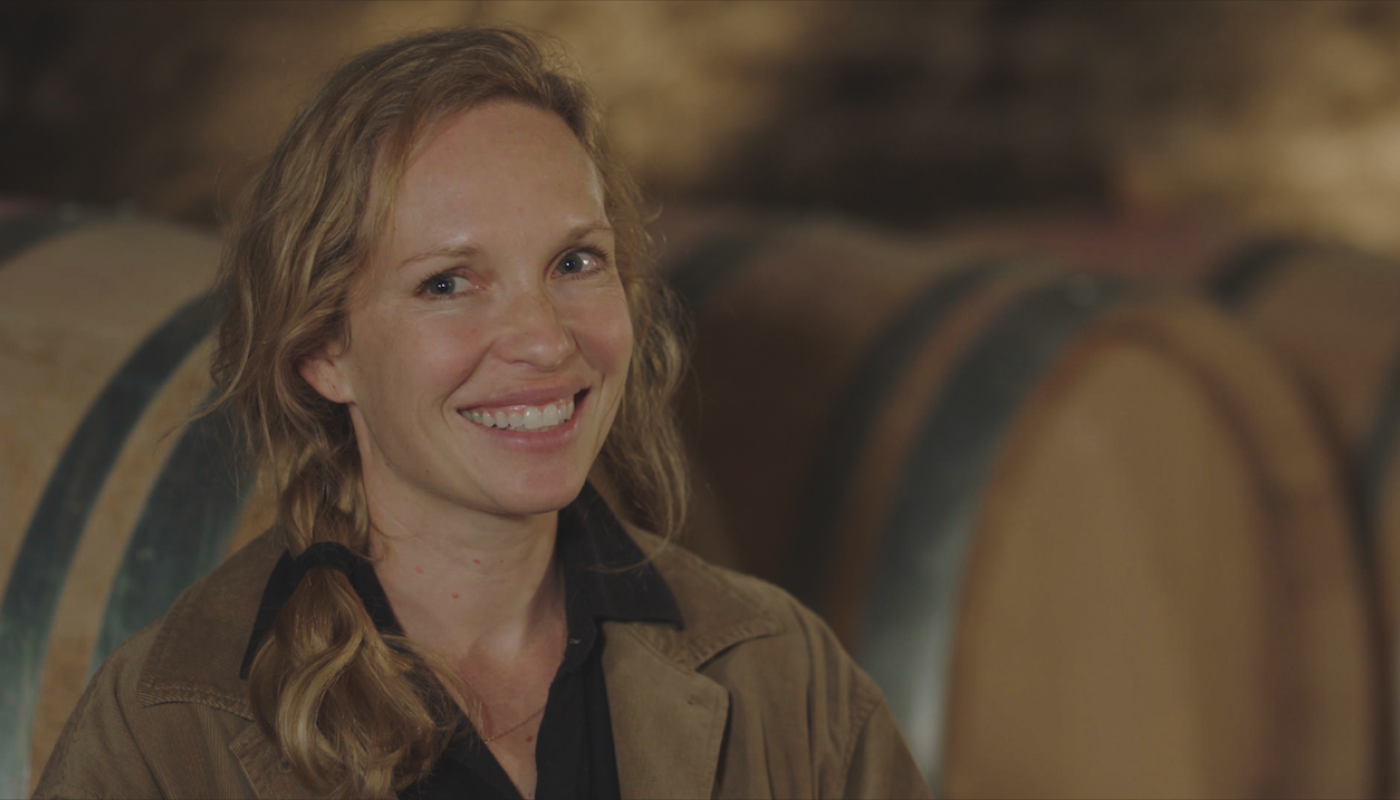
Among the active, two women eco-warriors in two countries, impassioned about wine and protecting its future, are putting the climate-change debate squarely in the vineyard: Diana Snowden Seysses is an American wine producer and climate activist making wine in California (Snowden Vineyards) and Burgundy (Domaine Dujac). Marta Mendonça is manager of the Porto Protocol Foundation, a game-changing non-profit open platform to fight climate change in the wine industry. A member of Porto Protocol’s steering committee, Snowden is described by Marta as ‘a rock star of sustainability’ and was pictured at the top of this article by the team making a BBC Maestro online wine course to be launched early next year.
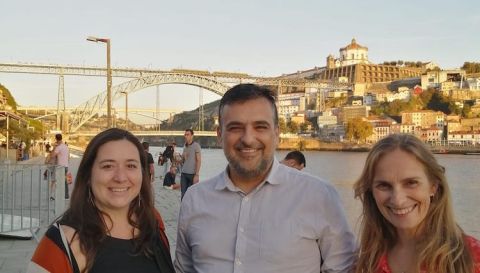
The Porto Protocol is international in its reach. It was founded in 2018 by Adrian Bridge, CEO of The Fladgate Partnership, owners of Taylor’s port. Bridge, like Greta, was at the time exasperated by ‘blah’ often substituted for the implementation of practical solutions. Membership of the Protocol has snowballed, bringing together companies and individuals from every link in the wine value chain to exchange best practices and catalyse climate action. Ambitious Climate Change Leadership Summits in 2018 and 2019 hosted Barack Obama and Al Gore as respective keynote speakers.
Marta, dedicated to promoting a sustainable future, speaks with animated authority. She believes ‘we all have a role to play in fighting our climate crisis. Even after the massive wildfires in recent years in California, we still have climate change deniers in the wine community.’ After the 2017 fires in Napa Valley, Diana threw herself into learning about climate change. ‘Everything around us was burned. But when you look at our potential for impact, there is a lot built into grape growing and winemaking that gives us tools. The wine community has the ear of the public, this is very powerful.’
Wine comes from specific locations and this enables the industry to speak directly to consumers who increasingly care about sustainability. Millennials and Gen Z in particular are more aware of how their choices affect climate, an awareness mounting as the oceans rise to engulf coastal land. For Marta, it’s evident that climate awareness starts on home turf. The benefits of sustainable agriculture need to be embraced by communities, taught in schools and explained by local media.
Marta’s commitment to raising awareness and influencing policy drives her actions. She remarks that wine-producing countries often have several different certifying organisations to validate wineries’ sustainability practice. ‘We need to level worldwide, to allow consumers to compare wines for a better understanding of the impact their purchase has on the planet.’
A passionate trailblazer, Diana uproots much of conventional viticultural thinking, respecting natural cycles of growth. She considers her family stewards of the vineyards and woodlands which comprise Snowden Vineyards in Napa Valley between St Helena and Rutherford. The wild animals and birds are the property’s ‘real owners’, according to her. While studying in the famous viticulture and oenology programme at Davis, Diana met her future husband Jeremy Seysses. Today Diana divides her time between winemaking at Domaine Dujac, Jeremy’s celebrated family property in Burgundy, and Snowden Vineyards. Domaine Dujac was certified organic in 2012, having practised biodynamics throughout their holdings since 2008. In April this year frosts destroyed most of the Chardonnay at the property, one more example of precarious climate conditions.
Asked if she considers herself an Old or a New World winemaker, Diana replies, ‘I take everything I hold dear, and which makes Burgundy special, and apply it to our property in Napa. Fine wine takes generations to figure out.’ She says it took time to persuade her American family to transition to organic farming and accept ambient-yeast fermentation.
Today only 6.2% of vineyards growing grapes for wine production are certified organic or biodynamic according to this recent OIV report. The remaining 93.8% are still often industrial grape farmers, practising chemical-intervention farming. Consumption of organic wines is currently a correspondingly small share of global wine consumption, surprising when we consider that in the US and Europe about half of all consumers are willing to pay a premium for organically farmed products.
Although organic viticulture indisputably offers benefits for the environment, through healthier soils and ecosystems, it is not however a magic bullet for the climate. Increased labour and use of tractors, for example, can generate a higher carbon footprint than conventional viticulture.
So what else do wine producers need to do? Diana leads the field, adopting sustainable wine production that takes climate-positive winemaking further, favouring practices such as dry farming and carbon capture. Careful selection of grape varieties to permit dry farming reduces the need for irrigation. During grape fermentation a huge amount of carbon dioxide is released and the capture of this carbon in wineries contributes to achieving carbon neutrality. The Seysses are building a new winery at Dujac for carbon capture, the machinery they’re installing possessing the capacity to capture, in theory, all the CO2 released by wine fermentation throughout the village of Morey-St-Denis if a collective initiative were established.
Diana concedes, however, that most wineries’ biggest carbon emission factor is making and transporting the glass bottle. ‘At present, I don’t see another container for fine wine better than glass. It’s inert, but also perfectly recyclable, and I’m looking into reusable bottles for Snowden.’ In the UK market, the Seysses are selling rosé from their Provence winery in kegs.
To stimulate a deeper understanding and discussion of these subjects, Marta and her colleagues at the Porto Protocol initiated a series of climate talks during recent COVID-19-induced lockdowns, where a moderated panel of international participants, such as climatologist Professor Gregory Jones (US) and Jancis, exchanged diverse perspectives. For Marta ‘the wine industry still has actors who view sustainability as cost rather than risk management. We need to express these risks in business language.’ Several of the climate talks, in a series called ‘The business sense of internalising climate change’, are addressing these hesitations.
Diana refers to terroir as a combination of three elements: ‘land, weather and the people who work on the land. Terroir is a holistic ecosystem which includes the community.’ For Diana, ‘the natural wine movement has had a lot of impact. Young people want to see something that is respectful of nature and not industrial. I desperately want to protect our very special winemaking tradition for the next generation.’
Prince Charles, a modest drinker also interested in protecting traditions for the next generation, has been ahead of the climate-change awareness curve for decades. In a recent interview with the BBC he told us he runs his much-loved Aston Martin on a sustainable mixture of ‘surplus English wine and whey from cheesemaking’! Sadly I don’t own an Aston Martin, but I have been wondering what kind of wine my much-loved Honda might like to be paired with. A powerful wine, mature, a wine which roars?
And in case anyone wants to point a finger at me for admitting to driving in the previous paragraph, let’s just say it’s never too late for a little humour… Like wine, humour can have a civilising effect on our lives. It opens us to discussion and tolerance, preparing the ground for creativity and the generation of ideas. In the warmer years to come, let’s get as much of this as we can!
















