Borgoluce: Where land is family
The champions of today’s world are those who work to restore the balance for a more resilient, sustainable, and brighter future. In the vast world of wine, one producer that unquestionably comes to mind as an unsung hero of sustainability is Italy's Borgoluce. The wine estate quietly flexes its strength, determination, selfless protection, and harmony of people, environment, culture, and nature, so instinctively, its good deeds seemingly go unnoticed. But, the impact is far-reaching.
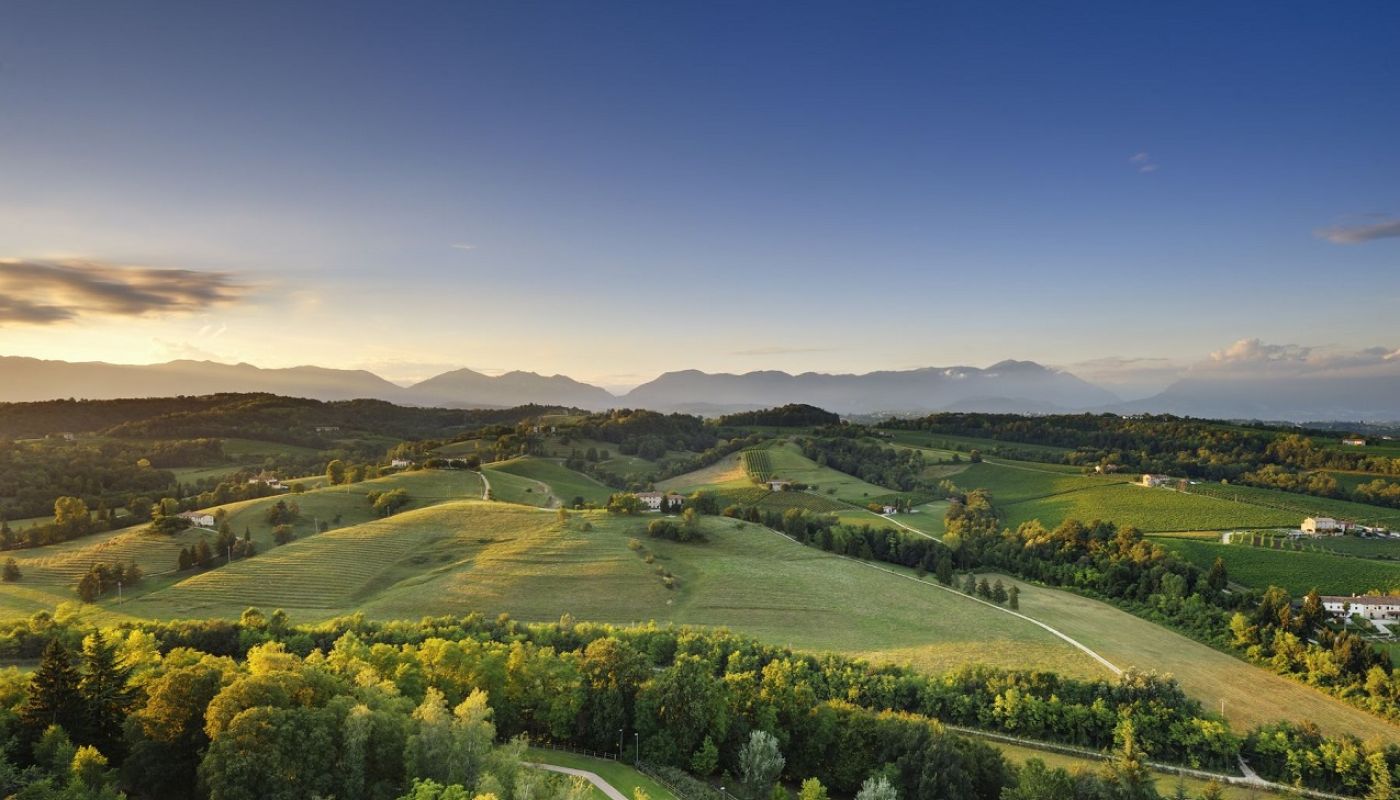
A bird's-eye view of Borgulce's territory showcases a breathtaking expanse between Venice and the northern Italian Alps, nestled in the Conegliano and Valdobbiadene hillsides. Woodlands, gentle knolls, and castles lead to steep and enchanting conical-shaped vineyards – it's among the most beautiful places in the world. The rural landscape is largely devoted to viticulture, where Glera – the celebrated grape of Prosecco – has taken root for hundreds of years. But, the sprawling ranchland of Borgoluce is also an agricultural powerhouse that is as much invested in its production of quality lively bubbles as turning the land's natural resources into food and energy.
On this cool and partly cloudy day in early summer, I climb into an all-terrain Land Rover for an afternoon jaunt through Borgoluce's sprawling 1,000-hectare wine estate. Through the window, the view is like something out of a children's picture book – rolling green pastures, grazing farm animals, old farmhouses, arable fields, groves of healthy woodland adorning the land. Around the bend, an apiary emerges along the River Ruio, followed by a verdant patchwork of vineyards. Borgoluce's roads are golden threads that bring together a rich tapestry that blankets the territory, representing a family's ambitious commitment to environmental equilibrium, which weaves together the economic, natural, and social functions of the estate.
‘We have always been careful to maintain biodiversity,’ says Borgoluce's commercial manager Alessandro Samogin. ‘This is done through multi-functionality.’
A careful look at the wine's label illustrates the family's principles – simple rings that resemble the solar system highlighting three of the most important elements of agricultural harmony: energy, nutrition, and environment.
Borgoluce’s territory is family. The land is love and nurtured, its gifts are respected, never taken for granted. While maintaining biodiversity and productivity, Borgoluce guarantees the renewal of natural resources through the responsible use of its own resources. It is a faithful pattern that the family has live by for generations.
A snapshot of their cycle sees no waste in the end. Wheat, barley, corn, walnut, pomegranate, grapes, and olives live in harmony with Borgoluce's cattle, water buffalo, pigs, and sheep. All contribute to the natural habitat of nourishment and energy. Wheat becomes flour for pasta and bread, bees for honey, grapes for wine production, and water buffalo for cheese and dairy produce. Corn is harvested for energy and food. Wood is burned in a biomass boiler then used to heat the facilities. Buffalo waste becomes energy to turn on the lights, as well as thermal energy for the buffalos' sheds. Water from the wine cellar and stables are collected and reused.
Rooted in history
But a sustainable environment isn't anything new to Borgoluce. In fact, during much of human history, people lived sustainably. From any vantage point on the property, beyond the reminders of the area's rich and colorful history and survival of the darkest times, their commitment to the land remains the heart of their existence. Meadows, woodlands, livestock, crops, vineyards, orchards, streams, mills, and animal sheds – in the twelfth century, this abundance and variety allowed the estate to produce everything it needed for day-to-day life. Today, this tradition of biodiversity continues as the most natural way to ensure the soil stays rich and fertile while protecting the life of every species in the ecosystem.
Original farmhouses dot the landscape, two of which are now agriturismos. A gentle uphill walk reveals a nearby swimming pool, covered partially with flowering water lilies and reeds that serve to naturally-filter the pool. While the shady respite offers a refreshing morning dip, it also functions to replenish the groundwater and provide a habitat to support biodiversity.
The Collalto family were innovative pioneers, exhibiting a passionate dedication to the development of the vines and the wines they yield, but never without considering the whole environment. The conscious efforts they have put into the earth is the language they have spoken for centuries.
‘We have always been diversified, and animals are important to maintaining the fertilization of the ground; if you don't have the animals, you are using only chemicals,’ says Lodovico Giustiniani. He and his wife Caterina Collalto and her sister Ninni together with their mother Trinidad dedicate their efforts to promoting a heritage that is unique in Veneto. ‘Borgoluce is environment-friendly, and one of the things that are most important for us is biodiversity,’ he says.
The woodlands
Woodlands occupy approximately 400 hectares of the estate and alternate with plantations and pastures. The farm looks after their care and clearing of these areas, which contribute to the local biodiversity. The woods are cut about every 20 years for firewood, and wood chips are produced for two boilers that heat the farm buildings.
The power of Borgoluce
Borgoluce is also fully-driven by its own power. A biogas plant produces electricity using dedicated, estate-grown crops, such as corn and sorghum. Farm animal manure produces methane gas, which in turn converts into electricity. And a 60-kilowatt photovoltaic system provides enough to power the winery.
‘The plant produces more than 1,000 kW of energy per hour and more than 800 kW of calories,’ says Samogin. ‘We are self-sufficient from an electrical point of view, and we sell more than 8,000,000 kW per year to other users.’
‘We are first agriculturalists, then we are wine producers,’ adds proprietor Ninni Collalto. ‘This is important. This estate is tended with passion and provides eco-friendly, clean energy for the sustainable development of the area.’
Animals
A closer look within the territory reveals born-and-bred Limousin and Charolais cattle that graze on grass in the meadows and eat estate-grown cereal. Pigs and sheep carry out healthy lives in the open air of the Collalto hills. Their meat is then made into delicious nourishment.
Borgoluce Osteria is one of two dining establishments on the estate and is also a place to taste all the products in the very place they are grown. At dinner, Borgoluce's edible goodness is offered at a family-style gathering. Mozzarella from the estate's water buffalo, an assortment of cured meats, fried pork fillet, Alpagotto lamb, and sweet buffalo yogurt with walnuts and honey – all are gifts from the land. Each dish respects the raw quality of the material and naturally pairs well with estate-grown wines.
Wine
The winery transforms grapes into the region's famed effervescent wine and welcomes visitors to learn about their low-impact agriculture. Sips from the glass help to identify the nuances that connect me to the unique terroir, and while conversations encourage me to appreciate their complete offerings and the supply chain.
Approximately 73 hectares of farmland are dedicated to vineyards for the production of Borgoluce's wines. The Conegliano Valdobbiadene DOCG region is home to Borgoluce's finest Prosecco vineyards.
Borgoluce produces five distinctive Valdobbiadene Prosecco Superiore DOCG. The extra dry version, with 16 g/L of residual sugar, is their most popular worldwide. The prestigious single vineyard Rive di Collalto, one of the 43 crus (or rive) of the DOCG area, is also produced in an extra dry style. However, Borgoluce's total production of 415,000 bottles per year is more focused on producing dry Prosecco. Lampo Prosecco DOC Brut is a vivacious sparkling wine made from grapes from their youngest vines. The Valdobbiadene Prosecco Superiore DOCG Brut's delicate effervescence and freshness are ideal as an aperitif. From the slopes of Collalto is the Rive de Collalto Brut, which harnesses a full expression from the respected cru. The Gaiante is bottle-fermented, as in the traditional Méthode Champenoise. Its cloudy appearance and sediment are a natural sign of no filtration or disgorgement. The result is a zero dosage sparkler exhibiting a visual reminder of the wine's distinct bread crust flavors and aromas.
Giving back and guaranteeing the future
Whether it’s the wine in the glass or the energy required to illuminate the room in the agriturismo, the ultimate Borgoluce experience is to enjoy the products and fully appreciate the origins and the precious relationship with the land. Borgoluce believes that their model of sustainability is inextricably linked to education. Their mission is to teach future generations about the countryside to nurture a connection and inspire a better place to live. Students from surrounding regions are invited to participate in a variety of workshops, from bread and cheese making, to clean energy production.
The activities carried out on the estate foster their environmental views and ensure social and economic sustainability with the creation of jobs and the development of community alliance.
Borgoluce also keeps its people close at heart, especially in the most challenging times, such as by donating a portion of the wines sales through their online shop to assist a local hospital during the Covid-19 pandemic.
Beyond the obvious sparkle in the glass, Borgoluce exemplifies a group of dedicated people who are stewards of the land. They make certain that their vital ecosystem continues to thrive. Their heroic farming efforts and intimate commitment to nature represent a pebble tossed into a body of water.
I was privileged to ride the ripple and tell about it.
















