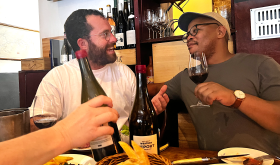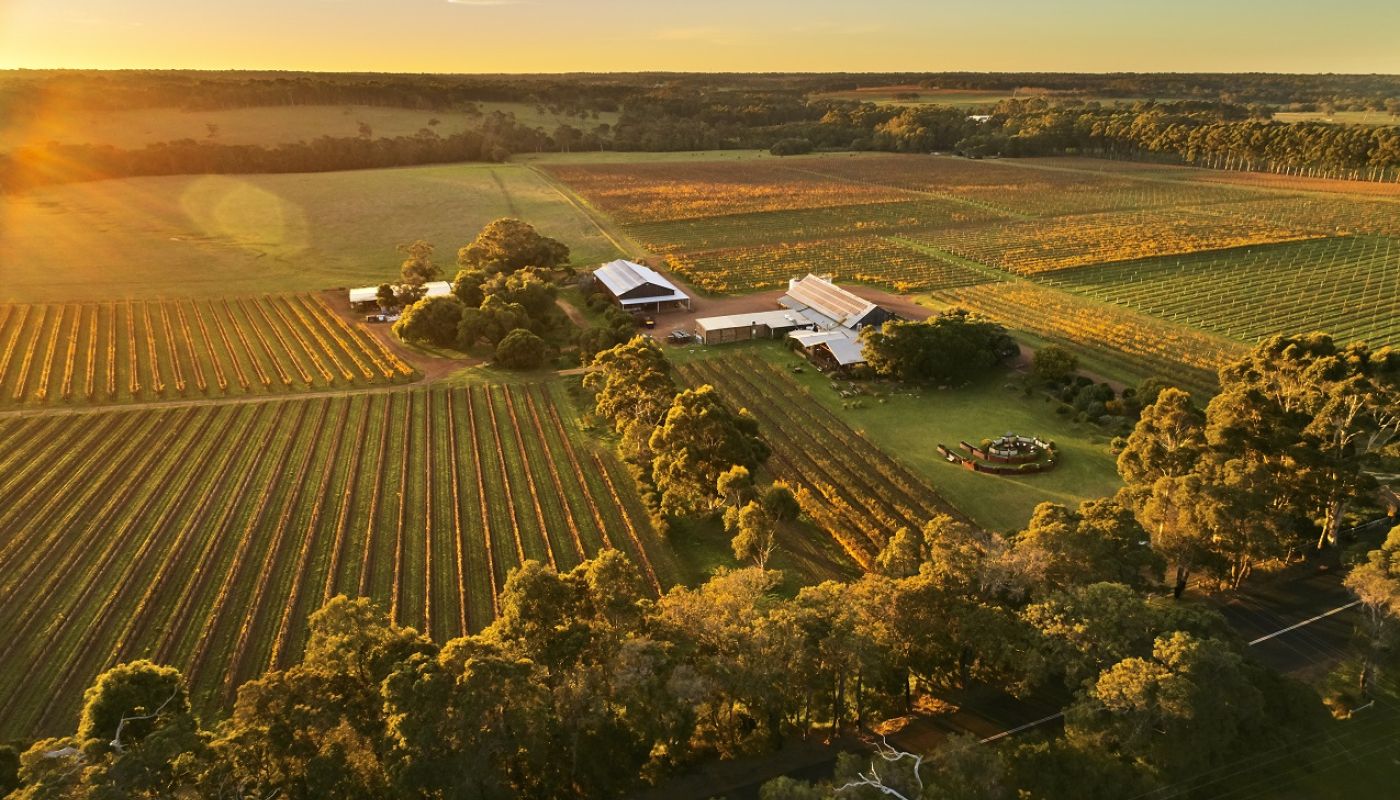
Many years ago I went on the trip of a lifetime with two of my best mates (they were both best men at my wedding a few years later … quick tip: don’t have two best men … double trouble!) to Australia. We went for three weeks, flying to Sydney to stay with friends for a few days, heading down south for racing at the Melbourne Cup meeting, before spending a final week over in Perth and Western Australia. It was there that we agreed to spend a few nights down in the Margaret River … one of the most idyllic places on the face of the earth. As you drive down the coast, you have mile after mile of perfectly deserted surf beaches on your right, and on your left some of the most beautiful vineyards imaginable, making some of the finest wines in Australia, and I would venture in some cases, some of the finest in the world.
A morning on the beach would be followed by a visit to one of the magnificent wineries for a long and lazy lunch, sampling some of the latest wares from such names as Howard Park, Leeuwin Estate, Vasse Felix and of course, Cullen. It was a visit to the latter that really piqued my interest however.
You get a special feeling when you visit some wineries: a sort of sixth sense that you just know it’s run by special people, and that it is making special wine. Cullen had that atmosphere from the moment we entered its gates.
A quick visit to the website makes it clear there is a wealth of information about Cullen’s sustainability credentials, and very important they are too. But I wanted to get beneath the rather dry numbers and talk about people at Cullen, and the philosophy that drives them. Before I spoke to Vanya, I contacted Cullen’s UK importer, Liberty Wines, and spoke to Tim Tweedy, a senior member of the team there.
'We have been importing Vanya Cullen’s wines to the UK for nearly twenty years now and have always been hugely impressed by her passionate commitment to sustainability throughout the journey from grape to glass. Where she has led, others have followed.'
Vanya Cullen has been leading the way in sustainability in the Australian wine industry for many years, long before it became fashionable, and Cullen is a genuine global pioneer in sustainability practices. As soon as I became aware of this competition, I knew who I wanted to put forward, and contacted Vanya Cullen directly to set up a Zoom meeting (which only a few months ago would have meant nothing to the vast majority of us, now it feels like an everyday event ... how times have changed!)
I wanted to get a sense from Vanya of where this passion for sustainability came from:
'My passion came from the legacy of my parents, who came across from Tasmania where they had fought to try and save Lake Pedder (protestors against this controversial scheme included members of the world’s first ever green party). Mum’s mother, who was a suffragette and a nature photographer, instilled that in us as well about the beauty of nature in Tasmania. Then coming across here, they got the first environmental act to pass through Parliament, which prevented the mining of Bauxite along the coastline here and we all grew up with that legacy about the environment. Mum was always experimenting … using Hungarian shipmast locust trees for the vine posts, putting seaweed out … it was always a minimal chemical sort of feeling in our whole family really.'
How did your upbringing lead you to becoming one of Australia’s most celebrated winemakers?
'We had a very nature filled dream-like childhood really, so we came to have the farm and then the vineyard, going from minimal chemical inputs to organic and then to biodynamics has been a natural progression for us. We’re also interested in looking at indigenous seeds. They say that if the soil comes alive again you can get those seeds re-sprouting that have been there for thousands of years ... we haven’t seen that yet, but we’re always hopeful. We see it as an ongoing renewal of nature every year, that we’re privileged and blessed enough to be here in this time and place growing the wine in this way.'

In terms of numbers at the Cullen estate, they are mighty impressive: the level of carbon in the soils in the vineyards has been trending up over the last five years. And the combination of both offsetting their carbon footprint and the biodynamic and organic management has resulted in Cullen effectively becoming not merely carbon neutral, but carbon negative. Essentially, the biodynamic soil and plant health program that is being implemented by Cullen has been increasing the carbon content of the soil. This is atmospheric CO2 being taken up by the plant leaves and being deposited in the soil via the plant root systems.
9,043 tonnes CO2 equivalent has been sequestered in the 31 hectare Cullen Vineyard between 2015-2019, equating to approximately 1,808 tonnes CO2 equivalent per annum. Cullen wines gross carbon footprint for 2017/18 was 1,664 tonnes CO2 equivalents. Cullen wines is therefore carbon negative to the tune of around 144 tonnes.
Vanya takes up the story again:
'We started our carbon neutral program back in 2006. We joined Men of Trees and offset our carbon footprint by having trees planted in biodiversity corridors in Western Australia, but it wasn’t a complete program so we went to NOCO2 in Sydney and offset by buying low voltage light bulbs and then the Men of Trees reformed as Carbon Neutral in Western Australia and we felt that was more relevant to us. They always said the vineyard was carbon neutral … we felt maybe it was a more positive situation. So since 2007 we’ve been investing AU$25,000 a year into our carbon emissions program which is a lot for a small company to invest but we felt it was important to make that ethical commitment to the climate ... what we’ve found is we actually have something like AU$100,000 worth of carbon credits! Carbon Neutral has never had anyone that was positive in this way so they are still trying to work out how to certify us ... It is a lot of hard work and a lot of investment and a long term strategy too. Organics and biodynamics is about long term strategy and commitment financially and emotionally and then you have these wonderful rewards ... because the Earth is always giving ... it never questions it always gives back you know?'
Vanya acknowledged a brief period when she and the team got a little over excited about their sustainability credentials, giving them more emphasis in marketing terms than the original quality wine message … sales dropped.
'We did get people side-swiping us saying “Oh they’re just the little biodynamic people, we make the best wine”.' That lesson has been well and truly learned, and Cullen is now winning awards again (most recently Vanya was named as Winemaker of the Year at the prestigious 2020 Halliday Wine Companion Awards) not just for its commitment to the sustainability cause, but for its world class Cabernet Sauvignon/Merlot blend and Chardonnay (named respectively after Vanya’s mum and dad).
Vanya is also quick to acknowledge that any success is down to a 'huge team effort for everyone at Cullen that puts in so much and cares so much about making quality wine in this way.'
Perhaps the ultimate test of sustainability though is how the new custodians of the land interact with the original indigenous population. Vanya agrees:
'I always like to acknowledge the Wardandi people, the traditional custodians, with anything I’m looking to do … We talk about next year as 50 years of sustainability at Cullen (Vanya’s parents planted the first vines in 1971), but it’s a little bit humbling when you compare it to 50,000 years of sustainable indigenous land care. I’m definitely interested in learning more about those cultures that have operated so successfully for such a long period of time. I think it’s a really great time – particularly with what’s going on in the world right now – to look back at how people looked after the world for such a long period of time and how have we stuffed it up in such a short period of time … I think that needs to be reviewed!'
And maybe – amongst all the talk of carbon offsetting and environmental certifications – that is the crux of the matter: being humble enough to learn the lessons of history, and apply them to the benefit of all of us.