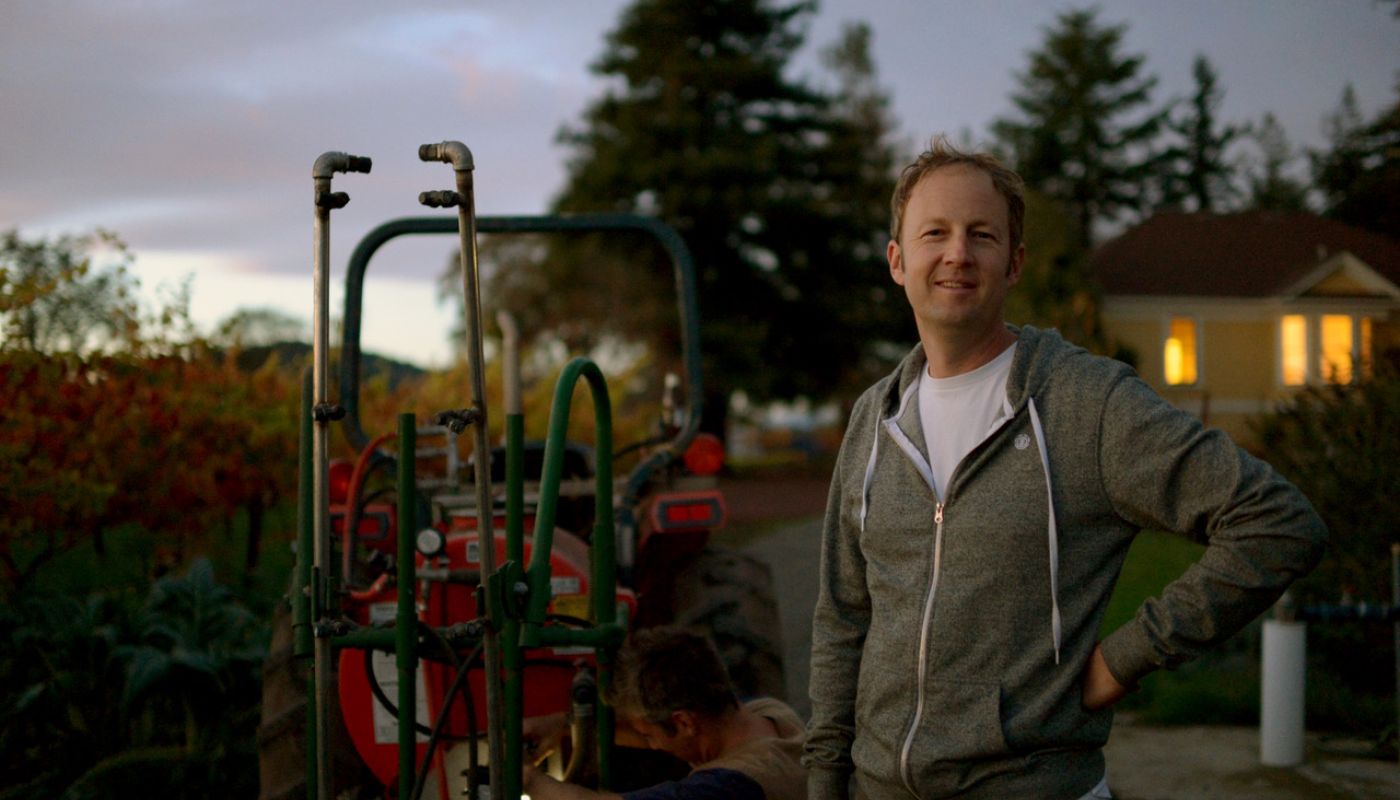
Steve and Jill Matthiasson are two of my sustainability heroes.
Since day one, a cornerstone of Matthiasson – not just as a physical winery and collection of vineyards – but as a business, has been to first identify, and then to striving to adhere to, the most holistic approach feasible in order to make consistently great wine.
Like ‘sustainability,’ ‘holistic’ can denote ecological environment, individual or collective humanity, or a bird’s eye assessment of processes that shape a successful organization, in order to ensure that all stakeholders are considered. Whatever one’s definition of either word, Steve and Jill Matthiasson, since the 2003 founding of their winery – have not only practiced viticulture and enology in a style that made them one of the earliest proponents of ‘new California winemaking,’ but demonstrated their understanding that the human component of winemaking extends far beyond the winemaker.
Steve’s notoriety as one of the United States’ intuitive American viticulturalists and most sought-after vineyard managers speaks to his continued forward momentum of working cleanly in his vineyards and encouraging others to do the same.
When he visits markets across the world, the presentation he’s most eager to give certainly touches on conversations of cover crops and to till or not to till, but they overwhelmingly include talk of the way he and his wife Jill, take care of and value their people, as business owners. I’ve witnessed him speak so passionately on this subject that he occasionally runs over time during these seminars and doesn’t leave himself time to speak to his wines, poured in front of his attendees. Before sharing his email address with the group, I’ve heard him say, ‘You’re all wine professionals, I’m happy to answer any questions about these wines, but you have a lot of information in front of you and you don’t need me to walk you through the way the wines taste. I’m here to talk about the important stuff.’
COVID has been a game-changer and offered defining moments where spotlights can and should be shined on the way business managers value (or do not value) their employees. While the Matthiassons are being just as smart as any sensible employer during COVID, doing things like implementing social distancing and providing personal protective equipment for their staff, they’ve taken it several steps further (in a time when cash on hand is extremely minimal, due to temporary global closure of many of their top restaurant accounts) to show real leadership. Their staff is required to use a self-check app to regularly track and monitor their well-being and they have hired a special work place safety check individual to maintain best health practices as they begin harvest.
But realizing the need to care for their people isn’t a realization that was brought on by COVID. The family’s commitment to their employees includes longtime benefits seldom presented to America’s vineyard and winery workers. For many years, they’ve offered ongoing training opportunities for personal and professional development, such as English as a Second Language (ESOL) classes, viticulture classes, chemistry classes for cellar employees, computer proficiency classes, and Spanish classes. Their employee benefits include 100% health coverage for employees and 50% for dependents. Additionally, they offer flexible schedules to afford some of their workers with children the opportunity to pick up or drop off their children at school or to another caretaker.
For an independent first generation farming family who’s nearly lost their own home due to the financial commitments of owning a small business, one could argue the decision to commit to their people to this degree is clearly rooted in a moral commitment, not reconciling the aforementioned benefits to the business’s P&L. But Steve and Jill would tell you that in order to play the long game necessary to run an agricultural business well, investing in your team from the beginning makes the most sense. Many of their full-time employees have been with them for more than a decade, so it’s a pretty proven theory.
It’s said that only after taking care of yourself (and in this case your team), you can then take care of others, and Matthiasson’s community involvement shows both the importance of giving back and an understanding that operating a business doesn’t happen in a bubble or vacuum. They are a regular contributor to the Napa Valley Farmworker Foundation, have donated $35,000 to the Napa Community Foundation for their Earthquake Relief Fund (in 2015) and $53,000 this year to the Independent Restaurant Coalition to assist COVID-unemployed sommeliers such as myself, and give to the Immigration Institute of the Bay Area (which provides pro-bono attorneys for those in need of a pathway to citizenship).
Beyond giving back with their treasure, Steve personally tries to live as the change he wants to see in the world, lending his time and talent by mentoring a Black vineyard manager and teaching organic viticulture to the Viticulture and Enology students at UC Davis, the alma mater at which he and Jill first met.
Before covering their altruistic efforts, I alluded earlier to Matthiasson’s noteworthy commitment to sustainability in their vineyards and winery. But talk is cheap and greenwashing plentiful, so I’d be remiss if I didn’t touch on what specifically solidifies sustainability at Matthiasson.
They’ve committed to being one of the early adapters of a new electric tractor developed by Carlo Mondavi – Robert Mondavi Jr.’s grandson – which should be available to them for beta testing in 2021. Currently all of their power is electric and it comes from 100% renewable ‘Deep Green’ sources (https://www.mcecleanenergy.org). All of their buildings are insulated to high R values. They recycle everything they possibly can and use their organic winery waste, such as pumice, for compost. They use low weight bottles that are made from 100% recycled materials and produced in California using natural gas or renewable power. Wine shippers are all in recyclable cardboard boxes (not Styrofoam), and all glass bottles are packed in their original boxes. Sustainability has to be considered at all points in the supply chain.
All Matthiasson vineyards are either certified or transition organic, and use very minimal amounts of water and off-farm inputs. They’ve planted cover crops and hedgerows of native plants on many properties to promote carbon sequestration in the soil, to prevent soil erosion, and to provide a habitat for beneficial insects other wildlife. All vineyards have no-till, deep rooted grasses, which serve similar purposes. All of their vines are tied with biodegradable hemp twine instead of plastic, and they avoid the use of plastic whenever they can (and use no plastic in the vineyards at all). All prunings and other removed vines are chipped and returned to the soil, not burned. Finally, they will be partnering on an exciting new project offering part of their land to Native Americans to grow native medicinal plants.
They are Certified Organic by the California Certified Organic Farmers (CCOF) and practice Certified Fish Friendly Farming, in accordance with the California Land Stewardship Institute.
At one of the first seminars where I heard Steve speak a few years back, he not only spoke of where Matthiasson was succeeding as a sustainable wine brand, but of where they were still aiming to improve. When invited to participate in RAW a few years ago, Steve politely declined, saying that at that time, not all of his wines fit all of the requirements for participation in the fair. Matthiasson now qualifies for participation in RAW Wine Fair. When a high-profile (now Master Sommelier) showed interest in purchasing his wines for her restaurant list, he highlighted the few dogmas to which he didn’t adhere that might preclude him from being part of her program (this has changed since and she now purchases the wines). Transparency and honesty is the best marketing.
When we buy a bottle of wine – in a retail shop, from a restaurant wine list, or as wholesale wine buyers, are we asking the right questions? pH and acidity may be important to know about a wine, but isn’t the quality of life of those who made it more important?
















