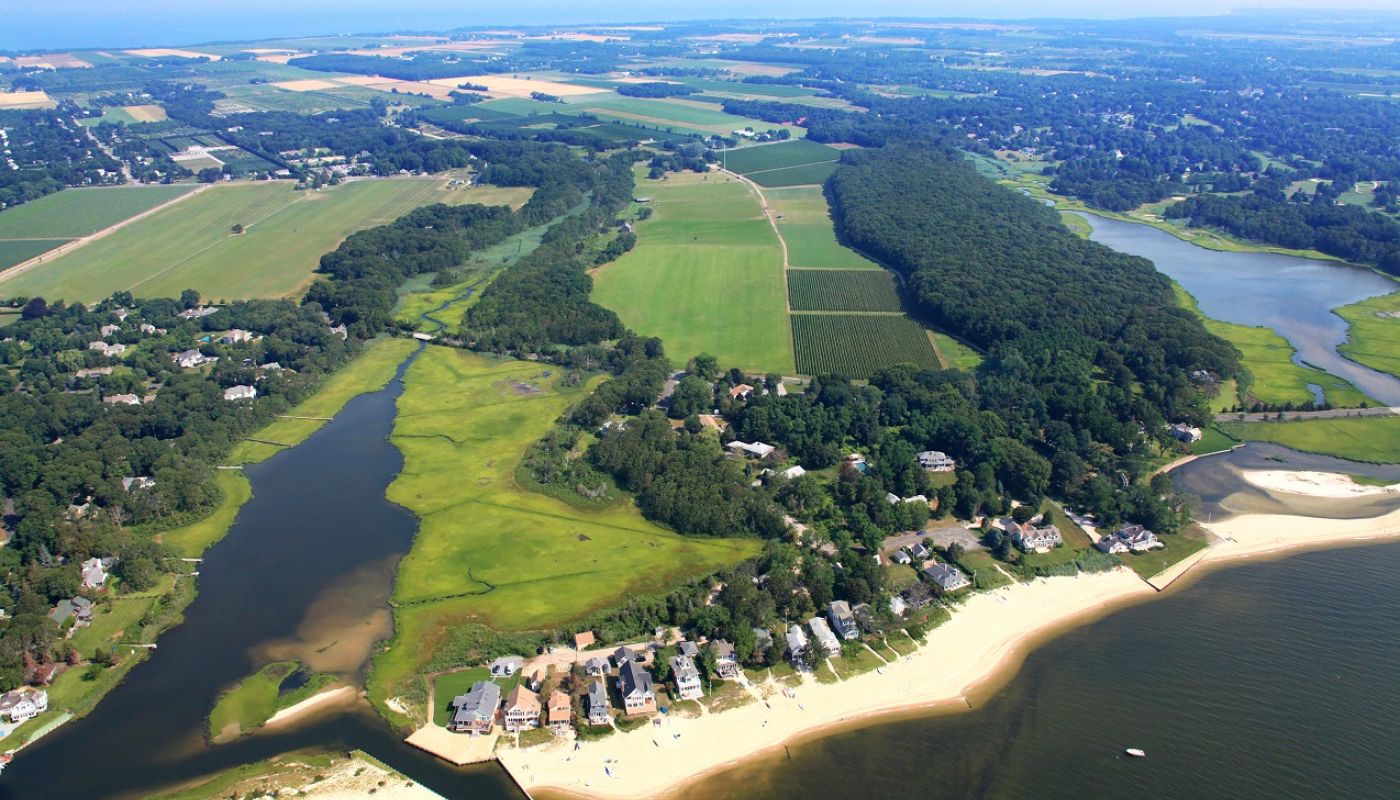
Located about 85 miles east of Manhattan, past the strip malls and split-level homes that checker the sidelines of the Long Island Expressway as it makes its way through the suburbs of New York City and onward to the eastern edges of Suffolk County, is McCall Wines, producers of some of the most esteemed wines in the region and a local leader in sustainability. While many associate the eastern portion of the island with the renowned exclusivity of the Hamptons, things are a bit quieter on the North Fork, known for its relative repose in contrast to the rarefied, tony lifestyle of their neighbors to the south. There are occasional party buses that come through to some of the nearby wineries on the weekends, and in the fall it’s common for city dwellers to trek ‘out east’ for a day or two of picking apples and pumpkins with their families at the region’s roadside orchards and patches. McCall Wines and their Corchaug Estate reside discreetly along the south side of Main Road in the hamlet of Cutchogue, largely made noticeable by the wind turbine that has provided their farm with clean wind energy since 2010.
‘Our business began as an initiative to preserve and protect the historic agricultural land and waterfront forests of our town from the threat of development,’ notes Brewster McCall, co-owner of McCall Wines, alongside his father, Russ, who is the winery’s founder. ‘Our family has been living beside the same farms and wetlands for generations and we feel a deep sense of stewardship for the environment around us. With the particular threat of development in the last decades, it’s more important than ever to save what’s possible and demonstrate to our community the vital function of farms and environmentalism in our local culture and economy. The nearby Hamptons are a cautionary tale of overdevelopment. Once farmland and forest is gone, it never comes back.’

Before purchasing his vineyards and founding his namesake winery, Russ McCall grew up in Connecticut, summering in Cutchogue and attending university in Atlanta, Georgia, opening a small cheese shop there after graduation in the 1960s. The shop had a focus on artisanal varieties, which was relatively rare in the United States at the time, eventually transitioning to a wholesale operation, distributing cheese, gourmet foods and fine wine, offering his expertly curated selection to area hotels and restaurants – with exclusives on some of the world’s most revered wines sold in Georgia and South Carolina. Long dreaming of a vineyard up north on Long Island, after nearly four decades in distribution, Russ originally purchased the Corchaug Estate property in the mid-’90s, when he joined forces with the Peconic Land Trust to save the farmland adjacent to his family’s longtime summer home. The land was under threat of development, with the previous owner having commercial designs on building over 80 waterfront condominiums in the farmland and woods near the McCall’s historic family home.
When Russ bought this land in 1997, he sold the development rights to the state and created a huge wildlife preserve in the woods along the estuary, and the town received an adjacent parcel which has walking trails open to the public. Later, in 2001, he rescued an additional 47 acres and gifted it to the Peconic Land Trust, enabling the organization to keep the original farmhouse for their North Fork Stewardship Center as a token of their shared commitment.
‘We have just over 30 acres in vines, but the farm is over 150 acres. The original purchase included a 51 acre nature creekside preserve, adjacent to vineyards, in conjunction with the town of Southold who also received acreage next to the parcel – but stopped the town from developing their piece into baseball diamond and playgrounds as they initially intended, (and) we required they keep the land wild with walking paths for the community,’ Brewster recalls. The family also realized that their investment in a sustainable future for this property required fiscal sustainability as well. ‘We planted and grew grapes for 10 years before moving into winemaking, ensuring the company carried no debt from the original purchase and planting, and ensuring quality of mature grape vines.’
McCall enlisted veteran viticulturist Steve Mudd to plant the first vines on the Corchaug Estate, with a special interest in growing Merlot and Pinot Noir, with Mudd advising over the course of the decade that followed. Though these varieties were not common to the area at the time, McCall was determined to produce the grape varieties that he loved most, and Mudd was tasked with traveling to Oregon in order to seek out Pinot clones that had potential to grow quality fruit from the pebbly loam soil on the southern reach of the estate; ten acres of Merlot were also planted in the clay-rich northern portion of the vineyard.
From the start, the McCalls shared a vision of crafting high-quality wine using sustainable, low-yield vineyard practices. 2007 was the first vintage that was bottled with the family name on the label. A potato barn was converted to a tasting room in 2010, a year that also saw the erection of the Corchaug Estate’s wind turbine and the introduction of Charolais cattle to the property. In 2011, the family purchased the nearby North Ridge vineyard, a uniquely quirky property with hilly reliefs and a large dry kettle hole found within a protected forest located in the center of the vines. Originally planted in 1983, the McCall team nurtured the existing but overgrown and neglected Cabernet Franc, Cabernet Sauvignon and Chardonnay of North Ridge, reviving the old vines for quality production, and eventually adding Petit Verdot, Syrah and Sauvignon Blanc to the site as well.
All of McCall’s wines are certified sustainable, audited annually by Long Island Sustainable Winegrowers (LISW), a Long Island-specific sustainable code and certifying body. The three primary tenets of sustainability – environmental stewardship, social equity, and economic viability – with rigorous standards for ‘best practices’ that LISW has fine-tuned over the course of over forty years, in the belief that ‘vineyards should work in harmony with our natural world leaving the land we steward in better condition than when we found it, building a community between vineyards, workers and the land.’
The LISW sets forth ‘a new way to look at sustainable agriculture that ensures we have clean water and air, a healthy workforce, healthy soils and healthy vines,’ pledging commitment to the following:
- To implement cultural practices and solve problems that reduce and minimize the use of chemicals and fertilizers, with the goal of protecting the farmer, the environment, and society at large.
- To encourage practices that promote and maintain high biological diversity in the whole vineyard.
- To maintain and conserve healthy and fertile soils to produce grapes for years to come
- To encourage practices that protect our maritime ecosystem and estuaries from runoff and leaching
- To create and maintain viticulture that is economically viable over time.
- To maintain the highest level of quality in our fruit production.
All cardboard and glass is recycled, and plastic is rarely, if ever, used. Grapes do not travel more than 7 miles to local facilities for sorting, fermentation, aging, bottling, or storage. McCall does not own their winemaking facility, instead working with their neighbors at One Woman Wines & Vineyards, also a certified sustainable family business, owned and operated by not one but two dynamic women, Gabriella Purita and her mother, Claudia. Sustainability has long been a way of life for Claudia, who grew up on a small family farm in Calabria.
McCall Wines was the first business to go wind-powered in the town of Southold and they have worked transparently with local officials to give them a ‘road map’ of sorts for allowing permits for more wind power throughout the community. In fact, the wind turbine at McCall has provided enough energy over the years that they have also been able to supply clean power to the Long Island Power Association.
McCall’s grass-fed beef is hormone-free and humanely raised on fields that have been following organic standards since 1998. Charolais, a historic breed of cattle originally from France, are free-range with optional shelter and never kept inside against their will. Pasture rotation ensures no exhausted grass or need to re-plant, and pastures are dragged to break up manure so that it fertilizes the grass. Field runoff, which is rare since the grass is healthy, goes into a pond on site, not into waterways or other properties. The cows are only fed McCall’s own organic hay, which is cut and stored for winter months, and conventional hay is never purchased. Occasionally they receive the spent malts (waste product) from local brewery Greenport Harbor Brewing Co. to feed to the cows as treats, and this is the only non-organic aspect of our beef operation.

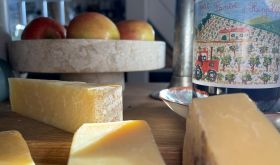
The McCall tasting room and new storage cellar were built partially underground to best insulate the concrete structures. New building projects only use high fly ash content concrete, LED lights, and there are plans underway to build a second wind turbine. The tasting room does not offer air conditioning, except for wine storage and in restrooms. Disposable plates, serveware and drinkware are very rarely used and typically only for events, and anything disposable is made of 100% biodegradable materials. Toilet paper for visitor restrooms is responsibly sourced. Cheese served in the tasting room are exclusively American artisanal products – no European or commodity cheeses – and they grow their own organic ‘victory garden’ for herbs and tomatoes to use on their cheese boards.
Community is at the heart of this family business, with a longtime staff that includes a farm manager that worked their way up to leading the vineyard, having initially started with the team over ten years ago. Team members are paid fair, competitive wages and all Department of Labor guidelines are followed, and they provide their team with all meals, drinks and snacks. McCall fully pays for any relevant education for leadership on their team – vineyard manager, livestock manager, tasting room manager – as well as language classes for those that are interested. They continue to work very closely with the Peconic Land Trust, and take any opportunities to support their work – in addition to gifting land for a stewardship center and selling development rights to farmland, McCall continues to host fundraising events and ensures no future building will ever happen on their 100+ acres as well as any new land acquisitions.
McCall continues to make the case for clean and finished wines that are made with an utmost respect for their local environment and community, leading by example with consistency, dedication and an eye towards the future. ‘People often are surprised by the quality of our Pinot and say they "would never guess" it's from Long Island,’ Brewster remarks. ‘I think overall we are still underestimated. To be fair though, Pinot is such a difficult wine to make well that I’m skeptical of most, too, so I welcome the opportunity to surprise or impress people when their guard is down.’
Worldwide, the 2020 vintage is presenting a unique set of circumstances, but Brewster and family are approaching it with their trademark blend of ingenuity, resourcefulness and good cheer. ‘We don't expect challenges due to COVID in the vineyard; outdoor picking with masks is relatively easy to do safely – and the sorting table at One Woman is outdoors and rather small, can be done with barebones team, same as their tank room and bottling line – the biggest impact I would predict are COVID-related delays on labels, glass, replacement parts for bottling line if needed,’ Brewster notes. A bright spot has been visitors to the Corchaug Estate. ‘People have been great this year. Willing to follow rules, engaged in what we have to share, open to education like never before. I think that people are craving an authentic and meaningful experience more than ever, and appreciative of what we have to offer. It’s been a challenge working during this pandemic, but the silver lining has been our guests.'
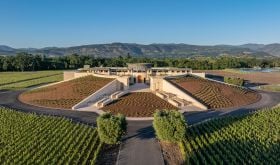
(The photo at the top of this article is an aerial view of the farm by Alex Ferrone.)