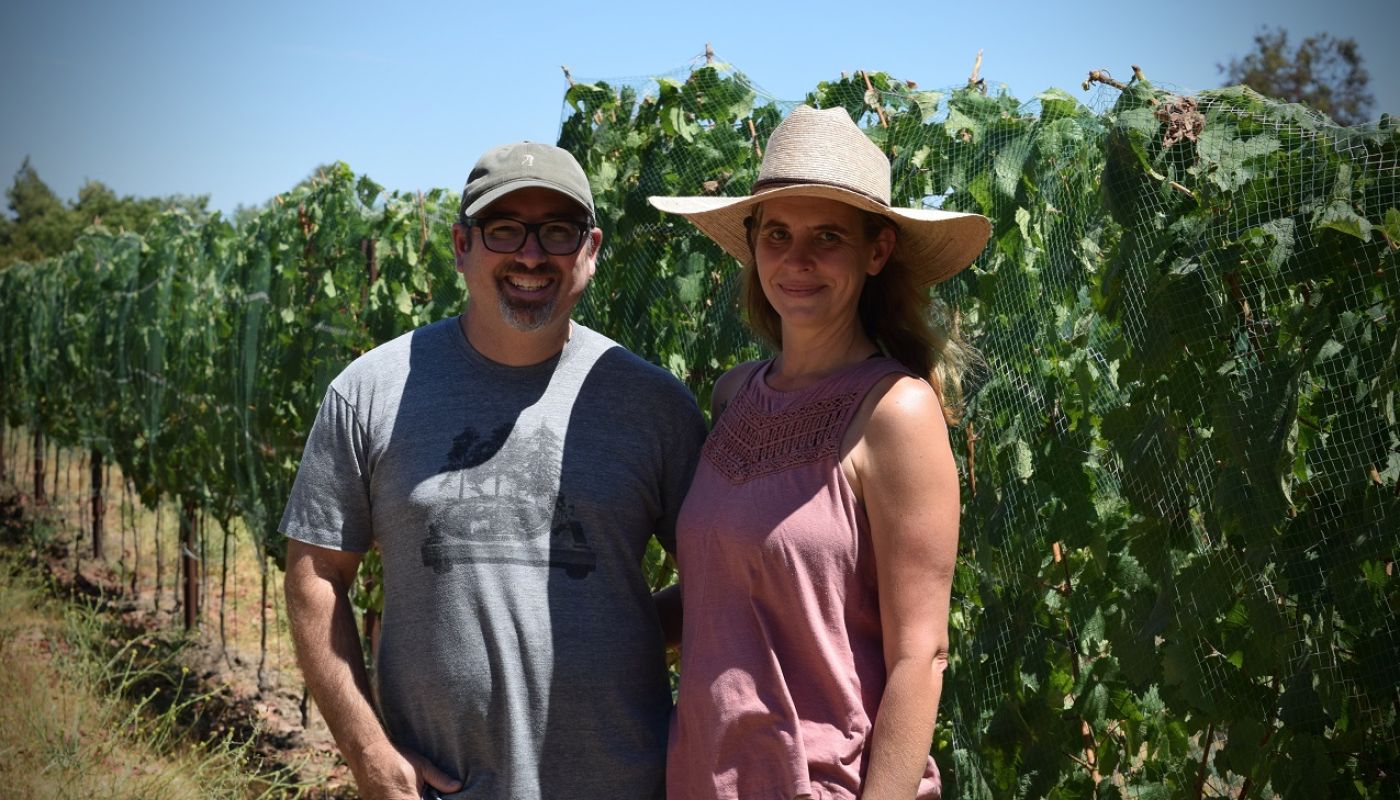
‘We manifest our life. That’s the whole quantum physics thing,’
Anna deLaski commented, in context, as she and her husband David deLaski, got philosophical about the climate crisis. When asked about their fears for the future, David proffered,
‘We are incredibly concerned. That’s why we are so dedicated to regenerative farming as one of the ways to help reverse climate change. Carbon sequestration is a huge part of regenerative farming.’
The deLaskis (pictured above) are the proprietors of Solminer, where they produce natural, organic and biodynamic wines in Los Olivos, California. They grow the great bulk of their own grapes on their farm, certified organic in 2014 and biodynamic in 2018. Owing to the dry climate of the Santa Ynez Valley, they spray very little just to keep the spore count down and only what is permissible by organic and biodynamic standards. Meaning an inert substance like oil, which doesn’t impact the beneficials notably. They actually received a letter from the organic certifying body last year, thanking them for spraying so little.
When you think of Santa Barbara County wines, is Blaufränkisch at the top of your list? Solminer makes one that should be. Then there is the Grüner Veltliner, zippy as ever. And the St. Laurent is not to be missed! There is no geographical confusion here. Solminer specializes in Austrian varieties. They have a meaningful connection. Anna grew up near the Wachau region and was accustomed to family Sunday afternoon walks in the vineyards and stopping for a glass of wine and a charcuterie board. It was that approachable spirit they aimed to capture with Solminer. David adds,
‘We want to create something for people. The wines mean a lot to us. We really love the wines that we make here.’
Solminer is a love story. Love of wine, of nature and connection to the earth. Sol like the sun and mining, like digging in the dirt. Cosmic and earthly forces meeting together in a glass. And the pair met under the full moon. It blossomed into a Farmers Almanac romance as they left their lives in the hubbub of Los Angeles in 2012 for a more pastoral setting to the north.
Anna and David started their winery with the pre-existing Syrah and then began grafting some of the Austrian varieties in 2013. They found inspiration in some Grüner Veltliner already growing there and wanted to contribute to the diversity of varieties in the area. After the Grüner Veltliner and Blaufränkisch both really took off, they found one grower in all of California with the beloved St. Laurent grape. Since then they have grafted some of their own and now have the distinction of being the producers of the ONLY organic St. Laurent in all of California.
‘The idea is that the whole farm is a living organism. It all has to work through a symbiosis. There is a certain level of communication between the bacteria in the ground relating to the fact that it actually came from an animal that lives here, that ate the grass that grew here.’
David says as he gestures towards a seemingly six foot high mountain of dung and hay, or the ‘poop lasagna’ as it were. A trademark of biodynamics. Since they acquired their vineyard in 2012, the soil has changed a lot. Some areas of the property had been super compacted with horses because there was no pasture. The ground had been totally grazed. They have worked to rehabilitate the land. They feed the soil a diverse cover crop and don’t till in between the vines at all. Instead a perennial cover crop that comes back every year that never gets turned under. That allows the fungal network to stay alive and do their job.
‘Weeds are just a judgement’ says Anna, ‘That is biodiversity too.’
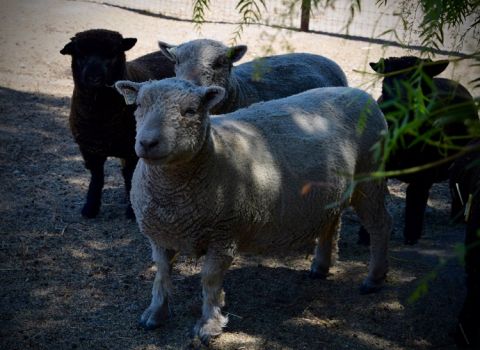
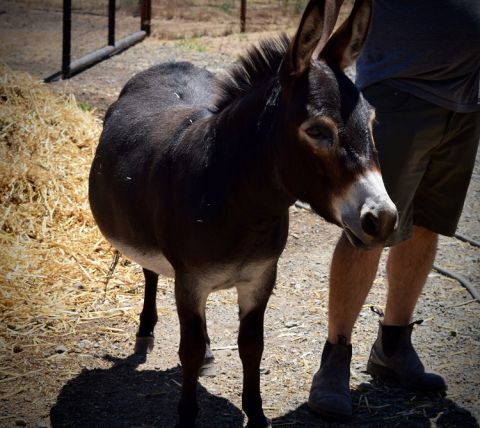
The adorable Babydoll sheep do their part to keep the growth in balance. The donkeys serve as a protective force from predators. The cats maintain the rodent population. The chickens contribute to soil health, keep insect populations in check and provide the family with farm fresh eggs! There are 5 bee colonies on the property, 4 in boxes and one hive. Pollinators on the farm signal the importance of biodiversity and the deLaskis create ‘insectaries’ or planting areas with native and climate appropriate plants that provide a home for beneficial insects and birds. And there is an exuberant dog who makes it her business to know who is coming and going at all times. It is a working farm and all have a job to do.
Winemaking is farming first. Solminer makes natural wine. And natural winemaking decidedly starts in the vineyard. Though there are no written standards or certifying bodies, the universally understood step one of natural winemaking is organic farming at minimum and more aspirationally, biodynamic. The farming practices initiate the entire process. To be considered and accepted as a natural wine, this is a must. How was the earth treated in pursuit of the grapes? The deLaskis are admittedly not classically trained in winemaking. They were fortunate to have a mentor who happened to be making natural wine. David explains their approach,
‘How little can you get away with here and still have something really good? Filtration changes the flavor of wine. Any time you do anything to the wine, it is a conscious decision that alters the flavor.’
To the delight of natural wine aficionados everywhere, Solminer does some styling of some of their wine. They make a few different skin contact whites, a carbonic syrah and the oh so exuberant rosé Pétillant Naturel. They also present some clean and classic wines, fermented on native yeast that showcase the manner in which the grapes were farmed.
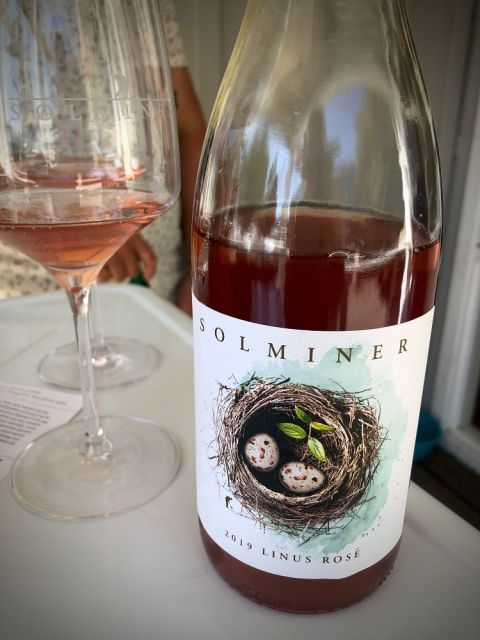
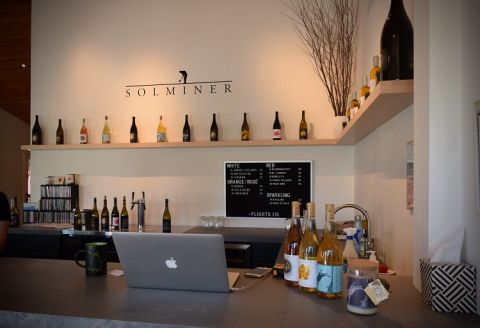
When the pandemic hit, like many small wineries, Solminer had to pivot. They are a lean team, with just three other employees besides themselves, producing around 2,000 cases annually.They operate a small tasting room in Los Olivos, just a half mile from the farm. Obviously beholden to all of the state mandates permitting operations, they are presently open for outdoor tasting. Upon discovering that their shipper was using styrofoam, they began shipping in house. They ship with pulp and ice packs, when needed, or delay shipping until cooler days cycle through. They intentionally use lighter and thinner glass bottles, with less of a punt to decrease the weight. They employ a variety of closures, including a recyclable crown cap for the pét-nat.
The wine is actually made in a processing facility in Buellton, a mere ten minutes away. As of last year, it is their space only. The certifications in the winery are all about keeping the organic and biodynamic grapes segregated from the non. This entails stringent cleaning protocols so there is no residue in the tanks. Winemaking involves water usage mostly in the winery. The deLaskis collect rainwater that is utilized for biodynamic preparations sprayed in the vineyard and for a bit of watering of the orchard. They also return water containing grape juice, lees or wine in the winery to the vineyard and put it in their compost. They monitor soil moisture and only water when necessary to keep the vines healthy.
With all of the widespread systems transformation occurring in the world, Anna remains optimistic about farming,
‘And now with discussions of systemic change, like with Black Lives Matter for example, we need that in the agricultural world also. With this COVID crisis we have to ask, what if this is the time that allows us to transform how we grow food? We are super passionate about that.’
The process of tilling the earth in agriculture is believed to be a significant contributor to the climate crisis. If that practice can be altered as a systemic change, there is potential for a profound effect on the planet. David reminds us that regenerative farming can be done on a large scale in a sustainable way,
‘It's important to start to look at biodynamics as a subset of regenerative agriculture. And start to look at some of the operations that are not specifically biodynamic but the regenerative practices have as much potential to save us all from catastrophe as biodynamic. Big players are trying to incentivize farmers to adopt the regenerative agriculture standards. Not that we are leaving it up to the big companies but it is a step that can make real impactful change.’
The deLaskis view sustainability as a journey to heal the earth. They are committed to evolving in their practices as they learn and grow into their identity as farmers and winemakers. Energized by the promise of the forthcoming Regenerative Organic Standard, currently in a pilot phase, this new certification will take into account soil health, animal welfare and social justice more holistically, including the treatment of human beings. The mission is congruent with the values of Solminer and what they have both created and manifested. And then there is that rustic image conjured by Anna, of families leisurely strolling alongside grapevines, stopping for refreshments, savoring and celebrating life.