Although it seems that this year sustainability has been ungraciously upstaged by COVID-19 on the global agenda, the pandemic has disrupted the norm to such an extent that it has provided both the opportunity and the urgency needed to make fundamental changes necessary for the future health of our planet.
An expression we use to describe the clarity of our eyesight – ‘20/20 vision’ has the potential to better reflect the particular shift in focus that has been motivated by the world-wide effect of COVID-19. The sense of the phrase could now refer to a type of awareness that extends it’s reach beyond the limitations of our eyesight. ‘2020 vision’ might signify the year in which our collective field of vision zoomed into the processes of microscopic organisms and witnessed how they were capable of altering life on a global scale.
Despite the impossibility of seeing microbes with the naked eye, with wine we can detect their effects on the nose and palate. Whether that is as a wine fault such as musty cork taint and vinegary acetobacter or the more desirable flavour influences such as buttery malolactic fermentation and biscuity yeast autolysis. It’s also the action of the yeast microbe Saccharomyces Cerevisiae that is responsible for the existence of wine entirely. It is this species of yeast that converts the sugar in grape must into by-products of alcohol and carbon dioxide. Yet throughout the eight-thousand-year history of winemaking it wasn’t until the early twentieth century that we understood the cause of spontaneous fermentation was wild yeasts usually found on the skin of grapes or in the surrounding air. I think it’s reasonable to admit that nature knew how to make wine long before we did and once we discovered how to manipulate wine to suit not only our taste but also our profit margins, it came at the expense of the natural environment.
A wine producer willing to surrender control back to nature is Tillingham Wines, located near Rye in East Sussex. Tillingham’s co-founder and winemaker, Ben Walgate has been carefully cultivating a philosophy of grape growing and farming that invests in the microbiome of the earth beneath the vines which benefits the biodiversity of the farm and the surrounding landscape. Walgate’s holistic approach involves ploughing deep into the ancient roots of agricultural and viticultural history to discover timeless wisdom, combining this with modern, scientific knowledge and techniques to create a sustainable system of quality wine production. His method involves a combination of biodynamic and regenerative agriculture practices both of which aim to reverse the damaging effects that intensive, industrial farming conventions have had on the health of the soil and the environment. Both of these practices begin with the foundation of organic farming which eliminates the use of chemical fertilisers, herbicides and pesticides.
He explains: ‘Regenerative farming is a relatively hot topic, I didn’t know it until recently, but this term absolutely nails what it is I have been working towards and inspired by since first being introduced to Biodynamics many moons ago. When people have asked me about our approach here, I’ve struggled to explain it easily, saying that it is an amalgamation of practices etc. In essence, regenerative agriculture is about repairing and rebuilding the soil and the wider farmed environment, in the knowledge that it is all connected, that there are both symbiotic and subtle connections between plants and animals on all levels. It isn’t just a way of farming though, it is also a way of life, about balance and respect.’
The aim of regenerative agriculture is to go beyond sustainability, by sequestering more CO2 back into the soil than the farming system emits into the atmosphere. This is achieved by reversing the damaging techniques of mass industrial farming which have depleted the soils of microbial life.
The influence of soil type on wine quality is commonly discussed however this is usually in terms of the geological material such as chalk, limestone, clay, or granite for example. We rarely talk about the living content of soils; earth worms, nematodes, protozoa, fungi and bacteria that feed on decaying organic plant material and recycle it into simpler molecules of minerals and nutrients that can be absorbed by the vines. This digested organic material, known as humus, is key to the strength of the soil structure; this structure maintains tiny air pockets between soil particles which increases the soils capacity to retain water but also aids the long-term storage of carbon in the soil.
One of the biodynamic preparations that Walgate is using to create a humus rich soil is known as cow horn manure or BD500 which he describes as ‘microbial dynamite.’ The preparation involves filling cows’ horns with fresh manure which are then buried in the ground over winter. Whilst in the ground the manure inside the horn ferments and transforms into a microbe rich material. The horns are then dug up after four months in the ground and the crumbly manure is diluted with water which can then be sprayed onto the soils.
This is just one of many methods employed at Tillingham, others include the use of cover crops between rows of vines that prevent soil erosion and supress invasive weeds, planting wildflower meadows to attract beneficial insects, agroforestry to provide habitats for wildlife and for the ability of trees to transfer and store atmospheric carbon into the soil. All these land management techniques combine to create a richly diverse ecosystem capable of sustainable production.
It’s refreshing that Walgate has chosen to plant over 20 different grape varieties at Tillingham, because currently almost 70% of English wine production is sparkling wine, and the majority of plantings are chardonnay and pinot noir. Climatically and geologically it makes sense to grow these grapes as the south east of England has similar climate and soils to Champagne. Despite the outstanding quality that English sparkling wine has so far achieved – in order to develop a more diverse and sustainable market in this country we need to develop our own unique style of English wine, rather than produce imitation Champagne.
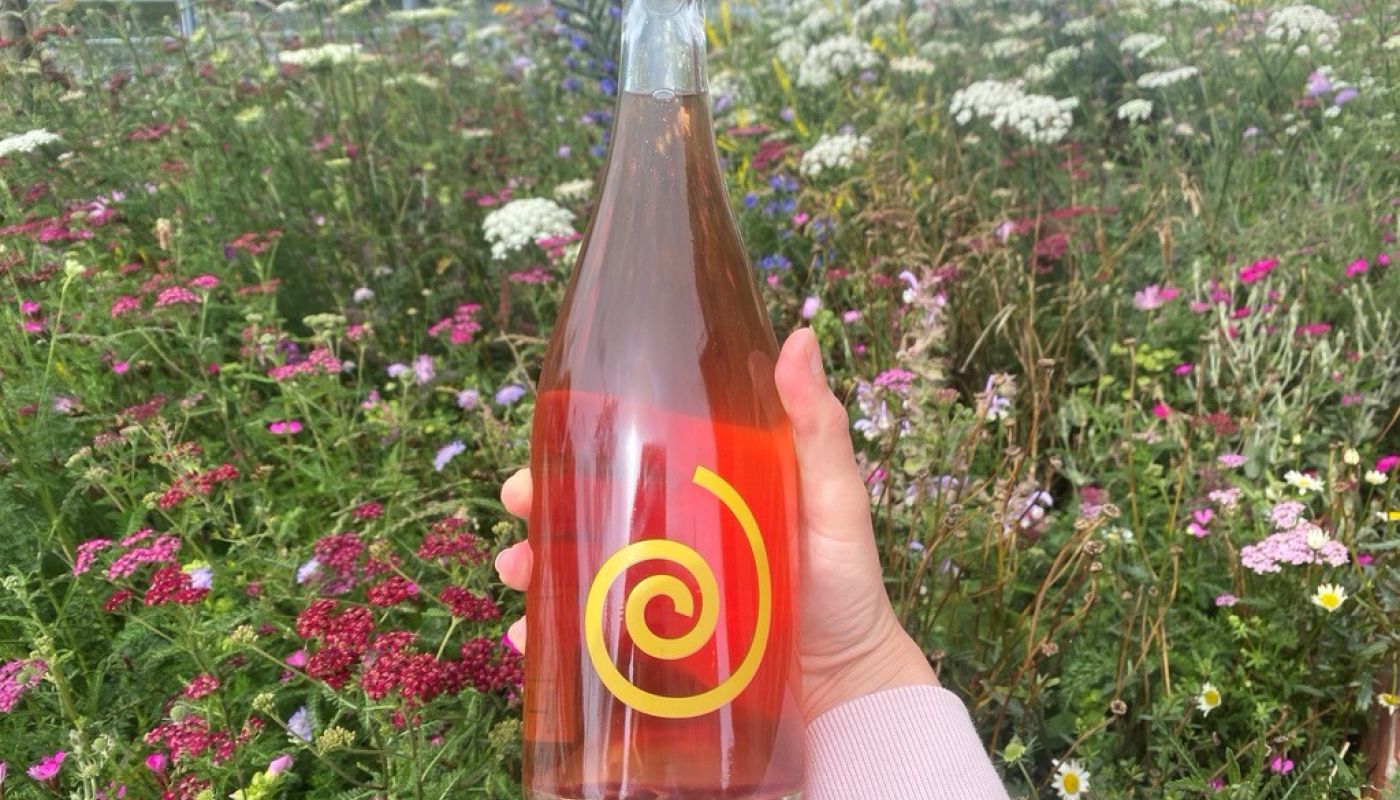
Tillingham is clearly keen to create its own identity, inspired by a strong sense of place. The numerous grape varieties that Walgate has to play with allows a multitude of options when it comes to blending, and given our country is renowned for unpredictable weather, this unpredictability can be fostered by flexibility of wine style. The winemaking processes that have so far been employed in the winery are similarly numerous, yet all are low-intervention techniques using spontaneous fermentation of wild yeasts, with either zero or minimal chemical additions to the wines. Letting nature lead the way in the winery can lead to some unexpected results or happy accidents. In the last three seasons he has used locally grown grapes that are either organic or biodynamic to experiment with techniques such as carbonic maceration, methode ancestrale, stainless steel, oak barrel and concrete vat fermentation as well as Georgian qvevri wines. This approach to winemaking, which resulted 17 different wines being released in 2019, resembles a sort of sketching out of ideas in draft before perfecting the most popular discoveries with Tillingham’s first harvest of grapes due this year. This creative strategy is reflected in the playful label design for each of the wines. Simple, colourful and – dare I say it? – highly instagramable graphics adorn the bottles and the designs are printed directly onto the glass, eliminating an unnecessary layer of packaging.
I should mention that whilst waiting for the 2020 vintage of grapes to come into play, Tillingham have expanded their business, the autumn of last year saw the opening of eleven bedrooms, that have been converted from an old hop barn, as well as a bar and restaurant for the use of guests and the general public alike. Not only is this a fantastic way of introducing people to the philosophy of Tillingham, but it creates a self-sufficient cycle where by the animals and vegetables, not to mention wines, produced on the farm supply the restaurant, and any subsequent waste is put back to work in the soil as compost.
It’s cheering to know that although presently our ability to travel is limited or we may wish to reduce our carbon footprint by flying less, we can enjoy wine tourism without needing to dig out our passports for the occasion. Let’s hope Tillingham’s passion for sustainable farming and wine production is contagiously spread by those who pay a visit.
It becomes clear as I ponder a hazy glass of Tillingham’s Col’18, an undisgorged, unfiltered, unfined sparkling wine, that the answer is suspended in the liquid, the debris of microbiological life that is usually discarded: we must embrace microbes, they are not merely vital for the creation of wine but also key to living sustainably. As I look forward to the release of Tillingham’s domaine wine I imagine that when I open the bottle I’ll raise a glass to 2020, an exceptionally unconventional vintage.
















