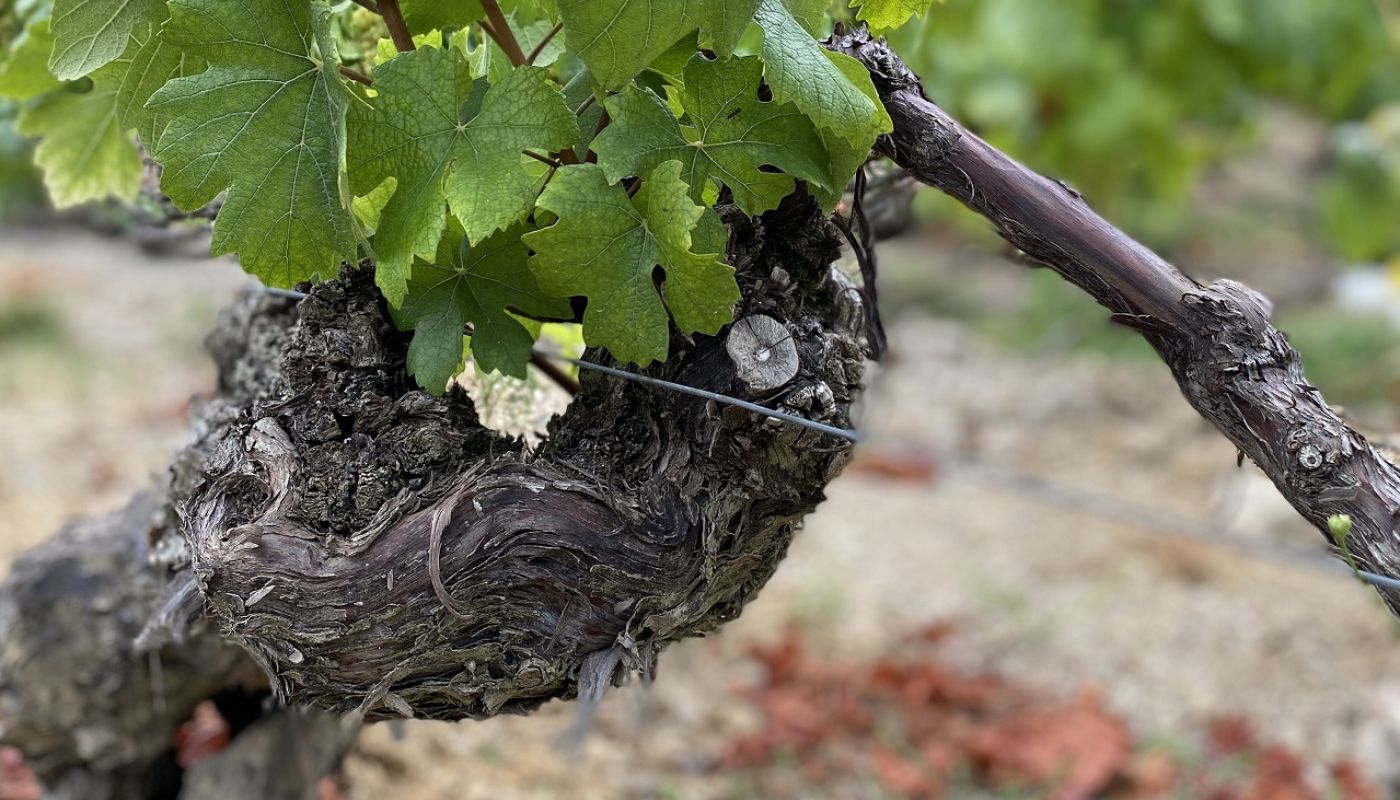
Champagne’s old vines – for the most part – aren’t really that old. Well, not when you compare them to places like Australia where some of the oldest vines in the Barossa are greater than 35 years and span more than 125.
Old vines, by Champagne’s standards, err more toward the younger end of this spectrum for the most part, often replaced after just 30 or 35 years. Phylloxera aside, there are a myriad of reasons why Champagne’s patchwork quilt of vineyards are decidedly more youthful. Commercially driven decisions around yield are perhaps the most convincing, but for some, there’s also a question of style and freshness – what makes champagne quintessentially champagne?
There’s no doubt that old vines can produce some superior fruit – concentrated and with considerable character. Roots go deeper and can draw on essential nutrients and water, so they stress less. And reduced vigour and foliage means better balance between fruit and vine.
But to what advantage for champagne? Especially if the preference is for more verve than voluptuousness for the sake of its effervescence, elegance and finesse.
Didier Gimonnet, third-generation grower and producer of Pierre Gimonnet et Fils located in Cuis, in the northern Côte des Blancs, has some of the region’s oldest parcels. His are classically structured wines reflecting the high-vibration of Champagne’s chalky heartland – racy, pure and precise – but also complex. Gimonnet’s old vines play a substantial role in boosting their quality.
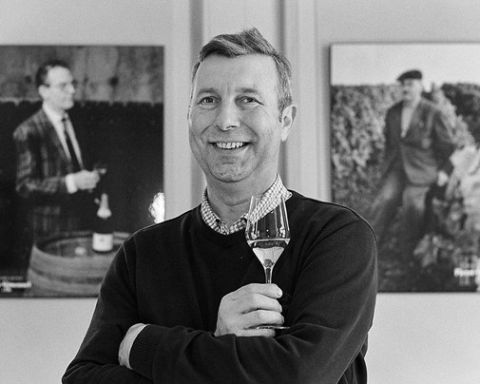
The domaine is privy to 29 coveted hectares belonging to Premier and Grand Cru terroir – Cuis, Chouilly, Cramant and Oger for the most part. More than 50 percent of Gimonnet’s vineyards are aged over 35 years and 80 percent of Grand Cru parcels are above 50 years.
So concentrated are some of the old vine wines that it becomes a question of balance, says Didier, who is unapologetically pro-blend and anti-mono terroir. It’s an affirmation that goes to the heart and soul of champagne as a wine from disparate terroirs to balance concentration with finesse and elegance. Gimonnet’s own bottlings emulate this sense of joie de vivre.
There are two historic parcels in the domaine that pre-date World War I, an anomaly in Champagne. Le Fond du Bateau, planted in 1911, and Buisson, in 1913, share an entire hectare between them of chardonnay, located in Grand Cru Cramant. They’re grafted onto American rootstock.
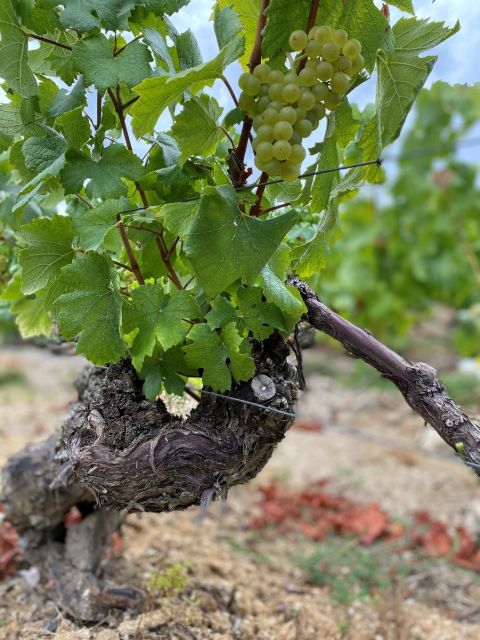
Le Fond du Bateau was bequeathed to Didier’s father when he married Mademoiselle Larmandier in 1958, a kind of dowry as was typical for the time.
“I remember my father saying that when he harvested the plot for the first time, he thought that it was not a gift because it was old vines! But when he tasted the juice, and also being from Cramant, it gave a quality that was really exceptional. My father thought, wow, I’m going to keep it and, of course, we have because the juice is so different.”
Surviving three generations, two World Wars, and the challenges of pests and diseases is not an easy thing to do in Champagne’s unforgiving northerly climate. So, it’s all the more miraculous there’s been no special treatment along the way to galvanise their resilience. If you ask Didier, it’s been largely thanks to standard agricultural management – the use of synthetic applications and the like – that was commonplace from the 1960s onwards. Organic methods preceded this time, but because roots are on chalky ground, it was more difficult to avoid damage to plants with the innate crushing activity of ploughing.
“My father didn’t plough and used herbicide and I’m sure that because of this, they [vines] survived. Today, we have no herbicide, so ploughing happens very delicately.”
More than fifty years on, Gimonnet’s centurial vines continue to produce something special. Both parcels are picked at a stoic 11.5 – 12 degrees potential alcohol and acidity is very good. Maturation is also faster between flowering and harvest, though yield is surprisingly generous. At 8,000 – 11,000kg per hectare it’s lower than the region’s average, but not at all tiny.
“It’s economical to have old vines with reasonable yield here [in the Côte des Blancs] because their roots reach the chalk with ease, so plants never stress or suffer like they can on sand or clay.”

Grafted vines on American rootstock generally need more time to express terroir than those from Vitis Vinifera rootstock, which is thought to facilitate more rapid transmission of terroir to fruit. In Champagne’s case, in the absence of pre-phylloxera vines, there’s no choice but to wait.
“We never fertilise a lot,” says Didier. “We prune to protect fruit and sometimes limit pruning to protect the plant. It’s not about making money but looking after the vineyard and having something very healthy for the long-term. My only interest is to have true expression of terroir and, for this, you need older vines.”
But not too old, he explains.
“Old vines from our domaine give an important concentration of Cramant - but it’s not the style of Cramant!” he says. “I prefer to blend wines from these very old vines with younger ones that are 40 years old.”
In Cramant, where the terroir has a fine texture and lovely balance, it produces easy to drink styles of champagne that display silky and airy elegance. But Le Fond du Bateau’s concentration outweighs this identity, which is why Didier is against producing single-vineyard champagnes from this plot and others with similar maturity.
With so much intensity, the juice from these older parcels is destined mostly for Special Club bottlings which sit at the premium end of Gimonnet’s range. Special Club blanc de blancs blends represent single villages – Cramant, Oger and Chouilly – but not single terroir. The balance is added in tiny amounts, across other champagnes, to increase quality overall. Incorporating the best elements in top cuvées but also to improve others – notably Fleuron, Gastronome and Rosé de Blancs – is their philosophical style. From a 50-hectoliter tank, around 25 – 30 percent is added to Special Club and 2-3 percent to everything else.
Blending the old with the not so old, even at just a few percent, results in a profound elaboration of Gimonnet’s wines, adding subtle richness and fruit nuances to soften rapier-like acidity and texture.

In front of Le Fond du Bateau there exists a much younger plot, planted in 1975. Same lieu-dit, same soil, but with a huge difference in juices which can only be attributed to age and massale selection. It gives something ‘exceptional’ says Didier who believes massale selection is the most important factor in sustaining healthy plants for the future. It supports the expression of the blend, according to Didier, who credits the handywork of his grandfather who initiated this traditional method of vineyard propagation.
Didier’s son, an oenologist who recently returned from studies in Burgundy, is carrying forward this good work, and the philosophy of Gimonnet, albeit with some new ideas. He’s been experimenting with oak, against a backdrop of Gimonnet’s relentless use of stainless steel, to produce Coteaux Champenois, but also the idea of adding 2-5 percent to champagne blends.
Coteaux Champenois is not altogether novel for Pierre Gimonnet. Until the 1960s, Gimonnet’s oldest vines had a less glamorous purpose. They were used by Didier’s grandfather, who started production in the 1920s, to make Coteaux Champenois, which went by the less-illustrious name of vin de nature. More than 50 percent of production was sold-off as still wine in barrels directly to restaurants or consumed as little more than grape juice.
“The perception of champagne is not what it was once ago. It was very difficult to survive just making champagne,” he says, referring to the period of time that followed the Great Depression of 1929.
When Didier started working at the domaine in the 1980s, they were still making wine without bubbles, but the philosophy was not the same as today.
“Now, if you want Coteaux Champenois it’s because of the high maturity of grapes. We’re experimenting because we think it’s time and, as a wine, it’s only just starting to find its true style. It’s not ‘still wine from Champagne’, but ‘still wine for still wine’. We don’t want the same character as champagne, we need to find more maturity and different vinification, so old vines are good for this.”
Vintage 2020, with its naturally ripe and high-quality yield, provided a good opportunity for Gimonnet’s modern-day foray into Coteaux Champenois. Le Fond du Bateau and Buisson will each make their way to market in late 2022 or early 2023. Didier plans on growing the range, adding a unique blend of these two terroirs with wine intended for Special Club Cramant, in a single bottling.
“I think we will continue doing experiments of Coteaux Champenois and develop the idea. My son has invested in more barrels so we can also add some to champagne production, but I would like to keep the purity of Gimonnet. In some of the experiments, it has shown something positive for the wines, still having minerality and saltiness but also something gentler.”
This year, Didier has added a small part of oak fermented wine to his champagne, Gastronome, which is intended for restaurants, because it’s creamier and well suited to food.
“I really am a man convinced that blending is historically the truth of champagne,” concludes Didier. “For me the difference between champagne and other sparklings is its elegance and finesse. Because of our northerly climate and very chalky soil, we make champagne [blended] for easy drinking - for pleasure and harmony.”
Under any other stewardship, especially the younger type, Gimonnet’s old vine repository would be bountiful fodder for single-terroir cuvées that are rich and full-bodied. But these examples elevate old vine value as a salient contributor to champagne’s classical profile – a blended wine – with the potential for still wine for still wine’s sake.
It’s all a matter of viewpoint.
The photos are provided by Sara Underdown.
















