Hills of Gold
Despite having all the prerequisites necessary for producing incredible wine, Lazio remains overshadowed by its more famous neighbor, Tuscany. Put bluntly, Lazio has not been blessed with a great enological reputation. Generally, in Italy, and even within Lazio, if you mention Lazio wines, the image that comes to mind is cheap carafe wine served in Roman osterias. However, thanks to a new wave of producers who are focused on quality and sustainable farming, this is slowly changing.
This change has been a long time coming. After WWII, Lazio’s wine culture became increasingly industrialized and focused on quantity, which meant planting high-yielding vineyards. In the 1960s and ’70s, it was common to rip up or replant old vineyards with international grapes like Chardonnay and Merlot, or high-yielding Trebbiano and Malvasia, despite the availability of a plethora of authochtonous varieties.
Scrolling through Instagram one day, I came across Aurete, a winery in southern Lazio, on the border with Campania. This word refers to gold, the golden color of the soil. The post showed a video of people pruning vines that had been originally planted in 1840. My husband is tired of me dragging him to obscure towns in Lazio to see vineyards, so I asked my friend Elizabeth to join me with my dog, Bellone. (He’s named after another autochthonous Lazio variety.)
As was the custom until phylloxera, most Lazio vineyards had different grape varieties within the same vineyard, but at Aurete’s Cariano vineyard there’s mostly Raspato Nero, some Cesanese, and another Laziale variety, Reale Bianco. Both are so rare that they’re not mentioned in Wine Grapes and seem to be localized to a small area between Mt. Cecubus and Mt. Falernus, which was famed in ancient times for the Roman wine known as Falernum. While there’s no way to know whether these were the grapes used for that historic wine, it’s fun to imagine ancient vignerons farming these grapes in the same area.
Esperia is a medieval hilltop town with pre-Roman roots. Archaeological evidence suggests the town existed as far back as the 4th century BCE and was populated by a people known as the Latins. It was a base for the Romans during the Samnite wars, which led the Romans to build the Via Latina, or the Latin Way, a consular road like the Appian Way. Viticulture had existed here long before the Romans conquered the area.
In 2016, three lifelong friends from Cassino– Eugenio Varone, Giovanni Vittiglio, and Paolo Ingino – decided to start a winery. They knew they wanted to make natural wine made with local varieties in their home region, so they started searching for sites where they could plant new vineyards. A winemaker friend told them to search near Esperia, where there was a long-established viticulture, an excellent microclimate, and unique soils.
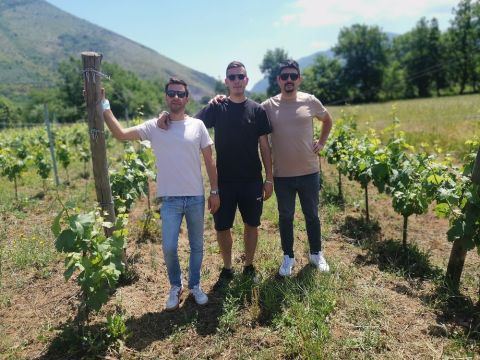
“We’re in a unique area between Mt.Falernus and Mt.Cecubus, and the sea is just over the hill,” explains Ingino. “So we’re situated in a very particular climatic zone because of the Arunci mountains, which were created by tectonic movement in Lazio and Abruzzo. It is an ancient land. Not far from the town, there’s a marked trail with fossilized dinosaur footprints.”
Unlike most of Lazio, this is not a volcanic zone. Instead, it features limestone karst topography. This is a boon because the area is hotter than most of Lazio, so the soils retain water well. Luckily, there’s also red clay topsoil that’s full of iron and other minerals that karst soils are usually deficient in. Varone, Vittiglio, and Ingino found the perfect location to grow grapes.
“There is a unique microclimate here,”says Ingino. “It rains very little, which causes stress in the vines, but underneath the red clay, which seems like the Australian Outback, there is water.” This is due to the karst, which retains moisture well. “And due to the area’s particular microzone and topography, there are autochthonous varieties that only grow here. There are about four specific to this microzone. We work with two in particular: a white grape called Reale Bianco and a red teinteriur variety called Raspato Nero.”
The three partners planted three new vineyards of Reale, Raspato Nero, and Syrah. They believe the terroir here is perfect for Syrah. They created the new vineyards with these unknown varieties using cuttings from the old vineyard through Massal Selection. Overall, there are about five hectares each of Raspato Nero and Reale Bianco in the area.
Visiting the ancient Cariano vineyard
The three men found these varieties by scouting the area and speaking with elders such as old farmers. In the 1960s and 1970s throughout Lazio, farmers began planting Trebbiano and Malvasia and ripped out native varieties in favor of new plantings with high yields, which brought in more money. Thankfully, a handful of farmers saved their old vines and were able to buy the Cariano vineyard, first planted in 1840.

That makes the Cariano vineyard older than the Republic of Italy. Ninety-five percent of it is Raspato Nero. There are also some Cesanese vines, a Lecinaro vine, and the white Reale Bianco. There are also a few unknown varieties. Before the industrialization of Lazio’s vineyards, mixed vineyards were typical of the area and widely spaced, which allowed farmers to grow other crops such as grain and vegetables. When Varone, Vittiglio, and Ingino bought Cariano, they restored it with the help of a local agronomist, Vincenzo Coppolo. During restoration they were able to replace the old pools with chestnut wood poles, which have a long tradition in Lazio. Their first wine from the vineyard was the 2020 vintage.

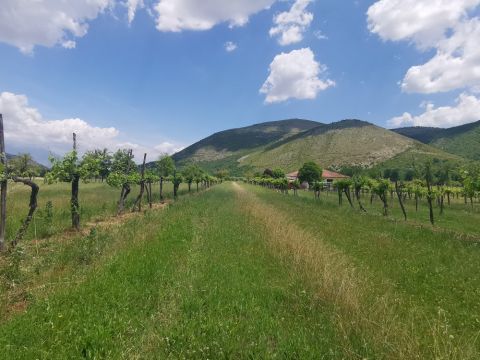
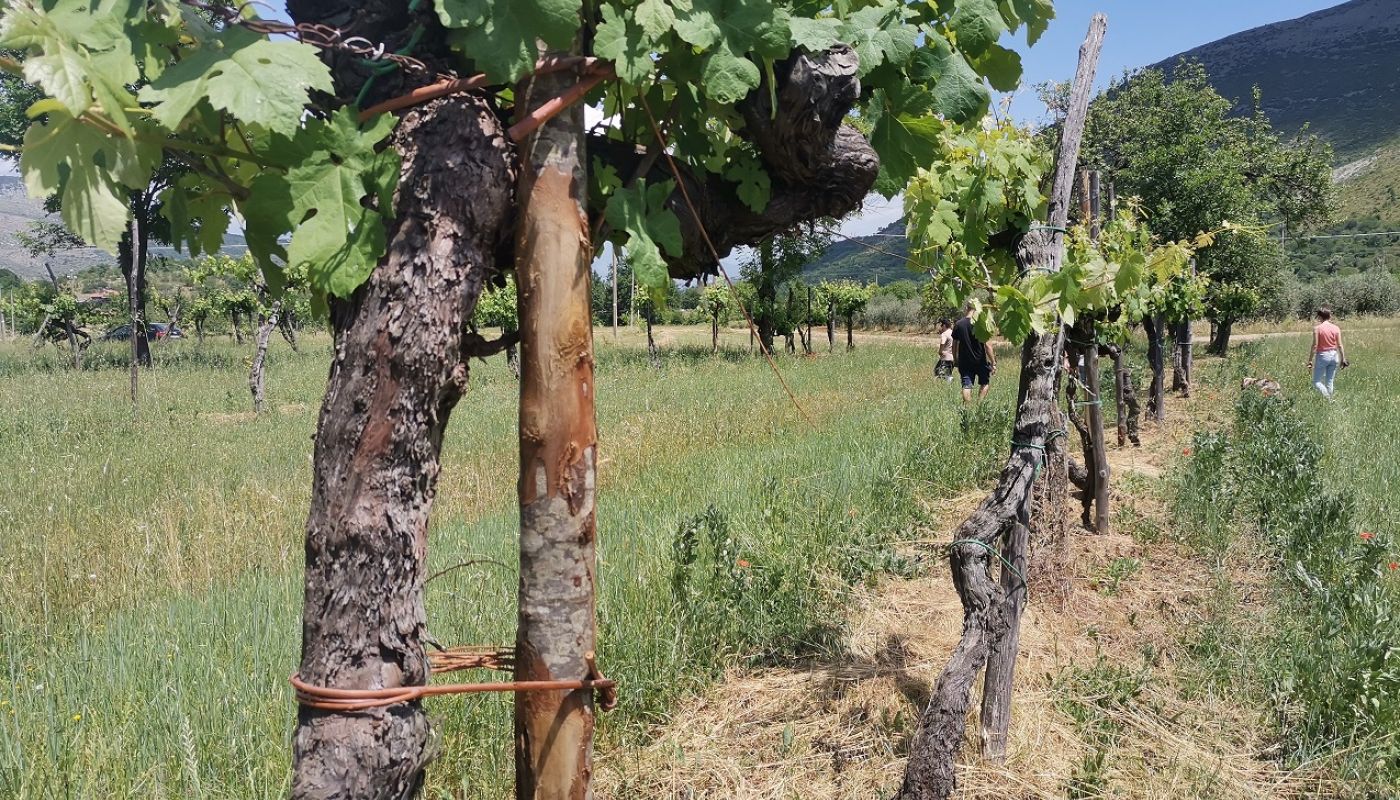
Today, they work biodynamically. Planted among the vines are different fruit trees that the vines cling to. This is a classic technique for trellising vines called Vite Maritata, which was used in the ancient Roman period and certainly through the Middle Ages. The tree and the vine are planted together, or “married”, which creates a symbiosis. This kind of farming was widespread throughout Italy until the 1900s. Most peasants had small plots of land, so they had to develop techniques that maximized production on what they had. Fruit trees provided the structure for the vines to climb up, as well as fruit to eat. The space between vines was used for other crops.
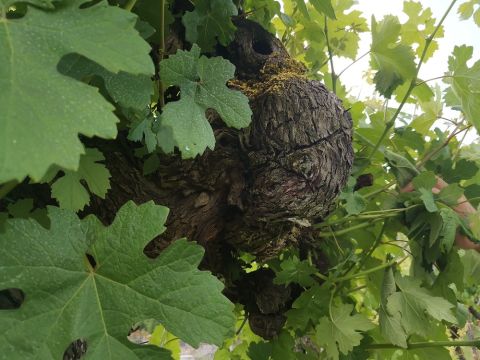
It’s a remarkable vineyard. Each vine seems to have its own personality. I imagine them like the Ents from Lord of the Rings or the Weirwoods of A Song of Ice and Fire. Their trunks twist and turn and are full of gnarls and knots. Some look like they have faces. I keep thinking that these vines are lucky to have such wonderful stewards. Varone, Vittiglio, and Ingino have a particular southern Italian charm. We’re guests here, and they’re attentive to us and our questions. By taking time to share their new and old vineyards and share conversation over lunch, they give us a better sense of who they are and therefore what they are trying to express through the wines.
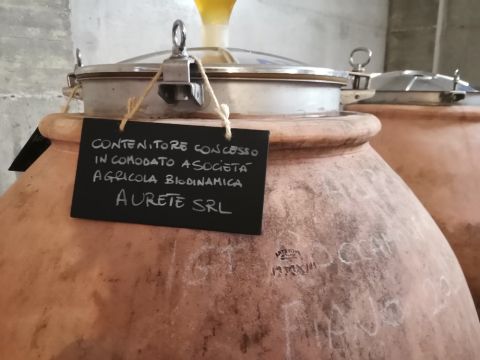
The men are building their own winery in situ, but for now they’re vinifying at a nearby winery called I Cacciagalli, just across the border in Campania. They decided to vinify exclusively in amphorae because they believe terracotta will help the wines express the terroir better. Terracotta vessels allow the wines to breathe and age perfectly.
As Elizabeth and I sip, we can taste how different old vines compare with wines made from newer ones. All the wines are clean and expressive, with a thread that connects them. I can only describe that thread as “Mediterranean”. I taste juniper berry in every wine. However, the wine from Cariano is special. The Raspato Nero from the young vineyard is lively and fresh. Maybe my mind is playing tricks on me, but this wine has youthful energy, whereas the red wine from the old vines is more complex and rounder. On the nose, it’s full of blackberries, cherry, juniper berry, a rich earthy aroma, and wet stones. Its medium body and structure are well balanced, the tannins are soft and easy, the acidity is perfect. It has a silky and round texture in the mouth and a long, saline finish.
It’s a beautiful experience to taste the wines with Varone, Vittiglio, and Ingino. Their wines reflect patience and attention to detail; you can taste that the grapes are perfect progeny that came from from healthy, happy vines. I can’t wait to see this wine on the market in 2022.
The photos are provided by Sarah May Grunwald.