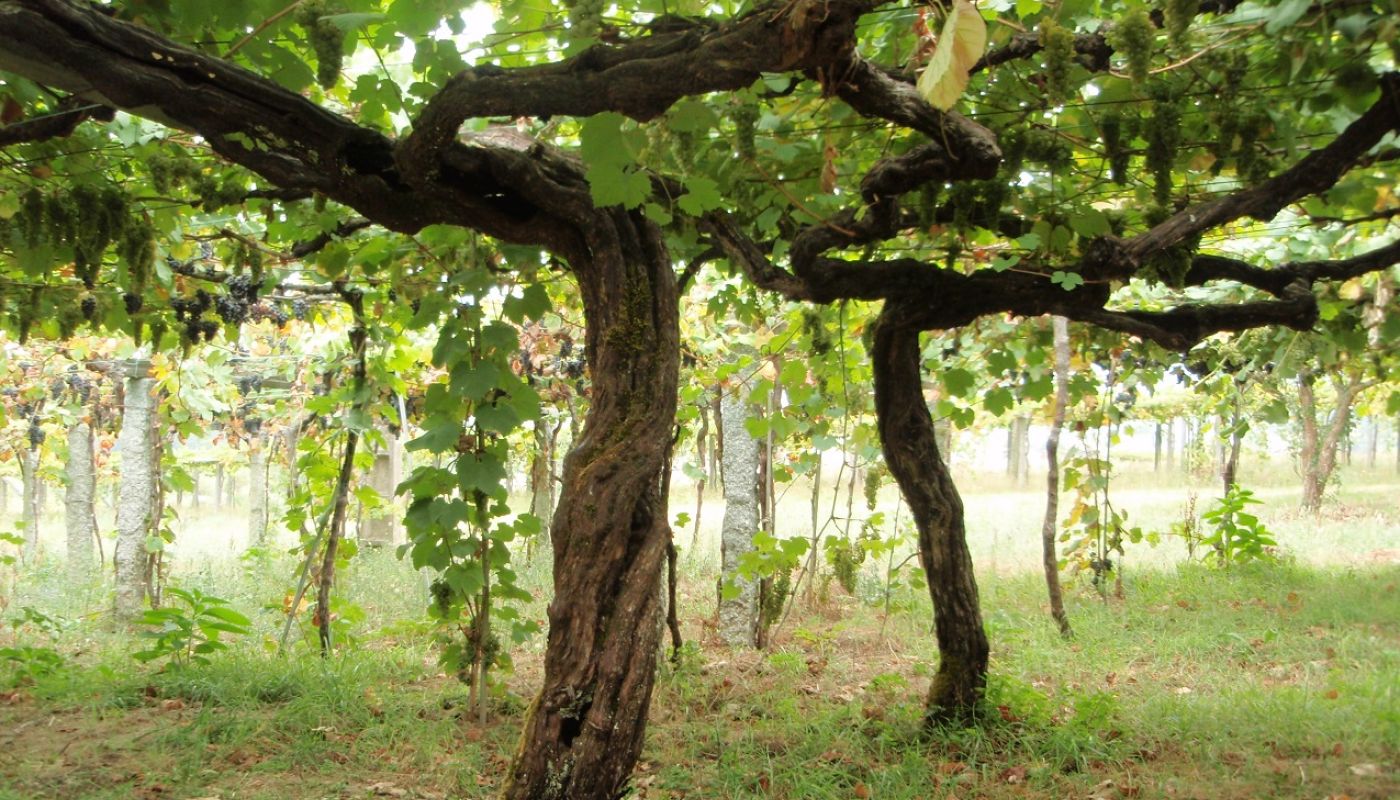
One fascinating thought talking about old vineyards, is to realise what has happened in the many decades since those vines were planted. They are a link to a different era, a heritage to treasure and learn from for the future. Thankfully many winemakers are starting to recognise this, and these hardy survivors are getting the attention they deserve. So has Rodrigo Méndez, a winemaker in Rias Baixas who has set up the Forjas del Salnés winery and Bodegas y Viñedos Rodrigo Méndez in Cambados (Pontevedra). He is also involved in the Castro Candaz project with famed vigneron Raúl Pérez. The vineyard of interest for this article is Finca Genoveva and two wines hail from these very old vines.
The story of Finca Genoveva is in a certain way the history of Rias Baixas, or how it was before the Denominación de Origen was created in 1988. This was a time when wine production was mostly home-based, and every other family grew vines among other crops. The region has known many challenges to overcome, from mildew and phylloxera to the Spanish civil war and two world wars. This led to many young men migrating in search of work in larger Spanish cities and abroad, so the ladies of the families were responsible for the grape growing and winemaking. After the second world war commercial grape growing and winemaking really took off and although black grape varieties were part of the historic plantings, Albariño was easier to grow and planted extensively from the 50’s on.
It was in the troubled years in the first part of the 20th century that a lady by the name of Genoveva took care of the family vineyard, not only because she had to but also out of passion. Lola, the daughter of Genoveva and now well into her nineties, remembers as a kid how her mother replanted empty spots when vines succumbed because of mildew attacks, but also planted new vines on lower lying ground close to the village. The stone wall around the Finca Genoveva vineyard adjacent to the house is still a testament of the effort Genoveva put into it. Every year she would make her white and red wines from the Albariño, Caiño and Ratiño grapes. This last obscure grape variety is now almost extinct and not allowed in the D.O. Rias Baixas wines.
It was by chance and through a friend that Rodrigo found out about this old parcel of vines in 2007 and in that same year he met Lola. She had continued to do what her mother Genoveva taught her but was now too old to keep going. Lola sold her home-made wine to the local bar or restaurant owner who would come taste the different barrels and mark the favourite one to buy. The remaining wine was to share with friends and family. A few years after the D.O. Rias Baixas was created, selling these home-made wines became prohibited. Nevertheless, Lola continued tending the vines with the local ‘jornaleros’, dayworkers helping her and other private owners to maintain their vineyards. The wine was for friends and family as much as they could drink, whatever was left ended up in the cellar.
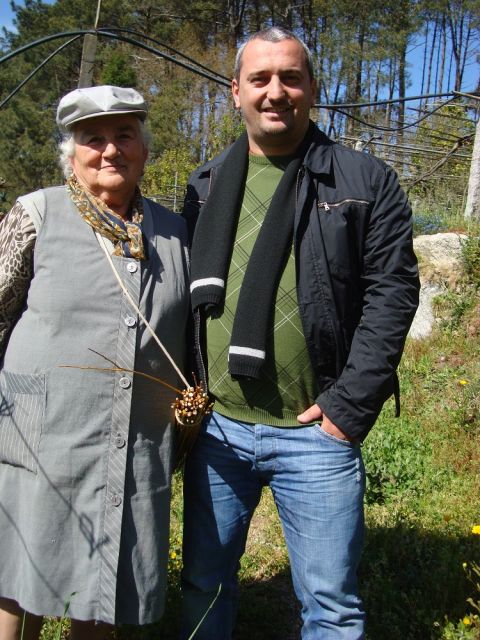
The year Rodrigo met Lola was the year that her jornaleros were retiring, and Lola’s two daughters had no interest in continuing the family legacy. To make matters worse, this was a moment in time with an oversupply of grapes in Rias Baixas. Consequently, selling the grapes was not an option and Lola was about to grub up these centenarian vines.
The vineyard of about 2.5ha was planted on an amphitheater behind the finca, not surprisingly using the traditional pergola training system. Weeds were taking over after almost a year of neglect, but the vines were looking very healthy. The soil is the typical granite rock covered with a 15cm layer of decomposed granitic sand, very poor in organic material. As Rodrigo was explaining during the interview we had, there was an energy beaming from the site and he knew from the moment he stepped into it that this was something special.
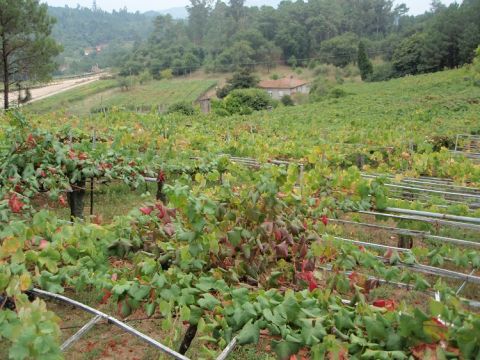
Galician people are notorious for their pride and stubbornness. Selling a vineyard or plot of land which has been in the family for generations is virtually unthinkable. So, at first Rodrigo needed to gain Lola’s trust. She agreed after long conversations on Rodrigo using a small part of the grapes if he would manage the vineyard. Rodrigo started pulling out the weeds and reviving these old gnarly vines. The pergola is only 1.50m high and some vines are 10m long, bending along the trellis back and forth. Although a precise age is difficult to pinpoint since there is no register of which vines were planted when, considering the history of the finca and the generations working in the vineyard, the oldest must be close to 200 years and 80% of the vineyard is at least 90 years old. Through the years when a vine died another was put in place by layering from the vine next to it. The vineyard has remained untouched by phylloxera, so this is also what Rodrigo has done with the empty spots he found when he started. He has kept the original shape of the vines as much as possible, with gentle pruning and keeping the arms intact. The first two years Rodrigo could use 2000 to 3000kg of grapes to make his first wine, and after three years of shared crop Lola trusted Rodrigo enough to let him use almost the whole harvest. This is how he keeps working today and Lola still lives in the farmhouse making her wine with about 1000kg of grapes every year, as the fifth generation of her family to do so.

Besides discovering the vineyard, Rodrigo had the chance to taste bottles sitting in Lola’s cellar, some older than 20 years. Tasting the wines together with Raúl Pérez was a revelation, many of the wines still fresh both white and red. He realised that if these wines made in old barrels with no oenological tools whatsoever could age this well, he could recreate this style of wine today.
Since then, Rodrigo is moving away from stainless steel and towards vinification in oak. This has been a slow evolution rather than a drastic one, year by year using more oak and less stainless steel. Equally important is the idea of going back to ‘unplugged’ winemaking, doing as little as possible and only when necessary. In the same spirit of recovering old traditions, he is one of the few red wine producers in Rias Baixas using the grape varieties Caiño, Espadeiro and Loureiro.
From the vineyard Rodrigo bottles two wines with the ‘Finca Genoveva’ label, depending on the vintage about 6000 bottles of Albariño and 1500 bottles of Caiño, selecting exclusively the grapes from the old vines. The Albariño grapes are destemmed and pressed and after three to four days of settling the must goes into a large oak cask. It stays there for fermentation and ageing for one year, just a bit of SO2 is added after the alcoholic fermentation to block the malolactic conversion. The wine is kept on the fine lees, but Rodrigo does not do any battonage. As for the red wine full bunches are used for the fermentation in 300L and 500L open top oak barrels with one month of maceration.
After pressing and three days of settling the red wine goes back into a 1500L cask for one year. For both white and red only native yeasts are used and there is no temperature control. The wines are not racked during the ageing unless absolutely necessary, keeping the vinification and ageing as static as possible. This kind of hands-off approach in the winery has taken courage, trial and error and a lot of patience.
After years of fine-tuning the wines today stand out with their sheer elegance, subtle perfume, lingering tension, and a gentle silkiness. Surely, they are not the most obvious or ‘classic’ Rias Baixas wines as we know them today, but they do have real character. Could this be the common feature to distinguish wines made from old vines when tended well and kept in their purest form? Character, a better-defined sense of place, wines that are not trying to be perfect but just true to their origin. These wines can make us travel to the past and tell a great story to share among friends. Terroir, the grape varieties, and winemaking details are what wine aficionados do love to discover and study, but the story behind the wine is what we all can relate to. The authenticity of passionate people like Genoveva, Lola and Rodrigo can be wine’s most powerful message, respecting the past and caring for the next generations, our future, and the environment we live in.
The photos were provided by Salvator Vandewalle.