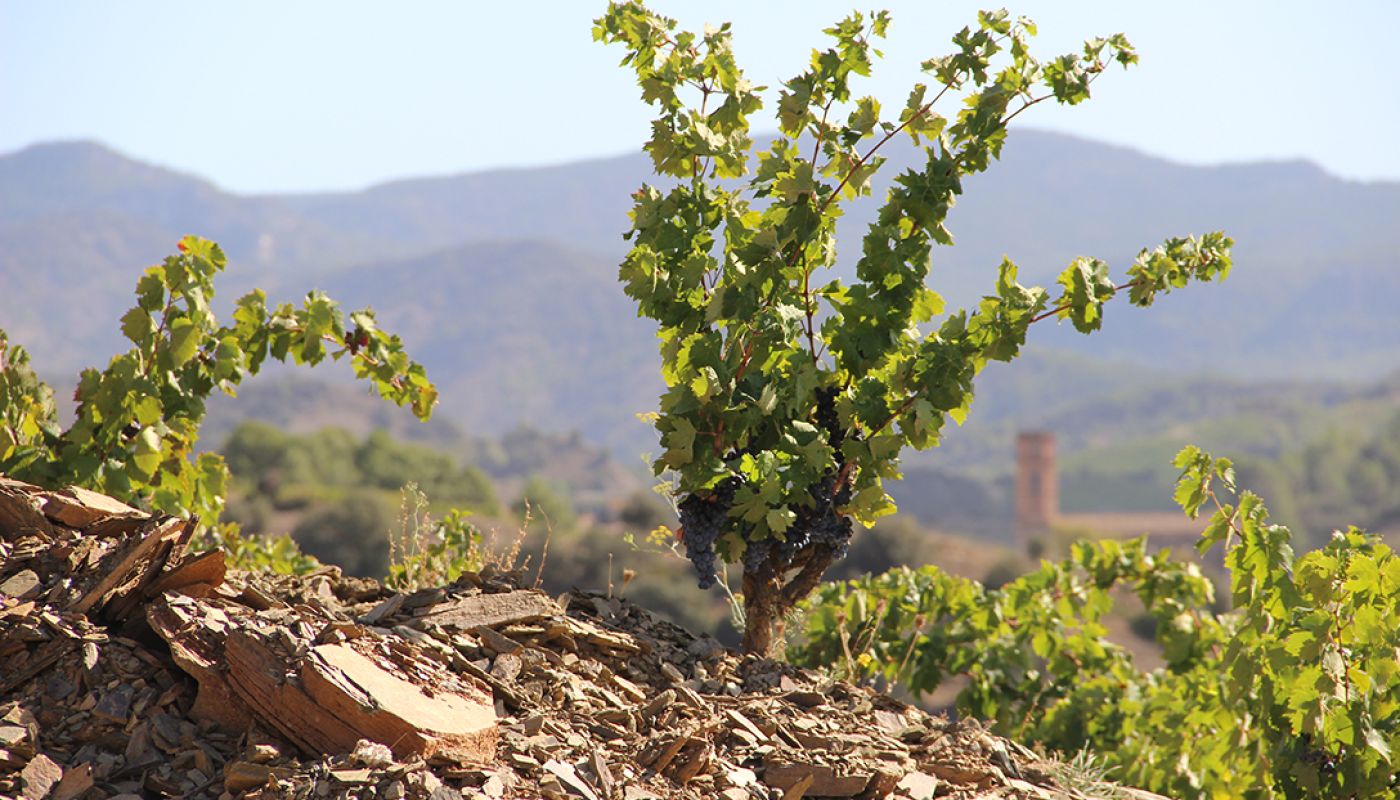
A Priorat old vine says, “I have lived a long time on the side of this mountain, season after season, year after year. I have endured scorching heat, fierce winds, scarce or late rains and more. I have witnessed triumphs and tragedies, struggled and thrived, been loved and forgotten, and still, I am here. I am a journey into the Earth in search of nourishment. Survival is the will to drink deeply of life.”
On a clear day the villages of the Priorat appear across the landscape, spilling down the hillsides. They are close enough to feel connected, but before there were cars, they were at least a day’s journey apart. The DOQ Priorat is composed of 12 viticultural areas, ten of which are the Priorat villages though there were no formal villages until 1203. In the time of the Carthusians, the villages were simply clusters of residences, which would eventually become municipalities.
There is land near Poboleda known as Salanques. It has many smaller parcels so the only way to identify them is to add the name of the owner to the title of each plot, which in this case was Joan Doix, so the vineyard is known as Salanques de Joan Doix. The family has been tending the same vineyards since 1850. It is a 3.5 hectare (8.6 acres) parcel which looks west towards Poboleda. The Carthusians occupied Poboleda when they first arrived in 1194 but then it was pronounced “populeta” after the poplar trees growing along the Siurana River. It was a tranquil place to live while plans for the Scala Dei monastery were being made. One could say that there were always vines and wine in the Priorat. That was part of what attracted the Carthusians to the region. They recognized its enological potential and taught the locals many things to help refine the craft of both growing and winemaking. It was said that if a load of grapes were dropped at the top of the village, they would roll directly into the church, where the monks would be waiting to receive them.
The Priorat’s vinyes velles, old vines, are defined by the DOQ (Denomenation of Qualified Origin) with 75 years of age or more. As of 2020, there were 2,088 hectares (5,160 acres) of old vines scattered throughout the region. After so many years, the dry, hot climate and rocky soils of the Priorat have formed an enduring relationship with the autochthonous Garnatxa (Grenache) and Carinyena (Carignan). Salanques de Joan Doix was planted to Carinyena because the variety takes time to mature and longevity was the family’s objective. Five generations later, the relationship between the Doix family and their vines remains binding, impassioned and committed.
The original vineyard was planted in 1850 but only a few of those original vines survived because phylloxera destroyed the vineyards of the Priorat at the end of the 19th century. The Doix family replanted with American rootstock in 1902 and once the roots were established, the family grafted them with cuttings from the surviving autochthonous Carinyena. The oldest vines occupy approximately 1 hectare (2.5 acres) of the vineyard.
Poboleda is an idea location within the Priorat. The majestic Montsant Mountains to the north are steadfast and comforting. Together with the Molló Mountains to the south, they form a funnel which sends cool breezes known as Garbanida, into the region from the Mediterranean Sea. This freshness delays ripening as much as a month compared to areas further west in the Priorat. The Salanques de Joan Doix vineyard enjoys one of the most desirable microclimates. Its slope faces west so the temperatures are never extreme. Midday, when the sun is most intense, the Garbanida breezes reach out to it tenderly. And later in the day, when the sun sets to the west, the surrounding hillsides cast soothing shadows over the vines.
Historically, vineyards of the Priorat were planted up and down the steep slopes known as costers. Salanques de Joan Doix is no exception. Its altitude varies from 350-600 meters. The soils are predominantly llicorella, the local name for the ancient slate soils, hardened and broken into pieces over millennia. Tiny hand hewn rock walls known as marge helped protect the land from erosion. Tending the vineyards continues to be challenging because tractors tip over. Even the mules sometimes struggle to keep their balance and owning them is sometimes a luxury. So for now the Doix family relies on their strength and fortitude to get work done. At least now there are cars because in the old days the trip from home in the village to the vineyard was 30 minutes or more on foot, depending on how much they had to carry with them.
Because of their age, the old vines were never irrigated. The people who planted them had little more than a wagon, a shovel, some pruning shears and methods learned through history and observation. The people hand watered new vines for a year or so to help establish roots. Then it was up to the vines to adapt to their place naturally. They would send their roots deep into the earth, sometimes as far as 20 meters (66 feet), to find sustenance and sanctuary when surface water was scarce. A grower’s merit is measured by their vine’s roots.
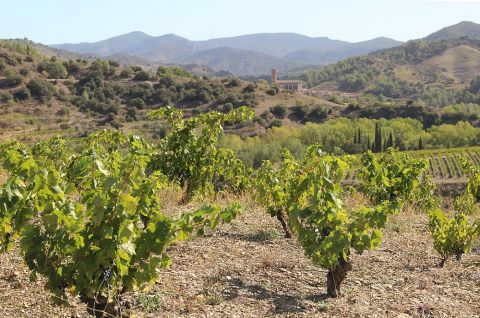
But becoming old was not just a matter of lazing about on the mountain enjoying the view. There were obstacles to overcome. If the vines were not getting pulled out because another crop was more profitable, they were fighting off blights like phylloxera and powdery mildew. Some old vines survived because their people loved them despite the struggles, like the Doix family. The reward for their mutual endurance is an equilibrium forged by the elements of terroir and the hands that cared for them. The young vines of today will be nurtured so they can become old vines too. They will speak for nature when their growers are no longer around.
The heritage of the Salanques de Joan Doix vineyard began with the Jaume Estrems Sans family. They tended the grapes and made wine. In 1878, Jaume rode his horse, carrying six bottles of the family wine, to the Paris for the Universal Exhibitio. Their wine won a gold medal along with other award winning wines from the Priorat. Then, ten years later did it again, this time going to Universal Exhibition of Barcelona, and won a silver medal. This is testimony to the quality of Priorat grapes even back then when wine was more oxidized than it is today. The family became “Doix” a generation later when Jaume’s daughter married Joan Doix Abello. Their son was Joan Doix Estrems whose name became the moniker for the Salanques vineyard.
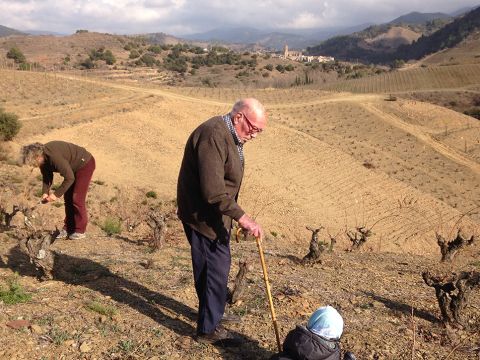
Joan Doix Estrems had a hard life and still, he always smiled with contentment. Joan was only ten but had to become the man of the house because his father was arrested for being on the wrong side of politics after the Civil War. He assumed responsiblity for his mother, the other children and the vineyards but he never complained. Joan continued to visit the vineyards every day of his life until the very end, when he died at age 93 in 2019. He and the vines had shared a long life together. Together they did their part to ensure the continuation of the family legacy.
Joan and his wife Teresa Casas Gorga had a son, Josep Mª Doix Casas. He married Maite Mora Paimes. Joan insisted Josep go to school to learn a trade so he worked as an electrician. Maite became the daughter Joan never had. She too fell in love with the family vineyards and absorbed all the knowledge Joan had to give. When Josep and Maite had children, Maite would take them to the vineyards, along with their grandfather, ensuring the next generation’s attachment to the land.
Today Sandra Mora Doix, Joan Doix’s granddaughter, has a degree in viticulture and enology and is making the family wines. Her father is retired now and is finally able to spend his days in the vineyard with Maite. Sandra and her husband have started generation six, too young to know for sure, but they are also joining their grandparents in the vineyards, establishing roots of their own. There will be no pressure, but one can hope that they will find themselves connected to the vines just as every generation has. Sandra says, “You choose to follow the life. And you want to take care of the vineyards because they are part of your life, you grow up with the vines. They are family. You must respect and preserve them. It is hard work but it comes with valor, a sense of pride.”
Sandra refers to winemaking as elaboration, as if the vines have a message and it is her job to transmute it, the voice of nature, into the wine. The life force of the old vines produces precious fruit that is still breathing, evolving from barrel to bottle and into the glass. When it reaches the palate, energy commingles, cells split and transform. We drink it and our consciousness is enlivened, our senses are more aware. This is the great gestalt of wine. It beckons us to stop and explore it, and life, more deeply. It says, “Come, sit with me. Let me tell you the story of my life.”
At first the old vine Carinyena is mysteriously dense, powerful if not a little wild. It embraces the Priorat terroir with penetrating articulation. Suddenly it arrives at the back of the palate radiant with velvety blackberry preserves, juicy blueberries and currant. Then nuances of wild herbs, ink, pencil lead, licorice and bittersweet chocolate emerge. The density expands with finesse and restraint, ensuring the finale is persuasively long and worthy of applause. The collective of nature, culture and time becomes clear. It is spoken in the language of the senses. All the aromas and flavors become a transcendental journey into a place where the vine’s invitation can be understood…
At the end of the day, radiant beams of sunlight cast their omnipotent glow across the vineyards. There is no sound but the stillness of the air and the occasional chatter of birds. The craggy old vines keep their vigil. They are the sentinels of time, a conduit between the Earth and the sky, living in synchronized rhythm with their growers. When twilight descends across the landscape and the owls send haunting calls into the night, the vines continue their dialogue with the universe, forwarding their stories of the day into the glistening stars with a wish: “Please remember me.”
The photos were provided by Elizabeth Hecker.
















