The notes and the numbers are in a small, red A6 notebook. On it, debossed at the bottom of the faux-leather cover is the word “Liderpapel”. I would have bought it at Carlin, the stationery shop in Zamora, only a few months after moving to Spain in the summer of 2009; amazed, as I was, at the price of stationery, coffee, tapas and garlic.
The very first page is a list of requirements: “AAA batteries; 2x large tubs; several buckets; press; whisk; tubes; 20 picking crates (or 10); dry ice (or CO2); PMS.”
The batteries were for my headtorch. I can’t remember if I planned to harvest in the early hours of the morning – keep the fruit cool, you know – or if I knew I’d need the light in the small, cold, windowless bodega in which I’d planned to make my first wine.
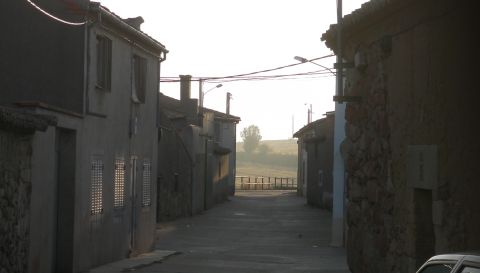
The bodega was behind the green metal door, number 19, Calle Bodegas, Villanueva de Campeán, Zamora, Castilla y León, España. That north-facing side of the street was basically all ground-floor bodegas. Number 19 was a pair of dusty, earth-floored rooms separated by a cotton curtain, containing an abandoned fridge and the occasional sound of scurrying. Further up, number 23, was another two-roomed affair with flooring, tables, benches, electric lighting, two concrete cuves, a fireplace and a chest freezer. It was the location of my first social outing; the place where Tomás, ever the practical joker, gave me a roasted pig’s head on a plate and indicated that, as an honoured guest, I would have the privilege of eating the lot in front of two long tables’ worth of friends and family. It descended into mirth, as everyone but I knew it would.
Short, dark skinned, with a perpetual five o’clock shadow and rough builder’s hands that always looked oversized, Tomás gave me one of my first language classes on arriving in the village. It consisted of repeating the word “tempranillo” to me over and over, making sure I got the grizzle in the middle of the word and the double-L sound at the end. It wasn’t really known as Tinta del Toro (as it should have been) because that referenced a neighbouring Denominacion d’Origen (DO), and in the countryside, neighbours are rivals. And for sure it wasn’t the “Temp-rah-knee-oh” of a chinless Englishman.
Tomás’ nickname for Calle Bodegas was Calle de los Malacos (“Street of the Miscreants”), with the somewhat obvious implication that he was one of its original tenants. During fiestas (and often not during fiestas) most of the parties ended up on that street.
I installed most of my gear in number 19. I’d got a tiny basket press in Zamora town and, not on the list, a stainless steel 300L “siempre lleno” (“ever full” – a variable capacity tank) bought – if memory serves on a gold plate – outside Cacabelos in Bierzo country. My partner was also making wine (Mencia, if you must know) in Valdeorras at the time and we’d regularly drive up through there to get bread from a particular artisanal baker.
The whisk was an idea I’d had for a grape destemmer which was unusual in theory, and would have been just plain nonsense in practice. I’d eventually planned to destem by hand. The PMS (Potassium Metabisulphite)? Well, that was the influence of pretty much the only textbook I’d been given: Bryce Rankin’s “Making Good Wine”. It’s something of an Australian winemaking bible – if you wanted to make wine in the 1990s.
Further on in my notebook was “ask Bee about pectin-splitting enzymes”. Bee was Bee Thompson, of Crawford River in Australia. She was living down the road in Rueda, doing the northern hemisphere/southern hemisphere harvest thing. I don’t know how much I wanted to use enzymes to settle juice at the time – that’s probably Bryce speaking.
Because the truth is I was on a bit of a natural phase even then. There are no notes for yeast, for example. Adding sugar was unnecessary – this was Castilla y León, after all – and there was no way I was adding acidity. The PMS? Well, natural winemakers still debate that now.
And so to the grapes, of which that little red book still has my pre-harvest sample notes: “10 September; Brix: 21; pH: 3.21” (I didn’t do a Titratable Acid, probably because they wanted me out of the winery lab). I had a burning desire to make white wines and there are notes for two spots in Santiago Santamaria’s vineyard, the two spots where he had a few ancient bush vines of Verdejo among the otherwise equally old and more ubiquitous Tempranillo: by the trees (the shadier bit at the southwestern end) and in the middle. It was going to be hand picked fruit because there was just me.
I would walk over burning coals for those vines today. Some people say old vines don’t make much of a difference. I think they’re wrong, but it doesn’t matter, because if you ask anyone to make a straight choice between young vines and old vines, they’ll go for the latter. If they say they want the former they’re just being facetious and you shouldn’t be friends with them.
But in our part of Spain: Tierra del Vino de Zamora (north of the river was Tierra del Pan, the land of bread, but they still had bodegas – underground ones), Toro, León, Bierzo, Valdeorras – even Arribes; it was embarrassing. In most places they have replanting programs and know the last time a block was replanted, or they know rows 15-20 are due a replacement in the next five years. Here, they have no idea – they’d have to look it up. They know who planted it – Granddad Miguel (the roots are like a mirror to the family tree) – and they might get the decade about right (often between about 1900 and 1930, its a time for which we have no immediate reference).
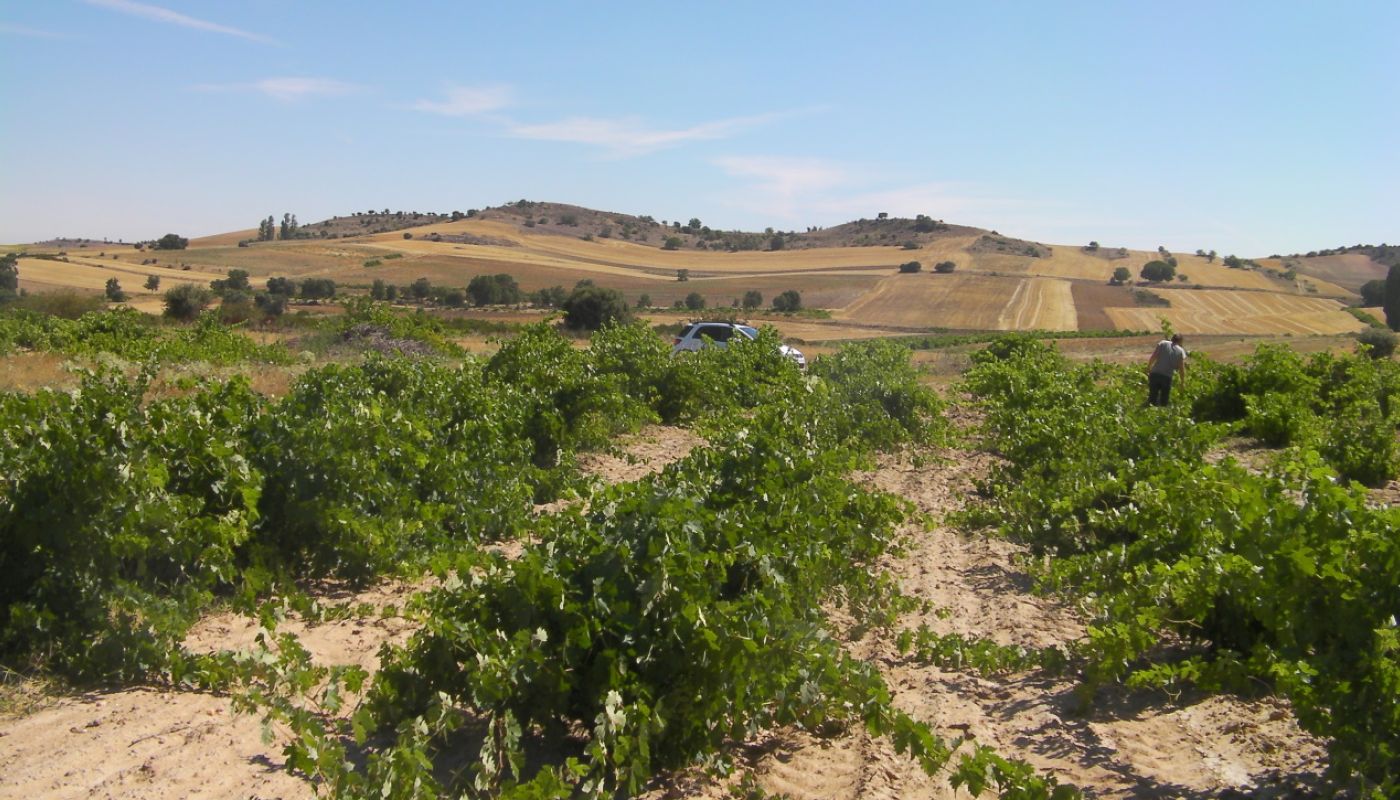
My partner was running a winery in the village and Santi, as he was called, was the dad of her cellarmaster, Luis. That was his other name: “el padre de Luis”. He had a family vineyard on the rise as you drove out of the village, overlooking the country road that meandered south to the village of Cabañas, heading into the wilds of Sayago country.
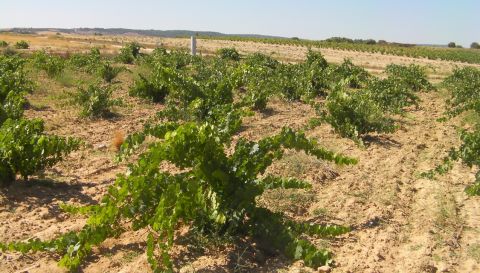
The soil around Villanueva was sandy – a kind of red quartz sand. It was dessicated, dry and hot; perfect for Englishmen to take midday walks in, and inhospitable to phylloxera. This was half the reason most questions about vine age never really got a proper response. They just said “cepas centenarias” to cover everything from 50 to well over 100 years old. Santi’s vineyard, which was on whiter sand – it certainly felt hotter there than anywhere around when I was harvesting it – was around 90 years old, from memory –planted in the early 20th Century. And I was being let in to take about 200kg of Verdejo for a home winemaking project.
Which should be classed, really, as a sin – a desecration of their cultural heritage. But I was being let in because the vines weren’t hugely valuable despite their age. And it was here, in a small village in Spain, where I lived with a peak population of 250 people, that I came not to give a damn about notions of propriety in wine. Yes, red wines from Toro and Tierra del Vino de Zamora lack a certain balancing acidity. They are big, warm, often tannic red wines that once supplied the people with essential, supplementary carbohydrates. Sure, the world moves on. In Zamora town, everyone drinks Heineken or Estrella (they’re probably the same company), and I read blogs about perfect wines and 100-pointers.
Honestly, qualitative analyses of wines from those “cepas centenarias” vineyards could all take a short walk off a tall cliff – and admire the root structure poking out on the first part of the fall. Assessing the wines, in reality, meant nothing. Sure, I could do it – I even sat on the DO assessment panel for the region – but even knowing that old bush vines undoubtedly produced better Tempranillo than the young VSP (trellised) stuff was something of a moot point: they all still “lacked” acidity and had “high” tannins.
An Aussie winemaker friend recently told me that one gives Rutherglen Muscat either a “double gold” or a “no medal” at Australian wine tastings. Old vines wines are like that. It’s either something beyond mere objective parameters or it’s never going to be as good as an acid-adjusted Merlot. In a way, I don’t think we ever really rise to meet those gnarled reminders of the passing of time. Across this part of Spain, all these incredible old vines, planted before appellations were created, were going to co-ops and being sold for a pittance. Not all, but most.
In the end, the wine I made wasn’t great. Hand destemming was quickly shelved. Trying to squeeze freshly-harvested grapes alone with a tiny basket press was a horror story, but mainly a recipe for blisters and progressively less imaginative swearing as time wore on. A cool bodega is great, but not if you want to start a ferment. After five days of zero activity and an increasing smell of bruised apple, I caved in and inoculated it – with EC1118, a Champagne yeast, of all things. It’s all there, in the little red book: the gentle trip of dates and numbers, from 16 September to 4 October 2009 when primary ferment finally petered out. Of course, I know precisely how I’d do it all now.
I named the wine “Calle de los Malacos Old Vines Verdejo 2009”. It won best homemade white wine in the region. I have one bottle left and I want to see if that oxidative note it got at the start (and never seemed to lose) is still there. But I also don’t want to open it.
Living in that village, surrounded by 100 year-old vines; pruning them in the fog that wouldn’t lift, sometimes for days, in winter; taking the dog for a walk past the ruins of the 15th Century convent; checking in on the ferment when I got home from the winery; being unable to walk 50 meters in the village without saying hello; hearing the gossip about the sunburned Dutch pilgrims who stopped in at the village bar; cooking over vine cuttings in the bodegas; it was a special time. It is the closest I have ever been to the earth.
Sometimes, though, it is as if those long-lived vines existed to spite us. They grew while the civil war raged (and people still don’t want to talk about that today); they survived through Franco, had generations tend them; they bore witness to the global change in tastes and their fruit now gets French oak chips and plastic corks (or very pricey French barriques, depending on the winery), stainless steel and queries about acidity levels from critics.
The Englishman who was there for three years – nothing, a tourist – gets maudlin when he thinks of them (the vines, the people, the views – all of it). I went back in 2018 and everything and nothing had changed. Since then, in three years, we’ve had a global pandemic, Harry and Meghan left the royal family and people are still arguing about natural wines. And Tomás, who in 2018 was in a coma following a car accident on a country road, has died.
Those same vines I harvested over ten years ago will be pushing shoots again this year, as they have every year through a century of village lives. All I am left with is a bottle of wine; a 750mL record of a fumbling novice. It’s not enough for my sentimental greed but in a way it’s completely appropriate.