25th anniversary events | The Jancis Robinson Story | 🎁 25% off gift memberships

Blend ambition

Wednesday 13 July 2016 • 3 min read
Image

It is a truth universally acknowledged that the fire of my loins electrocuted the Rosenbergs. Which goes to show that some things are definitely better off unblended (as witness the above car crash of the first lines of Pride and Prejudice, Lolita and The Bell Jar), but in winemaking blending is considered one of the most crucial skills. 

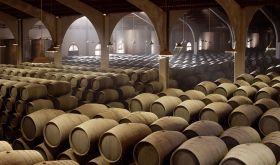
By blending raw wines together from barrel or tank, the world’s greatest bottles come into existence. There’s no recipe book, no vinous version of Hogwarts’ Moste Potente Potions. By sensorial wit alone, winemakers might assemble hundreds of different wines to create the finished product, with the hope of substantiating the adage that the whole is greater than the sum of its casks. Champagne cellarmasters are particular exemplars here, with Krug’s Grande Cuvée often put together from more than 120 different wines from ten or more different years.

Yet, on the other hand, unblended wine is held aloft as the most unadulterated expression of terroir there can possibly be. After all, if you blend too many colours together, as a winemaker once told me, you always end up with black. Perhaps, then, entirely unblended wines are the ultimate wine. Take for example the below barrel of Richebourg, which represents the entire production of the 2015 vintage of that hallowed Burgundy appellation at Albert Bichot’s Domaine du Clos Frantin. Surely this is the epitome of what makes wine special?

The two standpoints are of course totally incompatible. Let’s imagine that the solitary Richebourg barrel would be immeasurably improved by being blended with the three barrels of Chambertin they also made in that vintage. The resulting assemblage is unquestionably the better wine, let’s say. The problem is that you end up with 1,200 bottles labelled Bourgogne Rouge with an asking price apiece north of €400.

You know ... it’s so crazy, it might just work! Who’ll lend me half a million euros so I can prove it? Anyone?

Or what if it turned out that one of the key ingredients of an existing blend was discovered to be better off as a soloist? Like hearing The Long And Winding Road without Phil Spector’s bombastic orchestral overdubs, perhaps the beauty of the source can only show its true colours when it’s set free. Or perhaps this proves only that I’m as bad at mixing metaphors as I would be at blending burgundies.

Besides, the difference with wine is that once you remove a component, the original blend is necessarily diminished. If you were to remove a component of Krug Grande Cuvée, for example, and bottle it as a standalone wine, perhaps named after the single vineyard from which it was sourced, then isn’t it a logical inevitability that the quality of the former is compromised by the existence of the latter?

European appellation rules are notorious for monkeying about with blending regulations. For instance, it has recently been announced that basic AC Muscadet is soon expected to allow up to 20% of Colombard, Chardonnay and Sauvignon Gris to be blended with the region’s native Melon de Bourgogne. In Chianti, noble Sangiovese is already permitted to constitute only up to 70% of the blend. In both instances, the main purpose seems to be diluting the very qualities that make the key ingredient distinctive.

In fairness, perhaps these apparent subversions of quality are more reflective of the commercial realities of winemaking. The same logic allows American producers to use up to 25% of different varieties, vintages and regions to those stated on the label without disclosing them. In Europe, up to 15% is permitted. The defence states that this allows winemakers the ability to fine tune their blend without needing to complicate the label with undue detail. That may be so, but there is still something unsavoury about buying something labelled prime beef that might be 25% entrails.

So which is better then, blended or unblended? As always with wine, a straight answer is impossible. The single variety, single vineyard, single barrel concept is the very essence of terroir, yet the artful assemblage is fundamental in realising wine’s full potential. One seems to quench the thirst for minimal intervention wine that channels its origin without adulteration, while the other champions the arcane expertise of the winemaker. 

Put simply, sometimes blending works, and sometimes it does not. What fails for the first lines of novels, for example, perhaps might succeed with their last. 'The only immortality had been the means of uniting them, as if by a magical thread.' 

Or perhaps not. Either way, the decision is best left in the hands of the creator.

Choose your plan
JancisRobinson.com 25th anniversaty logo

This February, share what you love.

February is the month of love and wine. From Valentine’s Day (14th) to Global Drink Wine Day (21st), it’s the perfect time to gift wine knowledge to the people who matter most.

Gift an annual membership and save 25%. Offer ends 21 February.

Member
$135
/year
Save over 15% annually
Ideal for wine enthusiasts
  • Access 289,648 wine reviews & 15,919 articles
  • Access The Oxford Companion to Wine & The World Atlas of Wine
Inner Circle
$249
/year
 
Ideal for collectors
  • Access 289,648 wine reviews & 15,919 articles
  • Access The Oxford Companion to Wine & The World Atlas of Wine
  • Early access to the latest wine reviews & articles, 48 hours in advance
Professional
$299
/year
For individual wine professionals
  • Access 289,648 wine reviews & 15,919 articles
  • Access The Oxford Companion to Wine & The World Atlas of Wine
  • Early access to the latest wine reviews & articles, 48 hours in advance
  • Commercial use of up to 25 wine reviews & scores for marketing
Business
$399
/year
For companies in the wine trade
  • Access 289,648 wine reviews & 15,919 articles
  • Access The Oxford Companion to Wine & The World Atlas of Wine
  • Early access to the latest wine reviews & articles, 48 hours in advance
  • Commercial use of up to 250 wine reviews & scores for marketing
Pay with
Visa logo Mastercard logo American Express logo Logo for more payment options
Join our newsletter

Get the latest from Jancis and her team of leading wine experts.

By subscribing you agree with our Privacy Policy and provide consent to receive updates from our company.

More Hemming's spittoon

Casks maturing in a sherry bodega
Hemming's spittoon Richard revives his Spittoon column with the curious story of the Jerezanos' other business. Which traditional white wine is aged...
Rollercoaster
Hemming's spittoon Wine doesn't always have to be great, argues Richard. Most wines I taste are of average quality. Mediocre. 15.5 out...
Image
Hemming's spittoon Is finding the right food and wine match ever possible? Probably ... When you consider the virtually infinite number of...
Image
Hemming's spittoon How technology is being used to share every detail of how a wine is produced – for free. If you...

More from JancisRobinson.com

Ferran and JR at Barcelona Wine Week
Free for all Ferran and Jancis attempt to sum up the excitement of Spanish wine today in six glasses. A much shorter version...
Wine news in 5 21 Feb 2026 main image
Wine news in 5 Plus: Ridgeview sold, Wales hikes minimum unit price for alcohol, four new MWs announced and Julian Leidy wins Top Taster...
Two bottles of Pikes Riesling on a table with two partly filled wine glasses beside each bottle
Wines of the week The professionals’ pick for rock-solid Riesling at a reasonable price. From $14.99, £13. At a gathering for emerging leaders on...
Patrick Sullivan & Megan McLaren in Gippsland - Photo by Guy Lavoipierre
Tasting articles This cool-climate Australian region is finally living up to its early promise. Winegrowers Patrick Sullivan and Megan McLaren are pictured...
Institute of Masters of Wine logo
Free for all Congratulations to the latest crop of MWs, announced today by the Institute of Masters of Wine. The Institute of Masters...
Richard Brendon_JR Collection glasses with differen-coloured wines in each glassAll Wine
Mission Blind Tasting Just looking closely can help you figure out what wine is in your glass. Welcome back to Mission Blind Tasting...
Erbamat grapes
Inside information An ancient variety high in acidity and low in alcohol might help Franciacorta weather the effects of climate change. Last...
De Villaine, Fenal and Brett-Smith
Tasting articles An extreme vintage rarefied by eye-watering selection. Above, co-directors Betrand de Villaine and Perrine Fenal with Corney & Barrow’s managing...
Wine inspiration delivered directly to your inbox, weekly
Our weekly newsletter is free for all
By subscribing you're confirming that you agree with our Terms and Conditions.