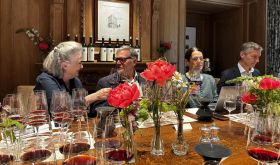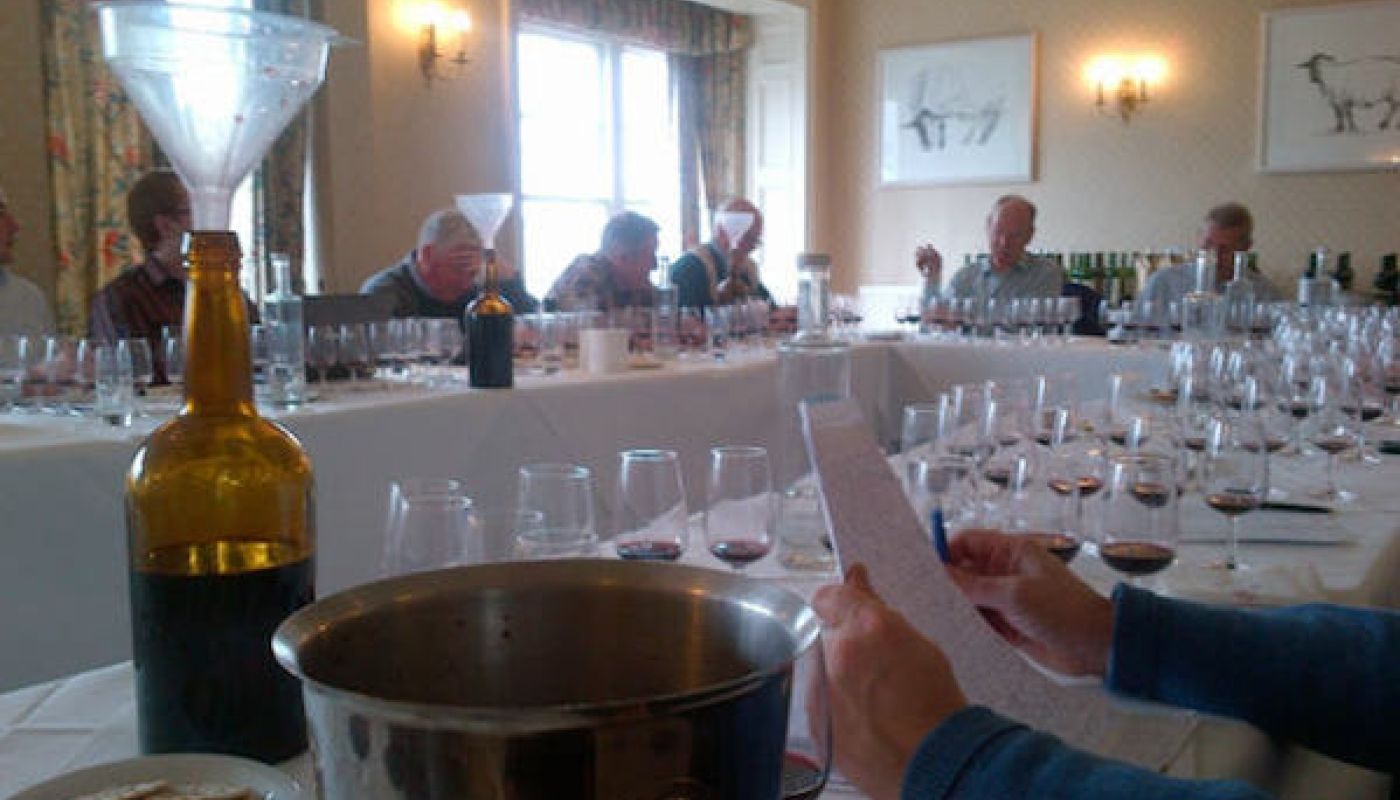
Every January about 20 of us wine professionals, most of them representing one of Britain’s finest wine merchants, gather in the seaside town of Southwold on England’s east coast to taste blind the Bordeaux vintage harvested four autumns before. At the end of the three-day session we have recently all been asked to rank the vintages of this century. The most recent group ranking is shown below.
Poor 2011, I might have said, with my habitual concern for underdogs, were it not for the fact that I recently undertook a pretty comprehensive blind tasting of the 2011 vintage under the auspices of the Institute of Masters of Wine. (I missed last year’s look at 2011s in Southwold.) This vintage more than any other recent one illustrates the mismatch between price and quality in Bordeaux’s extraordinarily unrealistic pricing strategy.
Flush with the success of the primeur campaigns selling the exceptionally good 2009 and 2010 vintages, and ignoring warning signs that the Asian investors crucial to these two campaigns were now disaffected with the whole primeur business, the Bordelais asked far too much money for the miserable 2011s. The one major bright spot among 2011s is Sauternes, echoing the success of that other important sweet wine port in that otherwise unblessed year (see The best 2011 reds anywhere).
Last month in Southwold it was the turn of the 2012 Bordeaux vintage, approached warily by the team of tasters still battle-scarred by the lack of pleasure they had found in the 2011s the year before but cheered by the fact that 2012s are generally less expensive than the lacklustre 2011s. As usual we started in the foothills of St-Émilion and as usual my fellow tasters were extremely stingy with their initial marks out of 20. (The least popular wine averaged just 13.61.)
But gradually during the first morning, some delight began to be expressed. Among right-bank wines there was a substantial jump up in quality between lesser and top St-Émilions and, particularly, Pomerols. This could have been because top-flight proprietors can afford to be stricter in their selections, but on these relatively small properties it was more likely to be their famously superior terroirs expressing themselves eloquently.
In St-Émilion, Troplong Mondot was a clear favourite, its alcohol much more moderate than in some riper vintages, with Beau-Séjour Bécot doing well and Trottevieille being notably successful in 2012. (The next day Batailley, the Pauillac property that is also owned by Philippe Castéja, showed well too.) The St-Émilion tendency to exaggeration of alcohol and oak seems, fortunately, to be in retreat, even if some of the less exalted properties are still flirting with what was once the popular pastiche style.
It was interesting that the handful of wines we tasted from the less glamorous Castillon appellation to the immediate east of St-Émilion were, perforce, poured blind with some of the less exalted St-Émilions and did not stand out as being obviously inferior.
The best Pomerols were a real high point in our 250-wine re-examination of this vintage – and seemed to be a considerable notch above those below the top drawer. Certan de May, Clos L’Église, L’Église-Clinet, Gazin, Lafleur, Petrus, Trotanoy and Vieux Château Certan were all outstanding, as a group the most exciting red wines of the vintage. As well as having lusciously ripe fruit they had real energy and a sense of place.
Across the Gironde on the left bank, the stars did not shine so brightly. In this year in which the Cabernet Sauvignon grapes took an age to ripen fully after a particularly protracted veraison (when the grapes change colour from green to purple), a cool summer and no shortage of mildew, we kept encountering rather green, underripe aromas and a certain rawness of tannin – particularly in 2012s from some of the lesser Médoc properties.
What was impressive, on the other hand, was the sheer winemaking craft that was evident. Clearly, this was far from a perfect vintage, but at the better properties the skill in managing those imperfect tannins was remarkable. There may not have been much fruit concentration on the mid palate but the textures were so flattering that they almost distracted from this lack.
There was some evidence of real glamour in the higher reaches of the Margaux appellation, even if Palmer seemed arguably a little more exaggerated from bottle than when I tasted this first vintage made in the new cellar from cask in April 2013. Pavillon Rouge, the second wine of Château Margaux, looked glorious in Southwold – just a notch down from the grand vin, which, like Mouton, was looking particularly successful last month.
As usual, the St-Juliens were workmanlike – occasionally even stodgy – but none was stunning. The trademark opulence of Léoville-Poyferré stood out in this generally rather meagre vintage.
In Pauillac next door, quality was distinctly variable but Pichon Lalande was beguiling while Grand-Puy-Lacoste and Batailley (£460 and £380 a dozen bottles respectively from Millésima) were two of the better-priced 2012s among the wines we tasted. The Pauillac first growths cost about ten times as much and certainly didn’t deliver ten times the pleasure, however carefully crafted they were.
I was expecting the worst of the St-Estèphes because these wines are naturally austere, not necessarily a good thing in a generally underripe vintage. But I was generally very impressed by the consistency and quality of the top names here, with the famous triumvirate Calon-Ségur, Cos d’Estournel and Montrose offering something akin to charm, as did Phélan Ségur, another relative bargain at £320 from Millésima.
The Pessac-Léognan reds grown just south of the city of Bordeaux exhibited less greenness and had the attractively fresh perfume one associates with the Graves, but they certainly weren’t particularly concentrated wines. I wouldn’t cellar them for too long.
It was the Pessac-Léognan whites that really cheered us up on our final day of tasting. Here were the sure-fire successes of the vintage. The 2012 vintage was a bit of a washout for the sweet wines of Sauternes and Barsac – Yquem and Suduiraut didn’t even make a grand vin – but the dry whites made in 2012 were a sheer delight to taste, and probably nearing their peak now. Their styles were very varied – from searingly fresh Sauvignons to the rich, creamy, particularly successful full-bodied whites that emerged from the Haut-Brion stable in 2012.
As usual Smith Haut Lafitte Blanc was very impressive but the tasting group’s favourite dry white was the delightful Bouscaut, ‘just’ £30.95 + VAT a bottle from Four Walls Wine. Blind tasting is a wonderful thing.
RECENT RED BORDEAUX VINTAGES RANKED
Here is how our group of about 20 wine professionals ranked the vintages of this century, with a top choice given 13 points and bottom choice given 1.
- 2005 (221 points)
- 2009 (215 points)
- 2010 (210 points)
- 2000 (179 points)
- 2001 (165 points)
- 2008 (120 points)
- 2006 (118 points)
- 2012 (108 points)
- 2003 (89 points)
- 2004 (85 points)
- 2007 (60 points)
- 2002 (43 points)
- 2011 (25 points)