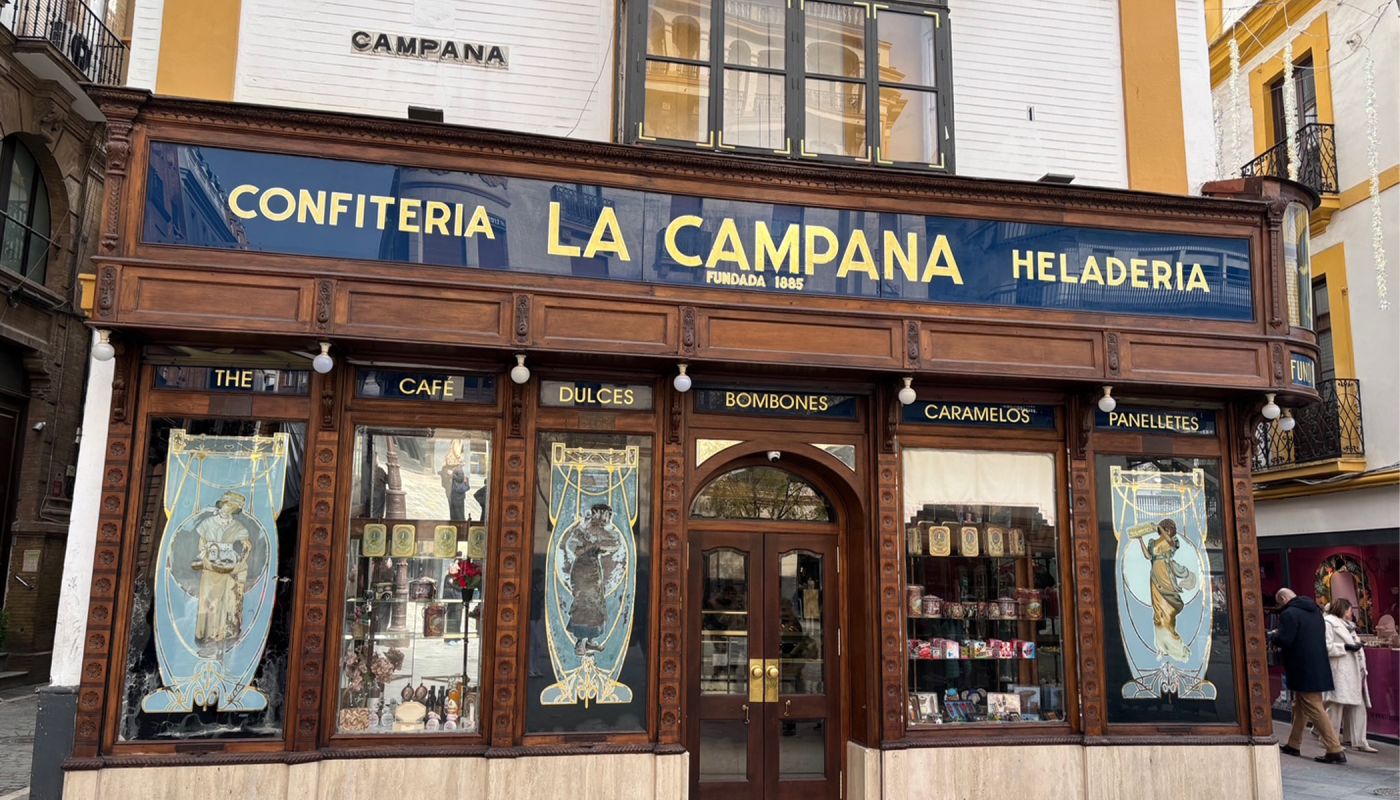
As we left Confitería La Campana, which first opened its doors in Seville in 1885, JR said something that reminded me of my favourite line from the movies, when Eddie Marr says with a straight face in the film The Glass Key, ‘My first wife was second cook in a third-rate joint on Fourth Street.’
JR’s comment was, ‘You know, this is the third restaurant we have been in twice during our six-day stay in this lovely city.’ In fact her arithmetic was inaccurate: we were to visit four separate establishments twice.
It must have been the unusual experience of going back somewhere that struck a chord with us. Ever since I started writing about restaurants, in 1989, this pleasure has been denied me. The requirement for new copy each week has tended to preclude repeat visits. And although it does mean that I can answer the question most frequently asked of me – ‘which is your favourite restaurant?’ – absolutely truthfully by naming the last one I had an excellent meal in with JR, that is as far as I can venture. Favourite restaurants remain beyond my ken.
But in Seville, we did manage to visit four restaurants twice, all of which I would heartily recommend, including those I wrote about last week.
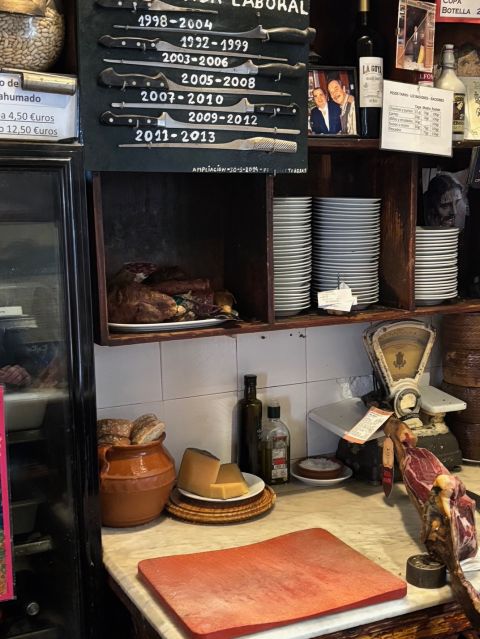
On our last day we enjoyed another couple of glasses of fino with the owner of Las Teresas tapas bar, which has been in his family since the 1930s. Opposite a wall crammed with old and various bottles and the same sort of assortment of old images – of Jesus, of a Seville FC footballer and of old family photographs – I learned not only about their customers’ consumption of Ibérico ham, which totals two entire legs a week. In a corner just above a set of weighing scales that could have proved popular on the Antiques Roadshow was a tribute to that all-important tool, the ham carving knife. A blackboard reveals their duration from an average of three years for most to a seven-year stint from 1992 to 1999 for one.
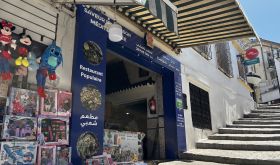
The equally historic Confitería La Campana (shown at top) offers less dangerous charms. Excellent café con leche, sweet pastries and gorgeous marrons glacés which they sell wrapped individually are just part of its appeal.
But the highlight for me lay in watching their bartenders at work. By and large, all in their 50s with thick, well-groomed hair, these were men who had seen everything and had served every combination of drink.
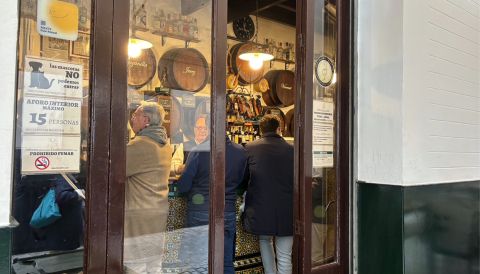
And just round the corner there is the tiny but unmissable sherry bar Manolo Cateca which proudly displays the notice that it accepts a maximum of 15 people inside (there are tables and chairs in the pedestrianised street outside) for their wide range of carefully selected sherries, wines and tapas.
Our return to Desacato came about through a combination of factors. Firstly, there was the recent memory of our meal there and then there was its convenient location on the same street as our hotel. This was on the evening of 6 January when the whole city seems to lose its head as the Three Kings procession of floats and marching bands grips the city and makes any form of progress through the sweets-strewn streets virtually impossible. This time we had a second serving of their eel skewer; their interpretation of a prawn tartlet; a grilled sole; and a creamy cheesecake, as well as a 2023 Pago El Espino from Cortijo Los Aguilares in Ronda, which proved a creditable alternative to burgundy. Darker, resonant of cherries, it was a versatile wine that flattered my fish and JR’s main course, their variation on Spain’s popular Russian salad.
The fourth restaurant we ate in for the second time was Sobretablas. Dinner here delighted us both on numerous counts. The location, a former private house. The owners, a husband and wife. The wine list, over 1,000 bins, including numerous choices from Burgundy. All in all, this place would become a regular haunt if I were to live in this fine city.
A five-minute walk from the vast, celebratory Plaza de España built in 1929 for Seville’s international exhibition and in the same style, Sobretablas has been the home, in every sense of the word, to chef Camila Ferraro and her partner, the wine-mad Robert Tetas, since 2018. They met while working at Celler de Can Roca in Girona, to whose dining room Sobretablas, with its white walls and greenery, bears a striking physical resemblance.
In other ways, the setting is domestic. The entrance is by the kitchen. There are a few tables immediately on the right and then it is down a flight of stairs to the main dining room. Ferraro and Tetas live on the third floor.
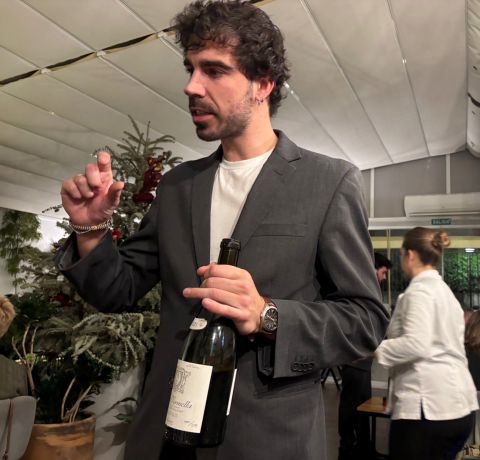
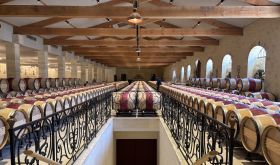
‘Opening Sobretablas in this lovely villa in the Porvenir neighbourhood was a combination of luck and chance’, Tetas told me. ‘We’d spent months searching, mainly in the city centre, but no location seemed to meet our requirements. Camila’s father knew the owners of the house, and it had just become vacant. An opportunity we couldn’t pass up. It’s a historic and protected house, so we wanted to maintain its original layout. The building has different spaces: a “patio” that we’ve conditioned for year-round use, several rooms spread over two floors that can be used as dining rooms or living rooms, and the wine cellar.’
And what were the challenges and pleasures of running a restaurant in your home, I wondered? Tetas replied, ‘Being in a villa like this helps us offer a more welcoming experience, given its resemblance to a house. The biggest challenge is maintaining many of the elements that date back to the last century and are sometimes difficult to replace.’
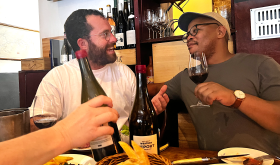
JR, who had studied the wine list online for ages before we arrived for our first meal, ordered a bottle of Ube Miraflores Cota 45 from Jerez for the ridiculously inexpensive price of €32 despite the temptation of many other wines from not just around Spain but also from France (Burgundy a speciality) and many other countries.
Tetas, well known on the Spanish wine scene, explained that securing many of these had been difficult to begin with as Seville has no tradition of wine importing, and he paid special thanks to Carlos Orta, the burgundy-mad chef at Villa Más in Catalunya. I recently sat next to John Moreira, the international director for drinks company Fever-Tree, who explained that Spain was their most challenging market for two reasons: a low cost of living and the fact that its hospitality industry is so fragmented. Both of which add to its charms for any visitor.
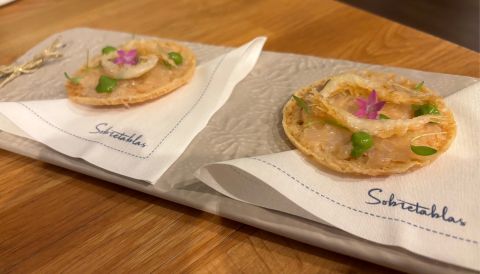
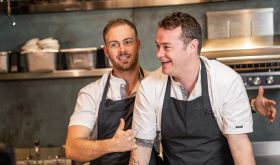
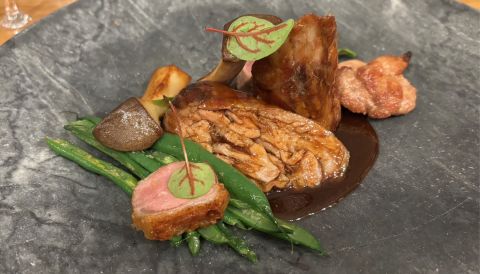
I decided on a novel approach with Ferraro’s menu which begins with five snacks, several first and main courses and the inevitable tasting menu opposite. I ordered the five snacks, we skipped the first courses and then ordered the hake and tuna. It proved a smart move as the snacks were extremely impressive. Best of all was a ‘tortillita’ of raw prawn meat topped with a tiny white shrimp, closely followed by a luxurious flan of wild mushrooms and a cannelloni stuffed with veal. This I followed on our first visit with the tuna and on my second visit by a dish simply described as a lamb stew but comprising slow-cooked lamb, morels and French beans that was undoubtedly the best dish of my stay in this charming city.
Confitería La Campana Calle Sierpes, 1–3, Casco Antiguo, 41004 Seville, Spain; tel: +34 954 223 570
Manolo Cateca Calle Sta. María de Gracia, 13, Casco Antiguo, 41004 Seville, Spain; tel: +34 657 590 509
Sobretablas Calle Colombia, 7, 41013 Seville, Spain; tel: +34 955 546 451
See also Eating and sipping in Seville for more restaurant reviews and contact information.
Every Sunday, Nick writes about restaurants. To stay abreast of his reviews, sign up for our weekly newsletter.