
Which is the preferable wine-bottle stopper, cork or screwcap? On aesthetic grounds, cork must win every time. And on grounds of sustainability, as I wrote in March, there is something much more attractive about a cork forest, with its renewable ecosystem, than aluminium mining (although we still don’t have an impartial comparative lifecycle analysis of the various wine-bottle closures, unfortunately).
But which is better for wine quality? Australians and New Zealanders got so fed up with the performance of the corks they were sent by the big cork producers in Portugal around the turn of the century that they moved almost wholesale to screwcaps, or Stelvins, as they call them.
The widely accepted view in academic wine circles is that screwcaps eliminate the variation in natural corks and allow winemakers to be sure that the wine the consumer encounters is exactly the same as what was originally put in the bottle. Winemakers’ chief concern is not the obvious, mouldy-cardboard stink of serious TCA infection but low-level cork taint that the consumer may not notice, but which robs the wine of its fruit and charm.
It is hardly surprising then that when Stephen Browett, chair of fine-wine traders Farr Vintners, invited various wine professionals to a blind tasting of exactly the same wine stoppered by cork and screwcap, he had a 100% acceptance rate. Very, very few producers have examples of each closure over several vintages – or admit to it. (It is rumoured that the Bordeaux first growths have been experimenting with screwcaps for some time.) Most producers decide to use just one type of stopper.
But Farr have been buying the New Zealand wines of Kumeu River for years, and Browett was able to source examples of some of its early-21st-century bottlings under both cork and screwcap, two 2002 whites and a 2000 red, while it was making the transition to screwcap after encountering severe TCA in one cork-stoppered 1999 wine. Another NZ producer, Felton Road, embraced screwcaps for all wines soon afterwards but, like Kumeu River, was also able to offer a couple of early-21st-century wines, one Chardonnay and one Pinot Noir, under both closures.
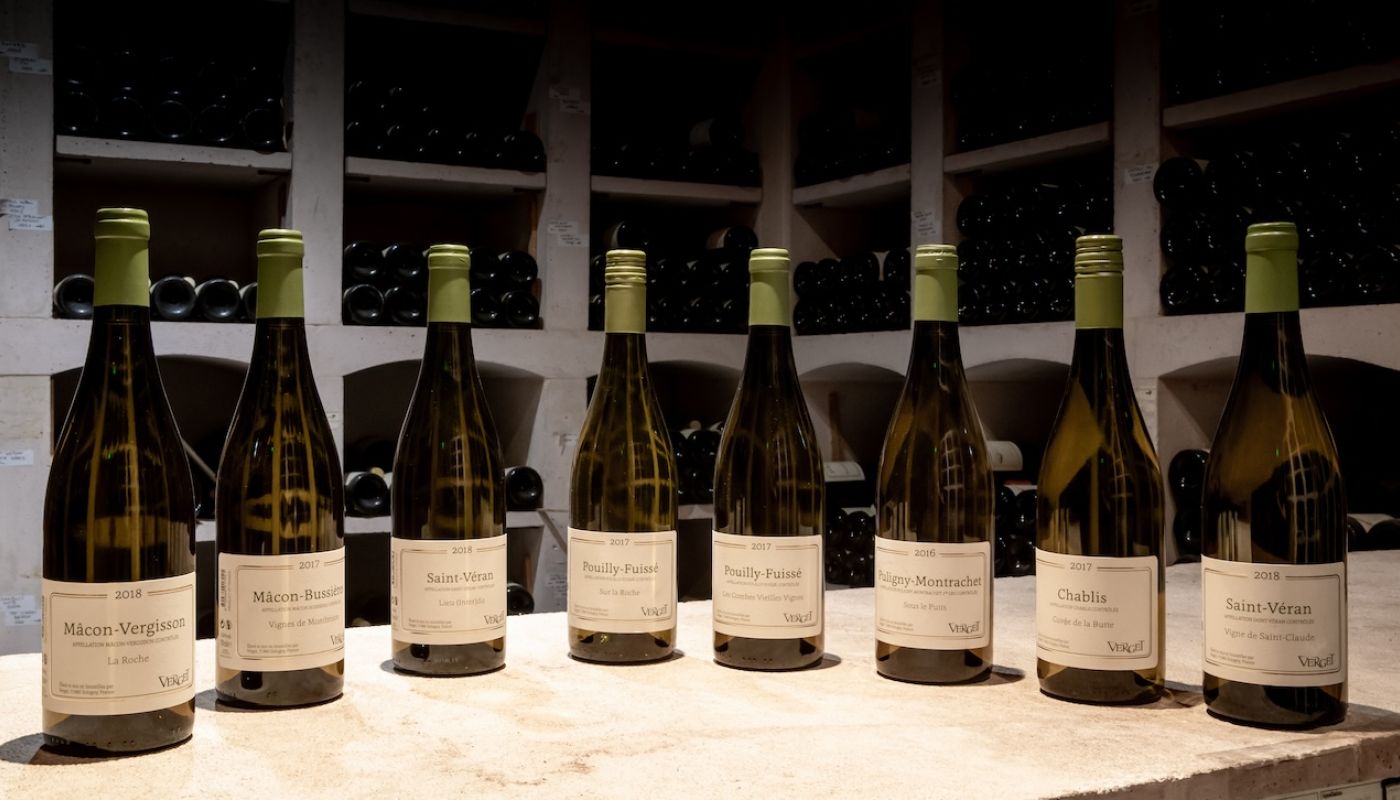
The producer most useful in this comparative exercise, however, was Farr Vintners’ long-standing supplier of white burgundy, Verget, which trialled screwcaps in 2003 and has been offering its wines stoppered by either screwcap or cork, roughly 50:50, since 2004. We were able to compare no fewer than 15 pairs of Verget whites from 2003 to 2019.
This white-wine-dominated line-up was supplemented by a 2009 and 2010 vintage of Ségla, the reliable second (red) wine of Bordeaux second growth Château Rauzan-Ségla. Master of Wine David Gleave of Liberty Wines, a big fan of screwcaps, chipped in with a Henschke, Mount Edelstone 2004 Shiraz from South Australia’s Eden Valley and a 2005 and 2016 vintage of the top Tuscan Cepparello, so we had some experience of ageworthy reds.
At the tasting in November, all these wines were served in pairs and had been decanted, so we couldn’t tell from inspecting the rim of the bottle which was cork-stoppered and which was screwcapped. We then voted on our favourite in each case.
We began with the New Zealand whites, which demonstrated vividly the superiority of the screwcap. The cork-stoppered Kumeu River, Estate Chardonnay 2002 was distinctly brown and smelt oxidised and unappetising, while the screwcapped version still had some fresh fruit about it. Of the 17 tasters, 17 preferred the latter. But a little dissension crept in with the second wine, Kumeu’s supposedly superior Maté’s Vineyard Chardonnay 2002. Three tasters actually preferred the cork-stoppered version to the screwcapped one, presumably thanks to its fruit and energy. This was a question of personal taste in wine style, however, rather than one of sheer wine quality.
With the Felton Road Chardonnay 2001 there were only two deviants from the gospel of the screwcap, but things changed considerably with the many flights of Verget white burgundies. In fact, in only three of the 15 Verget pairs did the panel of tasters definitively prefer the screwcapped version, while in five cases the panel definitively preferred the cork-stoppered option, although this was particularly marked in the early vintages up to and including 2014. During this period, Verget was using screwcaps with liners that let in a bit too much oxygen. From 2015 onwards, all Verget’s screwcaps had a more impermeable liner, and the votes for each closure of the ensuing vintages of Verget’s white burgundies were pretty even.
In 2012, Verget made another important switch, from natural corks – cylinders punched out of the bark of the Quercus suber cork oak – to Diam technical corks, made from carefully treated, tiny cork particles reassembled into a cylinder designed to guarantee freedom from TCA taint and to control the all-important oxygen transmission rate.
Poor-quality corks that let too much oxygen into the bottle are thought to have been one of the causes of the notorious phenomenon of premature oxidation that affected far too many white burgundies from 1996 until well into this century. But not a single one of the 15 cork-stoppered Verget bottles we sampled, from 2003 to 2019, suffered premature oxidation – an impressive performance. Perhaps this was the result of extreme vigilance when buying corks, and the switch to Diam seemed sensible on the basis of this tasting. My only objection to Diam closures is that they are less elastic than natural cork. If you want to re-stopper a bottle, you have to do it almost as soon as you extract the cork.
The oldest Verget wine we tasted was a 2003 Corton-Charlemagne, believed to be the world’s first grand cru burgundy to have been bottled under a screwcap. The two examples of this wine nicely illustrated to me the potential drawback of screwcapped wines. The screwcapped example was duller than the cork-stoppered version. Perhaps the screwcap has the effect of almost mummifying the wine, stunting its evolution?
Not that I preferred the cork-stoppered wines in all cases of the Verget wines. Far from it. In six out of 15 cases I preferred the screwcapped version, but many a time there was little variation in quality between the two samples, especially once Diam technical corks were used.
As for the red wines, the 17 tasters preferred the screwcapped version by quite a margin in all cases except the youngest, the 2016 Cepparello from Tuscany, for which the cork-stoppered version was preferred by eight votes to seven. (The next-youngest red was the 2010 Ségla from Bordeaux.) There were no Diams in the red line-up. They might have tipped things in cork’s favour.
So what does all this tell us? That the Diam closure and Verget white burgundies are both extremely reliable. The number of tasters who expressed no preference for either version – usually at least two and up to five out of the 17 in the case of the Mâcon-Vergisson, La Roche 2013 – suggests that there is no clear-cut answer to the question of which closure is best for white-wine quality, although to judge from the seven pairs of reds we tasted, contrary to received wisdom, screwcaps may just be superior to natural corks for red wines.
The most exciting or best-value of Verget’s 2023s
With prices per 12 bottles in bond from Farr Vintners
Bourgogne Blanc Grand Élevage 13.5%
£150
Mâcon-Bussières, Montbrison 13.5%
£160
Mâcon-La-Roche-Vineuse, Les Bois Joyaux 13.5%
£180
Mâcon-Pierreclos, Lieu Secret 14%
£190
Mâcon-Vergisson, Sur la Roche 13%
£190
St Véran, Vigne de St-Claude 14%
£180
St Véran, Lieu (Inter)dit 13.5%
£220
Pouilly-Fuissé, Haut de la Roche 13%
£295
Pouilly-Fuissé, Les Combes Vieilles Vignes 13.5%
£360
Pouilly-Fuissé, La Roche Premier Cru 13.5%
£420
For tasting notes, see Cork v screwcap – the tasting. Verget's wines are also imported by Ideal Wine & Spirits Co and Thatcher's Imports in the US and by Bibendum in Australia. For international stockists, see Wine-Searcher.com.













