Looking for a bottle to give as a present? Those carrying significant years, ideally birth years, can be just the job. But the trouble is that if wines are to have the same age as the recipient, they tend to be expensive. A twentieth-century vintage will be necessary even for those only just old enough to be allowed to drink, and it will have to be a wine that was worth keeping 20 years or so.
Given the age of most wine enthusiasts, you are more likely to be looking for a wine that is several more decades old – quite a financial commitment. Only the smartest table wines last that long, and there can be massive question marks over the authenticity and storage history of single bottles of venerable table wine.
Fortified wines, wines to which alcohol has been added during the production process such as port, sherry and madeira, are much more robust than table wines and, since most unfortunately the category is far from the height of fashion, they tend to be much better value than classic table wines.
Only a minority of them carry a vintage date, however. Vintage-dated sherry is a recent innovation, as is madeira labeled with the date of harvest, so they are generally too young to serve our purpose. Vintage port would be a fine gift even if it needs to be really quite venerable before it truly delivers on its potential. I’d ideally be drinking 1977s and wines from the 1960s now – gifts for those in their forties and fifties perhaps?
Single-quinta vintage-dated ports are a good substitute for the more expensive wines labeled with the name of a famous shipper such as Taylor or Graham as they start to drink well at closer to 10 than 20 years old and they are getting better and better quality all the time. The handful of 2015s recently declared would probably do nicely when 2015 babies come of age.
Or there are the vintage-dated tawny ports often labeled Colheita that are increasingly to be found on the market. An excellent source of mature ports of all sorts, including single-quinta ports of the 1980s for about £70 a bottle, is MWH Wine in Berkshire, who will ship worldwide.
One way round the difficulty of squaring suitable vintage year with depth of pocket is to look for solera wines carrying the year when the solera was established. These generally fortified wines are made by fractional blending of old wines with younger ones in systems known as soleras. These used to be common on the Atlantic island of Madeira – and many of those who bought a wine with a nice old year on the label thought erroneously they were buying wine made exclusively in that year. The category was so abused that it was temporarily suspended by the EU but madeira soleras are now being established once more – still too youthful to be useful for our purposes.
I did come across one very useful dated solera wine recently, De Muller’s Aureo 1954 Solera Tarragona. With its orange cellophane wrapping and distinctly retro label, it rather reminded me of Lucozade to look at but, although it’s as sweet, it is infinitely more interesting – and great value at not much more than £20 a bottle.
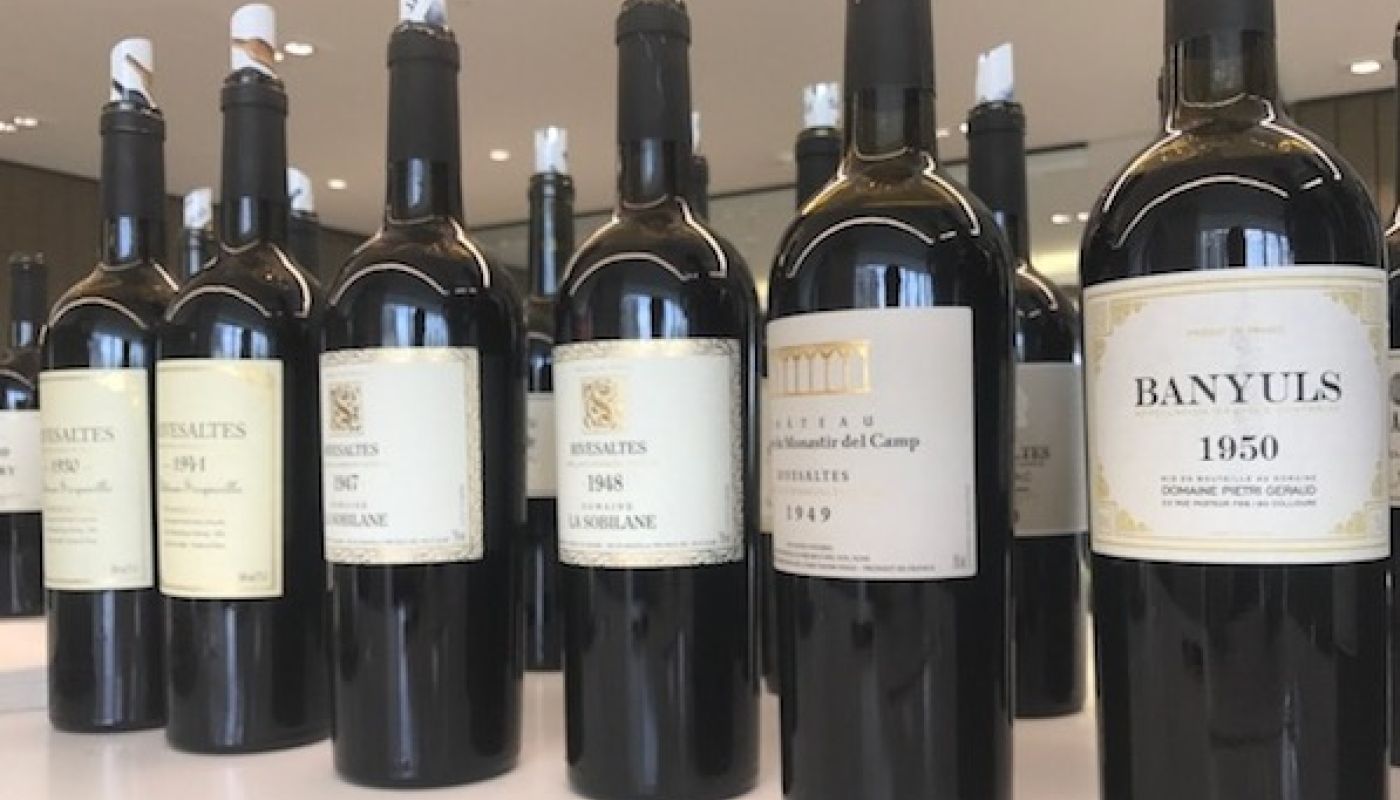
But perhaps the greatest resource of good-value, truly vintage-dated wine is the range offered by Philippe Gayral, who has built a business selling the small parcels of vins doux naturels he has found on his travels around the hinterland of Perpignan in Roussillon. His current range includes all these vintages: 1930, 1941, 1947, 1948, 1949, 1950, 1951, 1952, 1953, 1955, 1958, 1959, 1960, 1963, 1965, 1968, 1975, 1977, 1979, 1984, 1987 and 1988 – not all of them bottled yet under his label L’Archiviste. Fine-wine traders Farr Vintners of London and Hong Kong offer the widest range, including an 1874 for £300 a bottle and seven wines from the 1930s between £500 and £960 a dozen. For between £300 and £500 a dozen the best of these wines (see below) offer serious interest, history and vintage relevance for a special year, but Farr specialise in big orders. Try Selfridge’s for single bottles.
They are made a bit like port, the fermentation being stopped by the addition of pure spirit (if that is not an oxymoron), but they are only about 17% alcohol as opposed to port’s 20%. Based on Grenache grapes of all three colours, these Rivesaltes, Banyuls and Maurys are the most traditional wines produced in Roussillon and dominated the wine scene there until the fashion for table wines and international grape varieties came along in the 1980s.
Producers kept making these strong, sweet wines – often in tiny quantities – just to keep the tradition alive, but knew that there was no hurry whatsoever to sell them. Gayral’s aim is to ferret them out.
A complex EU subsidy scheme kept production going, notably in the co-ops that predominate on the plains around Perpignan. ‘They kept small lots of these wines like a gold bar, an investment for the future', according to Gayral.
But he has also sniffed out many a wine made by small domaines that exist no longer, their vineyards long since concreted over as, like all French towns, Perpignan has sprawled out into countless malls, lotissements and industrial parks.
Of course, with wines supposedly this old, and from rather obscure origins, doubts have been expressed about the authenticity of their ancient vintages. Gayral himself admits that he occasionally livens up a particularly antique liquid with the addition of something similar but younger, permitted up to 15%. (Few wine drinkers realise how widely these 15% additions of something else are allowed for wine in general.)
But he points out that the French customs authorities and their colleagues from the delightfully named Répression des Fraudes are very much on his case. His wines are authenticated by detailed records from the producers that are scrutinised regularly by customs officials. And now this is increasingly backed up by both nuclear magnetic resonance tests and radiocarbon dating, both of which techniques have been developed to offer pretty sophisticated analysis of exactly how old a wine is and roughly where it comes from. Indeed, he claims that his are some of the inexplicably few in these days of fake wine to be authenticated by carbon dating.
I asked scourge of the wine counterfeiters Maureen Downey whether radiocarbon/carbon-14 dating was ever used in her line of work and she replied thus:
No.
Carbon dating is not precise enough, and way too expensive.
To date there is nothing scientific that can be done that is affordable, accessible and accurate.
The closest we have is cesium-137 testing – and that is extremely expensive, only occurs in a few places and can only date the liquid in the bottle as containing at least some liquid that is:
- Pre-atomic test
- Pre-Hiroshima and Nagasaki
- Pre-Three Mile island
- Pre-Chernobyl
- Pre- Fukushima
(way too many horrors…)
Knowing the Chernobyl nuclear disaster plays a part in this, its residues indicating incontrovertibly whether a wine was made pre or post 1986, I looked up ‘Chernobyl dating’, only to be directed to a series of Ukrainian lovelies. Wine writing is a constant series of surprises.
HOT DATES – BOTTLES WORTH CHASING
Taylor’s Quinta da Vargellas 1987 Port
£78 MWH Wine
Taylor 1977 Vintage Port
About £120 from a range of independent merchants
Graham 1970 Vintage Port
About £120 from a range of independent merchants
De Muller, Aureo Solera 1954 Tarragona
£21.79 Georges Barbier
All these are from L’Archiviste:
Chateau Sisqueille 1930 Rivesaltes
€136.73 Best of Wines, Netherlands
Prieuré du Monastir del Camp 1949 Rivesaltes
£89.75 Winedancer.com
Domaine Pietri-Geraud 1950 Banyuls,
Bids invited from €49 Ideal Wine, UK and France (online auction)
Domaine de la Sobilane 1952 Rivesaltes
€168 Jagaro, Germany
Prieuré du Monastir del Camp 1959 Rivesaltes
£78 Four Walls Wine
And see Farr Vintners’ collection. They will split cases but do like large orders. Also wine-searcher.com for other stockists and L’Archiviste’s VDNs in 2017 for tasting notes.