A few years ago I was asked to address a hall-full of Turkish wine producers in Istanbul to advise them how best to export. I made the point that for maximum effect they really needed to act together rather than individually. Everyone in the room burst out laughing. Apparently, in Turkey, or in wine circles there anyway, cooperation is an unknown quantity.
After my talk, a wine producer from Greece, another country often riven by rivalries, who was in the audience observed to me, ‘If we Greeks can manage to get together to export, surely the Turks can.’ (Although it has to be said that a lack of cooperation between vine-growers on the island of Santorini is currently threatening their very survival as tourism encroaches on agricultural land, workers and even water supply.)
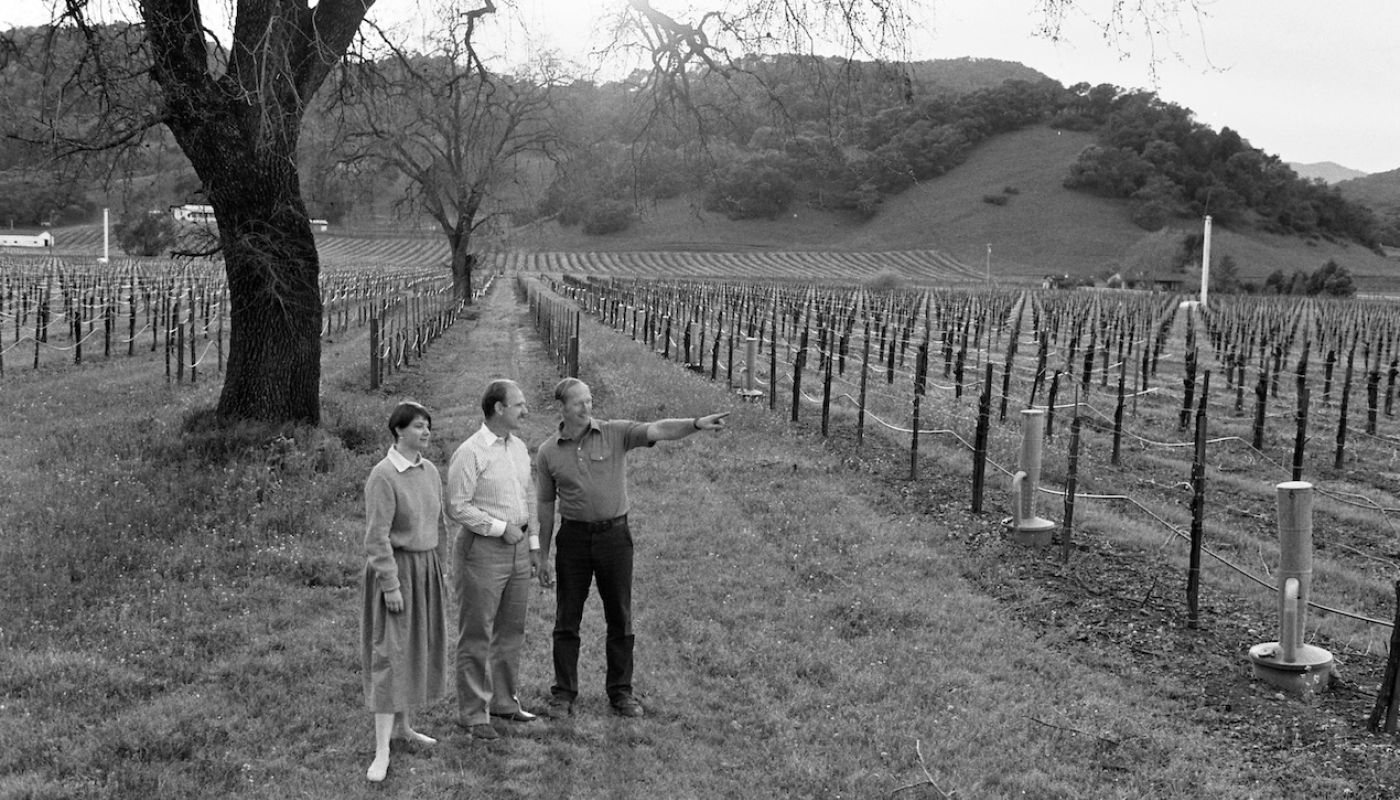
Compare and contrast with the Napa Valley. Admittedly its current wine-producing history is measured in a few decades rather than the millennia of which both Greece and Turkey could boast, which may be a factor in the admirable level of vintner cooperation there. In the 1970s they were all forging a completely new path, turning cattle ranches into vineyards, uprooting walnut trees in favour of vines. And trying to smash France’s wine hegemony. No wonder they worked together. But the man behind the first new winery in Napa Valley in 33 years, Robert Mondavi, took things to an extraordinarily generous level.
When Dennis and Judy Groth moved to the valley to make wine in the early 1980s, they came from the world of video games, in which absolute commercial secrecy was essential. When their Oakville neighbour Robert Mondavi offered to lend them expertise and even contact details of likely buyers of their wine, they were deeply suspicious. He must be spying on them, they thought.
As anyone familiar with Mondavi’s modus operandi could attest, this would have been the last thing on his mind. He just wanted to ensure that they did their best to further the reputation of the Napa Valley.
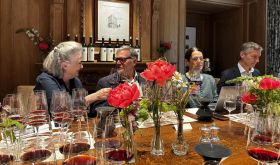
Scott Becker of Realm Cellars in the Napa Valley came over to London recently to share some of the historic bottles that made its reputation and told how the same sort of spirit gave him his break, with Napa vintner Jack Cakebread his benefactor in this case. When Cakebread visited the business school where Becker was a student, they bonded over a shared military background. Cakebread offered Becker an internship and free long-term accommodation in the valley. Eventually Becker took his chequebook (this was 2008) to Cakebread’s office, wanting to pay him some rent. Cakebread adamantly refused to take it, telling Becker that he had once tried to pay ‘Mr Mondavi’ for all that the latter had taught him. Mondavi was very obviously offended and insisted, ‘Some day you can do the same for some kid’.
But Mondavi was not the valley’s only gentleman wine farmer. Outsiders Bart and Daphne Araujo bought the famous Eisele Vineyard outside Calistoga (now owned by the Pinault family of France) in 1990. Bart then found that not only was he contracted to supply fruit to local vintner Joseph Phelps (whose wine estate is now owned by LVMH), he also found that the Eisele Vineyard name had been trademarked by Phelps.
‘Yikes!’ Araujo wrote in an explanatory email to me. ‘So I had to reach out to Joe and requested a meeting to discuss the trademark. Joe asked me to come to his house the next morning for breakfast. I arrived and was seated at a small cafe table in the kitchen with him. Joe was typically never one for small talk, but he continued some innocuous banter during the entire breakfast. When we were nearly done with breakfast, I couldn’t take it anymore, and blurted out “Joe, we need to talk about the trademark – how much can I pay you for the mark, and would you like to enter into a new agreement to share the vineyard fruit?” Joe responded that he would transfer the trademark to us at no cost, and continued that he would not accept our offer for ongoing access to fruit, as we needed all of the production for our new wine venture. All Joe asked in return was that “you and Daphne promise me that you will always do what is best for that very special property”. Joe Phelps became one of our great mentors, and also a father figure for me.’
The spirit of cooperation is still alive and well in this, perhaps the most famous, wine valley. Napa Valley Vintners is a thriving organisation which is notable for its charitable work, funded substantially by an annual auction involving dinners and wine donated by just about all of the valley’s wine producers.
An obvious, if much more youthful, example of vintner cooperation is the Swartland in South Africa, more recently put on the wine map. In the late 1990s, new producers such as Eben Sadie, Chris and Andrea Mullineux, Calli Louw and Adi Badenhorst needed to show the world the brilliance of their wines, typically based on old, unirrigated Chenin Blanc bush vines, and realised it would be virtually impossible if they acted alone. So in 2010 they launched The Swartland Revolution, an annual festival of wine and music to which opinion-formers were invited. They have continued to act cooperatively, showing their wines together, in increasing numbers, at, for instance, ‘New Wave South Africa’ tastings in London in the 2010s. They have just revived The Swartland Revolution event and continue to share intelligence, winemaking space and much more besides.
Another southern-hemisphere wine region with a remarkable spirit of cooperation between participants is Maule, well south of the historic centre of Chilean wine production on the outskirts of the capital Santiago. A region of smallholders rather than smart landowners, it was regarded for years by the wine establishment as fit only to supply cheap wine for blends. But by banding together to form organisations such as Vigno, centred on ancient Carignan vinestocks, and the Almaule association showcasing the produce of old País vines (the same as California’s Mission grape), the producers and growers of the region are now recognised both in Chile and abroad for their own, very special attributes.
Vintner cooperation can be engendered by obstacles encountered. In the southern German Baden region, many ambitious wine producers were frustrated by the fact that the sort of wines they wanted to make, and drink, didn’t meet the rather strict requirements of German wine law. They wanted to experiment with grape varieties not officially sanctioned then as producing quality wine. So they formed their own category, Badischer Landwein, with much more flexible rules and an insistence on sustainable viticulture and minimal intervention in the cellar. Every year this hipsterish band gets together to show its wares at the Badische Landweinmarkt, held since 2017, cheekily just before the elite German wine producers’ organisation the VDP hosts its much bigger annual showing in Mainz.
In Austria vintners on the steep northern bank of the Danube in the Wachau region have long worked closely together – so closely that they have their own unique nomenclature – Steinfeder, Federspiel then Smaragd, according to the ripeness of the grapes – that is quite different from the rest of Austria.
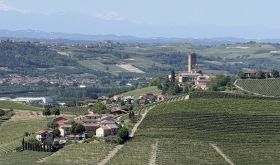
Other regions where there is a notable level of inter-vintner cooperation – sometimes to the extent of tasting and analysing each others’ wines – include Barolo, Barbaresco, Bolgheri, New York’s Finger Lakes and Oregon’s Willamette Valley.
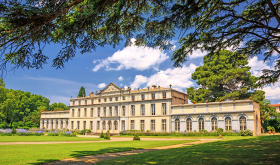
Gone are the days when a Côte d’Or wine producer claimed not to know the address of a wine-producing neighbour. Vintners are in general a congenial, collegiate bunch. When Nahe winegrowers Dönnhoff lost much of their crop to spring frost in 2024, their friends at Bürklin-Wolf in the Pfalz and Wittmann in Rheinhessen stepped in and offered them fruit. When July hail, unusually, totally wiped out Raimond de Villeneuve’s 2012 crop at the Château de Roquefort in Provence, multiple other local vignerons rallied round to fill the gap. He had to call a halt at 36 of them because the authorities would allow him to make only 80% of his output of the previous year. Austrian Fred Loimer even offered him some Grüner Veltliner grapes, which would of course have outlawed the whole thing in the eyes of the French authorities. On the advice of his lawyer, de Villeneuve paid each vigneron one euro, regardless of the size of their contribution.
Of course the wine world is dotted with specialist organisations devoted to a particular cause. But here I highlight some corners of it where just about everyone pulls together – bar the odd curmudgeon.
Some recommended wines from cooperative wine regions
Presented in the order the relevant regions are mentioned in the article.
Frog’s Leap Zinfandel 2022 Napa Valley 14.6%
£33.05 Justerini & Brooks, £35 Vinvm
Matthiasson, Linda Vista Chardonnay 2022 Napa Valley 12.5%
£48 Vin Cognito, £53 Nekter Wines
A A Badenhorst, Secateurs Chenin Blanc 2025 Swartland 13.5%
£15.95 Swig
Rall, Ava Syrah 2023 Swartland 12%
£55.99 Lay & Wheeler
Undurraga, Cauquenes Estate Carignan 2022 Maule 14.5%
£10.95 The Wine Society
Undurraga, TH Carignan 2022 Maule 14.5%
£17 The Wine Society
Shelter Pinot Noir 2022 Badische Landwein 13%
£38.26 Ripley Wines
Ziereisen, Jaspis Zipsin Pinot Noir 2022 Badische Landwein 13.5%
£39.59 Ripley Wines
Weinhofmeisterei Mathias Hirtzberger, Greif Grüner Veltliner Smaragd 2024 Wachau 13%
£42 Clark Foyster Wines
Prager, Steinriegl Riesling 2023 Wachau 13%
£42 Berry Bros & Rudd
Dönnhoff, Oberhäuser Leistenberg Riesling Kabinett 2023 Nahe 9%
£23 Abingdon Fine Wine, £26.39 Ripley Wines
Tasting notes, scores and suggested drinking dates are in our tasting notes database. For international stockists, see Wine-Searcher.com.