Maria Pozzo-Tonkova writes I am a wine blogger specializing in Hungarian wines. In 2024, I completed a course at the Central European Wine Institute in Budapest and have been organizing wine tastings since then. I am particularly interested in rare and forgotten Hungarian grape varieties
Hungarian phoenix
Until the 18th century, this dark and enigmatic grape was the only variety use to make red wine in Hungary. Later it achieved some notoriety abroad blended with Kadarka to produce the “Buda Red” wine exported throughout Europe. Despite this illustrious history, you can now barely find anyone who heard this name outside Hungary. The name of this wine grape is – Csókaszőlő.
My first encounter with this autochthonous Hungarian grape variety happened two years ago when I was choosing a bottle of wine for dinner with friends in a wine shop in Budapest. “If you want a good red wine, take this one, this is the real deal”, recommended a sale assistant showing me a bottle of wine with a black bird on the label. The bird was a jackdaw, or Csóka in Hungarian, which gave its name to Csókaszőlő (Jackdaw grape in Hungarian).
Csókaszőlő used to be the most widespread grape variety in Hungary. Before the 18th century when Kadarka was brought by the Serbs escaping Ottoman invasion, it was the only grape variety to produce red wines. Even after being overshadowed in fame by the elegant Kadarka, Csókaszőlő was used in the Buda Red wine blend to bringing more colour and body to it.
However, Csókaszőlő was the unfavoured child of the Hungarian winemakers. Towards the end of the 19th century, István Molnár, viticulturist and author of several horticultural books, wrote that Csókaszőlő could not “even step into the shadow of the Kadarka in terms of nobility”. In 1884, Csókaszőlő plantations were recommended for removal by the Viticulture and Oenology Section of the National Hungarian Economic Association. The last blow came with phylloxera epidemic that wiped out most of Hungary’s vineyards, including the Csókaszőlő vines.
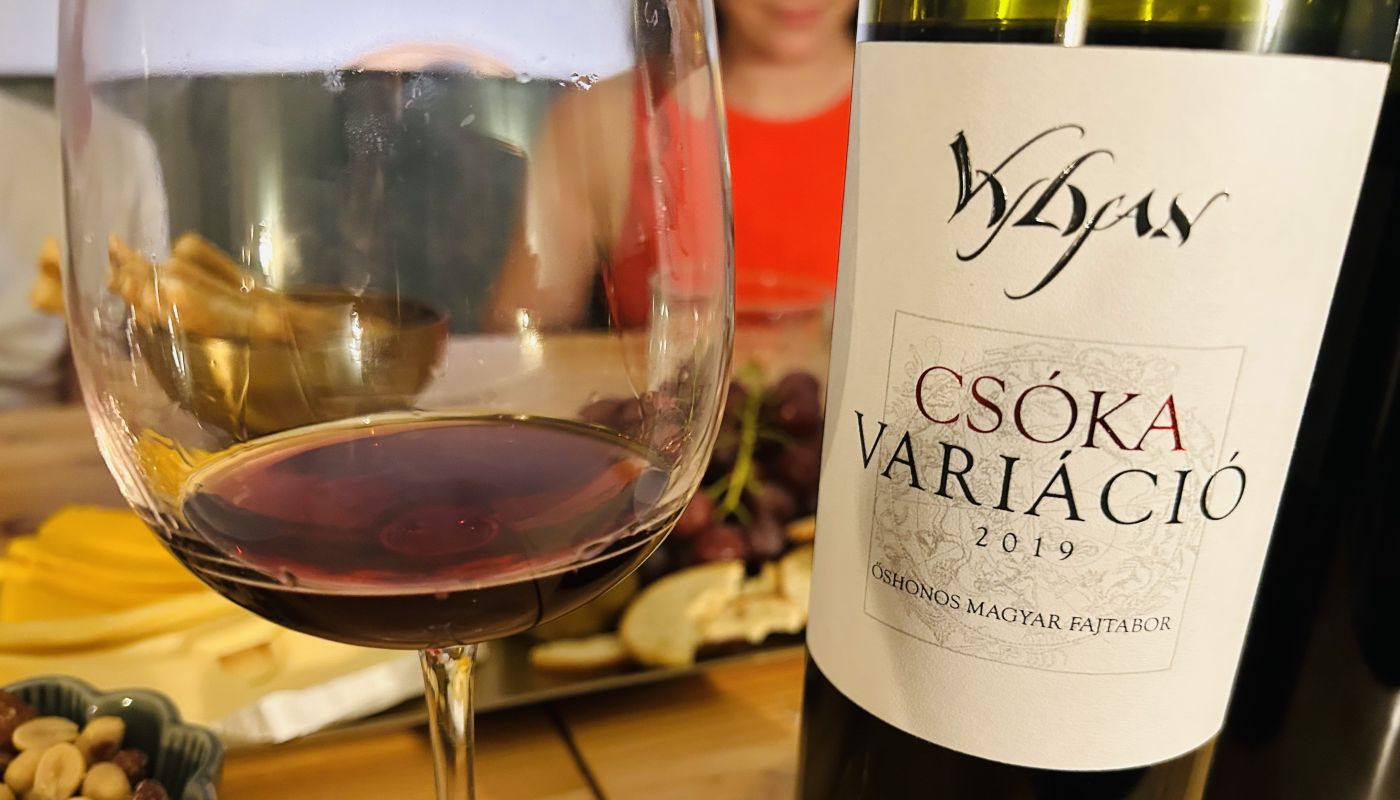
We owe the opportunity to drink this wine today to Jozsef Szentesi who started replanting Csókaszőlő in the beginning of 2000s. After reading an old article mentioning the Buda Red blend as one of the main Hungary’s export products, the winemaker immersed himself into reviving pre-phylloxera grape varieties. He took cuttings from a few remaining vines in the Pécs Viticulture Research Institute gene bank, and with this was able to restart production of Hungary’s oldest red. Szentesi’s first Csókaszőlő released in 2004 came as a bombshell. A few other wineries, including Vylyan from the southern Villany region, whose Csókaszőlő I tried, decided to follow his example.
Trying this wine today, I find myself wondering why it fell into disgrace. The wine made from Csókaszőlő has a beautiful deep ruby colour, velvety tannins and high acidity. On the nose, this wine shows notes of dried cherries and cranberries. It’s simply delicious!
Nowadays, Csókaszőlő can mostly be found as a single-varietal wine. But in the pre-phylloxera times, when varietal wines did not exist, it was used in blends like the legendary Budai Vörös (Buda Red). Csókaszőlő played an essential role in this blend giving to it more prominent colour, tannins, alcohol and acidity. The latter was particularly important for the wine’s shelf life. Buda Red thus became one of Hungary’s main export products during the monarchy along with Tokaji Aszú and might well have remained one of the country’s most iconic wines if not for phylloxera.
I had a chance to try Buda Red once. Being made by just one winery in the world, it is a real piece of luck to find it on a store shelf. This wine is extraordinary - the elegance and spiciness of Kadarka marries with vibrant Csókaszőlő to produce a unique blend. History cannot be rewritten but we can speculate that today Buda Red could have taken a well-deserved place in the world market next to traditional Bordeaux blends and Chianti.
Csókaszőlő is rising from its ashes like a phoenix but its future is still uncertain. This wine grape is grown on only 2 ha in the world today and remains unknown even to most Hungarians. Making wine from a rare and forgotten variety is not lucrative and the task falls to wine enthusiasts who are not afraid of experiments and work up courage to do it. These attempts are supported by thematic wine festivals aimed at promoting autochthonous Hungarian grapes and wine writers like me searching for hidden gems.