7 October 2019 Samantha Cole-Johnson was in the winery all week, ensuring optimum contact between grape skins and must. She explains what to do when things go wrong.
The winery smells amazing – if you like the smell of fermenting juice, which I happen to think smells deliciously like fruit juice, freshly baked bread and strawberry soda. The ferments also taste good, if you happen to be able to decipher what ‘good’ for a ferment is. It’s quite difficult because, being used to drinking finished wine, your immediate thought is to try to speculate on what the ferment will become when it’s finished.
But I’ve discovered that the key is not to speculate, because it’s impossible to say what it will be like when it’s done. (If you haven’t tasted ferments, you should know they’re a world away from what you’re pouring out of a bottle). Instead you compare it to all the other fermenting wine you taste or have tasted. It should taste good comparatively: not too green, not too tannic, not too stinky like bad eggs (this is H2S, hydrogen sulphide), and not like nail polish (ethyl acetate).
Green smells can’t really be fixed, they mean you picked too early. You can make the green smell go away by fining the juice, but you might also lose other phenolics in the process (and these affect the colour, taste and mouthfeel) so it’s usually not worth it. We had one pick of Chardonnay a couple of weeks ago that was so green that we used a bit of casein to fine it and drop some of the green aroma and flavour, but it’s generally not practised in our winery.
Too tannic isn’t pleasant in an unfinished wine. It probably means you pressed too hard, but I’ll get to that below.
Stinky H2S is easily fixed in a ferment. Its cause is usually a lack of yeast nutrients (nitrogen), which is why we added the optiflore mentioned in my last journal entry). It can also be caused by residual sulphur that wasn’t destroyed by oxygen and microbes before fermentation started. Vigorous aeration via pumpovers will blow off the smell very quickly in most cases.
The smell of ethyl acetate (nail polish) in a starting fermentation usually means that your ferment is cold and the yeast are struggling. You can warm the ferment up and help them out – most people do. However, our winemaker decided to play with fire this year. He didn’t warm up our tanks as soon as the smell became evident. He didn’t do this because during the yeast's struggle, they produce some really beautiful esters which can add a lot of complexity to a wine and smell really good.
It’s generally accepted that the longer a fermentation, the more esters are formed and the greater the ester retention. The shorter the fermentation, the fewer esters are produced. When you heat a ferment, you speed it up. So the plan this year was to wait, push the yeast to struggle a bit longer, and then warm the tank. Generally, the results were very good and he says we have better-tasting ferments than we have ever had (they really are gorgeous). But … three tanks were left just a bit past the deadline and the ethyl acetate smell didn’t blow off. I’ve been told that this is fixable, it just requires a bit of manoeuvring that isn’t ideal. I’ll get back to this in a second.
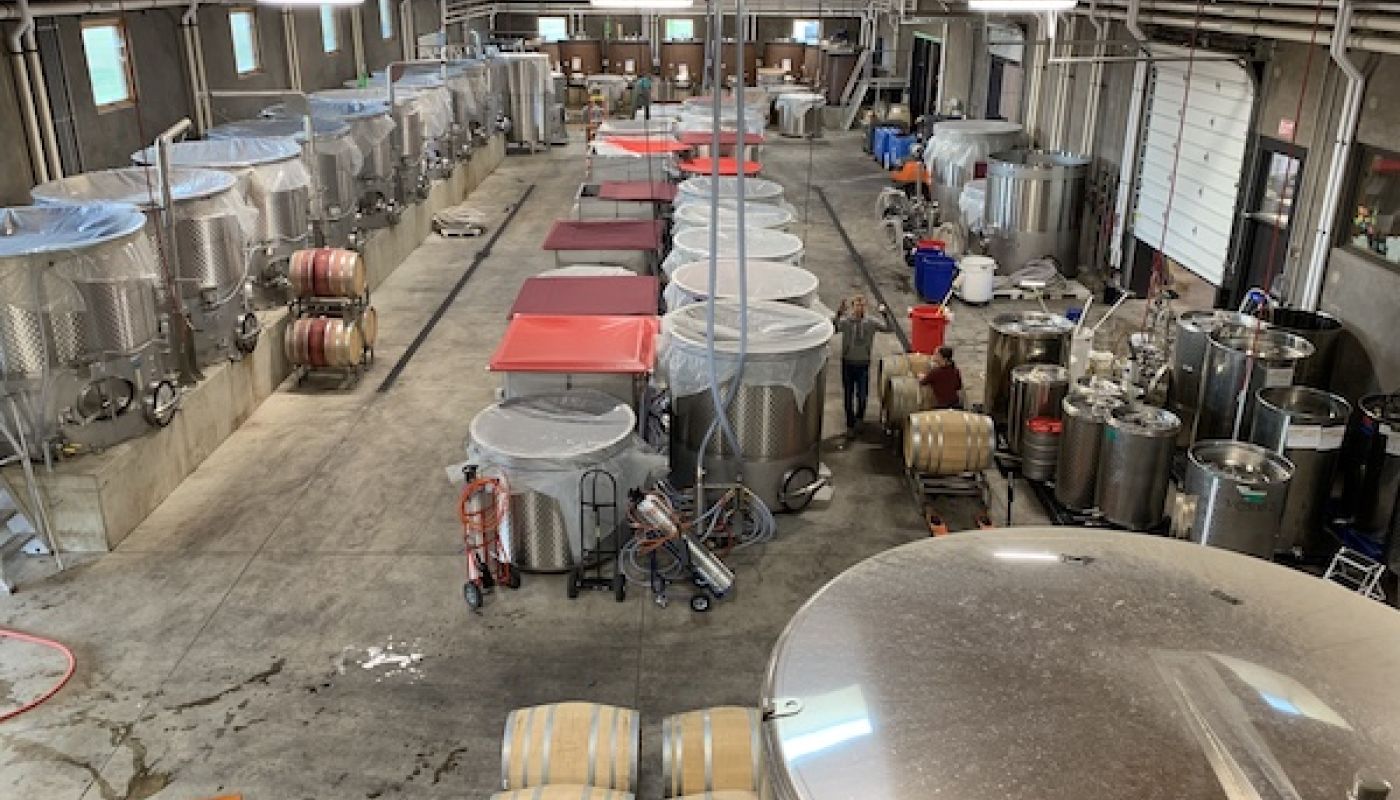
We started digging out tanks this week and pressing the Pinot Noir. This means that you hook up hoses and pump all the juice from the tank with grape skins in it to one that is clean. As all your tanks should have screens (if they don’t then one of your interns screwed up, your pump is broken, and the intern in question owes everyone multiple beers), you have clean, free-run Pinot in the new tank. The skins are then dug out into a bin (by an intern) and forklifted to the press, where they are pressed and the winemaker decides at what pressure they want to stop pressing. We usually go up to 1.2–1.4 bar before we stop. Any juice that comes after this is run into a different tank, labeled ‘hard press’, and doled out if anything needs a bit more tannin or ‘oomph’. If nothing needs it, it’s disposed of.
Now, back to overly tannic unfinished wine. It’s usually so tough because you pressed too hard. As for the tank with ethyl acetate, you wait until you drain a ferment that’s clean and pretty. Then, you sacrifice the pomace. Instead of pressing it, you run the ferment with the ethyl acetate over the pretty-smelling pomace and it acts as a filter. I’m not sure how this works scientifically but I’ve been told it’s tried and true and so this is the method used. I’ll report on how that goes in the next couple of weeks.
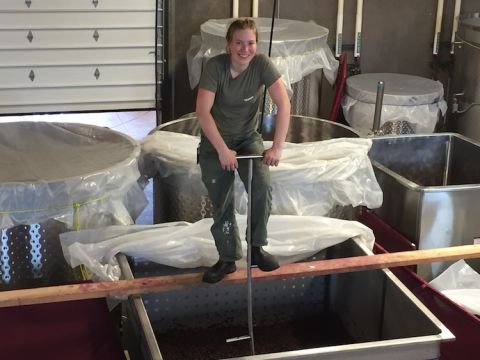
A lot of things happened this week, but five out of the seven days I was wandering around the winery doing cap management (pumpover, pigeage, punchdowns) and tasting ferments so I don’t know the half of them. I do know that one of our clients doesn’t like feet in their wine so we’ve been doing some more traditional hand punchdowns (shown in the picture), which really just results in sweat in your wine instead of feet. To be clear, we use our feet in our wine because it’s easier, faster, you can feel temperature difference and mix hotspots in, and you know whether or not your temperature gauge on the tank is accurate. If you’re not physically in the ferment, you can’t know for sure what the temperature is like.
The last of the fruit is in and processed, the vintage has produced what I think will be some outstanding wine, and we have a huge party tomorrow to celebrate the end of the harvest, so I better get some sleep!