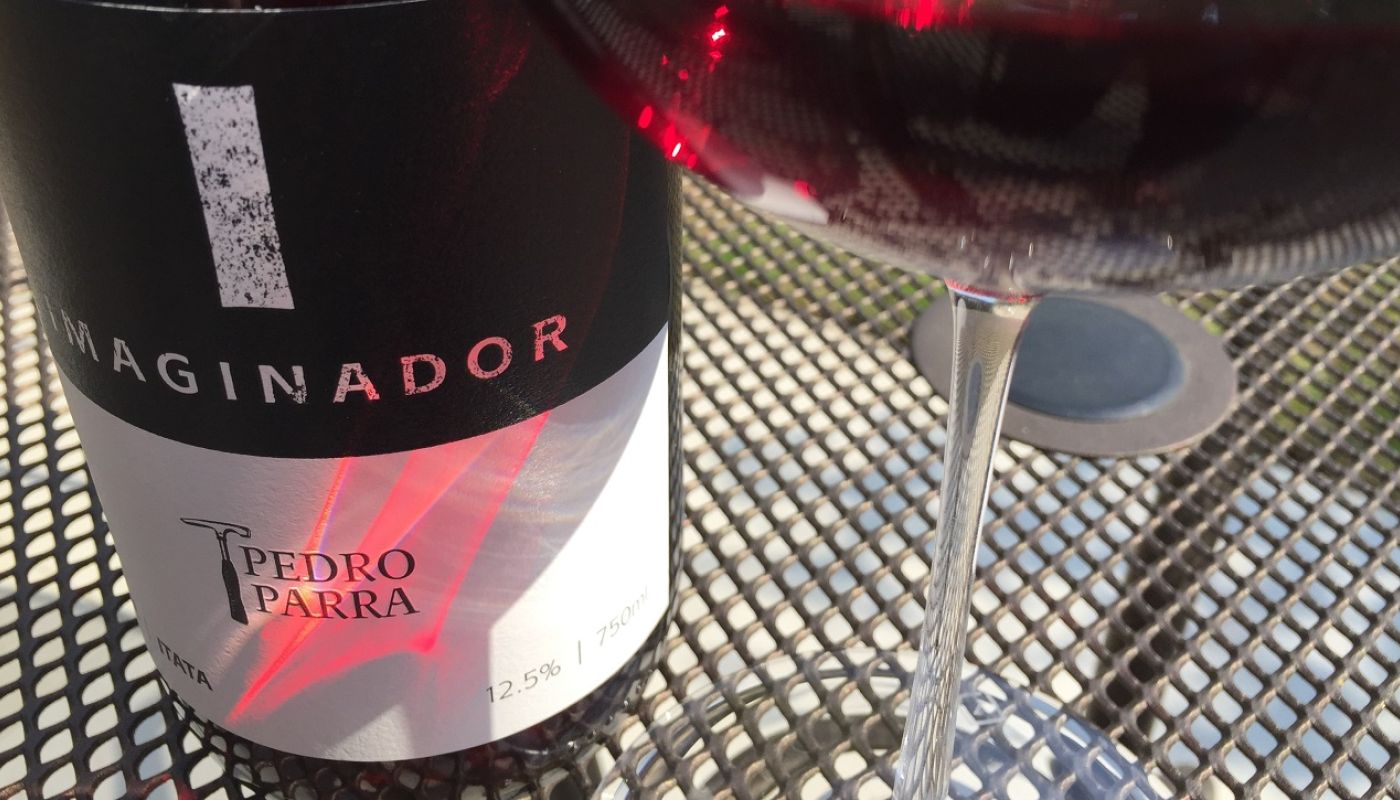
From $15.99, 1,850 Japanese yen, 76 Polish zloty, £18, €23.45, 180 Danish kroner, 159 Brazilian reais, AU$48.
Over the last three or four years a number of varietal Cinsaults have drawn me into this southern French variety. Most often found as the fourth ingredient in southern Rhône blends, after the Grenache/Syrah/Mourvèdre triumvirate, or as a larger proportion of many a Provence rosé, it has been hard to get to grips with what Cinsault is like on its own.
These single-varietal wines have, however, shown me just how effectively Cinsault can express terroir, in the vein of Pinot Noir. Pale and scented, with an aromatic profile that can vary significantly from place to place, it can have a particularly nuanced aroma.
It is also structured quite like Pinot, with relatively light tannins and good acidity. In fact, it is the variety’s ability to retain acidity in the heat of the southern French summer that is valued in the Rhône, where it brings freshness to softer Grenache.
Perhaps unsurprisingly, then, the varietal examples I have encountered have not been from its French homeland, but instead from areas in the world where heritage vineyards are being rediscovered and the varieties grown there re-evaluated: South Africa’s Swartland and the southern regions of Chile, especially Itata and Maule.
Itata, east of the southern city of Concepción, has come to the fore within, perhaps, the last decade. Indeed, the earliest article on these pages discussing Itata in any depth was this wine of the week as recently as 2013: De Martino, Viejas Tinajas Cinsault 2012 Itata. [But our first Cinsault-based wine of the week was Les Servières from the Languedoc in 2003 – JR.]
Much of the buzz around Itata has been for its País, where old vines were thought to take this generally disregarded variety to a higher level. But, for me, old-vine País at best makes good, interesting, but not great wines, which all too often have aggressive, rustic tannins that can be hard work. From the ranges I have tasted, I believe it is Itata’s old Cinsault vines that are the region’s true gems.
My wine of the week, Imaginador Cinsault, is made by Concepción native, Pedro Parra. Parra is a renowned viticultural consultant, perhaps best known for digging soil pits to help growers understand the ground in which their vines are planted. Julia profiled him and his work in Chile here as early as 2012, and he is mentioned in more than 30 of our articles. Jancis recently highlighted the part that Parra’s pits have played on the other side of the Andes, helping to drive The Argentine wine revolution, as the Argentines go about digging deeper into their terroir.
It therefore comes as no surprise that soils make up an important component of Imaginador (a geologist’s rock hammer is front and centre on the Imaginador label and can be found more discreetly on the labels of Clos des Fous, in which Parra is a partner).
Itata has swathes of soils derived from decomposed granite, whose age range is measured in hundreds of millions of years – in common with Swartland, in fact. These granites are so old that they can be crumbled by hand, and a solid stamp will crack a block of it. Many of Itata’s old, dry-farmed bush vines are planted on such soils.
Parra, however, is more selective: he doesn’t seek out just granite, he seeks out white granite soils, which are something of a rarity. As he explained by email earlier this week:
‘There are many kinds of granites, and my focus has been on the search for a particular granite that provides what I call the "chambolic", that means a chalk sensation of minerality, elegant with good mid palate and providing finesse in the wines. Wines tend to be red more than black fruit. This in my experience is only possible with granites with minimum clay content and very low ferric oxidation. In more simple words, soil is almost white and full of silt and quartz. The difficult part is that less than 5% of the granite terroir shows this typicity (something I learnt in my years as a consultant in [Spain’s Sierra de] Gredos with Comando G).
‘In general granites provide a different kind of wine, more rustic, acid, with more frontal minerality, without the sense of finesse (for example Pencopolitano [another of Parra’s wines, blending Cinsault and País]), this because the terroir is a more classic red granite full of iron. This kind of terroir, more frequent in nature, needs also to have low clay content but they have a lot of ferric [influence] present, and so the game changes a lot.’
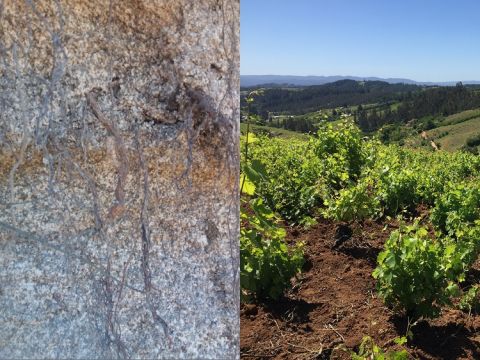
The contrast in such soils is stark: the image on the left, taken by Parra, shows vine roots penetrating the white granite, while that on the right is a shot I took of a typical Itata Cinsault vineyard on the ferric, red soils Parra discussed.
Also noteworthy on the right is the odd, much larger vine. These are País vines, scattered among the Cinsault. There were a few, much smaller, Moscatel vines there too. Such mixed vineyards are common in Itata, and Parra previously made a wine from Maule that had small amounts of the other varieties in it, though Imaginador is 100% Cinsault.
The precise nature of the terroir has also now influenced the winemaking for Imaginador. I originally tasted the 2017, which inspired this wine of the week. However, in 2018 he made a significant change to the fermentation protocols that has notably shifted the style of the wine. This, for me, shows the versatility of Cinsault and I find both wines equally easy to recommend.
In his words again:
‘I was for years trying the burgundian approach of very low physical extraction (pigeage or pumping overs) but high-temperature extraction (20–31 °C), all with natural yeast. I was so wrong. Burgundy is based on clay, but I'm not.
‘I changed the approach in 2018 with again minimal human extraction but also very low temperature. If you extract [musts grown on] sand and quartz like burgundy (high temp) you go rustic, dry and big, something I don't want at all. So very low temperature (18–22 °C max) makes fermentation longer. A real tea infusion and so you control the tannins and keep the wine vertical, less plush. Then [you can have] longer macerations after fermentation.’
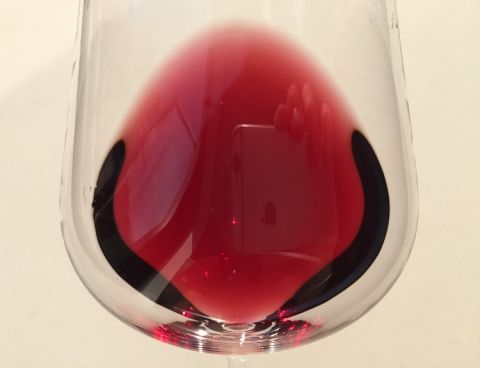
The 2018 is definitely more delicate in colour, as the stemless version of Jancis’s glass shows so well above. The 2018 has a rose-floral scent rather than the 2017’s spicier, beefier profile. As for the structure, the 2018 has lighter body and more delicate tannins than the 2017 (not that the 2017 has particularly powerful tannins; it is still at the lighter end of the tannic range).
The 2018 is also 1.5% lower in alcohol, which makes a contribution to the contrast, as does the incorporation of 35% whole bunches that tend to accentuate floral character (the 2019 has 60% and 2020 has 100%, so this is something to watch).
All of that said, I think Parra has been a little harsh on himself describing his pre-2018 winemaking as ‘wrong’, as I very much enjoyed the balance between flavour power, tannins and freshness on the 2017. The 2018 is simply a different overall style and I appreciate both examples in their own way – just as I can enjoy an earthy, more tannic Gevrey as much as a more supple, lighter Volnay. Since both wines have good distribution around the world, why not try both vintages and see for yourself what Cinsault can do? Prices above are for the 2017.
Since I mention price, I should also touch on economics. The rolling hills and dry-farmed bush vines across much of the region do not lend themselves to low-cost, high-volume production. Yet a lack of large-scale demand for País, Cinsault, Carignan and friends means that the prices that Chile’s big players will pay for these grapes, for blending into other wines for backbone or freshness, are frighteningly low: $0.10–$0.15 per kilo. See Chile – the perils of monoculture.
According to Parra, the route to changing these uneconomically low grape prices ‘is about local people making wines and exporting them. I think it is the only way. This will happen little by little, and in 20 years it will no longer be a problem, like it was in Barolo 50 years ago, or Gredos five years ago, or Ribeira Sacra etc … even Morgon’.
So long as imaginadores like Pedro continue to make and export exciting wines like these and encourage others to do the same so that we can recommend and drink them, the future will be progressively brighter for Itata.