This all began with a visit to my acupuncturist, who has, over the years, become a good friend as well as a great help.
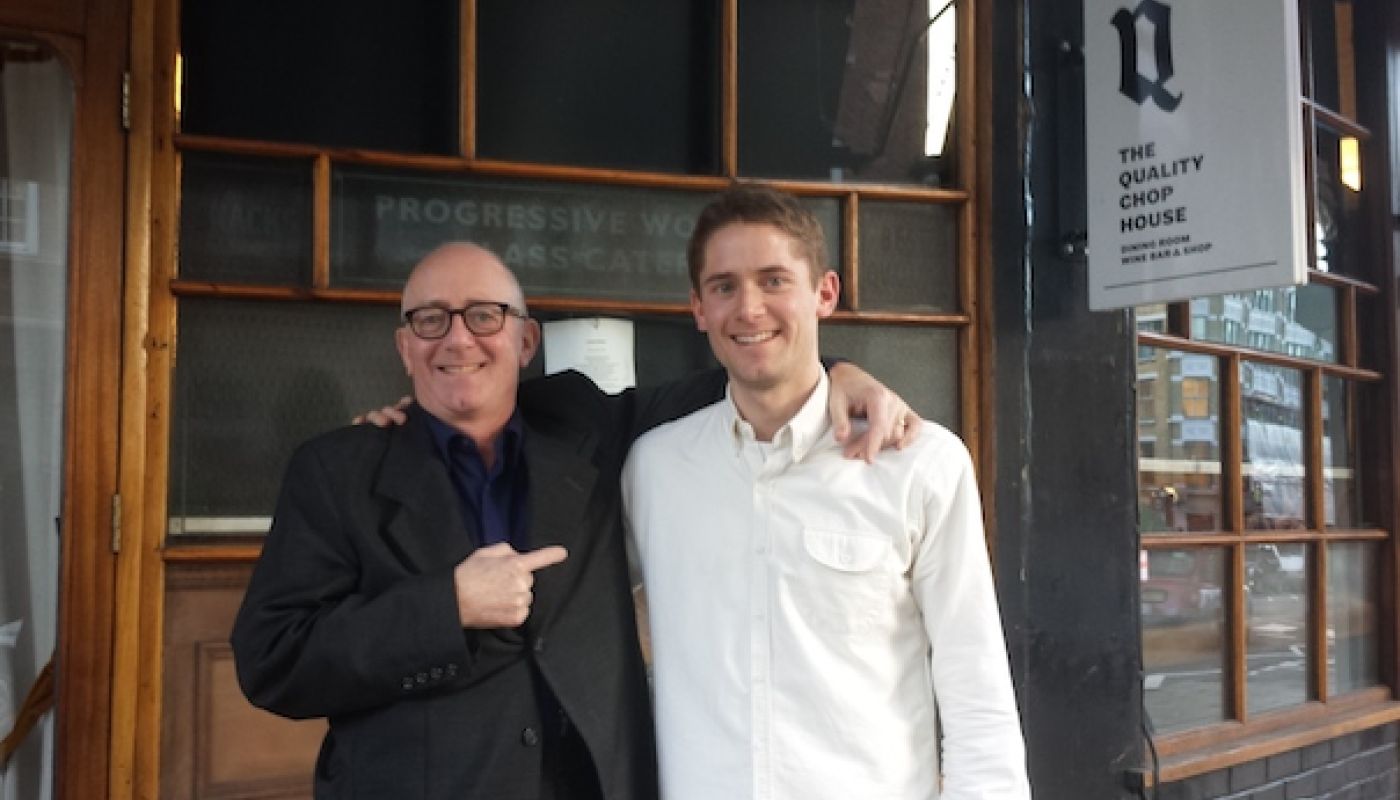
He lives in a wonderful house in the Lake District, about which I ask him during every appointment. His response is always the same – ‘fantastic’ -– but this time he continued in a different vein. ‘And when I was out walking the fells the other night, I had a great idea for a TV series for you and your son Will. I think there could be a great series with you and he explaining all the differences in the restaurant trade that have taken place since you owned L’Escargot in the 1980s and he has followed in your footsteps with The Quality Chop House, Portland and Clipstone 30 years later.’
I paid him, thanked him, and decided to get in touch with the fount of all TV wisdom, my sister Katie, a successful TV producer as well as a great cook. Her response is why what follows is an article rather than a TV series. In her opinion, such a proposal would be a tough sell as the demand today from the major channels is for stories that are BIG (her capitals) and for stories that have not been told before – although she did add that she would love to make it and watch it.
So, not to let my acupuncturist down, here are some thoughts, through the prism of London but with global application, about what has changed in the restaurant world between 2 June 1981 when I opened L’Escargot in Soho and today now that our son Will operates The Quality Chop House, Portland and Clipstone.

THE NAME: An attribute that today is far less important than it once was. In 1981 I thought I was taking a big risk by shortening the restaurant name I inherited, from L’Escargot Bienvenu to L’Escargot, but that name at least signified something French and something with a history as it had been a restaurant since it opened in Greek Street in London’s Soho in 1926.
Today, names do not matter. They can be geographical, as our son has named his restaurants, but that merely locates them conveniently. They can be transferable, like the opening of Red Rooster in Shoreditch, 3,000 miles away from its original home in Harlem, New York. Or they may convey an approach to cooking like Caravan. Above all, they have to be fun.
THE MENU: The crucial piece of paper in any restaurant’s make up and one that has moved into a much more free-form style. (For more on this topic, see On the Menu – Nick's new book.)
The single biggest change is the first item now on show, labelled ‘snacks’ or ‘to graze’. These often unmissable ‘small bites’ have evolved out of the tasting menu formula adopted by so many chefs and take the place in many instances of the more prosaic amuse bouche. But they are a welcome addition, most notably in their expression of just what the kitchen can deliver.
THE WINE LIST: I caused consternation when in 1981 I opened with an all-American wine list. Today something similar would barely cause a ripple among restaurant reviewers or customers. It is much, much more difficult for restaurateurs today to keep up with the ever-expanding number of wine regions producing top-quality wines from all over the globe. And as well as simple gestures towards the power of the customer, such as more wines by the glass, technology has played a huge part in making rare and expensive wines available. Here I am not just thinking of the clever Coravin system but all the rivals this technological breakthrough will spur in the not too distant future.
Changes in cooking styles have also seen two significant changes to the balance of today’s wine list. First of all there is a much greater emphasis on interesting white wines – 30 years ago white wines were really there as a prelude to the reds – and with that has come a much greater emphasis on rosés, which in my day sold only when the sun came out.
THE KITCHEN: This is not a golden rule but is almost one. Kitchens today should be on show and not tucked away in the basement as mine was at L’Escargot. This change, which has come about almost entirely because of TV, is a huge improvement for everyone involved, from the chefs to the customers to the poor old restaurateur, who no longer has to spend his time running down to the basement.
THE STYLE OF SERVICE: Less formal, less French, less de haut en bas, and far, far more friendly. At a recent meal at Le Gavroche to celebrate Michel Roux’s famous London restaurant’s fiftieth birthday, it was a shock to see the serried ranks of black and white jackets with most of the waiting staff in bow ties. A clean apron, clean fingernails, clean shirt, an engaging smile and considerable knowledge are the distinguishing marks of a good waiter today.
THE ATMOSPHERE: This has changed completely and today is far, far more relaxed than it was 30 years ago, a difference marked by a quotation from the 1980s that I have never forgotten. There was a feeling back in those days that 'the customer and the restaurateur were engaged in combat', with each trying to get the better of each other. Customers tended to believe that the restaurateur was trying to rip them off in some way, via the price of the wine, the cover charge or extras, a feeling that always seemed to put the restaurateur on the defensive. For a series of reasons this situation has been resolved to everyone's benefit.
The main reason for this, I believe, is that today restaurants, or going out to eat, have become so much more part of our way of life, and most customers, whether via TV, books or the internet, are far more knowledgeable about the business and confident of how it works than they were in my day.
A SENSE OF EQUALITY: The age-old challenge of providing waiting and kitchen staff with the wherewithal to enjoy the style of cooking that many of them are now involved in professionally remains as insoluble today as it was in the 1980s. But there is a much stronger sense of equality between the customer and those who are looking after them today and that is definitely a good thing. Perhaps it is because, thanks to the transformation in the image of cooking and running a restaurant, often it is the children of friends serving a slightly older generation – a turn of events that was unimaginable back when I was a restaurateur.
THE NATIONALITIES INVOLVED: London has become the restaurant capital of the world, not so much for the finesse of cooking available but in providing the broadest range of different cuisines. This has obviously been down to the fact that so many people of all ages have been drawn to this vibrant, English-speaking city during that period, and cooking, serving, pouring wine, looking after customers, all of these traditionally non-British skills, have become a valid way of for those people to express themselves and to make a living. The Brexit decision, as I have written before in London restaurants – at tipping point?, threatens all this.
A SENSE OF HUMOUR: Possibly the biggest single change in the manner in which the whole notion of hospitality is offered is that today it is given with warmth, humility and a sense of humour. Long may this continue.