
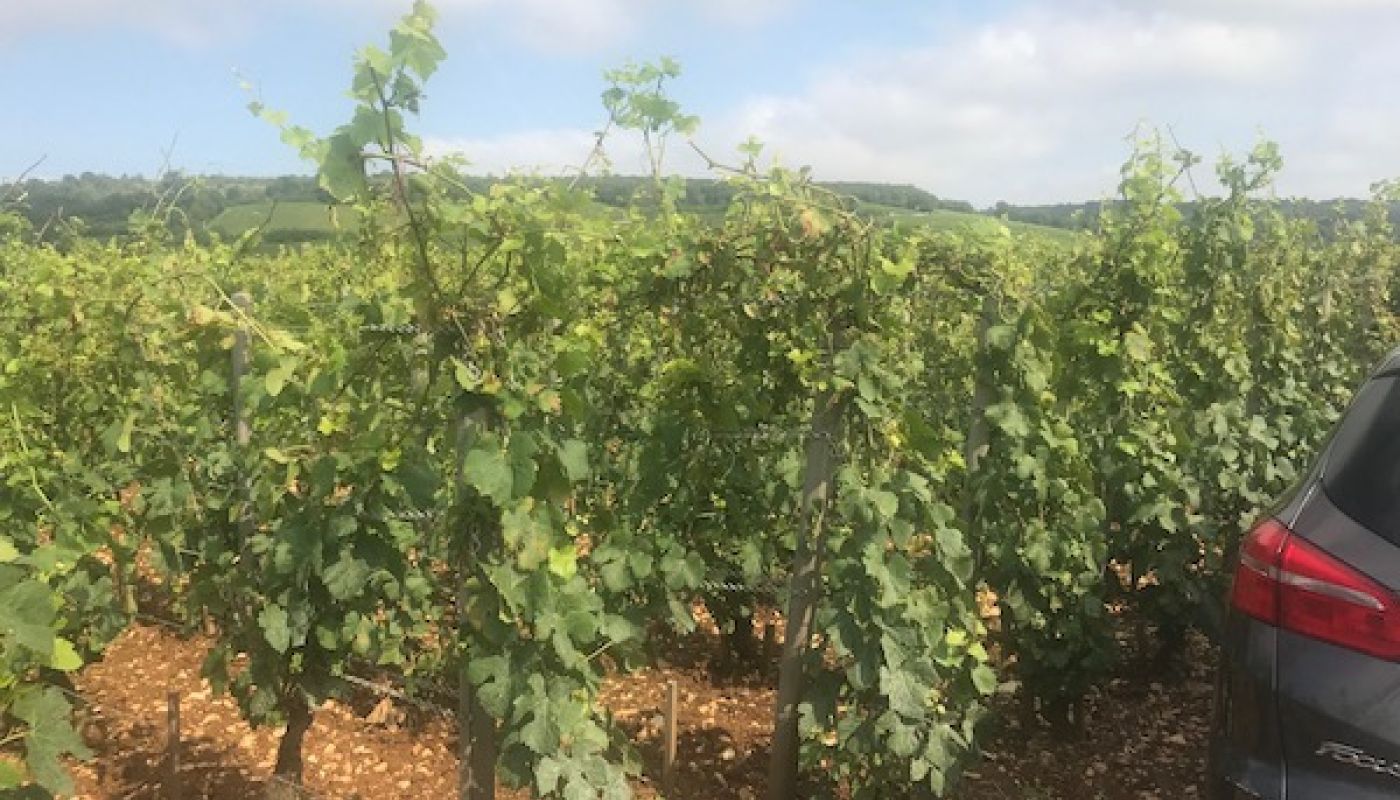
The FT’s erudite gardening expert Robin Lane Fox may be violently anti organic horticulture but organic viticulture is increasingly popular with both consumers and producers. Anyone who has visited a wine region and seen vineyard workers spraying vines with chemicals so potent that they are clad as if they were investigating a novichok incident is likely to find organically grown grapes an attractive proposition.
Perhaps less explicable is the increasing number of wine growers, including some of the world’s most revered, who are adopting the even more demanding protocols of biodynamic viticulture. Wine writer and biodynamic specialist Monty Waldin estimated that last year almost 5% of all the world’s vineyards were certified either organic or biodynamic (see Monty's 2018 organic/BD audit). In 1999 it was much less than 1% (see the introduction to Monty's organic/BD stocktake overview).
The principles of biodynamics were outlined by philosopher Rudolf Steiner in the 1920s. Many of them seem completely barmy. The emphasis on soil health, as in organics, is surely sensible. The post-war period of technological revolution coupled with the imperative of quantity over quality left a legacy of heavily compacted soils deprived of nutrients, organic matter, microflora and microbes. Healthy soil encourages healthy plants, and I have often found extra vitality in wines that turned out to be biodynamic.
Steiner’s insistence that a farm should be a holistic ecosystem rather than a commercially efficient monoculture is a much further step away from conventional science, but has resulted in a dramatic increase in the number of birds and animals to be found on the land of biodynamic practitioners (who are particularly numerous as far as general agriculture is concerned in Germany).
The last few years have seen the arrival in vineyards of horses to plough vineyards, causing lighter impact on the soil than any machine; sheep, goats and alpacas to keep cover crops, and sometimes vine leaves, under control; cows to provide manure and horns (of which more later); a wide range of insects; boxes to encourage bird predators to eliminate unwanted pests; and even chickens.
But it is the third tenet of biodynamics that is most controversial and the main reason many rationalists dismiss it as 'pseudoscience'. Full embrace of biodynamic practices requires the application to the soil, to the all-important compost or to the plants themselves of homeopathic doses of numbered, ‘dynamised’ (carefully stirred) special preparations. They are based, variously, on fermented cow manure (500), quartz ground to a powder (501), yarrow (502), camomile (503), nettles (504), oak bark (505), dandelion (506), valerian (507) and horsetail plant (508), with casuarina as the southern hemisphere alternative.
Some of them are supposed to be buried in cow horns or other animal parts such as bladders and intestines before use. All of them are supposed to be applied, and vineyard operations conducted, according to the celestial calendar.
This, understandably, is the part that only the most devoted biodynamic practitioners admit to readily, but they assure non-believers that the preparations are capable of transmitting energy and health to the soil, vines and therefore grapes. Sceptical scientists point to the weakness of lunar forces. But even non-biodynamic wine producers have long been careful to time their bottling with the phases of the moon to ensure that their wines are naturally star bright.
Harry Potter is mentioned by many a biodynamic sceptic. One of New Zealand’s most admired wine producers, Felton Road of Central Otago (profiled here yesterday), is famously biodynamic. But Nigel Greening, the scientist who bought it in 2000, says, ‘I signed up for biodynamics because I saw it was a return to traditional farming methods, but not the Harry Potter version of cosmic forces and potions. We do use the preparations. I’m not sure they do any good but people really enjoy doing them.’ His winemaker Blair Walter, whose father was an agricultural spray pilot so he ‘grew up smelling all these chemicals’, describes how their changing roster of interns love grinding the quartz to a powder and burying it at dawn before collecting eggs from the Felton Road hens and sharing a breakfast of whichever nationality is in charge of the kitchen that day.
Biodynamic viticulture is just catching on in California. Jason Haas introduced it at Tablas Creek in Paso Robles relatively recently and is also sceptical about parts of it. ‘We are pretty committed to the biodynamic preps, though I would say more out of a sense of curiosity than out of a deep conviction that they’re what’s important in the biodynamic pantheon. But I feel safe that at the very least, any impact of the addition of biodynamic preps will be positive, so are not going to do us any harm. The piece that I am least convinced by, and which we mostly ignore, is the calendaring piece of biodynamics. But most of it is just really good farming, which is a pleasure to implement.’
However much scientists may snort, it is easy to see the warm, fuzzy, if somewhat irrational appeal of biodynamics. But when someone as hard-headed as François Pinault’s main wine man Frédéric Engerer espouses biodynamics, it may be worth taking note. He has converted to biodynamics Bordeaux first growth Château Latour as well as Domaine d’Eugénie and Rhône superstar Château-Grillet. (The Burgundy grand cru Clos de Tart, acquired by Pinault's Groupe Artémis in 2017, had already been converted to biodynamics by director Jacques Devauges.) Pinault’s Napa Valley property, now called Eisele Vineyard, has been biodynamic for many years, thanks to the efforts of the previous owners the Araujo family. They successfully applied for certification by Demeter, the official international biodynamic organisation, way back in 2002.
Other early adopters were Burgundy’s two most famous women wine producers Lalou Bize-Leroy of Domaine Leroy and the late Anne-Claude Leflaive of Domaine Leflaive, who tried it out on a failing parcel of grand cru Bienvenues-Bâtard-Montrachet and was impressed by the vitalising effect of biodynamics on the ancient vines.
Lalou has been a fervent believer in biodynamic methods since the establishment of her own domaine in 1988, but when I visited her there in July the predations of this year’s growing season on biodynamic practitioners was all too obvious (her Richebourg vineyard is pictured above right). Europe’s particularly damp early summer was the first serious test for many an organic and biodynamic vigneron. Downy mildew was rife and attacked so many vines that crop levels, severely shrunk in 2017 by late spring frost, are also expected to be low on many properties in 2018. Alfred Tesseron of Château Pontet-Canet confirms this, but adds that ‘improvements in the expression of our terroirs are more important to us’ than the quantity produced.
While a significant proportion of Burgundy's most-admired domaines have been biodynamic for many years, Bordeaux has been much more reluctant to embrace the apparent witchcraft and Château Pontet-Canet was an early exception. Château Palmer in Margaux was turned over to biodynamics more recently, in late 2013, and is already certified by Demeter. Director Thomas Duroux must be truly committed to have managed to convince the distinctly varied board that this was a good thing even in relatively humid Bordeaux where the fungal diseases to which the vine is particularly prone thrive. He admitted last week, 'we had to face the most challenging mildew pressure I have ever experienced in my career. We did our best, we maintained the vision that chemicals are not the future... and we lost a significant part of the crop. But the most important thing is not 2018. The most important thing is our vision and the long-term future of the vineyard.'
On the basis of the experience of those who have been practising biodynamic viticulture over decades, he is convinced that vines will eventually find harmony and the ability to withstand disease and extreme weather. There are numerous examples of organic and biodynamic vineyards that seem to derive fortitude and adaptability over time.
But these methods are very expensive in the short term, each vine requiring far more care and labour than in any mechanised vineyard, even if the amount spent on agrochemicals declines towards zero. Although biodynamics, strangely in view of the copper toxicity of many vineyard soils, permits the copper and sulphate additions that constitute the traditional ‘Bordeaux mixture’ used to combat downy mildew since the 1880s. (Not before time, the EU has just proposed limiting the maximum permitted copper additions by a third to four kilos per hectare a year.) Biodynamic viticulture is a luxury; no biodynamic wine can be cheap.
PROMINENT BIODYNAMIC WINE PRODUCERS
Some of these certified producers also make non-biodynamic wines.
- Bordeaux Châteaux Brane-Cantenac, Climens, Durfort-Vivens, Guiraud, Haut-Bages Libéral, La Lagune, Latour, Palmer, Pontet-Canet.
- Burgundy Clos de Tart, Domaines des Comtes Lafon, Dujac, d’Eugénie, Leflaive, Leroy, de la Romanée-Conti
- Rhône Chapoutier, Château-Grillet
- Loire A host of estates, with Coulée de Serrant a notable pioneer
- Champagne Louis Roederer (top cuvées)
- Alsace Deiss, Kreydenweiss, Ostertag, Zind-Humbrecht
- Italy Foradori, Alois Lageder, Loacker, Emidio Pepe, Querciabella, San Polino and see this list from Walter
- Spain Familia Nin-Ortiz, Recaredo
- Germany Bürklin-Wolf, Clemens Busch, Rebholz, Wittmann
- Austria 60 estates, led by Nikolaihof
- California Benzinger, Bonterra, Eisele Vineyard, Frey, Qupé, Sea Smoke
- Oregon Brick House, Brooks, King Estate, Montinore
- Washington Hedges
- Chile Emiliana
- Argentina Noemia
- Australia Cullen, Yangarra
- New Zealand Felton Road, The Millton Vineyard, Rippon, Seresin
- South Africa Reyneke, Waterkloof













