Over the past fortnight I have almost lost my interest in food, taste and restaurants.
The explanation is simple and not that uncommon. I have had flu and, while not quite bad enough to consign me to hospital (although I thought of going along to the nearest A and E department one morning last week), it has been pretty bad. I am now on the mend, thanks to a combination of a loving wife, a few days in Ballymaloe outside Cork in Ireland, and finishing a remarkable book.
Visitors to JancisRobinson.com know my wife well enough so no more need be said about her. Ballymaloe is almost as well represented on this website as she is, since it is here that we have spent numerous happy times, either with family or appearing at the Kerrygold Ballymaloe Literary Festival of Food and Wine. On this occasion we, all 24 of us, celebrated a friend’s seventieth birthday here in the warmth of the Allen family’s hospitality in the comfort of their extraordinarily comfortable ‘home’, enjoying some spectacular food and wine.
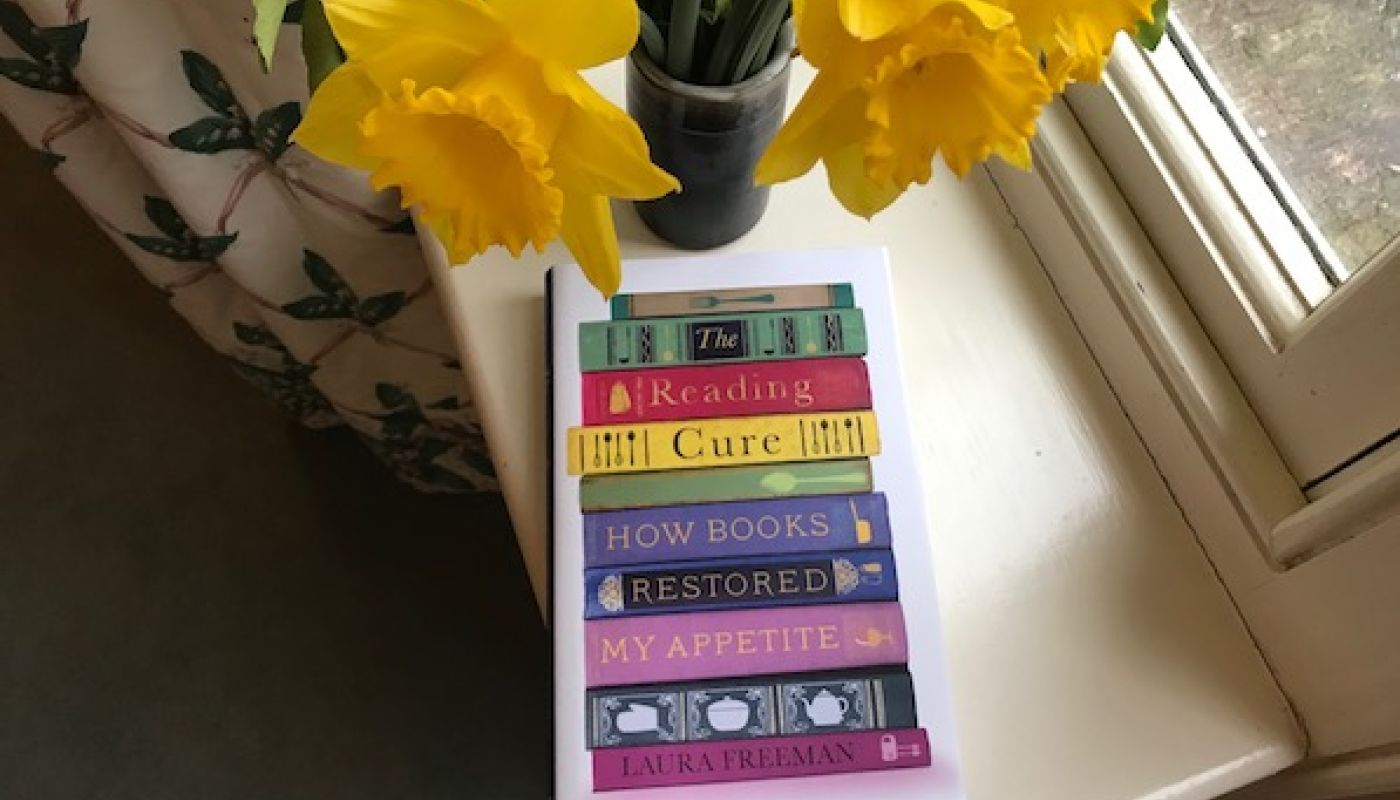
This was to prove a particularly suitable place in which to read, enjoy and wallow in Laura Freeman’s recently published book, The Reading Cure, How Books Restored My Appetite.
This book verges on a tragedy, one all too common. Laura Freeman was a very bright girl who at the age of 13 succumbed to the anguish that is anorexia nervosa. For anyone who has not had first-hand experience of this largely self-inflicted wasting disease, let me explain that it, and its consequences, can be absolutely devastating and sometimes fatal.
It begins with a patient’s unwillingness to eat, often inspired by distorted self-image, and the disease seems to affect mainly young women. In Laura Freeman’s case, she thought she was too fat when in fact her ribs are glaringly obvious, her hair started to fall out, walking became difficult and her whole appearance became almost ghost-like.
Fortunately for Laura, help was close at hand. She had loving parents, Clara and Michael, as well as a brother Ed. It was her mother who spotted her daughter’s decline and took her off to a doctor who diagnosed her, aged 15. Bed rest and her mother’s love dominated the following two years but Laura, her family and her friends are very fortunate in that the diagnosis and cure were immediately recognised and put into effect while she was still legally in their charge. Sadly, for my cousin whose daughter was over 21, this was not an option. The parents could not intervene, and she slipped away.
In one respect, Laura was a typical victim of this awful disease in that she is highly intelligent (she graduated from Cambridge with a double first) and, to judge from the photograph on the book’s jacket, extremely attractive. But in one respect she was an unusual victim. Laura is and always has been an absolutely avid reader.
The books that were to save Laura’s life are listed on nine pages under the heading ‘Book Room Bibliography’ at the end of the book. They are very wide-ranging. Listed alphabetically by author they begin with Louisa May Alcott and Little Women before moving on to Charlotte and Emily Brontē and, perhaps the most influential writer for Laura at her worst, the incomparable Lewis Carroll.
It is from his books that Laura is able to visualise and objectify her illness. She begins to refer to it as her ‘Jabberwock’. This unsavoury creature becomes the embodiment of her illness, an illness she is able to describe all too succinctly. ‘Anorexia', she explains, ‘tells you that you cannot eat, that you do not deserve, that you may not have or hope for food. Always it deals in nos and nots and nevers. It’s a way of thinking that is hard to break.’
Carroll was to give the author a sword but it was a more unlikely writer, Virginia Woolf, who was to hand her a protective shield. A fellow sufferer, it is Woolf with whom Laura most empathises and whose untimely death seems to act as the ultimate finale, one that Laura decides she is much better off avoiding.
Along the way, the author cites numerous other writers, some obvious, some less so. There are the First World War poets, particularly Siegfried Sassoon, and their love of hot tea and the importance they attached to food; there are the great walkers, Laurie Lee and Patrick Leigh Fermor, who, partly because of the young age at which they set out from the UK on their travels across Europe, also had voracious appetites.
Laura spends an appreciable amount of time taking in the travels of the American food writer M F K Fisher and her English counterpart Elizabeth David, both of whom played a vital part in her recovery. So too did J K Rowling, whose Harry Potter books appeared regularly at significant stages in Laura’s recovery. She vividly recalls being envious of Harry and Ron’s haul of enchanted tuck: Bertie Bott’s Every Flavour Beans, Drooble’s Best Blowing Gum, Chocolate Frogs, Pumpkin Pasties, Cauldron Cakes, Liquorice Wands and Fizzing Whizzbies. After finishing Harry Potter and the Philosopher’s Stone, Laura was fizzing like a Whizzbee.
The author who gets the second-largest entry in the bibliography after Woolf, however, is probably the most important: Charles Dickens. At the end of the first chapter, Laura faces up to the challenge of Christmas. Christmas, she admits, had been a strain ever since she had been ill. More than a strain, it had been a cause for panic and distress. Dicken’s writings on food, whether in Oliver Twist, A Christmas Carol, Little Dorrit or Great Expectations, all signal small but significant milestones in her recovery to good health and happiness.
The book ends happily with Laura, now almost 30, on holiday in Spain and her appetite fully restored. She credits the love of her parents, her friends and her boyfriend Andy, described as The Invincible One, for her recovery. This is a remarkably brave and sensitive book – one that needs to be read, if not enjoyed, by anyone who enjoys food and whose appetite may, however temporarily, have been impaired.
The Reading Cure: How Books Restored My Appetite, Weidenfeld & Nicolson (2018), £16.99, 260 pp.