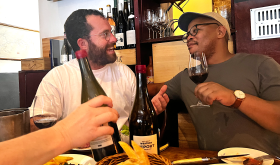
If you have deep pockets and own even the finest red-wine estate, you may still be tempted to produce a little white wine to have something to share with your guests at the beginning (or end) of a meal. Thus François Pinault has supplemented his Burgundy holdings of Clos de Tart in Morey-St-Denis and Domaine d’Eugénie in Vosne-Romanée with a few vines in the most hallowed white-wine vineyards of all, Montrachet and Bâtard-Montrachet.
Similarly, at top St-Émilion property Ch Cheval Blanc, co-owned by Belgian businessman Albert Frère and Bernard Arnault of LVMH until Frère’s demise in 2018, one of their less promising vineyards has been converted from red-wine vines to producing a rather impressive, Sancerre-like white wine. The project, begun in 2009, was inspired by Frère’s desire to have a white to serve his friends.
Something similar happened in Tuscany in the late 1980s when entrepreneur Giuseppe (Pepito) Castiglioni, who at the time commuted between Mexico and Italy, decided to plant one of the vineyards on his Chianti Classico estate Querciabella, near Greve, with Pinot Blanc in order to produce a white wine for family and friends. 1988 was the inaugural vintage.
Pinot Blanc, known as Pinot Bianco in Italy and Weissburgunder in German-speaking countries, is not a hugely respected grape. In Alsace it’s regarded as a workhorse and is not allowed in the region’s grand cru wines. But Castiglioni’s dream was to produce a wine in the image of Burgundy’s world-famous Bâtard-Montrachet and he boldly called his new wine Bâtard-Pinot when it was first sold commercially in the early 1990s.
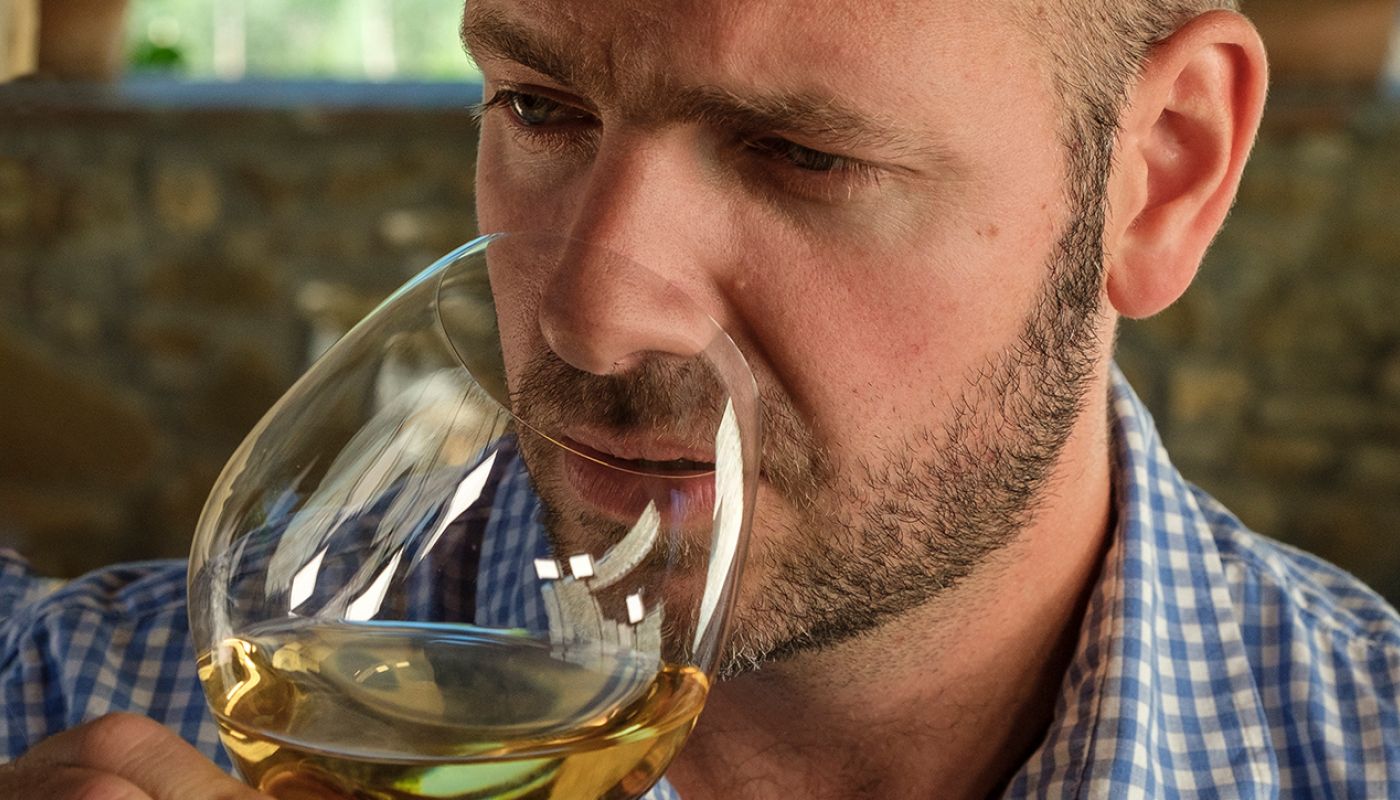
When some fashionable Chardonnay was planted and its produce included in the 1992 vintage, since when the wine has been a blend of the white burgundy grape and Pinot Bianco, the name was changed to Bâtard. The current winemaker, South African Manfred Ing (pictured above), explained to me what happened next. ‘I’ve heard various stories but let’s just say the French embassy were not impressed. So we dropped the D and added an accent, and from the 1994 vintage the wine has been known as Batàr.’
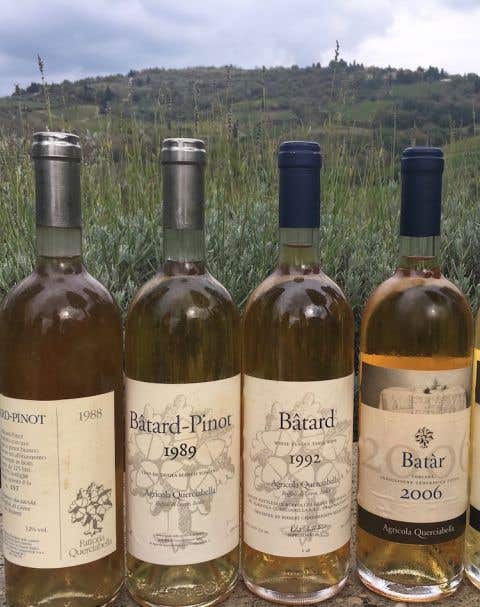
But it’s not really the name that distinguishes this wine. As was proved by a tasting earlier this month of 21 vintages from 2018 back to 1995, with me in London and Ing in Tuscany linked by Zoom, Batàr is a wine unique among Italian whites, let alone Tuscan whites. It manages to be both rich and fresh and seems capable of evolving virtually forever. It may be called after Bâtard-Montrachet but to me it reminds me most of a particularly ambitious, full-bodied Corton-Charlemagne, a rather different grand cru white burgundy. (I wrote this in my tasting note on the 2017 last January and forgot the comment, but found myself writing exactly the same thing about the first wine I encountered in the recent tasting, the 2018.)
It’s difficult to overestimate how different this wine is from most Tuscan dry whites. When he first tasted one of the earliest vintages, the celebrated late Italian wine commentator Luigi Veronelli forecast that the wine ‘would do for Tuscan whites what Sassicaia has done for the reds’, referring to the pioneer ‘Supertuscan’, and was sure it would be much-copied. But Batàr remains unique.
Most Tuscan whites are based on the most anodyne form of Trebbiano, known in France as Ugni Blanc. There are other, more interesting, sorts of Trebbiano elsewhere (see some suggestions below) but the most that Trebbiano Toscano can produce is a light, crisp white best drunk in the first year or so.
‘Yes, Batàr is very different from Trebbiano, and even from all-Chardonnay wines in Tuscany’, grinned Ing, adding, ‘I’ve made Chardonnay in four different continents and I can see that it’s the Pinot Bianco that sets it apart. It’s an unusual blend that works really well here. Our Chardonnay by itself would lack Tuscan identity. The Pinot Bianco fills in the gaps and maybe adds texture.’ The Querciabella team, now lead by Pepito’s son Sebastiano Castiglioni, are particularly proud of some cuttings of Pinot Gouges they planted in 2008. These are Pinot Noir vines that mutated and produce light-skinned grapes that came originally from the Nuits-St-Georges premier cru vineyard La Perrière of Domaine Henri Gouges in Burgundy and have been a minor textural ingredient in Batàr since 2013.
The original Pinot Blanc vineyard is now an olive grove but cuttings from it were planted in the early 1990s in the oldest current vineyards of the biodynamically tended five hectares (12.5 acres) of Querciabella devoted to white wine production. Just over half of them are planted with Chardonnay, but Chardonnay is less productive than Pinot Bianco so most years the blend is close to 50:50. Total annual production of Batàr is rarely more than 15,000 bottles, all on allocation, so someone must be working very hard at developing export markets since the current vintage, 2017, is available in at least 15 different countries, according to the price-comparison site Wine-Searcher.com (see below).
Ing admits that the harvest period at Querciabella is ‘ridiculously long’. The earliest-maturing, lowest Chardonnay plot, across the road from the winery at 450 m (1,480 ft; the hills of Chiantishire are surprisingly high), may be picked as early as 18 August and they can still be picking the Sangiovese vines for their red wines on 20 October. But the fine-tuning that Ing has imposed, in tandem with his ‘vine guru’, estate agronomist Dales d’Alessandro, is to be sure to pick each plot at the optimum point in the ripening process, something that’s relatively easy because all the vineyards are so close to the winery that they can be monitored daily.
The wine is made almost exactly like a white burgundy, although after being fermented and aged in oak barrels (only about 10% of them new nowadays) for about 10 months, the final blend is left to age over the winter in concrete, rather than Burgundy’s more usual stainless steel, before bottling and release. According to Ing, ‘Sebastiano won’t touch Batàr till it’s four years old.’ And it’s certainly true that the different vintages, although surprisingly consistent in quality, started to distinguish themselves only with age in my tasting.
Afterwards I wanted to see how a mature example of Batàr compared with a fine white burgundy of the same vintage, so I took the opened bottle of Batàr 2010 home to taste alongside a Bernard Boisson-Vadot Meursault, Les Grands Charrons 2010 from our cellar. In the event I was comparing oranges and apples. The Meursault was much tighter, smokier and lighter than the more concentrated and more obviously mature Batàr 2010, Ing’s first vintage, but I reckon the two wines will last quite as long as each other. According to Wine-Searcher.com, the 2010 Boisson-Vadot wine is no longer available but a comparison of prices of the 2009 vintages of these two wines suggests that the white burgundy costs five times as much as the Tuscan white.
Guests at Querciabella, unlike at other Tuscan estates, are typically served a young vintage of Batàr at the start of a meal and then a much older one with cheese at the end. Sounds good to me.
I asked whether the estate produced any other white wine. ‘Not for now’, I was told enigmatically.
Where to buy Batàr
2018
Italy – Querciabella, Greve in Chianti, €70; a range of retailers from €67.50
UK – Drinks & Co £68.22 (shipped from Italy)
Hong Kong – XtraWine HK HK$762
Russia – Decanter.ru 10,690 roubles
2017
(In order of the lowest price in each country)
UK, Switzerland, Denmark, Germany, Italy, France, Ukraine, Japan, US, Netherlands, Cyprus, Greece, Russia, India
Trebbiano worth seeking out
Francesco Cirelli, Anfora, Trebbiano d’Abruzzo
Faraone, Le Vigne, Trebbiano d'Abruzzo
Emidio Pepe, Trebbiano d'Abruzzo
Edoardo Valentini, Trebbiano d'Abruzzo
Antonelli, Trebium Trebbiano Spoletino, Spoleto
Centopassi, Tendoni di Trebbiano, IGT Terre Siciliane
Suavia, Massifitti Trebbiano, IGT Veronese
See background and tasting notes on all these vintages in 21 vintages of Batàr and see Walter's 2012 account of a vertical tasting of Batàr 1991–2010 along with a vertical of its stablemate Camartina.