
See my full tasting notes on 70 top burgundy 2008s.
It was one of the most distracting tastings I have ever attended. So many bottles, tasters and spittoons were there at Flint Wines' second look at 2008 red burgundies last week that there was hardly room to move in the tiny room at the back of the St James's Hotel and Club.
To make matters worse, an ongoing and increasingly bad-tempered dispute developed between two of my fellow Masters of Wine about a hugely important question for burgundy lovers. One of them, a modernist, expressed disappointment at the lack of fruit in these young 2008s. Well if fruit is all you're after, snapped the more classically minded MW, then buy New World Pinot Noir. It's cheaper and full of fruit – but surely you want more? These burgundies will develop magnificent subtlety once they've aged properly in the bottle. The fruit-seeker would have none of it. He wanted his fruit and he wanted it now. But surely, chimed in our host, Jason Haynes of Flint Wines, if you're paying £60 a bottle for some of these wines, isn't it worth waiting until they have earned that value by developing something a bit more complex than primary fruit?
Eventually there were some surly mutterings about agreeing to disagree but no sooner had these two tasters left than they were replaced by a wine-minded restaurateur who kept up a non-stop and very loud commentary on the perils of ever judging burgundy. It just keeps you guessing, you see. You think you've nailed it and then it suddenly does a U-turn: comes out of its shell, dives back into it, puts on flesh, turns all anorexic. Honestly, you just never know where you are with Burgundy vintages. Remember the 2000s? How mean they seemed at first and what great drinking they still are? And as for the 1996s! So charming at first and then all of a sudden there seemed to be nothing in the bottle but acidity.
For someone who continued to voice the opinion throughout the tasting that there was simply no point in awarding scores to burgundy, he had fiendishly impressive recall of all the critics' scores of the 70 wines we were tasting. They all came from first-class addresses and ranged upwards from village wines in the Côte de Nuits through more than 30 premiers crus up to 14 grands crus, of which one, Latricières Chambertin from the recently renamed Domaine Arnoux-Lachaux, suffered the endemic malaise of a tainted cork. (No screwcaps here.)
Whatever your point of view, it is certainly true that 2008 is a very, very different vintage from the plump, cheerful, easily accessible and, yes, fruit-stuffed 2009 burgundies about which I wrote last month. In 2008 the grapes ripened very late and were so full of tart malic acidity than it took forever for the softening malolactic fermentations to be completed, so that what we tasted in January 2010, the usual Burgundy primeur season in London, really was work in progress, and distinctly surly work in progress at that. (See this complete guide to our Burgundy 2008 coverage.)
Both in Burgundy in late 2009 (when some of the malolactics were still ongoing) and in London in January 2010, the dominant feature of the 2008s was high acidity and a lack of body, which led me to suggest that these wines might best be drunk relatively young, by about 2015 in the case of the lesser wines. But now that they have had a year or more in bottle, they seem to have gained a bit of weight, and the tannins seem a little more obvious (perhaps contributing to their apparent 'lack of fruit'). I therefore suspect that I was too conservative in my suggested lifespan originally, and that indeed many of the wines will demand quite a long time in bottle for the tannins to recede while the complex tertiary flavours develop.
If I look at the approximate drinking dates I appended to my notes for the 2008s I tasted last week, I see that in general I was suggesting drinking the Côte de Nuits village wines from about 2014 until 2020 with a few exceptionally early maturing wines such as Thibault Liger-Belair's Nuits-St Georges, Charmotte, that is already delicious. Indeed, in general, the really avid followers of biodynamic viticulture such as this one and Domaine Jean Grivot seem to have done great things with 2008. At the time, it was said how important in this nail-bitingly late vintage it was to have well tended, not overloaded, vines, and presumably the vine-by-vine attention that biodynamicists lavish on their vineyards paid off particularly in 2008. (By contrast, 2009s virtually made themselves.)
My suggested optimum drinking period for the premiers crus hovered very, very roughly around 2016-2028, although of course this is an extremely inexact science and, as my restaurateur friend points out so aptly, red burgundy in particular has a nasty habit of wrongfooting even its most devoted fans. There will be many burgundy classicists who like to drink their wines older than I do. I agree with the modernist that a vestige of fruit is always welcome.
Our collection of premiers crus included four Pommards, wines which usually demand quite a bit of time to mellow, but oddly these four 2008s seemed almost as ready to drink as their neighbours from Volnay, from which we tasted three very fine premiers crus from de Montille and Lafarge. Yet even among wines from the same producer, there was huge variation in style and sometimes quality. Ripening the grapes really was a knife-edge operation in 2008. At the revitalised Domaine Henri Gouges, for example, most of the 2008s showed extremely well last week, but the Nuits, Clos des Porrets, was as tough as old boots.
With one or two notable exceptions, there was not a great leap upwards in quality and potential longevity between the really successful premiers prus and the grands crus we tasted, despite what can often be quite marked differences in prices. While you can get your hands on a good village wine from the 2008 vintage from about £30 a bottle, a decent premier cru is likely to cost about £50 while most grands crus range from £70 to £300+ a bottle.
I don't think those who have already bought 2008 burgundies have any cause for concern – unless all they want is fruit.
Some especially successful 2008s
Arlaud, Charmes-Chambertin
Arnaux-Lachaux, Les Suchots, Vosne-Romanée
Confuron-Cotetidot, Les Suchots, Vosne-Romanée
Pierre Damoy, Le Chambertin
Dujac, Les Malconsorts, Vosne-Romanée
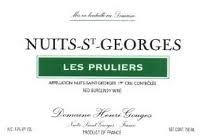
Henri Gouges, Les Pruliers, Nuits-St-Georges
Jean Grivot, Les Boudots, Nuits-St-Georges
Hudelot-Noëllat, Clos Vougeot
L&A Lignier, Les Baudes, Chambolle-Musigny
Mortet, Les Champeaux, Gevrey-Chambertin
Perrot-Minot, Chapelle-Chambertin
Armand Rousseau, Le Chambertin
See my full tasting notes on 70 top burgundy 2008s. Arman Rousseau's 2008s were particularly successful.













