
‘It’s a fight we are starting, and sometimes we feel like Braveheart', sighed Beaune-trained winemaker François Massoc pondering the issues thrown up by the recent forest fires in southern Chile. His Mercedes SUV notches up 100,000 km a year between his various Chilean wine projects but the Itata region in closest to his heart, brave or not.
In wine literature Chile has long been described as a viticultural paradise. It’s true that it escaped the devastation caused in virtually all other wine-producing countries over a century ago by the vine-root-devouring phylloxera louse, and that much of the country has a climate well suited to vine growing. Thanks to this, together with meltwater from the Andes and a biddable labour force, Chile has been able to churn out enviable volumes of reliably inexpensive wine from its fertile Central Valley south of the capital Santiago, colonised by the vine in the early nineteenth century.
But, just as in most wine-producing countries, a revolution is under way. The best and most thoughtful Chilean winemakers are not content to emphasise quantity at the expense of quality. New vineyards are being established in cooler, more demanding sites. Signs of climate change are immediately apparent in the receding snowline of the Andes; irrigation is no longer regarded as a given.
And, perhaps most significantly, the dry-famed vineyards of southern Chile – producing wines labelled Maule, Itata and Bío-Bío – have been attracting the interest of serious, ambitious wine producers. Old bushvines, many centenarians, that for decades simply made plonk for local consumption are now recognised as being in perfect balance here and are being harnessed to produce distinctive, refreshing wines made from the likes of Cinsault, Carignan, Muscat and País, the Spanish grape variety brought by the conquistadores (and, according to some historians, used to intoxicate and then swindle the indigenous population of southern Chile).
Most of these vines, on particularly propitious granite and schist soils, are grown by smallholders continuing a long tradition of viticulture, if not of making money. The produce of their wines may now find its way on to modish wine lists in wine bars and restaurants in Manhattan and London, but the grape prices paid by the big companies that dominate the Chilean wine scene remain pitifully low. Ten US cents a kilo is by no means unknown. (Across the Andes in economically stressed Argentina, a kilo of grapes fetches between one and four US dollars.)
Farmers in Maule were in the front line of those who suffered damage in the earthquake of 2010. Many a primitive winery and long-standing family homestead had to be abandoned completely and both vineyards and wine were lost.
But the latest catastrophe to hit southern Chile, the exceptionally widespread fires last month that destroyed many vineyards, particularly in Maule, may have an even longer-lasting effect. The rolling hills are carpeted with pine and eucalyptus, the non-native trees that were encouraged by generous government subsidies from the early 1970s until two years ago.
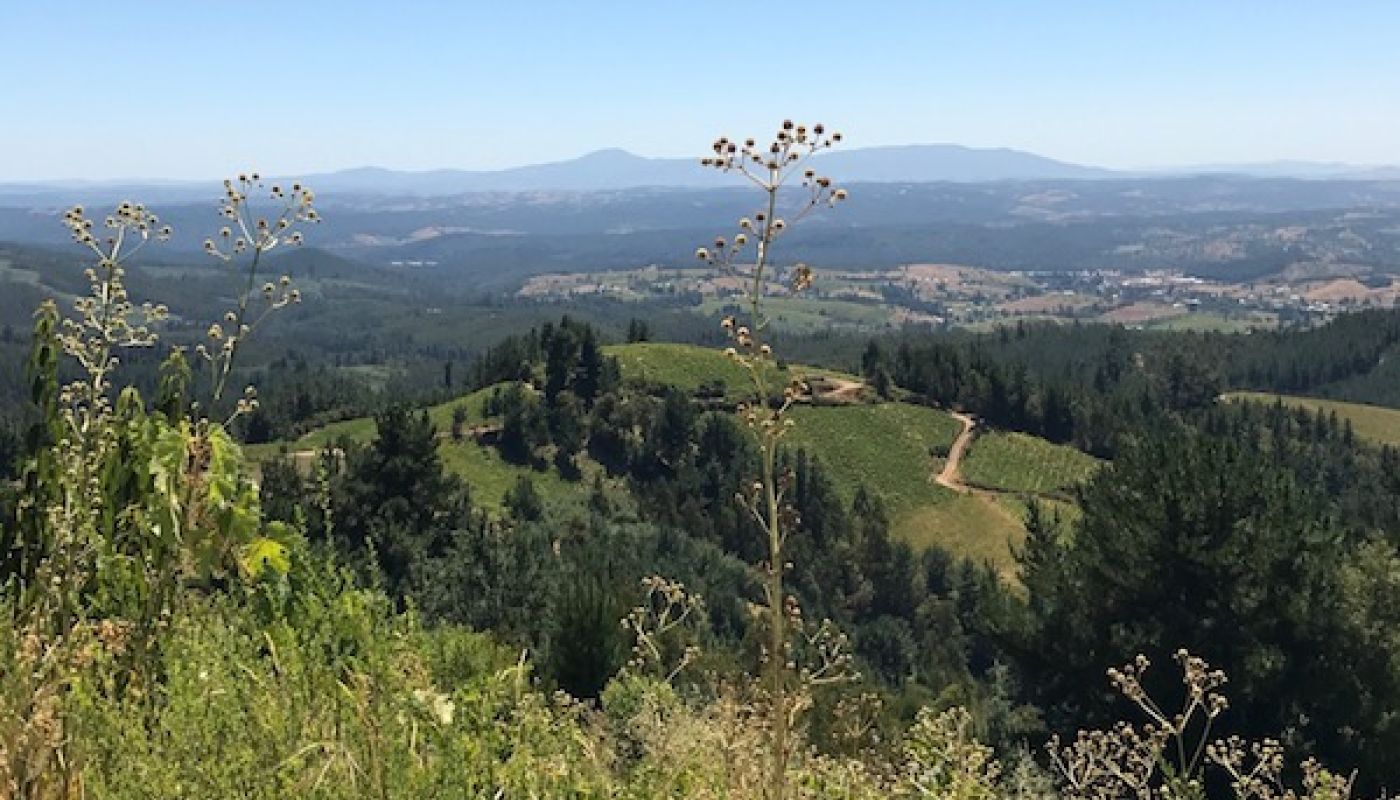
The tiny plots of family-owned vines, often part of a mixed farm, are generally surrounded by these plantations, most in the hands of just three big companies, that seem to have been imposed on the landscape with little planning. During a day spent touring the Itata Valley earlier this month, I saw terrible swathes of burnt grey-brown stumps of trees and vines, but no evidence of either firebreaks or emergency water supplies.
Farmers did their best to save buildings and livestock, but in the most difficult circumstances. After an unusually hot, dry summer the sheer number of these fires, almost 100, has inflamed countless rumours as to their origin, ranging over petty arson, a connection with both activists in Spain and the Farc rebels, and even a fear that US imports of Chilean wood-based products will suffer in the Trump era.
For Pedro Parra, Chilean vine terroir specialist sufficiently highly regarded to be hired by some of the most admired producers in Burgundy, the fires may in the long term be a good thing, spurring the government into acknowledging the inadvisability of a monoculture – especially one devoted to imported tree species that soak up water and acidify the soil. Below he inspects a steep vineyard in Itata. Note how undulating the countryside is, and how ubiquitous the pines.

He and an increasingly vocal group of wine producers based in and around Concepción, Chile’s radical second city, want to see the land returned to mixed farming favouring local tree species and the 400-year-old tradition of grape growing. As he points out, the eminent Professor Emile Peynaud of Bordeaux visited Chile 30 years ago and recognised that the most promising soils were in the south, an observation echoed by influential producer Marcel Lapierre 10 years ago, who saw parallels with the granite of his native Beaujolais. The astute American family-run company Kendall Jackson also chose southern Chile when they decided to put down roots in the country, but were ahead of their time.
Parra works closely with Massoc and together they have been holding seminars and lobbying to establish a serious wine faculty in the university of Concepción. They know it will not be easy to persuade local government to support this initiative. Two years of trying to set up an official meeting with a contact there have so far been fruitless. But they are fired up by the combination of human need and wine quality.
‘It’s a cultural problem that won’t be solved in a hurry', admits Parra. ‘It will take 10 to 40 years. But then 40 years ago in Barolo [where he also consults] they couldn’t sell their wine…’
They are trying to forge relationships with other wine regions around the world with similar soils and, often, similar problems – Galicia, the Gredos mountains outside Madrid and Swartland in South Africa – and are encouraging as many high-profile foreign wine visitors as possible to Itata – even though it is notoriously difficult to navigate, one other reason why it has been invaded by only a handful of the big wine companies.
Miguel Torres of Catalunya established a base in Chile back in 1979 well to the south of what was then the focus of the Chilean wine industry just south of Santiago. And in recent years Torres has been fashioning wines so good out of Pais that they have found a ready export market. De Martino is another sizeable company that has taken a serious interest in Maule and Itata, and even the giant Concha y Toro has begun to follow in its footsteps.
Now, after the fires, some serious recovery measures are in order. Fuerza Chile.
SOME FAVOURITE SOUTHERN CHILEAN WINES
With UK retailers and/or importers. See wine-searcher.com for global stockists.
Whites
De Martino, Viejas Tinajas 2015 Itata (Les Caves de Pyrène)
Pandolfi Price, Los Patricios Chardonnay 2013 Itata (Stone Vine & Sun have just sold out of the 2013 and expect the 2014 later this year)
Rogue Vine, Grand Itata 2014 Itata (Indigo Wine)
Reds
Clos des Fous, Cauquenina 2014 Maule (Liberty Wine)
Massoc Frères, País 2015 Itata
Pandolfi Price, Los Patricios Pinot Noir 2014 Itata
Pedro Parra, Imaginador Cinsault 2016 Itata (H2Vin)
Pedro Parra, Pencopolitano 2015 Itata (H2Vin)
Rogue Vine, Grand Itata 2015 Itata (Indigo Wine)
Rogue Vine, Super Itata 2014 Itata
Miguel Torres, Escaleras de Empedrado Pinot Noir 2013 Empedrado (Fells)
Villaseñor, Puelo Patagonia Pinot Noir 2014 Austral
Viñateros Bravos, Granitico País 2015 Itata (Les Caves de Pyrène)













