
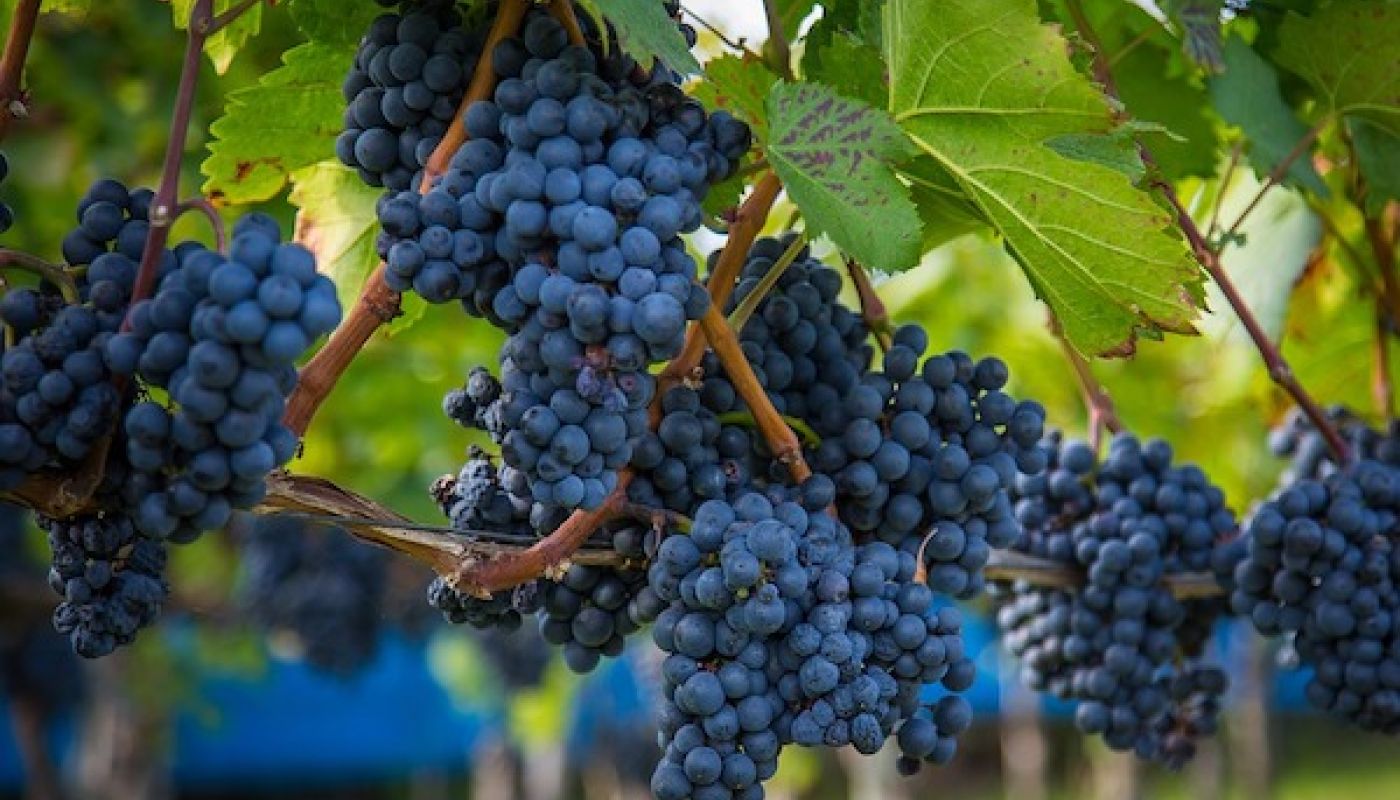
This weekend at the FT Weekend Festival at Kenwood House on Hampstead Heath I am hosting a wine tasting and make no apology for the fact that the topic is the same as last year’s: exotic grapes.
This century the wine world has been transformed from one dependent on a handful of ‘international’ (in fact, mainly French) grape varieties, such as Cabernet Sauvignon and Chardonnay, into one that seems increasingly fascinated by alternatives to them, the more local and obscure the better.
All over the world, it seems, vine growers are increasingly interested in regaining their viticultural heritage, thereby increasing biodiversity, by recuperating long-forgotten vine varieties that may not have been replanted after the late nineteenth-century scourge of phylloxera that wiped out virtually all of Europe’s vineyards until they were replanted with phylloxera-resistant American roots – perhaps because they were then regarded as having a weakness that can now be corrected. Or they may have been abandoned because their yields were too low for the post-war era when quantity so emphatically trumped quality. (This was true, for example, of Viognier, that was almost extinct except for a few hectares in Condrieu in the northern Rhône as recently as the 1960s but is now so widely planted that it almost qualifies as ‘international’.)
Some of the most active vine recuperators are in Italy, whose regionally divided nature provides a particularly promising seedbed for those seeking novelty in the vineyard. The standard method is to examine local vineyards carefully and try to identify rogue vines. As often as not some senior farmer can put a name to vines whose produce used to be anonymously blended in with a more established grape before the fashion for varietal diversity.
The Swiss were some of the first to dig into their viticultural history, reviving the likes of Petite Arvine, Amigne, Cornalin and Completer decades ago. Under the auspices of the dominant Plaimont co-op, the Gascons have assiduously done their bit too – with many years of vineyard research devoted to rehabilitating almost-extinct varieties such as Petit Courbu, Arrufiac and Manseng Noir that grew in vineyards long devoted to Armagnac production (see France's secret south west).
In Portugal there are so many indigenous grapes to choose from that the need for further research has been less pressing, but Spanish vine growers have been hard at work recently widening the range of varieties in commercial production. An early example was the magnificent Godello. In the 1970s there were only about a hundred plants left of this Galician variety that produces truly noble, ageworthy dry whites. The very first varietal Godello, a wine made exclusively of the grape and labelled with its name, was made in the 1980s, by Godeval, a producer who name incorporates both the grape with its principal region Valdeorras.
More Galician treasures have since been revived – although many of them such as Merenzao, Carabuñeira, Sousón, Brancellao and Caiño Tinto turn out to be Portuguese, or at least have well-known Portuguese synonyms. Juan Garcia, also known as Mouráton, probably has the strongest claim to have its origins on the Spanish side of the border, but all of them are clearly much more at home in this far north-western corner of Spain than any Cabernet or Chardonnay would be.
This is another reason for the growing admiration for indigenous varieties. They tend to thrive in their native region, as well of course as producing truly local, distinctive wines instead of just another example of an international varietal. This presumably provided the inspiration for the Catalan company currently rebranding itself as Familia Torres when they put classified ads in local papers asking people to look out for unidentified vine varieties. Painstaking work in their vine nursery and microvinification lab has resulted in six new/old varieties, some of them so little-known that they are named simply after the commune in which they were found.
These sort of researches are being undertaken in much of the Old World of wine, and even in some of the longer-established corners of the New World. Old vines of the variety known as País in Chile, one of the first European grapevines to reach South America, are currently enjoying a vogue – not just because of the seniority of the plants (associated with better quality wine), but because they offer characters and flavours quite different from the narrow range of international varieties that have until now represented Chile’s wine mainstream. This variety, originally from central Spain where it is known as Listán Prieto, is called Criolla Chica in Argentina and Mission in California. The success of Chilean País is already inspiring a re-evaluation of Criolla Chica across the Andes.
Australia’s wine history is shorter, so the focus is less on researching old varieties and more on identifying what they call ‘alternative varieties’, generally vines that growers believe are more likely than most French vines to withstand the rigours of the fiendishly hot, dry summers that Australia has been experiencing. This has led to a massive upswing, despite the lengthy demands of Australia’s plant quarantine, in imports and plantings of a wide range of Mediterranean varieties. There are some wine bars in Melbourne where you can be hard pushed to find an old-school Cabernet or Shiraz.
Severe weather is widening the range of grape varieties from which wine is made today in other ways too. Czech and Slovak vine breeders have been developing crossings that will ripen early enough for their continental climate, and their counterparts in Minnesota and Wisconsin have come up with cold-hardy hybrids suitable for the harsh winters there. Brianna, La Crescent, Frontenac and Marquette have already proved popular with local wine consumers. But these hybrids don’t appear overnight. Brianna alone has 93 different parents, from seven different vine species in addition to Vitis vinifera, the most common species for wine grapes.
Furthermore, it takes three years to produce the first crop from just-planted vines, and many more years before there is real concentration of flavour, so this is a gradual evolution of choice for wine drinkers. But there is already firm evidence on shelves and wine lists of the trend away from a handful of famous French grapes towards a multiplicity of varieties from a wide range of countries. For example, the selection of wines I had to choose from for my Festival tasting provided by London retailer Jeroboams, supporters of the last two years’ Festivals, was markedly wider this year than last.
In 2012 I co-wrote a book, Wine Grapes, about all 1,368 varieties we could find that were then producing wine commercially. My co-authors Julia Harding MW and José Vouillamoz and I reckon that a second edition assembled today might include at least 1,450.
And then there is the perceptible trend towards blends rather than single varietals, not just blends dreamt up by winemakers but the field blends determined by viticulture. See this week's wine of the week.
FASHIONABLE GRAPES
Obscurity alone is not enough for a grape variety to be celebrated. The wine produced must be good, and a positive addition to the conventional canon. The following have certainly earned their spurs.
WHITE
Assyrtiko (Greece)
Fiano (Italy)
Furmint (Hungary)
Godello (Spain)
Malagousia (Greece)
Pecorino (Italy)
Petit Manseng (France)
Savagnin (France)
Xarello (Spain)
RED
Aglianico (Italy)
Mencía (Spain)
Nebbiolo (Italy)
Nerello Mascalese (Italy)
Touriga Nacional (Portugal)













