
Today, Thursday, I have even less time than usual between the end of the last tasting and dinner, so I have to skim over the tastings in some cases but full tasting notes will follow later this month.
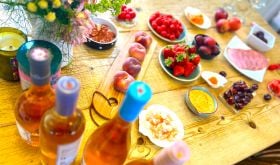
Dinner last night was on the theme 'Slow food, slow wine', with a mixed bag of wines chosen by Australian wine writer Max Allen – either because they were organic or biodynamic or because of the stories attached to them. The excellent, dry, intense but not too fruity Sutton Grange Fairbank rosé, for example, demonstrated the synergy of good neighbours and the complementarity of food and wine from a single region. Sutton Grange is next to a dairy that makes an organic goats' cheese called La Luna. Sutton Grange uses the whey from the dairy to treat fungal infections on their vines, and the Fairbank rosé pairs beautifully with La Luna. With two biodynamic producers (Vanya Cullen and Julian Castagna) as guests for the evening, there was plenty of debate about the planet, and particularly what Max Allen referred to as the 'fragile' country of Australia (fragile because it is so dry and has so many regions with very thin soils).
Other wines I particularly enjoyed were the Cullen Mangan blend from Margaret River and KT and the Falcon Melva Riesling from the Clare Valley. Both shared a fine purity and lovely freshness. The complete list was as follows:
2008 Sutton Grange Winery Fairbank Rosé Syrah/Cabernet/Merlot, Bendigo
2008 Lucy Margaux vineyards & Àuge Ristoranté Vino d'Àuge Saignée Sangiovese, Adelaide Hills
2007 Ngeringa Viognier, Adelaide Hills
2008 Gemtree Vineyards Moonstone Albariño, McLaren Vale
2008 Moondarra Holly's Garden Pinot Gris, Gippsland
2007 Bass Phillip Estate Pinot Noir, South Gippsland
2006 Ngeringa Syrah, Adelaide Hills
2002 Castagna Genesis Syrah, Beechworth
2002 Castagna La Chiave Sangiovese, Beechworth
2005 Castagna Un Segreto Sangiovese/Shiraz, Beechworth
2007 Cullen Wines Mangan Merlot/Malbec/Petit Verdot, Margaret River
Today's tastings focused on Chardonnay and Pinot Noir. The first, presented by Michael Hill Smith MW, was a very good snapshot of the evolutionary stages of this variety and the range of styles of Chardonnay now being made in different parts of Australia, defined first by region and then by winemaking practices. Heavy oak and buttery sweetness are, at this level of quality, pretty much a thing of the past. For more on this theme, see Jancis's article Whither Australian Chardonnay?
We tasted:
2006 Tyrrell's Wines Vat 47 Chardonnay, Hunter Valley
2006 Cullen Wines Kevin John Chardonnay, Margaret River
2006 Vasse Felix Heytesbury Chardonnay, Margaret River
2006 Leeuwin Estate Art Series Chardonnay, Margaret River
2006 Shaw + Smith M3 Chardonnay, Adelaide Hills
2006 Tapanappa Tiers Vineyard Chardonnay, Adelaide Hills
2006 Giaconda Chardonnay, Beechworth
2006 Bindi Wine Growers Quartz Chardonnay, Macedon Ranges
2006 Stonier Wines KBS Vineyard Chardonnay, Mornington Peninsula
2006 Oakridge 864 Chardonnay, Yarra Valley
2006 TarraWarra Estate MDB Chardonnay, Yarra Valley
2006 Freycinet Chardonnay, Tasmania
2006 Hardys Eileen Hardy Chardonnay, Regional Blend
2006 Penfolds Yattarna Chardonnay, Regional Blend
The overall quality was high and I had too many that I liked to single them out here. You'll have to wait for my tasting notes.
The Pinot Noir tasting that followed was done blind, and the Domaine de la Romanée-Conti, Romanée Saint-Vivant 2002 Vosne-Romanée thrown in to provide context was considered by all to be disappointing. A dumb phase? A context of more overt fruit styles? Or a case of blind tasting revealing a good deal? I'm not sure.
Again, you'll have to wait for my tasting notes. They certainly showed that Australian Pinot is far more sophisticated and fine-tuned than many people imagine – as you will see from Jancis's recent review of the Mornington Peninsula Pinots. We tasted:
2007 Stoney Rise The Holyman Pinot Noir, Tasmania
2007 Bindi Wine Growers Block 5 Pinot Noir, Macedon Ranges
2007 Yabby Lake Vineyard Pinot Noir, Mornington Peninsula
2006 Stefano Lubiana Estate Pinot Noir, Southern Tasmania
2006 Kooyong Single Vineyard Selection Ferrous Pinot Noir, Mornington Peninsula
2006 TarraWarra Estate MDB Pinot Noir, Yarra Valley
2007 Felton Road Block 5 Pinot Noir, Central Otago
2003 Ashton Hills Estate Pinot Noir, Adelaide Hills
2003 Paringa Estate Reserve Pinot Noir, Mornington Peninsula
2002 Domaine de la Romanée Conti Romanée St Vivant Pinot Noir, Vosne Romanée, Burgundy
1999 Mount Mary Pinot Noir, Yarra Valley
1997 Bass Phillip Premium Pinot Noir, South Gippsland
1997 Bannockburn Serré Pinot Noir, Geelong
1992 Coldstream Hills Reserve Pinot Noir, Yarra Valley
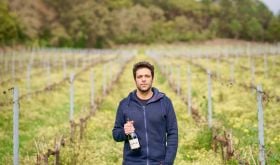
The most challenging tasting of the day was Brian Croser's (pictured) selection of (mostly) blended wines: almost all the wines were predominantly Cabernet or Shiraz. It was challenging because the wines were tasted blind and for each wine we had to answer several questions:
1 Is the wine made in a way to show off the variety/region or is it a 'winemaker's wine'?
2 Which region is it from (drilling down to regions within states, eg Margaret River or Great Southern in WA, etc.)?
3 Is it predominantly Shiraz or Cabernet?
4 Is the alcohol high, balanced or low?
5 Is the acidity high, balanced or low?
6 Is the residual sugar evident or high or is the wine dry?
Trying to write tasting notes as well as answer these questions for 20 wines took a bit of doing in the time available. Answers were then gathered by a show of hands for each aspect of each wine. Brian Croser was very encouraging even when the group didn't do too well overall. There was quite a high level of agreement as to which were regional/varietal and which were winemaker's wines (generally identified as very big, sometimes overripe, generally highly oaked) but we found the regions and the varieties harder. One wine stood out as the most generally recognised; Clonakilla Shiraz/Viognier 2007 Canberra District stood out for its fine perfume, fine tannins and excellent proportions.
One point Croser was keen to make in his introduction was that 24 of Australia's 73 wine regions could be classified as cool climate, ie with a mean January temperature of less than 19.5ºC. And it was the cooler climate wines such as the two examples of Shiraz from the Grampians and the Cabernet-based wines from Western Australia that were generally easier to identify.
The best part of the tasting was being able to go back to the wines after their identities had been unveiled and to focus on the key characteristics of certain region/variety combinations. The endeavour also reinforced the key messages of the tutorial – that Australia does make fine wine (if you were in any doubt) and there are clear regional differences in style and character. However, as Andrew Jefford pointed out (he popped in again for this tasting), it was a difficult exercise because you were always weighing up two major variables – variety and region – and which was the strongest determinant in your search for identity.
2005 Plantagenet Shiraz, Mount Barker, Great Southern2006 Glaetzer Amon Ra Shiraz, Barossa Valley
2005 Brokenwood Graveyard Vineyard Shiraz, Hunter Valley
2004 Torbreck Run Rig Shiraz/Viognier, Barossa Valley
2002 Penfolds Grange Shiraz/Cabernet Sauvignon, Multi-region South Australia
2005 Hardys Eileen Hardy Shiraz, McLaren Vale
2004 Henschke Hill of Grace Shiraz, Eden Valley
2004 Clarendon Hills Astralis Vineyard Shiraz (Syrah), McLaren Vale
2007 Clonakilla Shiraz/Viognier, Canberra District
2005 Clayfield Wines Shiraz, Grampians
2006 Two Hands Wines Bella's Garden Shiraz, Barossa Valley
2005 Penfolds Bin 389 Cabernet Sauvignon/Shiraz, Multi-region South Australia
2005 Seppelts St Peters Shiraz, Grampians
2005 Majella Cabernet Sauvignon, Coonawarra
2005 Cullen Wines Diana Madeline Cabernet Sauvignon/Merlot, Margaret River
2006 Balnaves of Coonawarra The Tally Cabernet Sauvignon, Coonawarra
2006 Woodlands Reserve de la Cave Cabernet Franc, Margaret River
2004 Moss Wood Cabernet Sauvignon, Margaret River
2005 Wynns Coonawarra Estate John Riddoch Cabernet Sauvignon, Coonawarra
2002 Wendouree Cabernet Sauvignon/Malbec, Clare Valley
Looking forward to dinner tonight – not because I am in the least bit hungry but because Brian Croser is going to talk about the current state and the future of Australian wine.
[They do work them hard, don't they? Wonder when they ever have time for a gossip? JR]
For all related articles and tasting notes, see Landmark Australia – a guide.