
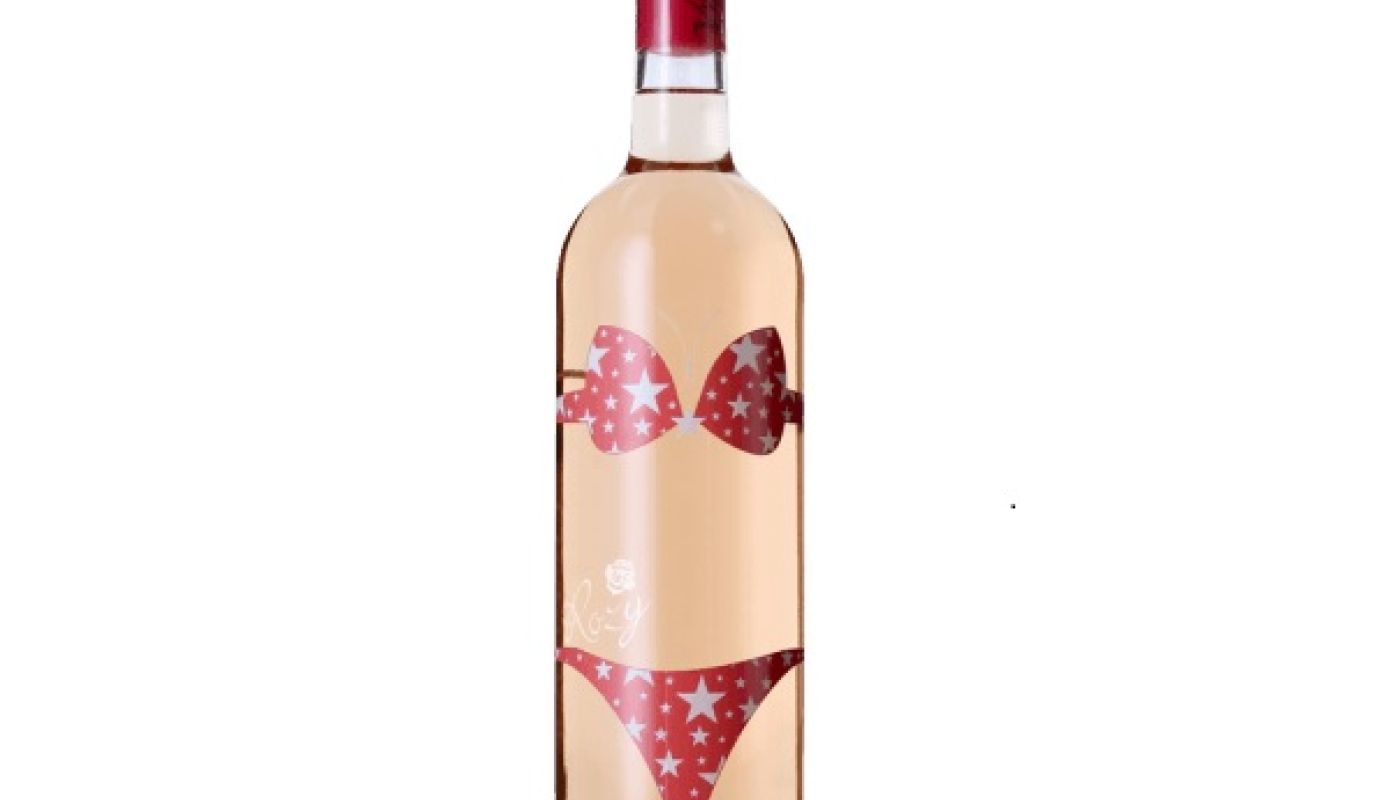
19 July 2018 Tam's cri de coeur about the dire state of packaging of most rosés deserves to be widely read so we are republishing it free today in our Throwback Thursday series. There is much more reportage on pink wines to come over the next few days.
3 July 2018 Perhaps I suffer from a puritanical streak, but for reasons both practical and environmental, I dislike bottles that are overly tall, heavy, crystal-cut, engraved, embossed, plastic-covered, with deep punts or unconventionally shaped. These bottles invariably require more energy to produce, more energy to ship, more energy to package, and are usually significantly inconvenient to transport. They tend to take up more room in a box, which means that usually wadding, often in the form of unrecyclable materials, is required to protect them – and sometimes fewer bottles can fit in a normal 6- or 12-bottle box. They are also often impossible to fit into wine racks and fridges, let alone wine coolers and wine sleeves. Furthermore, too much focus on packaging suggests to me that money is being spent on appearances, and I fear packaging over product.
I must, however, form a minority, because when bottles of all manner of shapes and occasionally eye-watering designs began to flood in for a little Languedoc and Roussillon rosé tasting I was organising, I quizzed various (intelligent) people about their opinions on the more extreme rosé bottles. Instead of disdain, there was genuine admiration and approval. Some even went so far as to say that they would select these rosés based on their appearance. (I would do the opposite.)
Disappointed as I was in my fellow wine drinkers, this meant I had to face facts: these attention-seeking methods of marketing serve a purpose. Heavy bottles, particularly those with champagne-like shapes, deep punts and long thin necks, denote prestige – you’re splashing out and you’re not afraid to take rosé seriously.
Funky shapes (elongated amphoras, squat artisan-gin styles) give off an edgy, modern, bohemian vibe.
Diamond-cut punts and waves/crystals/pyramids etched into the base or sides of the bottle scream Hollywood bling: Armand de Brignac move over, pink is the new gold.
Pink polka-dot bikinis, butterflies, bumblebees, tulips, purple angel wings and hearts, lurid pink roses and shimmering humming birds … well, words fail me. I can’t work out what those are trying to achieve.


But it was a plastic sheath that really upset me (see picture below). It was wrapped around a bottle of organic wine. Which means that not only has that particular producer probably doubled their carbon footprint per bottle by adding an entirely unnecessary wrap of oil-based, non-recyclable polyethylene but they’ve rendered the glass unrecyclable because the plant will not stop to separate the glass from the sheath – both will go to landfill. In one stupid decision, that producer has undone (and more) all the good they’re trying to achieve with organic wine. It doesn’t even look good. Who wants to buy a bottle of wine that looks like a particularly tacky can of toilet spray?

My second gripe is the half-naked bodies and bathing suits. There are winemakers out there who think they need to sell the lifestyle in order to sell the wine. Leave that to magazines and estate agents. For one: rosé does not have to be drunk by a swimming pool. The vast majority of us don’t have a swimming pool (or access to the beach) yet we still drink rosé. Two: rosé does not have to be drunk in summer. If you want us to take your rosé seriously, start selling it as a food wine or an aperitif. Some of us, in more northern climes, experience only three days of summer anyway, and we’d like to drink rosé more often than that. Three: it’s unimaginative and it’s shallow and it is, quite frankly, demeaning. NB those half-naked bodies are never of fat men... Four: it looks cheap – the kind of wine drunk on that stag/hen party where no one remembered anything and at least four people threw up on the bus.

I’ll leave out the gripe about storage, assuming that most people are buying just one bottle that goes straight into the fridge and then 20 minutes later into glasses. You’ll just need to remove a shelf and half your vegetables so you can fit it in.
So my final gripe is the most serious one, touched on at the beginning of this article. We’re entering a decade of unprecedented environmental crisis. Now, more than ever, winemakers need to start thinking about the not-so-distant future and it’s not just about their pretty organic vineyards full of butterflies.
The burgeoning issues of landfill, plastic, energy consumption, carbon emissions and climate change are right on our doorsteps, and every tiny decision a winemaker takes beyond the vineyard has a huge ripple effect. A slightly bigger bottle requires more energy and chemicals to produce, and produces more waste in the process; it is heavier to transport (empty) to be filled and requires special or extra packaging to ship it; it requires more energy to move it around in the cellar and extra/special packaging to box it; it consumes more energy to ship it to the sales markets and takes up more space per bottle on pallets; it creates more glass that needs to be recycled. All this for a wine which is nearly always made to be drunk within a year or two of production.
Some of these bottles are indeed aesthetically beautiful. I’ve kept the Domaine Montrose 1701 below because, label removed, its lovely shape and glass stopper make a very nice water bottle. But much as I like the look of it, I cannot help but wonder what the real price of this vanity is.













