
I’ve never been one for singling out women for being women doing any particular job, and International Women’s Day is well behind us now. But the issue of women’s place in wine hasn’t gone away and there are very few places where there is yet anything approaching genuine gender equality. Surprisingly, one of these is Bulgaria.
I’d vaguely been aware for a while of a significant number of good women in wine in the country, but I hadn’t thought about the numbers until I started to take pictures of all Bulgaria’s female winemakers for a webinar a few months ago. That prompted me to look into the statistics properly, to try and work out what is different about Bulgaria that makes it such a world leader in equality, and whether there are lessons to be learned by other countries.
A statistical view
A quick look at a few numbers elsewhere helps to put Bulgaria’s position into perspective. Romania to the north has just 16 active female winemakers across 325 registered wineries (in 2021), so they represent only about 5% of all Romanian winemakers. I should add that there are a further 25 female owners or part-owners of wineries there, but they are still very much the minority. Slightly further west, Slovenia is often seen as one of the most progressive countries in this part of Europe, but there are barely 24 women winemakers among the 2,000 producers registered to bottle wine in Slovenia. Even California, which many would expect to be enlightened, has just 14% women winemakers according to Santa Clara University research in 2020.
Katia Iontcheva, co-author of the comprehensive annual KA&TA Catalogue of Bulgarian Wine, reckons 47% of the wine cellars in her book have women winemakers, while Galina Niforou, of the Bulgarian Winemaking & Export Association, says that 53% of the 200+ wineries in her association have female winemakers. Membership of the Bulgarian Union of Oenologists consists of 85 women to 81 men. Overall, it seems fair to say that the balance is close to equal – which must make Bulgaria a world leader. Further down the line, it’s encouraging to see that student numbers at the country’s main university for wine studies in Plovdiv have a gender split of 50/50 too. At ownership level, women lag behind, owning or co-owning around 35% of Bulgarian wineries, but women hold around 80% of the finance and marketing roles, according to Niforou. What has made this pattern of equality possible in Bulgaria?
The role of Communism
Undoubtedly, the Communist regime in Bulgaria has been a factor. As Julia Kostadinova (wine brand manager of Avendi) explains, ‘The ideology of the “working class” was closely connected with the women’s rights and their emancipation. It was widely propagandised that the two sexes are equal, and women who didn’t work were considered to be “bourgeois”, “old-fashioned”, even “dangerous” for society.’ This was quite a change from the previous era when, for instance, Nikola Zikatanov (owner of Villa Melnik) tells the story of his mother being censured by the local priest for daring to wear trousers and drive a tractor.
Kostadinova adds that after 50 years of such propaganda, this state of mind is deeply ingrained. Margarita Levieva (editor in chief of Bulgaria Land of Wine magazine) says, ‘Education was free and accessible to all and equal for men and women. Perhaps this was the result of a competition within the world behind the Iron Curtain, as the struggle for women’s equality began there in the 1950s and 1960s. Equality between women and men was in line with the national policy of raising the role of women in modern society, and on the other hand, men were involved in housework too.’ She adds that ‘wine education as state policy started seriously in the 1960s. Personally I haven’t had any problems or obstacles in connection with my work on wine and with wine. No one has ever put barriers in front of me or any of the women I know in the industry.’ So much so, indeed, that most of the women I spoke to were surprised that anyone might believe there was any need for a wine association specifically for women.
Contrasting attitudes
Things are very different in neighbouring Romania, which was also Communist. Aurelia Visinescu (owner/winemaker of Domeniile Sahateni) says, ‘The Communist era created a society which led to a culture of submissive women, disguised in a glorified profile of a woman who had to be a wife and mother.’ Visinescu was the first high-profile woman to become production director in a big winery and win international prizes for her wines. She says, ‘It’s a fact that before 2000, women were more discriminated against when it came to jobs considered to be men’s roles – viticulture and winemaking included – so not many women decided to study these areas. Right after I graduated, my first employer-to-be posted a winemaker job but only men were accepted for interview. I found out about it from a colleague and had to bribe the secretary with flowers to get an appointment with the general manager. After 2000, the transition was slow as not many companies were privatised by then and mentalities do not change overnight.’
But she explains that women did start to evolve and aim for jobs that had previously been considered masculine. Lorena Deaconu Stoian, chief winemaker at The Iconic Estate, says there were women working in wine under Communism, but nobody talked about them. Her story began with a job in 1986 at the research station in Arges County where she says there were a few, very good, women working in production. She then won a scholarship to university to study wine for the next five years, eventually ending up at Halewood Romania by 2007, which recently became The Iconic Estate.
She highlights the common issue of work/life balance. ‘I travelled a lot, working very hard and with no children. I think this is one of the major issues for women who wish to have a family, but at vintage time there is not so much time for this.’ Visinescu concludes that the differences between Bulgaria and Romania have to do with different Communist regimes and also people’s mentality, adding, ‘I honestly believe the latter is more important because it changes more slowly than the regime.’
Csilla Serli (winemaker at Nachbil) agrees. ‘The somewhat outdated mentality is primarily related to the Orthodox religion, not Communist ideology. Romanian people have an old-fashioned perception related to tradition and it’s hard for them to become more open.’ Philip Cox (co-owner of Cramele Recaș) agrees that during Communism there were women doing important jobs and reckons it was fairer to them than the current system. He says Romania today is still a highly misogynistic society where women are not taken seriously as business people.
Cox goes on, ‘There’s a general problem with getting young people to work in wine in Romania. Agriculture in general, and wine in particular, are not highly regarded … It’s seen as a thing for people from the countryside and not very cool.’ Cox adds that he currently employs four women winemakers but none is Romanian, and says, ‘I hire winemakers every year and I have literally never had a Romanian apply for the job – let alone a female Romanian.’ Cintia Colibaba (lecturer at the university of Iasi, the main university for Romanian wine studies) points out that there is no specific wine degree, only a one-year module within a three-year horticulture course, so anyone wanting to work in wine must do further studies. She adds that, ‘the agricultural universities in Romania are fighting to change the system and to get specific studies for viticulture and winemaking, but so far, no success.’
In Bulgaria’s real world
In Bulgaria the first women took winemaker jobs as early as 1953, according to Madlen Kuzmanova, winemaker at Ch Copsa, though it was much more common that women worked behind the scenes. Ekaterina Gargova (owner/winemaker Wine Bridges) explains, ‘When I was looking to start work around 1994 and 1995, companies preferred men for winemaking jobs. It doesn’t mean that women were not there. They were, but more in the shadows. The wineries in 1980s and 1990s were larger structures with the production manager and technologist roles held by men and positions in the laboratory, quality control and bottling held by women, making women’s participation in Bulgarian winemaking rather hidden.’
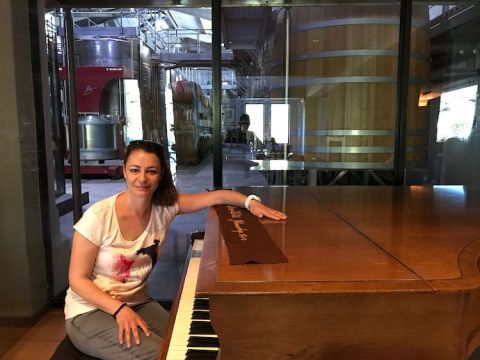
The winemaker at Orbelia, Desi Hitova, agrees. ‘There have always been women in wine, but they used to be in the shadow of men because of the structures in the big Communist wineries, who employed men in leading positions.’ This all changed in the 2000s with the rise of small private wineries, often employing just one winemaker who had to be able to do everything themselves rather than directing a team. It has not always been easy, as Maria Stoeva, Bratanov winemaker, says. ‘Sometimes I have found a slight contempt on the part of some men because there is a lot of physical work, plus logical and engineering thinking in winemaking and they think that these are qualities that are predominantly inherent in men. This happened during my first meeting with the technicians at Bratanov winery. It was difficult for them to accept that they would be led by a woman.’
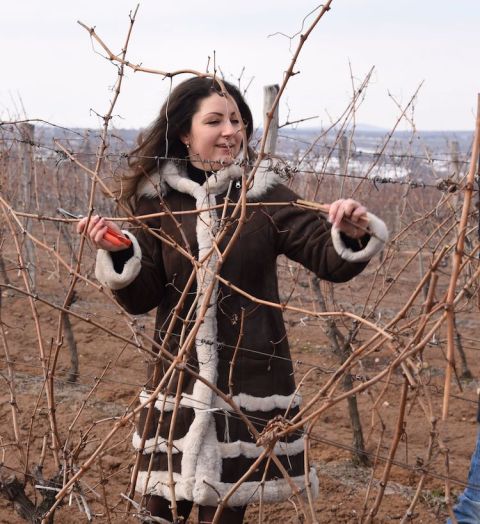
However, this attitude has been disappearing as the last ten years have seen more and more women taking leading winemaking positions. Tanya Avramova, who works in marketing at Bratanov, says, ‘My explanation is that this profession requires intuition, patience and an ability to balance the very physical part of this work with its artistic side … and women are better at that.’
Female qualities
Women’s sensitivity, ability to multi-task and greater tasting acuity were all mentioned as explanations, but none of these are qualities unique to Bulgarian women. Smoking also cropped up as a factor, as many fewer women than men smoke in Bulgaria (21% v 36%) and the banning of smoking in indoor public spaces back in 2012 surely has been a factor in enabling more balanced, elegant wines to shine in an atmosphere in which they are not fighting a fug of Balkan tobacco.
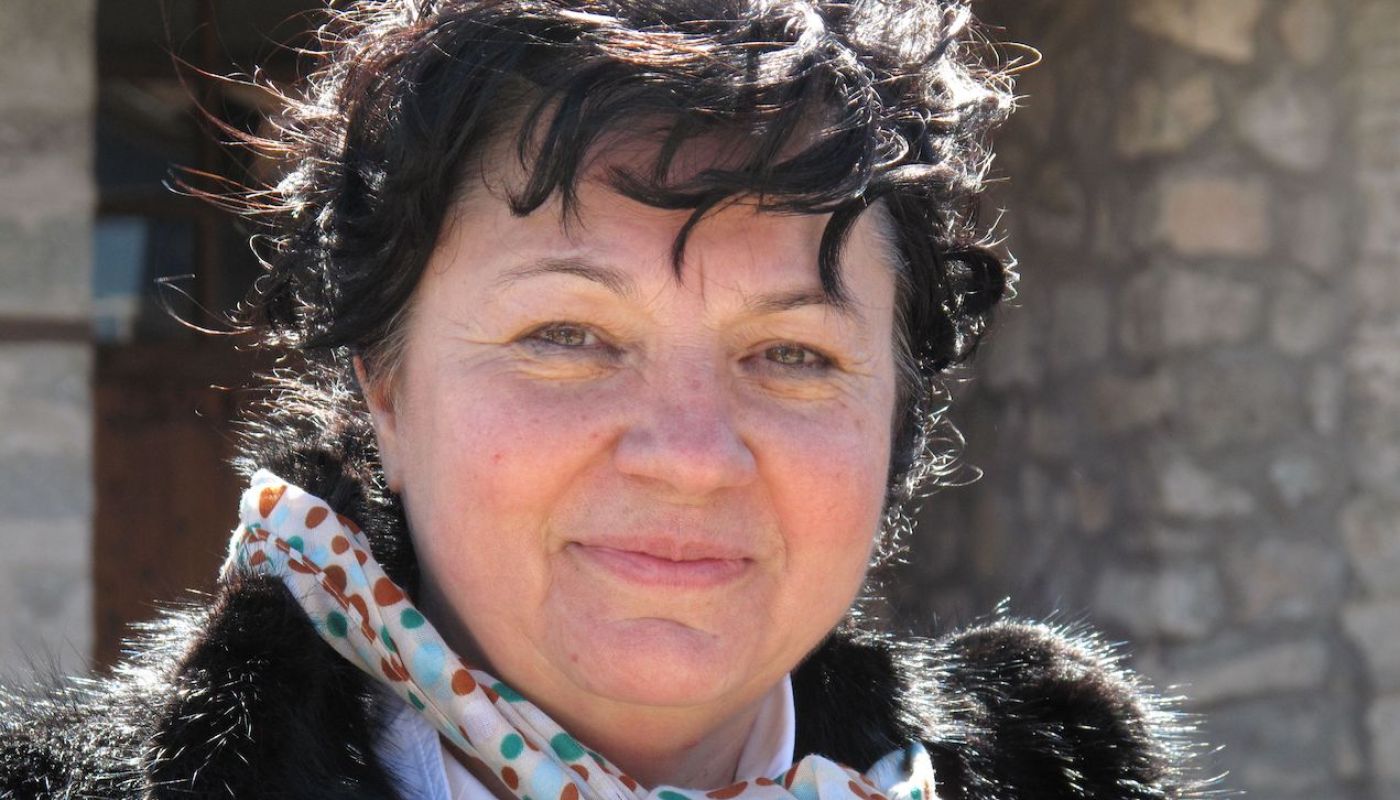
In the end though perhaps it is more to do with creating an environment in which young women see ‘people like me’ in certain roles, and that includes seeing wine as an aspirational career option. Undoubtedly this has been helped by role models such as Adriana Srebrinova (picture at the top of this article), mentioned by several women as an inspiration, and one of the first women in Bulgarian wine I got to know myself. She graduated in 1979 and went to work in a state winery, at first producing high-alcohol and sweetened drinks but learning about wines after hours. She mentions working with several strong women in wine production in the state-owned Vinproms, the organisation in charge of the collectivised state wineries.
Later she founded her own Maxxima brand and pioneered premium Bulgarian wine in the new, post-Communist era with her 1999 Private Reserve. She subsequently founded Borovitza along with her late partner-in-wine, the much-missed Ognyan (Ogy) Tzvetanov. Ekaterina Gargova (of Wine Bridges) was also mentioned by several younger women, and she recalls, ‘When I started as a cellar hand in a winery, I used to work with two women who gave me hope that it would be possible to become a winemaker.’ She explains that later, in turn, she has always wanted to help the next generation of women.
Kuzmanova of Ch Copsa says, ‘Our profession is interesting, diverse, dynamic and this is one of the reasons why it is preferred by both sexes, but the most important thing in my opinion is to like and love what you do, to want to experiment and upgrade. I can safely say that if I had to choose now, I would choose this profession again, because it has given me many moments of pride, pleasant experiences, friends and challenges.’
Lessons to share?
Bulgaria’s version of Communism has clearly been a major factor in creating equality of education and opportunity, and the mindset to allow this. It’s not just in wine either as Levieva explains, ‘In my conscious life, women’s equality has always been a natural thing. You probably know that we have women who hold the highest positions in the country – Chairperson of Parliament, Vice-President of Bulgaria, plus several Ministers. And this is neither surprising nor unusual for us. This is normal.’
The restructuring of the industry after privatisation, with the loss of the large state Vinproms in favour of small estates and private projects, has also been significant factor in bringing women out of the shadows. This created opportunities for winemakers who were able to multi-task and allowed many women to shine (though this is not to say there aren’t some great male winemakers in the new era too).
Neither of these are conditions likely to be recreated anywhere else – I don’t think many people would advocate a return to Communism. But I do firmly believe the story of women’s equality in Bulgarian wine is worth sharing for several reasons. One is that seeing ‘people like me’ being extremely successful in winemaking roles may be inspiring for women in other countries where they are still fighting their corner. And it’s clear that women through several generations have inspired and supported the next one.
Second, Bulgaria today is no longer a wine-export powerhouse and needs all the help it can get to build awareness on a crowded world stage, so maybe the story of world-leading gender equality can help. Finally, and in some ways the most important thing, is that women in Bulgaria today are creating some delicious wines well worth exploring.
See Caroline’s previous recommendations in Bulgarian wine today, published in June 2020, although some vintages have changed. She also recommends:
Borovitza, Cuvée Bella Rada 2019
Barrel sample. Rkatsiteli as you’ve never seen it, from old vines and fermented in barrel. Notes of peach and ripe apple, with twist of orange peel. Juicy and succulent. Drink 2021 to 2023.
Haralambievi, H Rubin 2019 14%
Tank-fermented Rubin from cool northern vineyards show a different side to this sometimes hefty indigenous grape. It is bright and juicy, fruit-forward with moderate grainy tannins and a fresh finish. Drink 2021 to 2024.













