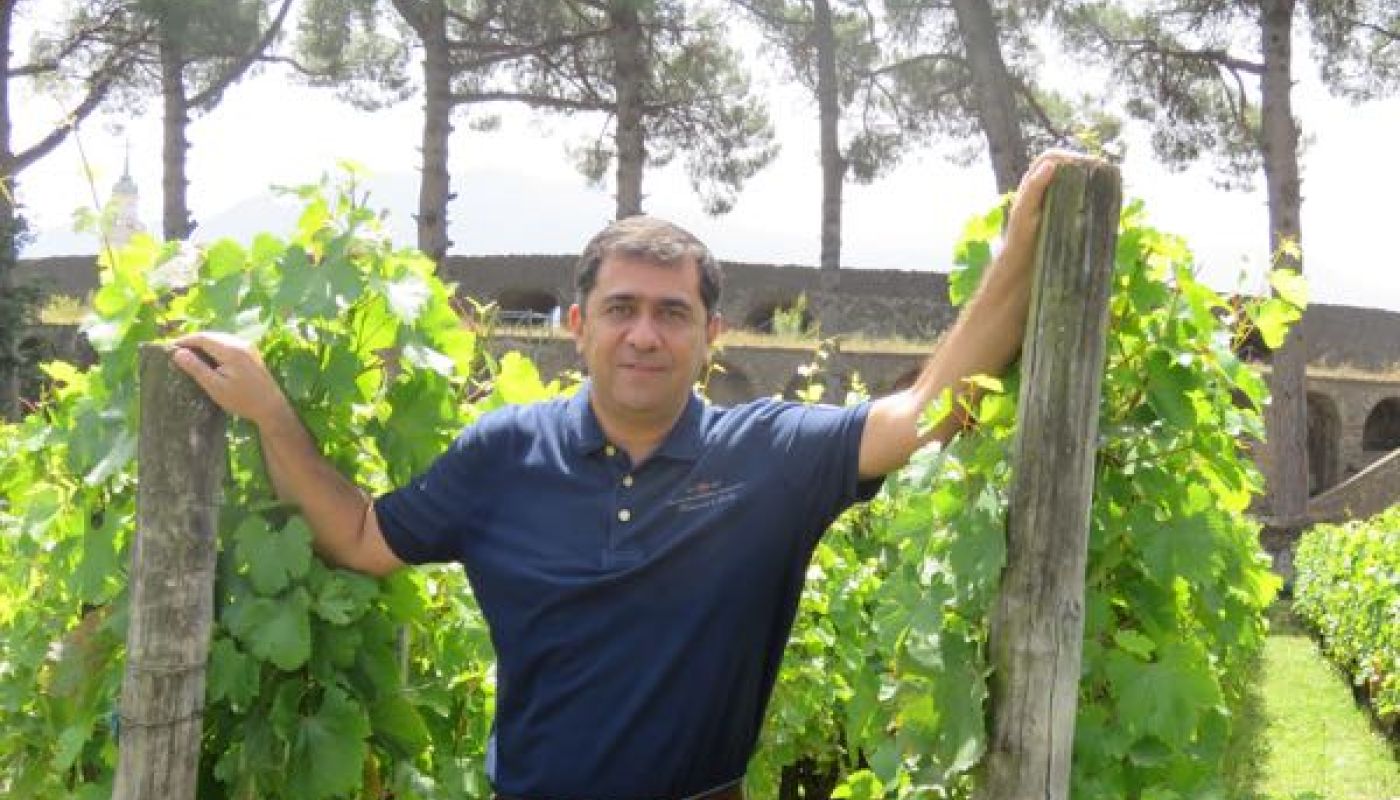
Here he reports on the first half of his 2016 trip to Italy. In part 2 he tells of the second half of his time there and his visits in Spain.
In the beginning, I´d stay to work for one month in some wineries. Today my technical trips are more focused in some places that I am interested in, particularly seeing certain people and wineries.
Rather than settle a month in Tuscany, I'll see a couple of producers that I like. I study the place, landscape, wine, food, culture and then I move to another place.
This year the trip was concentrated in parts of Italy and Spain.
Italy
The idea this year was to focus on some producers:
- the unknown Piemonte: Valle d'Aosta, Ghemme, Gattinara, Lessona
- Valtellina
- Mezzolombardo
- Friuli
- Slovenia (Karst)
- Chianti Classico [in part 2 tomorrow]
- Montalcino [in part 2 tomorrow]
- Campania [in part 2 tomorrow]
Spain [in part 2 tomorrow]
- Priorat
- Gredos (Sierra in Madrid)
PIEMONTE
Overall this is an area that most people know, especially for Barolo wines. I've been there a few times.
The last time I was in Barolo was a couple of years ago in October 2014, in the truffle season. There is a restaurant called Ristorante Boun Padre, part of the cellar and kitchen Viberti, run by the mother of a friend of mine Claudio Viberti. They make angel-hair pasta with amazing truffles.
Now the prices of bottles within this area is becoming higher in my perception. If you´re lucky to have a good friend, you might be invited to the cellar. I personally like Bartolo Mascarello, Giuseppe Mascarello, Rinaldi and others.
During my 2015 trip to Barolo, I realised that there's a widespread opinion that every year vintages are warmer and drier and the premise that the great wines of this area in Barolo are from vineyards with full exposure to the south is changing, indeed it’s south facing but with less sun exposure.
I also heard for many years that the great Barolos have to wait 20 years before you can drink them.
I think this has changed. Today you taste 2008, 2009, 2010 and they are already drinkable. Of course, the warmer, drier vintages, with the help of technology, machines that remove the stems of Nebbiolo efficiently, make these wines drinkable and consumer friendly.
I also observed this phenomena last year in the northern Rhône. Indeed, the fame of Hermitage with expensive Syrah is deserved but not all the wines produced now are still worthy of that great reputation. Unfortunately today you pay for fame and some wines are not worth what you pay. In Chile there is a saying 'make yourself famous and then go to bed'. In wine I believe this does not apply.
My visit took place during harvest time, where full south exposition brought yellow leaves; dry years, with high insolation and soils with little clay and therefore low moisture retention mark the vineyard.
St-Joseph on the south side of the northern Rhône today shows remarkable wines. Surely they didn´t ripen very well every year in the past and it was a marginal area. Now there are wines such as Pierre Gonon that are world class and at very affordable rates.
This climate change made me think that probably a little colder and ‘marginal’ areas could bring great wines at reasonable prices. As a matter of fact this 2016 I mainly focused on some less valued areas.
VALLE D'AOSTA
The prime target this year was to seek out good Nebbiolo in areas outside the region of Alba (Barolo, Barbaresco).
Located on the 45th parallel on the foot of Monte Bianco on the border with Switzerland and France, with approximately 300 ha (740 acres), the Valle d’Aosta appears as a mountain valley. It became a DO in 1987.

An area dedicated to tourism, where agriculture is given over 60% to cattle farming to produce Fontina cheese, the rest to vineyards and orchards.
Within this valley two million bottles are produced. To put this in context, a mid-size winery in Chile produces more than the entire Aosta Valley.
The average vineyard property is 0.7 ha, where properties as small as 0.3 ha are dedicated to making wine for home consumption.
Formerly the wine was considered as a source of calories – in such cold areas it was a source of energy for the family. In 1948 the per capita consumption reached 50 litres.
There are six co-operatives that produce 60% of the total area. Then there are 38 private cellars.
In a meeting with the winemaker at the Cave Onze Communes co-operative in Aymavilles, he tells me that for him the northern exposure gives wines with more finesse and southern exposition brings wines with more body. I think that climate change is affecting this area as well. At one time the northern exposure was not considered for high-quality wines. Harvests have come forward, 2003, 2001, 2007 and 2015 were warm ones, begun in August. Alcohols in general terms have risen.
Here the main varieties are Müller-Thurgau, Pinot Gris, Pinot Noir, Moscato Bianco, Gamay, Petite Arvine (only 80 ha in the world).
This last variety is very interesting, wines produced are quite salty, well worth trying if you find a bottle of Onze Communes of Valle d'Aosta there. In addition, I think the price will not exceed €15.
It is a mountainous area; the high-elevation vineyard in general is trained in ‘parrales’ on 4-metre-high rock terraces, with 2 metres depth. There's some Guyot and a some bush vines. The height delivers more aromatic wines.

The soils are sandy and rocky. Irrigation is allowed. Of course there is not much water retention there.
The vineyards range from 300 m to just over 1,300 m, these last are some of the highest in Europe. The climate is marked by very cold temperature in winter but not much rain, it’s rare. Before travelling here I thought it was very rainy. On the contrary it is quite dry. Only 400 mm (16 in) average rainfall per year.
The mountains block from the valley the winds and rains that come from the Atlantic.
In the highest part of the valley there is a sector of sandy soils in which the main variety grown is Blanc du Valdigne [also known as Prié – JH], ungrafted. The interesting thing here is to know why this variety has never been affected by phylloxera. I have read that this vine is very resistant to phylloxera but I am not sure this is the key. Or is it?
In Chile we have no phylloxera and until today we don’t really know why. However, I have seen in my travels some places that do not have phylloxera, where I believe there are a couple of common denominators. Soils are either volcanic or sandy. Volcanic: Spain (Tenerife, Lanzarote), Greece (Santorini). Sandy: Italy (Carignano del Sulcis on Sardegna), Aosta, the highest part of the DO.
Interestingly, in the Aosta Valley soils are basic (high pH), as a consequence wines have low natural acidity. Probably acid correction is a normal practice, to refresh the wines.
THE SESIA VALLEY: GATTINARA, GHEMME, LESSONA
Lessona was formerly the most prestigious area; today this area has very few vineyards; Gattinara today appears to be an important area.
In this area there are two DOCG, Gattinara and Ghemme. There was a volcanic eruption that caused these areas to have more acidic soils.
Here comes one of the issues that brought some questions on this trip: Do acidic soils tend to give acidic wines?
I remember at the World Congress of terroir 2004 in Bordeaux and Montpellier one of the conclusions was that you can’t isolate a descriptor in wine such as acidity, minerality or any other, and then link it to a component of terroir such as the acidity in the soil.
However, in my experience, aspects that truly mark natural acidity are: the variety, the weather (if it is colder, it is more acidic) and harvest date. Now if we leave these factors fixed, in general more acidic soils give more acidic wines. There may be some exceptions, but I think it is generally true.
In Chile, acidic soils in the Cordillera de la Costa (Coastal Range) generally produce wines that are acidic: Casablanca, Leyda, Marchigüe, Maule (VIGNO) and others.
In these valleys of Piemonte, in the areas of Gattinara, Ghemme, Lessona and others, wines are naturally more acidic (volcanic influence) compared with Aosta.
I say natural acidity because in the cellar I can always add acid artificially to correct the acidity of the wine, common practice, but at some stage this tends to standardise the wines.
Massimo Clerico (Lessona)
This is a producer who has only 2.5 ha. Vineyards planted on very poor and very acid soils. It is not irrigated. Massimo’s production is 10,000 bottles per year.
I think this is one of the high points of the trip. A project on a human scale, with minimum intervention in their wines (little oak), very fresh, very representative of the variety. Massimo's wines are indeed great. If you see a bottle out there, buy it.
I also tried with the owner a Sperino Cabernet Franc called L Franc Bandit. A little pricey, but worth trying something like this. Very spicy.
Monsecco (Gattinara)
A classic producer. I visited the winery and the vineyards, very interesting. We didn´t taste any wines because he preferred to give me a few bottles as a gift. Unfortunately, at Naples Airport I got screened and bottles were taken, so I couldn’t taste them, a pity.
An area of acidic and volcanic soils.
An interesting issue here. They commented that they were in a dilemma. His wine importer in the USA – Rosenthal (one of the best operators in USA), who has an amazing portfolio – wanted it to be as natural as possible. (Eric Solomon, an importer in USA for Spanish wine, is great too.)
That means among other things stopping the use of selected yeasts and starting to work with the native yeast that comes from the field. Technically it is quite easy to make the change. Let's see what happens. I hope to hear comments from Rosenthal.
SOME RECOMMENDED PRODUCERS AND WINES
Caves Coopératives de Donnas (80% of what they produce is Nebbiolo)
Donnas Vallée d’Aoste
Donnas Vallée d’Aoste Supérieur
Cave Onze Communes, Aymavilles
Petite Arvine
Gamay
Massimo Clerico, Lessona (100% Nebbiolo)
Lessona 2005, 2008
In general all vintages are very good, however I found the 2005 world class.
Other producers
Monsecco (Gattinara)
Rovellotti (Ghemme)
Tenute Sella (Lessona)
Just for reference, over the last three vintages: 2013 classic, 2014 cold and complicated, warm 2015. It's what I gathered from producers and what I felt in the glass.
FRIULI, SLOVENIA AND ‘NATURAL’ WINES
I travelled to this area to see two producers, Josko Gravner and Marko Fon, recognised producers of ‘natural’ wines.
Josko Gravner has vineyards in Oslavia, Gorizia, Friuli, all worked sustainably, organically, his vineyard is in balance, healthy, very much alive. A guy who makes wine in qvevri from Georgia. White wines with very long macerations with skins, he works with the Ribolla Gialla variety. A cellar based on buried qvevri.

He believes in the number 7 as a guide for life and his wines. That is why the wines are released 7 years after the harvest. Each harvest is well identified, warm, cold, good and not so good ones. These are wines that have a soul and certainly stand out for that.
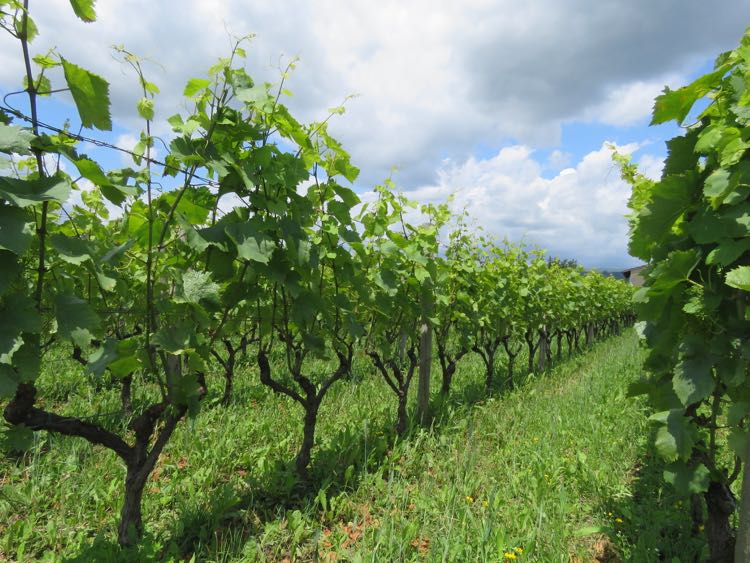
Marko Fon was another stop I didn’t want to miss in Karso in Slovenia. A young producer who makes 6,000 bottles in total, he introduces himself as a man freed from slavery, from consumerism, who also has an enviable lifestyle. What he produces is sold.
I´ve tasted these wines back in Brazil with my friend and owner of the importer Decanter (Adolar Hermann) and with Stephano Zannier, an Italian who lives two months in Rio de Janeiro and one in Italy near Venice in Spilimbergo where he was born, a lover of good wine. He has a restaurant in Castello di Splimbergo called Ristorante La Torre. If you go out there do not miss it.
Also he has a wine cellar at home, an amazing one, with all the Italian classics and then some other unique things.
We tasted some splendid white wines, old bottles from Valentini in Abruzzo. The classic Trebbiano d'Abruzzo (one of the best Italian whites, red is good, however the white is superlative). Keep an eye on this wine, the issue is that it is a bit expensive. Among them all, the old bottles are the best, until 2013 one of the great Italian wines.
Of the reds I think Soldera is a wine that ages well. From the French side, La Chapelle 1986, great wine with Rhône character, black olives and an iron note I can feel on the palate, typical of wines from this area.
I had a different experience last year in Tain L’Hermitage, tasting La Chapelle 2007, wines that I really didn’t enjoy much during my travels. I wondered how with this grape you can make a wine with less sense of place and so boring, oaky, over-ripe and more oak. It is a classic name but in this bottle it seems that the wine recedes into the background.
Back to Fon now, in his simple house in the Slovenia Kras area, rocks and limestone. We tried his wines with a salami and bread, wines with soul like Gravner’s.
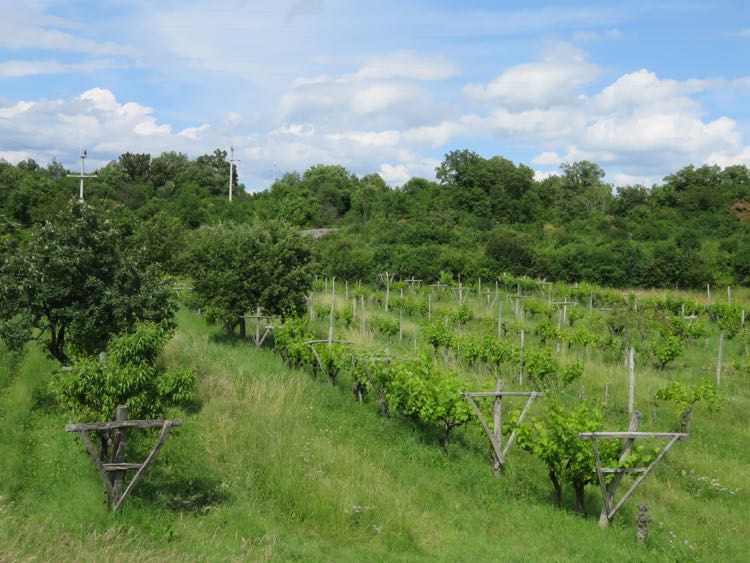
He works mainly with the Malvasia and Vitovska varieties.
He pointed out that his main market is Switzerland, although he is not well known. However, if you like natural wines, these are world class.
At that moment he had no wine to sell and gave me a bottle of Quattro Stati, from a vineyard over 100 years old (160 bottles per year).
All wines of this type are well worth it. Not easy to find but if you see a bottle somewhere, buy it.
My last day in Italy, I was organising wines to take to Spain and then to Chile, so finally I found the bottle of Marko Fon, Quattro Stati.
Difficult decision. Either I take this bottle to Chile and share it with my friends or I drink it in Italy. My choice was the second. I bought some cheese, bread and a Neapolitan pizza. Incredible bottle. Fresh, complex, very vertical, a wine that well represents the Karst region of Slovenia and its people. So simple and such good wine.

Now reviewing these two Italian producers, Fon and Gravner, and returning to a theme that is popular today. Natural wines.
In the last three trips I spent a lot of time visiting producers with this philosophy.
Now the question for the consumer is what´s a natural wine? What are the rules that must be met to fit this concept? I think the answer is not easy. I think in all areas and places the basic and common principles are:
- vineyards worked as organically as possible in the given conditions
- no herbicides to eliminate weeds, with soil ploughing – horse, mule and/or tractor
- development of natural grasslands between rows
- hand-picked harvests
- in the cellar with minimal intervention, usually without the use of selected yeasts or additives; usually stored in concrete, amphorae, old barrels, old foudres.
The addition of sulphites is the main issue. If you're in the Loire, the statement of principles referring to this is as follows. For reds less than 30 ppm, for whites 40 ppm and for sweet wines 70 ppm. (This refers to the total sulphur content in wine.)
In Italy you can find different criteria, but I prefer what Gravner said, if there´s a need to add sulphite you add, not much, just enough so the wine doesn’t turn into vinegar.
For the Spanish it is zero addition. Wines naturally have about 6 ppm, which is what occurs when native yeast ferments. That’s why I clarify this point, there are no wines without sulphites. Although there are wines without added sulphites.
What I am clear about is that with or without sulphites, wine has to produce pleasure, it must be good. I've tried a lot of wine vinegar sold as natural. In the end it is a good excuse to be natural and to make a bad wine.
Not easy for consumers and it can end up ruining the category.
Here are some ‘natural’ producers I enjoyed:
Pierre Overnoy, Arbois-Pupillin, Jura, France (French Gravner)
Tenute Dettori Sardegna, Italy
Huaso Sauzal, Maule, Chile
Josko Gravner, Friuli, Italy
Marko Fon, Karst, Slovenia
Antoine Arena, Corsica, France
Domaine de la Tournelle, Jura, Arbois, France
Georgia, many qvevri wines are of this type
Radikon, Friuli
Panevino, Sardegna, Italy
Jean-François Ganevat, Jura, France
Goyo Garcia Viadero, Ribera del Duero, Spain
Pipeño, Roberto Henríquez, Chile
VALTELLINA
I visited ARPEPE, located in Valtellina, one of the places with most impressive vineyards in the world. Near Lake Como.
Mountain vineyard, planting was made in terraces built by the Romans 300 years ago, a place where many wars took place, formerly part of Switzerland.

In the 90s the law changed and some Bordelais varieties came in. The main grape here is Nebbiolo, locally called Chiavennasca.
For me, the remarkable thing is that this area was probably not considered for premium wines in the past, where grapes might not have ripened well enough. This is a cold area.
During the visit to ARPEPE, Emanuele, one of the owners, talked to me about the way the climate has changed, now there is more stability in the vintages, the wines are less acidic and drinkable sooner.
2014 appears to be one of the worst years for this valley. A lot of rain.
In ARPEPE, I was told, this vintage was not good, where finally many kinds of wines were blended. There is a single label that gathered the great terroir and the less qualitative ones. Interesting. Only one wine.
A bargain, great wine. It's called Rosso di Valtellina 2014. (Try this wine it is so great.) Red violet colour, cool, cherry, in Italy it sells for €15 a bottle.
MEZZOLOMBARDO, Elisabetta Foradori
This producer is based in Mezzolombardo. Certainly Italy was one of my main goals. I had already tasted some of these wines, they seemed very good with great personality, so surely the person behind these wines would be interesting to know and to understand the philosophy behind them.
Unfortunately I did not get a chance to see Elisabetta, I was with her son Emilio. Great guy, no doubt he conveys the message and philosophy of these unique wines.
Mezzolombardo is a place surrounded by high mountains, the Dolomites, here there's limestone and granite. Today there coexist eight small producers and two co-operatives.
Foradori vineyards are worked biodynamically, they’re planted on alluvial terraces where you can see Teroldego (red variety), Nosiola (white variety) and Pinot Grigio.
The area is characterised by the pergola. Vineyards planted at low density and with higher yields. Today this is changing to higher densities.
At the winery some wines are made in Spanish amphorae (tinajas). They are remarkable, the best for me. Of a purity and cleanliness that I had not tasted in wines fermented in these clay pots.

The cellar is very clean, everything is perfect. The tasting table, one of the best I`ve seen. Not very large, with direct light that allows you to see wines perfectly. No defect in the wines, which is evident.
Total production is around 160,000 bottles per year, with an entry-level wine called Foradori, then a couple of wines with medium volumes, Manzoni Bianco Fontasanta and Granato, and four amphora wines. All very good in their category, but without doubt the amphora wines are the more interesting ones.
If you want to try true and clean wines made in amphora, probably Foradori is the champion today.
Below, my favorite ones:
- Nosiola 2014 amphora wine – very fresh, great acidity, very delicate, chamomile, citrus, spicy.
- Sgarzon Teroldego 2014 amphora wine – it is a red wine that is fermented with long maceration (seven months with the skins), concrete and then bottle.
- Morei Teroldego 2014 amphora wine – good acidity, aromas of violet, layers of cherry, almond.
The 2014 vintage was considered fresher and may be lower in quality through many regions in Italy but for my personal taste, I like it.
Vintages with more concentration, 2009 and 2015, provided ‘best wines’, although a bit sweet and a palate with good concentration. If less is more, then go for the 2014.
Here is a brief summary of vintages at Foraradori:
- Warm: 2000, 2003, 2004, 2009,
- Rainy: 2001, 2002, 2008, 2012, 2014
- Balanced: 2006, 2010
- Early: 2007, 2011, 2015
- Delayed: 2013
See also part 2 – Italy continued and on to Spain.