ITALY continued
TUSCANY – in search of classics
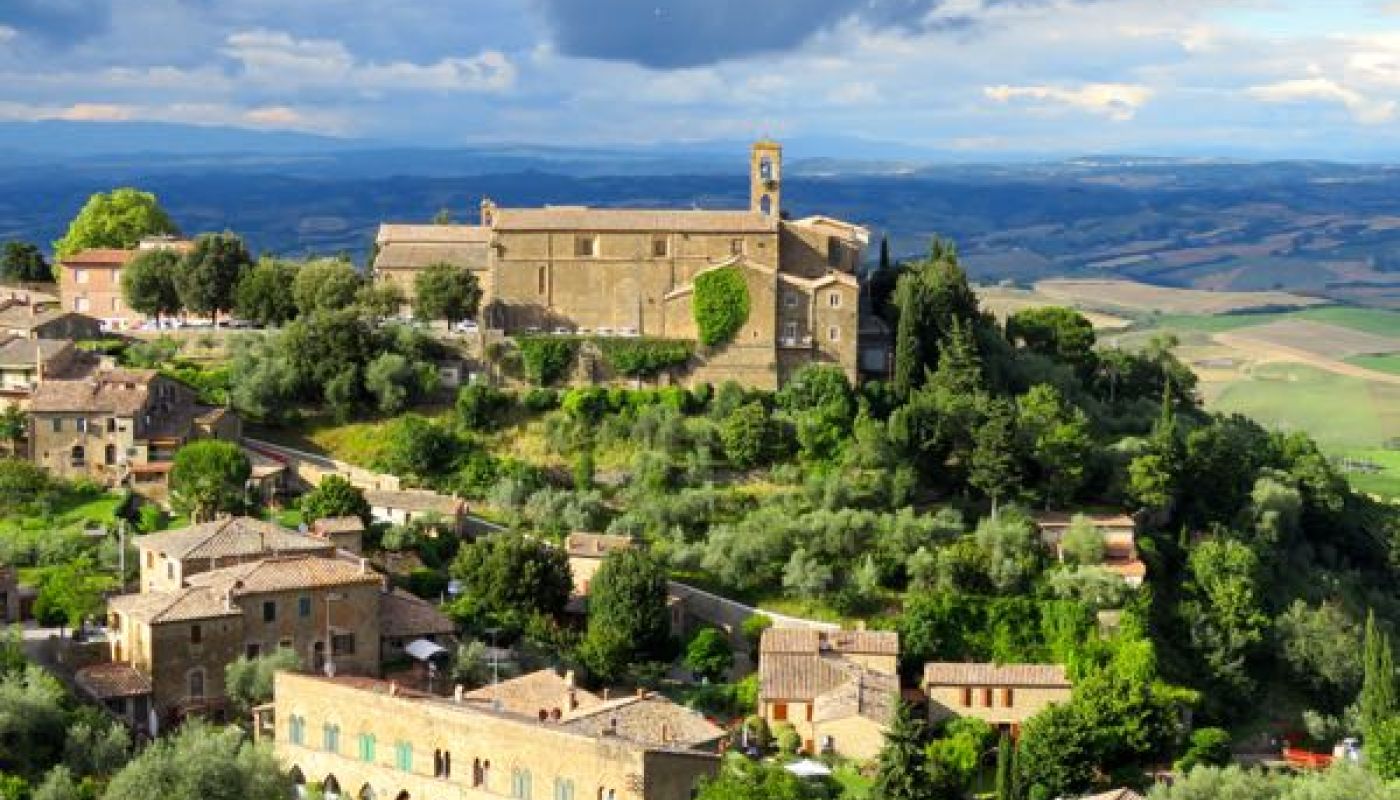
Having tasted many natural wines, looking for a bit more radicalism, I made a stop in Tuscany to try a classic, Biondi Santi, the legendary producer of Montalcino (my photo shows the town of Montalcino). In addition I visited Montevertine, whose cult wine Le Pergole Torte will surely some day become a classic.
There is an issue that is turning around in my mind. In Chile and the New World we have raised and created a category of icon wines, world-renowned wines from each winery, the pride and joy of the owner, in search of 100 or 20 points according to the publication and journalist. Many stay in the cellar and remain unsold, others have a little more luck and end up in good restaurants with good recognition.
From my perspective, commercially successful wines have some commonalities:
- a well-known and delimited vineyard
- a vineyard in a reputable area
- a visible face, someone who showed the wine at some particular time
- a prestigious brand that supports it
- a good marketing budget
- a very high price and a heavy bottle that looks like a flower vase.
Icon wines succeed only if consumers are willing to pay large sums of money for them. It is not enough for the winery owner or winemaker to decide that these wines are ‘icons’. The vast majority of icons fail because those behind them fail to understand the basics.
For me the word ‘classic’ is better because it is not as arrogant as icon, and applies not only to wines of very high value.
According to my Italian friend Antonio Morescalchi, one of the owners of Altos Las Hormigas in Argentina, Biondi Santi is one of the three classics in Tuscany.
A classic is one wine that transcends over time, which goes beyond the vintages and fashions. There are classics that people may not like today, although they are still classics. For Antonio a second range of classics would be Soldera and Ornellaia (Masseto included).
There is also a range of Tuscan wines that are classics for oenophiles: Fontodi, Isole e Olena, Poggio di Sotto, Castello di Ama, Felsina and others. I’ve tasted most of these wines. However, Antonio seems to me someone who really understands Tuscan wines. He was born there and lives there.
Well, tasting Biondi Santi Brunello Reserva 2010 (a great vintage), with its red and black labels that are recognisable on any shelf, I found the wine is characteristic of the place, powerful, and with great potential. These wines are certainly drinkable after several years. I think that despite climate and changes in technology, these wines of Montalcino are still a great option to buy by the case and forget for a few years.
Already in 1888 Biondi Santi was recognised as one of greatest Tuscan wines. In 1980 Brunello di Montalcino was recognised as DOCG made from100% Sangiovese Grosso and normally aged in old Slavonian foudres. There is a rumour in Montalcino that this classic estate is for sale, that anyone with a good wallet could buy Biondi Santi.
Le Pergole Torte, a wine from Montevertine in the Radda area with a fairly short history, today becomes a great wine of Tuscany for oenophiles. It does not have the heritage of hundreds of years like Biondi Santi, but we’ll see what happens in the future.
The mentor of this wine was Sergio Manetti, a guy who defended Sangiovese and during the Supertuscan era joined tradition with modernity; he was not willing to put Bordeaux grape varieties in his blends.
His son Martino Manetti – a great guy, very simple – hosted me. This is a tremendous, vertical wine. There is tension, and a bit of oak. However, I think it is a wine to drink in a few years. Well worth trying, it has a price that is high but not prohibitive.
If you go by Tuscany and want to buy some wine, the best place is the Enoteca Carlo Lavuri in Agliana between Florence and Lucca. It has a variety and quantity of amazing wines.
CAMPANIA
I visited Campania briefly. I wanted to see a vineyard that I had been told was inside the ruins of Pompei.
In Campania 55% of vines make red wine and 90% of them are Aglianico. The second most important is Piedirosso. Falanghina, Fiano and Greco are the most important white wine varieties.
As in many areas of the world, each zone is marked by the climate and soil. The coldest area is Avellino. Three of Campania’s four DOCGs are here: Taurasi, Fiano di Avellino and Greco di Tufo.
Of all the wines Greco di Tufo is what seems to me to be best, producing savoury wines that are fresh and not too aromatic. These are good wines for seafood, the sort favoured by my friend Marcelo Papa, winemaker for Marqués de Casa Concha in Chile.
Here I visited Mastroberardino and was received by the Neapolitan Antonio Dente, responsible for the vineyards, and Massimo Di Renzo, winemaker in charge of the cellar. It is a large cellar with well-crafted modern wines. They are very technical and the whites are especially clean and fresh.
Mastroberardino has planted 15 small parcels of vineyards with local varieties in the volcanic soils of the ruins of Pompei. Formerly there had been vineyards but they disappeared with the eruption of Vesuvius in 79 AD. Antonio showed me every vineyard – amazing.

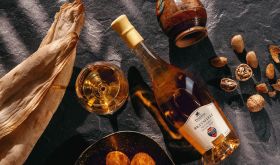
This is a relatively warm area and ultimately, more than the liquid, I was curious about the significance. Unfortunately, although at Mastroberardino we tasted many wines, all with a good sense of place, I didn’t get a chance to taste the wine from Pompei. Maybe the next time. I do believe that Mastroberardino should try to make wine as it was done in Pompei originally. I saw some rock lagares and amphoras (pictured below). I think storage in amphora for this wine is a must. I left some food for thought with the team. Let's see whether, when I return in a few years to taste the wine, it will have been aged in amphora rather than barrels.

TRAVELLING WITH WINE
First a word of advice to those who travel, carrying bottles of wine from different places visited. This is not an easy task today.
I arrived at Naples airport with 12 bottles well packed in Styrofoam boxes that DHL had specially designed for wine. British Airways was my airline. Unfortunately the BA representative would not allow the wines as checked luggage in this format. I had to buy a suitcase, put six bottles in it, and give the rest away to the guy who was wrapping the bags in plastic.
The counter person didn’t understand that that box was specifically for wine. She wanted a suitcase. Amazing. I almost chose not to travel with my clothes rather than losing six bottles of wine that meant a lot to me.
The same situation already happened in Georgia where I lost 17 bottles of wine on Alitalia.
The lesson is that you have to travel with bottles inside the suitcase and never mention at the counter that you’re bringing wine.
ON TO SPAIN ...
PRIORAT
It has been quite a few years since I was in Priorat, the last time being after Vinexpo in 2003, a year of unbearable heat. At that time it was with the idea of super-ripe and powerful wines that I visited some wineries whose wines I liked. I wanted to see what had happened in 13 years.
The area has been well known since the 1980s as somewhere where some producers went from making bulk wine to high-end bottles. The pioneers apart from the legendary Scala Dei were José Luis Pérez, René Barbier, Daphne Glorian, Pastrana, Álvaro Palacios and others. The region is marked by Carignan and Grenache, for its grey and reddish slate soils (licorella) on breathtaking slopes that are still cultivated the traditional way.
I visited three wineries: the emblematic Scala Dei, an essential part of Priorat’s history, Val-Llach and Terroir al Limit.
Scala Dei
This was the first stop. Jaume, the winemaker, hosted me. Very good reception, very open minded, long discussion. These were wines, at least for me, a bit hard to understand – mature, alcoholic, very well made, very good oenology, but not what I'm buying for my own consumption.
Here's a reflection: ‘phenolic ripeness’ is an extremely technical expression that says a lot and says nothing. I think it has ruined the wine world. Everybody at some point seeks full ripeness. The great quest is for brown seeds. The issue is that when this is achieved a fair amount of the grapes have already raisined, sugar is high and there is little to no acidity. A raisin tastes like a raisin; as a matter of fact this standardises wines. High alcohol – 14.5 or 15% – makes the wine quite difficult to drink. Wines with optimum ripeness and good balance don’t necessarily achieve full phenolic ripeness; they are not sweet, have moderate alcohol and firm tannins.
I feel that this area is a little stuck in a style driven by late harvesting. They have an impressive potential but they must analyse their harvest dates.
Also the people in charge of regulating the appellation should review this subject. Priorat wines must have a minimum of 13.5% alcohol on the label for red wines. Honestly this is a bit prehistoric.
Within this in mind, I visited Vall Llach and spent a good time with Albert Costa, one of the owners. A great guy. Young, eager to work, he is winemaker, viticulturist and worked in some New World wineries.
Albert of Vall Llach has great potential and I think that he must leave the super powerful style of wines with lots of alcohol. Today his wines are acceptable, but he has the potential to make superlative wines. His father was part of the group of people who raised Priorat’s reputation; he is now the inheritor of the project. So he must dare to make the leap and change. I think he definitely has the desire and talent. He must take a step forward, not being afraid of what may happen with the group of which his father is part.
I think this is not just about alcohol, it's balance. For example, if you taste the wines of Álvaro Palacios in Priorat, they are wines with high alcohols, but nevertheless they are extremely fine, clean and of great quality.
So this is the message for Albert as he welcomed me very kindly and although we don’t know each other in depth, I am convinced that Albert will be a leader and reference for Priorat in the future. He should do what he thinks is right and not what he’s been told is right.
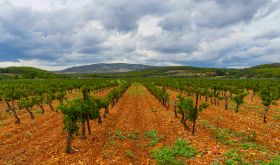
The top line is Mas de la Rosa (the vineyard pictured below). The Regulatory Council has given Mas de la Rosa and Clos Mogador the name of vino de finca. These are the only two wines within this area with this classification. I tasted Clos Mogador a few years ago and do not remember how it was. I'll try a bottle again one of these days.

Terroir al Limit
This producer plays on the limit within the Priorat appellation, with alcohols of just 13.5%, producing fresh, very tense, precise wines without much intervention in the cellar.
Without doubt this was the producer I most liked. Here the resident winemaker, Coke, hosted me. Unfortunately I didn’t get a chance to meet Dominik (the owner) who was away. Coke is a guy who knows a lot. I liked the philosophy and what is behind this winemaker who will surely become a great one in Spain.
I asked other wineries in the area about Dominik`s wines, and these are not considered as part of the appellation – mainly because they are less ripe and don’t have high alcohol.
From my point of view, within each site there must be an interpretation of the place given by the person who is behind the wine.
All the wines I tasted are very good, with no low points. I can definitely recommend a couple of labels: Les Tosses 2013 from a vineyard at 700 m: structured, floral, perfumed, tense. I also really liked Les Manyes 2013, a Grenache grown at 900m above sea level.
Terroir al Limit (their vineyards pictured below) is certainly the Priorat champion for me. Congratulations.

GREDOS
Comando-G
Located just over an hour from the Madrid area is Caldasos de los Vidrios (meaning 'glass gallows'), so called because people were executed here where there was a glass factory.
In 2008, two university friends Fernando García and Daniel Landi came together to make wine as a hobby, and then decided to make wines commercially. Daniel with a masters in viticulture hosted me in the cellar
Their idea is to make Garnacha in the Sierra de Gredos. Daniel tells me that 80% of the vineyard was lost in 30 years. Today there are 5,000 ha on granite soils. The finest and best Garnacha is seen at higher elevations within the Sierra. They manage their vineyards in an organic and biodynamic way.
This is a remarkable landscape with trees, mountains, vineyards and olives. When you come to Madrid in the summer you believe everything is flat and dry, but this place with 800 mm (31 in) of rainfall a year is quite different.
With a production of 80,000 bottles today, Comando G illuminates the future of Spain in winemaking. Something interesting and very fashionable according to what I see today is the use of stems. Comando G ferment their wines with stems, macerating for quite a long time. For me it is the producer that I have seen with the longest macerations. This makes me think that in general the use of stems in the world today is a good tool for warmer areas, low-acid varieties, and places where you need some more freshness.
There is no fixed recipe; everyone should see how far he or she could work with stems in terms of quantity and maceration time. For me the idea is that the stems provide ‘grip’ on the palate, while trying to avoid standardisation and having an excess of vegetal bitterness.
Comando G works at the limit with stems. It’s marked quite strongly on the palate. Their wines are very good and their high-risk bet is to my taste.
Congratulations, Daniel.