The beautiful Douro Valley in northern Portugal is in a real pickle. It’s best known as the home of port, and nowadays an increasing proportion of the vines that are virtually the only crop there produce stunning table wine too.
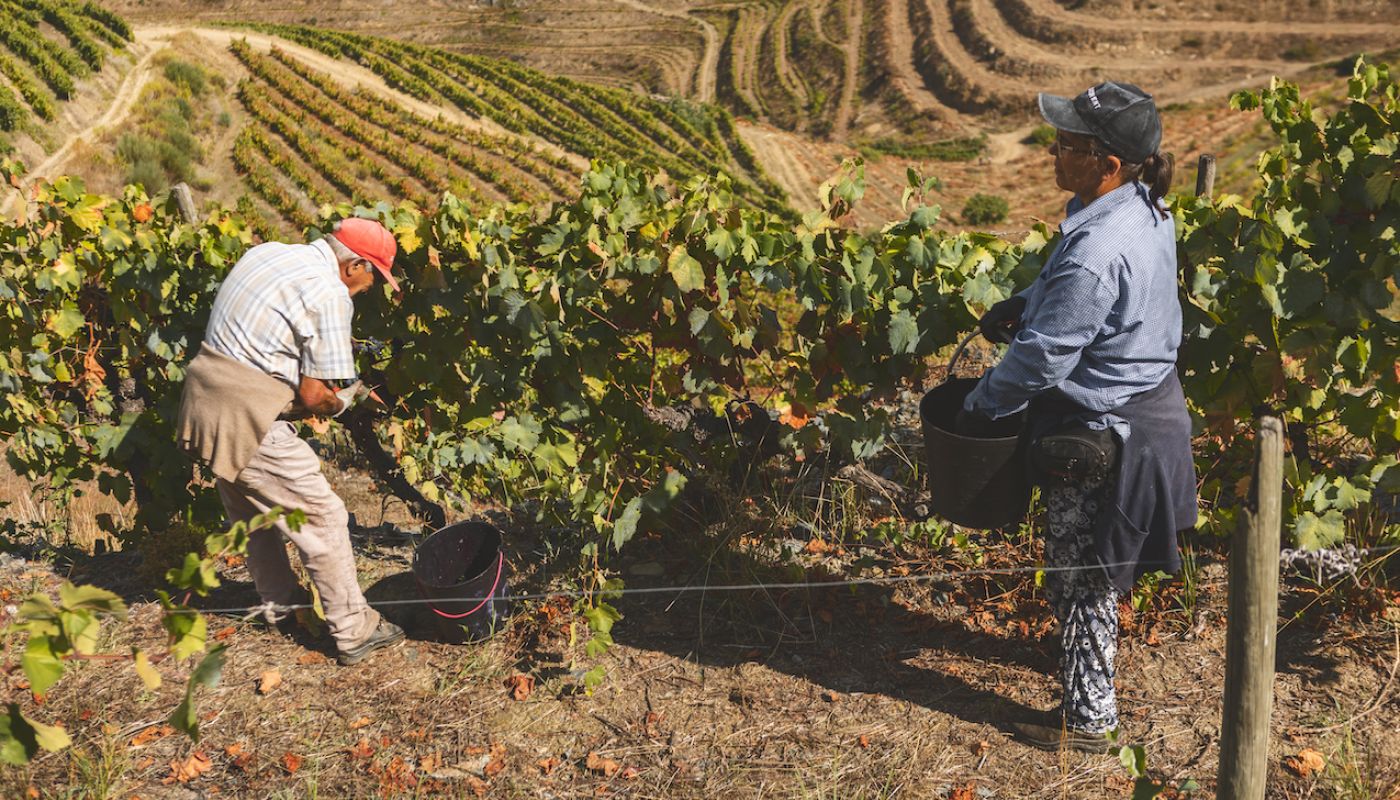
But who will tend and pick those vines? And pay the necessary price for their produce? Before the revolution of 1974 and Portugal’s accession to the EU in 1986, farming, which meant vine-growing, was the main activity in the valley and was dependent on cheap labour. But there has been a mass exodus to Portugal’s cities and other European countries. The number of grape farmers in the Douro fell from 38,695 to 19,633 between 2010 and 2020 – a drop of 49%. And even today 61% of those farmers own less than a hectare (under 2.5 acres) of vines and tend them only at weekends while holding down another, more lucrative job.
Only 266 farmers on the more than 40,000 ha (99,000 acres) of vineyards in the Douro own more than 20 ha of vines (a typical Bordeaux château will have about 60 ha). One of these more substantial vineyard owners is Symington Family Estates, one of the leading port shippers, with more than 1,000 ha (2,470 acres). Recently retired chairman Paul Symington has been sounding the alarm for the future of the valley for years. ‘The average age of the Douro farmers is getting frighteningly high’, he wrote to me recently, adding, ‘in our nearby village of Provesende, for instance, there are very few young people.’
With an eye to the future, the Symingtons have been trialling a grape-picking robot developed in Germany’s steep-sided Mosel Valley, but the unforgiving terrain of the Douro with its stubbornly stony soils has proved a real challenge. The Douro has over half of the world’s steep mountain vineyard according to CERVIM (the Centre for the Research, Study and Advancement of Mountain Viticulture) with more than 15,000 ha (37,100 acres) on a slope steeper than 30 degrees.
This makes for stunning scenery but multiple viticultural headaches. Many of the vines cling to the slopes on narrow stone terraces – now officially protected by UNESCO – which are expensive to maintain, can only be worked by hand or horse, and do their best to keep the thin layer of topsoil above the schistous bedrock in place against increasing odds. Symington again: ‘we are getting many more very heavy rainstorms in late spring and early summer and this causes serious damage to terraces and essential farm tracks. The rain is often so intense that it has no time to soak into the soil and just runs down into the Douro river, turning it from green-blue to golden yellow, laden with our soil, even as far downriver as Oporto.’
Fernando Guedes, chairman of Portugal’s biggest wine company Sogrape, confirmed the urgency of the situation. ‘Vineyard labour is getting very difficult. Now at harvest time we see Eastern Europeans, Russians, even Indians and Syrians.’ As Symington points out, the Douro Valley is not exactly a hospitable environment for workers. ‘Our winters are very cold, and June to end September is very hot – more than 40 degrees [104 °F] in the shade at times.’
These are all problems for producers but it is very much in the interests of consumers to preserve the unique vinous ecosystem of the Douro Valley – not least because it is a treasure trove of old vines. An estimated 40% of all Douro vines are more than 35 years old and some of them are much, much older than that. According to the official records of The Vine and Wine Institute (IVV), a total of 784 ha (1,937 acres) of vines date from before 1930, with a further 455 ha (1,124 acres) having been planted between then and 1980.
But with that comes yet another challenge for grape growers. The older a vine, generally the better adapted it is to its environment, the more complex the resulting wine, but the lower the yield. As David Fonseca Guimaraens, winemaker for The Fladgate Partnership, which produces, inter alia, Taylor’s port, says of the 50 ha (124 acres) of very old vines he works with, ‘they have developed very deep and extensive root systems, meaning that in years of extreme weather they produce very balanced ports that are finer, purer and age better in the bottle than the produce of younger vines, independent of the varietal mix’. Since 1995 Taylor’s have bottled the produce of the oldest vines on their Quinta de Vargellas estate separately, labelling it Vinha Velha, or ‘old vine’.
Round Symington’s house in the Douro Valley is a vineyard that dates from at least the 1930s, when Salazar ordered the first vineyard register. ‘But I get just 300 or 400 g [<1 lb] of grapes per vine here each year’, he laments. ‘Some of these old grandads have only one bunch of grapes. The concentration and quality is extraordinary, which is why I keep them, but my costs are very high.’ Furthermore he argues that ‘a vine in the Douro that is over 25 or 30 years old is the equivalent of a 50-year-old vine in Bordeaux due to our soils with their minimal organic matter and the long, hot, dry summers’. Although according to António Magalhães, who oversees the vineyards of The Fladgate Partnership, Douro vines provide ‘an open book in the study of the vine’s adaptation to climate change’.
Douro summers are so dry that even young vines there give pitifully low yields. An international OIV comparison of average yields of wine in hectolitres per hectare is headed by Australia, Germany and South Africa, all with over 79 hl/ha (around 4.5 ton/acre) in 2019. Italy and France produced an average of 67 and 53 hl/ha each. The comparable figure for Portugal as a whole was just 33.5 hl/ha, with the Douro 35 hl/ha, and that includes the much more productive western, rainier end of the Douro Valley as well as the much drier heartland responsible for the Douro’s finest port and table wines. Symington has calculated that the average yield this century on their estates has been under 25 hl/ha (<1.5 ton/acre). His clarion call for many years has been that prices for grapes and therefore wines must rise, simply to keep these vines in the ground. This is seconded by Johnny Graham, currently celebrating having made 40 vintages of his Churchill’s port: ‘The challenge is to make sure that grape growers are compensated for the extra cost of maintenance and the lower yields of these very old vines.’
Sogrape is arguably doing its bit to encourage higher prices. I was inspired to look into vine age in the Douro when tasting its Douro table wine Legado, for which a spectacular centenarian vineyard was acquired in 2007. Legado can sell for well over £200 a bottle and could certainly stand comparison with other wines at this price. Sogrape recently invested in another old-vine property well upriver and Fernando Guedes told me he was sure there were many more ‘great but ignored old vineyards in the Douro’. In many cases their produce is sold by part-time farmers for a song and disappears into blends for either port or Douro table wine – so there is little encouragement to keep these vines in the ground.
This must change!
Douro old-vine treasures
I searched for Douro table wines labelled Vinhas Velhas in our tasting notes database and found more than 100 examples but most of them are available only in Portugal. Companies such Portugal Vineyards and PT Wine will ship outside Portugal. Most ports are around 20% alcohol.
Quinta do Crasto, Vinhas Velhas Reserva 2018 Douro 14.5%
£24.99 Adnams
Smith Woodhouse, Madalena 2013 Port
£24.95 Hennings Wine, £30 The Oxford Wine Company
Warre’s 2017 Port
£74.95 Hedonism, The Whisky Exchange
Taylor’s, Quinta de Vargellas Vinha Velha 2009 Port
£96 Hatton & Edwards
Niepoort, Bioma Vinha Velha 2011 Port
£100 Wine Raks
Quinta do Vesúvio, Capela 2016 Port
£103 Fareham Wine Cellar
Niepoort, Bioma Vinha Velha 2013 Port
£120 The Whisky Exchange
Ferreira, Vinhas Velhas 2016 Port
£149.35 VINVM
Taylor’s, Quinta de Vargellas Vinha Velha 2007 Port
£159 Thomas Peatling
Legado 2016 Douro 14%
£192.50 Q Wines
Taylor’s, Quinta de Vargellas Vinha Velha 2011 Port
£225 Connolly’s Wine Merchants
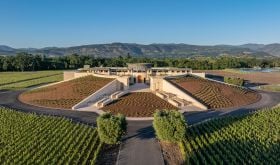
Image of Quinta do Caêdo, source of Legado Douro table wine, courtesy of Sogrape.
Tasting notes in our tasting notes database. International stockists on Wine-Searcher.com.