There’s something archetypal about Paris and Sancerre. I associate glasses of pale, searing, zesty, stony Sancerre with sitting in a bistro or on a pavement in the City of Light. So when I had the chance of a lunch on a sunny day in Paris between trains recently, a bottle of Vacheron’s 2019 Sancerre suggested itself.
But this wine, from one of the most admired producers in the appellation, wasn’t searing and stony. It was distinctly chubby. The Sauvignon Blanc fruit was clearly so ripe that one had to look hard for the wine’s trademark bracing aroma and refreshing acidity. In the glass was the effect of climate change. Recent summers in the Loire have been so hot that grapes reached record ripeness levels and therefore have relatively little acid.
I have been noticing the same phenomenon in virtually all young Sauvignons from the Loire recently: wines such as Pouilly-Fumé, Menetou-Salon, Reuilly and the white wines of Touraine. (As elsewhere, this year, 2021, marks an end to the run of heatwaves, but the wines won’t be released until next year and are likely to be in relatively short supply.)
So if you like your Sauvignon to be racy rather than rich, where should you look? Some fine examples are made all over the world – notably Bordeaux, Styria in Austria, the Pfalz in Germany and coastal Chile – but New Zealand, whose cool climate produces wines characterised by relatively high acidity, is an obvious source. Not least because 85% of the country’s highly successful wine exports are Sauvignon Blanc. (Wine seems to be allowed out of New Zealand even if few humans are currently.)
There was a time when all NZSB seemed to taste the same – almost violently pungent with some obvious sweetness – but considerable work on the part of the best producers has gone into refining the country’s most popular wine and some examples should suit those looking for bone-dry, minerally wines that may remind them more of Sancerre than aromatic fruit juice.
Marlborough, in the north of the South Island, dominates Sauvignon Blanc production and vice versa. Few Sauvignons produced elsewhere in New Zealand can rival Marlborough’s finest, though Greenhough of Nelson, also in the north of the South Island, can present a challenge.
There has been a modest increase in Marlborough Sauvignons sold with a subregion on the label. Awatere to the south tends to produce slightly lighter, fresher examples. Producers have been coaxing subtlety from hillside sites, from adding a small proportion of Sémillon grapes as they do in Bordeaux, from relying on yeasts in the vineyard and cellar rather than those bought in from a supplier, and from ageing a little of the blend in oak. I list some current favourites below.
There is another appealing aspect to New Zealand as a wine producer: the country’s unusually long-standing commitment to sustainability. A national wine sustainability certification scheme was launched as long ago as 1995 and now applies to more than 96% of all vineyard land. The requirements are well intentioned but are not nearly as stringent as those for certification as organic or biodynamic by an international body. At the last count, 42 NZ producers were certified organic, six certified biodynamic, and dozens more produce at least one organic wine, but this represents just 6% of the country’s vineyard. Nevertheless, these wines are reaching export markets; since 2017 the export value of organic wine has grown by 40%.
Unlike Chardonnay or the most interesting red wines, Sauvignon Blanc can be sold without any extensive and expensive ageing. One of my favourite Marlborough Sauvignons in a recent presentation of organic wines from New Zealand for instance, from Churton, was made from grapes picked only a few months ago – in this case, unusually, by hand not machine.
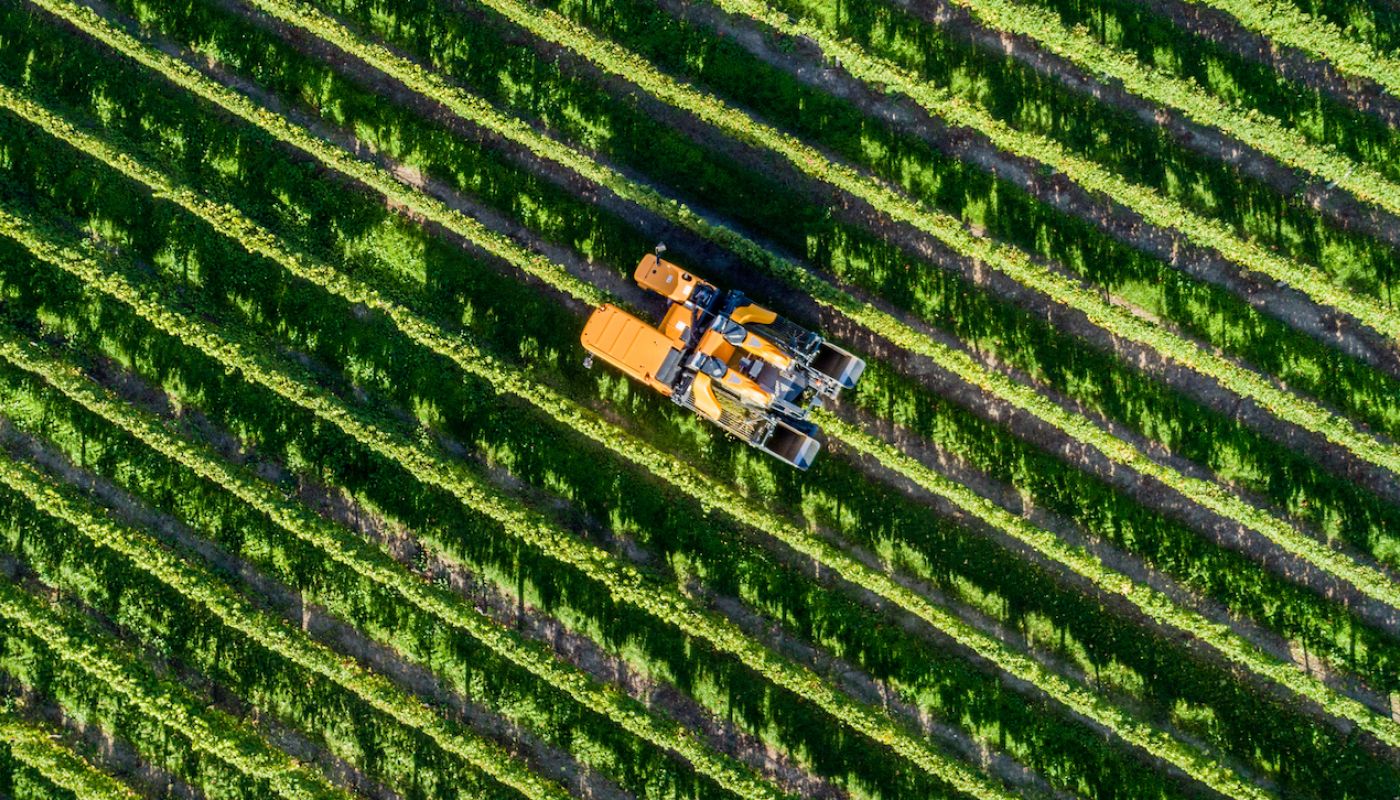
Mechanical harvesters dominate New Zealand’s vineyards at harvest time; 98% of Marlborough fruit is picked by machine. Some research suggests that machine-picking results in more intense Sauvignon Blanc aromas than hand-picking. Even more surprising is a development outlined in Master of Wine Rebecca Gibb’s 2018 book The Wines of New Zealand: mechanical harvesters are also set to work shaking the vines just after flowering in early summer, literally shaking off ‘floral trash’, superfluous growth that would otherwise remain and increase the incidence of rot, which can be substantial in the leafy canopies of Marlborough Sauvignon Blanc, during the growing season. Machines are also used in the winter, stripping canes off the dormant vines.
Machines are much cheaper than humans, and the pandemic has only increased the global wine industry’s reliance on them. Furthermore, yields in NZ tend to be notably high, and many wines are made in contract wineries. So it’s not surprising that NZSB is both profitable for the grower and well priced for the drinker.
Talking of price, there’s another category of French wine for which NZ substitutes are interesting, those made from the second most planted grape variety in the North and South Islands: Pinot Noir. Red burgundy is now so expensive – and some of it perhaps too ripe nowadays for burgundy purists – that New Zealand is increasingly fertile hunting ground for alternatives. Early examples of New Zealand Pinot Noir were rather facile and/or sweet but more and more examples are worth exploring.
Of particular interest to wine geeks will be Greystone’s Vineyard Ferment Pinots, wines made by, unusually, fermenting the grapes out in the vineyard in the hope of imbuing them with even more terroir influence by maximising the effect of the yeasts naturally present there. These are really very fine indeed, especially the 2019 for potential and the 2017 for current drinking with the same sort of mushrooms-and-violet appeal as a mature red burgundy.
Greystone are based in North Canterbury, one of several centres of Pinot Noir excellence in New Zealand. Bell Hill – like the Côte d’Or, on an inland seam of limestone – is top of the tree here, but the wines are made in tiny quantities. Highbury Vintners and Handford Wines in London have a few bottles each of mature vintages, but they cost more than £100 a bottle. Luckysomm of Napa is listing Bell Hill Pinot Noir 2012 at ‘just’ $120 a bottle.
Marlborough Pinot Noir has been gaining complexity as the vines mature and as producers understand more about the best clones of and sites for the variety. But the Martinborough subregion of Wairarapa, in the south-east of North Island, and Central Otago, in the far south of the South Island, have a much more established reputation for the variety. Each of these regions has a Japanese-owned wine operation whose Pinots have impressed me – Kusuda in Martinborough and Sato in Central Otago. The gentle, precise manner of Japanese fruit-handling seems particularly well-suited to the fragility of Pinot Noir.
Ata Rangi is the well-established star of Martinborough but, like these two Japanese producers, is not certified organic [I'm assured by Helen of Ata Rangi that they are in fact certifed organic, though have been omitted from NZ Winegrowers' list of organic wine producers]. The well-established star of Central Otago, on the other hand, is Felton Road, which is not just certified organic but, like neighbours Quartz Reef and Rippon, is also certified biodynamic.
Felton Road’s Block 3 and Block 5 Pinot Noir have been New Zealand’s most famous Pinots for years and I take my hat off to the (UK-based) owner Nigel Greening for slimming them down and for keeping their prices relatively modest (a little over £60 for the 2020s) for wines of which only a few hundred cases are made each year. Compare and contrast with burgundy.
Organic NZ Sauvignons
Greenhough, River Garden 2019 Nelson
£11.40–£14.95 various independents
Walnut Block, Nutcracker 2020 Marlborough
£13.99 (2019) Virgin Wines, £14.25 Vintage Roots
Dog Point Marlborough – any vintage
£14.60 to £20 from a wide range of independents
Churton 2021 Marlborough
£15.80 (2019) Tanners Wine Merchants
Dog Point, Section 94 (oaked) Marlborough – any vintage
£20.45 to £35.90 from a wide range of independents
Loveblock, TEE No Sulphur Added 2020 Marlborough
£21 Specialist Cellars
Organic NZ Pinot Noir
Greenhough, Stone’s Throw 2017 Nelson
£16.49 to £17.99 various independents
Walnut Block, Nutcracker 2019 Marlborough
£21.50 Vintage Roots, £22 (2017) Virgin Wines
Te Whare Ra 2017 Marlborough
£24.50 to £32 (2016) various independents
Felton Road, Bannockburn 2020 Central Otago
£39.95 Jeroboams
Schubert, Marion’s Vineyard 2018 Wairarapa
£41.40 Hedonism, £35.99 to £39.99 (2017) various independents
Greystone, Vineyard Ferment 2017 North Canterbury
£41.50 Frontier Fine Wines
Burn Cottage 2018 Central Otago
£41.99 to £54.95 various independents
Tasting notes on these and many more New Zealand wines in our database.
Stockists, not just in the UK, from Wine-Searcher.com.