25 October 2008 This is a longer version of an article also published in the Financial Times.
For me the sweetest smell in recent memory is that of cheese straws through floorboards. I was in the basement of a house in Islington, North London, one of a dozen tasters rating anonymous sparkling wines as part of a dissertation for the mistress of the house's Master of Wine qualification. In one corner of the room, overlaying the prevailing smell of fermented Chardonnay and Pinot Noir juice, carbon dioxide and the bready smell of fizzy wine unleashed from being locked up in a bottle with dead yeast cells, my nostrils picked up something unexpected. Another sort of fermentation. Something lactic, cheesy, But not cheese itself. Coming through the ceiling was a waft more like cheese-flavoured flaky pastry. Cheese straws surely?
When I had finished tasting, handed in my score sheet and gone upstairs to where Mr MW-to-be was lurking with restorative solids and liquids, I almost fell on him with delight. There on a dish, just above where I had smelt them, was indeed a pile of cheese straws – proof that I really had fully recovered from the most frightening period of my professional life.
It all started with a bout of flu, although in retrospect I realised this particular one was the third in four months. I ached so much that I postponed by 24 hours a flight to Cape Town to judge a wine competition. By the time I was on the plane and sipping a sleeping draught in my preferred form, I realised to my horror that the De Grendel Shiraz 2004 smelt of ... absolutely nothing. This was the first, and I sincerely hope only, time I had ever lowered my nose to anything and failed to pick up even a vague hint of its aroma.
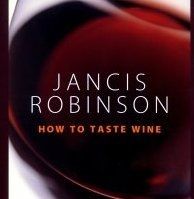
I had lectured on how to taste, the title of the new edition of one my books (see picture and below), so many times. One of my party pieces to demonstrate how important the nose is to the sense of taste is to remind people how, when they have a cold-induced, blocked-up nose, they lose their appetite because food seems to taste of nothing.
Only three weeks ago I spent a day at Ballymaloe House near Cork talking to wine lovers about the sense of taste. In one of the exercises, they donned nose clips and masks and had to distinguish between grated carrot and grated apple. By no means everyone managed it, even though at Ballymaloe they grow their own produce and their apples are especially appley, their carrots the essence of carrot-ness. Ah yes, a sense of smell is absolutely crucial to the sense of taste, as I had been preaching for more than 30 years.
As physiologists know, all our sensors of flavour are concentrated at the top of the nose where each of us has what is effectively our own extremely sensitive and genetically programmed personal computer capable of distinguishing between 10,000 different aromas. There's a passage from the back of the mouth up to this smell-processor, which is why even people who have never consciously smelt anything have some idea of what things taste/smell like. But we wine professionals seek maximum information. That's why we take such care deliberately to sniff wine before we put it into our mouths, thereby looking like pretentious buffoons perhaps, but making sure that we consciously absorb the all-important flavour messages that a wine has to give before submitting ourselves to the potentially intoxicating and fattening business of putting it in our mouths. Because the sense of smell is so important, and can give us so much pleasure – and can warn us of off-odours – it makes sense to smell food just as consciously as we do wine.
As someone who had not been taught to use my sense of smell until studying wine in my twenties, I was all too aware of how underused this sense can be. So as a mother I have tried to encourage our children to use their noses from the minute they were able to communicate. I have accordingly been rewarded with a son who can smell my shampoo and tell me which hotel supplied it 18 months earlier, and a daughter who has such a heightened sense of smell that she has become a fridge policewoman in her spare time. Our three children are unlikely to find themselves victims of poisoning by either a noxious gas or contaminated food but last year I, who earn my living from pontificating about the aromatic nuances of hundreds of different wines each week, suddenly found myself disabled and defenceless in all olfactory respects.
It was a truly terrifying experience. I had suffered serious congestion in the past so that I was able to smell only a small proportion of what I knew was there, but this time there was nothing. I kept frantically raising my hand to my nose, hoping to get that reassuring skin smell. Nada. South African Airways' scented liquid soap made the same nugatory impression. Arriving at the hotel in Paarl where we judges were to be lodged for the week was a bittersweet experience. On a previous visit I had been struck by the uniquely haunting smell of the thatched ceilings of our rooms, reminiscent of dry grasses mixed with the herbal smell of rooibos tea that is so characteristic of South Africa. Yet this time I could not smell it, or anything else. Finally I had the horribly personal experience of the condition I had always wondered about, anosmia, from which a few per cent of the population suffer, usually because of some physical shortcoming or accident.
Walking through the garden towards the wine tasting that morning was torture. I kept stopping at each flowering bush hoping for the merest whiff of perfume. Nothing. This was all most embarrassing. Judging a line-up of wines with a small team of fellow professional tasters is an intimate experience. You each share your perceptions and your scores, and fight out a consensus score. It would have been disastrous, and stupid, if I had tried to disguise my plight. South Africa's best-known wine writer and organiser of the wine competition Michael Fridjhon was so sympathetic that I felt perhaps mine was not such an uncommon problem. He showered me with sprays and decongestants – to zero effect. Each time we discussed a wine, even when I was the chair of our small panel, I had to ask my fellow judges, pathetically, what it smelt of.
And yet, marking the wines simply on the basis of how they felt to me in the mouth, I found remarkable agreement between myself and the other judges who had the undoubted benefit of a sense of smell. We may not be able to sense the nuances of flavour in our mouths but our oral equipment is excellent not just at taking in the tactile impressions a food or drink are capable of making such as astringency, but also at assessing what I call the dimensions of a wine: its sweetness, acidity, bitterness, saltiness and potency.
Astringency is common in young wines and is usually sensed by a drying sensation on the insides of out cheeks. A red wine that makes us feel as though we've had the saliva sucked out of our mouths tends to be called tannic, even though for some reason we don't use this word for exactly the same sensation in white wines, caused by the phenolic compounds in grape skins. Tasting is such a private, subjective process that its language and procedures are riven by a lack of rigour. For example, until quite recently, we used a tongue that is particularly sensitive to the four basic tastes in different areas of it as our model for how we sense a wine's dimensions. The tastebuds on the tip of the tongue were commonly supposed to be the most sensitive to sweetness, those on the back edges of the tongue best at sensing acidity, saltiness (increasingly common in wines now that salinity in irrigation water is increasing) perceived on the front edges of the tongue, and bitterness on the flat bit furthest from the tip. Now we are told that this is inaccurate – and also that we need to take into account a fifth basic 'taste', the delightfully named umami to which I allude in my article on sake.
But still I find, now that, thank the Lord, I have a sense of smell again, that when I smell a wine that is high in acidity, the edges of my tongue immediately start to tingle, presumably in anticipation of stimulation to come. And I certainly find a hot, burning sensation left at the back of the mouth when I swallow or expectorate a wine that is excessively high in alcohol. What I do know, and what may explain my relative accuracy in judging those South African wines using my mouth alone, is that the mouth is enough to monitor two highly significant indicators of quality in a wine: whether the individual dimensions of sweetness, acidity etc make for a harmonious whole; and the persistence of a wine, how long its impact lasts in the mouth after it has been swallowed or spat.
Of course professional wine tasters have zero embarrassment about spitting in public. We may have to taste up to 100 wines in a working day. It would not be sensible to swallow, although in my experience this does not diminish the pleasure to be had from ingesting the stuff in a social context in the evening. Tasting and drinking are two very different activities. The first has nothing whatsoever to do with the relaxation that most sensible people associate with wine. Rather, it requires extreme concentration, something I have acquired with age and which may eventually compensate for what medical textbooks worryingly suggest may be declining sensory powers in the twilight of our years. Tasting also requires discipline. When I was young I would treat wine tastings as social occasions. Now I am extremely boring. I wear invisible blinkers and address only the wine in my glass and either an increasingly splattered notebook or an increasingly sticky keyboard. Teeth take a terrible toll, especially from very young reds stuffed with blackening pigments and enamel-eating acids.
I am often asked what preparations we professionals need to make before wine tasting. The answer is remarkably few. High atmospheric pressure tends to help, by making things taste more precise, brighter somehow. Minty toothpaste is a killer, making any wine (or indeed fruit juice) tasted immediately afterwards taste disgustingly metallic. The fiercest of spices can hijack the palate (though not the precious nose). But there is no need to rinse the palate with water in between every wine as some outsiders suggest. So long as the wines are tasted in a sensible order – strongest and sweetest last – it is quite easy to go straight from one wine to another, and preferably in the same glass. Traces of washing up liquid wreck far more havoc than traces of the previous wine.
Another question I have been asked frequently in my decades of wine tasting is whether there is such a thing as a Superpalate. Are some people born better tasters than others? Until I lost my sense of smell, I was rather dismissive of this notion. I would answer briskly that, with the exception of those poor anosmics, anyone could learn to be a wine taster if they were interested enough – just as I had done. I put my performance in the tasting papers in the Master of Wine exam down to the fact that I was pregnant when I took them. But living without it for a while made me re-evaluate my sense of smell and realise that perhaps it really was, and thankfully is, pretty acute. (Thank you, cheese straws.) From childhood I had powerfully visceral memories of smells inextricably linked with experiences and places. Not just new-mown grass and sun-warmed tomatoes but, for example, Blythburgh church. My grandmother's downstairs cloakroom. Lime-based fertiliser. A particular sort of tennis ball.
And then in the summer of 2006 I attended a symposium in the Napa Valley organised by the Institute of Masters of Wine. One of my fellow MWs had us all, unknowingly, do what is known as a prop test to sort out those with the most tastebuds. It turned out that I, like a significant proportion of women, am a hyper-taster, as opposed to a normal or hypo-taster. It would probably be easier for me as a wine writer to be thoroughly normal, but there is nothing I can do about it so I just have to be consistent and true to my own sensory experiences, sensitivities and preferences.
For make no mistake about it, we all have lots of those. Although the human nose can detect concentrations as weak as one part per 10,000 of some compounds, different palates vary enormously in the aromas to which they are most sensitive. And, to make life even more complicated when trying to present objective tasting notes, we lack a common, objectively verifiable language. Tasting is so private that we cannot extract that smell we decide to call 'spicy' and compare it with what other tasters are experiencing. All in all, it is a wonder that tasting notes manage to be intelligible at all.
But on my return from South Africa I thought that my ability to describe wines was compromised forever. I frantically contacted the wine-loving ear, nose and throat specialist who had been so useful for my childrens' tonsils and he, bless him, interrupted his alpine holiday to put me in touch with a colleague. For two or three weeks, despite the fiercest of nose drops and medications, and my children's wafting the smelliest of unguents under my nose, I lived in a terrifyingly deodorised world. With a pathological hatred of pretence, I was all for telling the world my career was over and handing over completely to Julia, but the wise specialist insisted this was both unnecessary and a bad idea. He presumably knew what I found hard to believe, that it was highly likely that my beloved sense of smell would return.
I don't know exactly how it happened but I do know that my son found Members’ comments on [a now-defunct version of] our forum from 2004 'Acupunture – great for wine tasters' and 'Acupuncture and tasting', and an excellent acupuncturist duly seemed to make an immediate impression. An hour after my first session, my nose started to twitch and tingle. That evening over dinner I experienced my first hint of the hauntingly fungal smell of mature red burgundy. And, mercifully it was downhill all the way from there.

A fully revised edition of How to Taste Wine is published by Conran Octopus in the UK on Nov 3 and, entitled How to Taste, by Simon and Schuster in the US on Nov 25. (The previous edition was called Jancis Robinson's Wine Tasting Workbook in the UK. Don't ask.)