Now that is a pretty cool vintage! The only problem is finding a name that encapsulates the complexities of a single vintage that runs across more than 600 kilometres. We tried the 'Happy Bunny Vintage', the 'Blockbuster Vintage'. We almost fell for the 'Dream Vintage' as so many growers told us they couldn't have rêvé mieux. Not easy, huh? Especially when you're talking about one of the finest Loire vintages ever.
The BIG difference this year is that it was the growers who decided when to pick. That sounds sort of normal, but all too often it's a change in the weather or the onset of rot or endless rain that is the real clincher. Assuming the guys had worked hard and kept any mildew under control (we like to work with producers who can cope!), then this was a real no-stress question.
In 2013 we reckon all of Muscadet was picked in the space of nine days. This year we've nine days difference between one grower starting and another finally getting moving. And that was the case the whole way along the river.
Only, like all great vintages, it wasn't that easy. A great start to the year with a fine, even and early flowering always helps – giving the guys a nice ten-day advance. That was lost (and then some) during the cold, wet and infinitely depressing August. Summer? You're joking! Some of the growers wondered if the grapes were ever going to ripen.
But we've been there before, and never forget Pierre Couly saying oracle-style that it's only the first three weeks (around flowering) and the last three weeks that count.
September was the game changer. The sun came out, the wind settled in, the rain went elsewhere. The outbreaks of rot dried up (but were still there, waiting in the wings, ready to pounce), the grapes stopped swelling, the juice started concentrating – and continued concentrating all through one of the driest months we've ever seen. The result was not quite miraculous (more mechanical really) – but it saw potential degrees shoot up while tannins ripened – and acidity levels stayed just so.
For only the 2nd time since they started comparative maturity tests across Chinon in 1999, the pros announced 'la maturité phenolique est atteinte' – the only other comparable vintage being 2005.
There is, however, a flip side to the coin. Concentrating the juice with sun and wind does just that: it concentrates everything ... and reduces the final yield. Right across the board, yields are 10 to 20% lower than had been predicted (and hoped for after losing the equivalent of one vintage in three). That's OK in Sancerre (hey, they 'hit' the permitted yield), but complicated in the Touraine where we needed 60 hectolitres/hectare and got 50 – and catastrophic in Muscadet where, while the good guys brought in close on 50 hl/ha, the average was around 40.

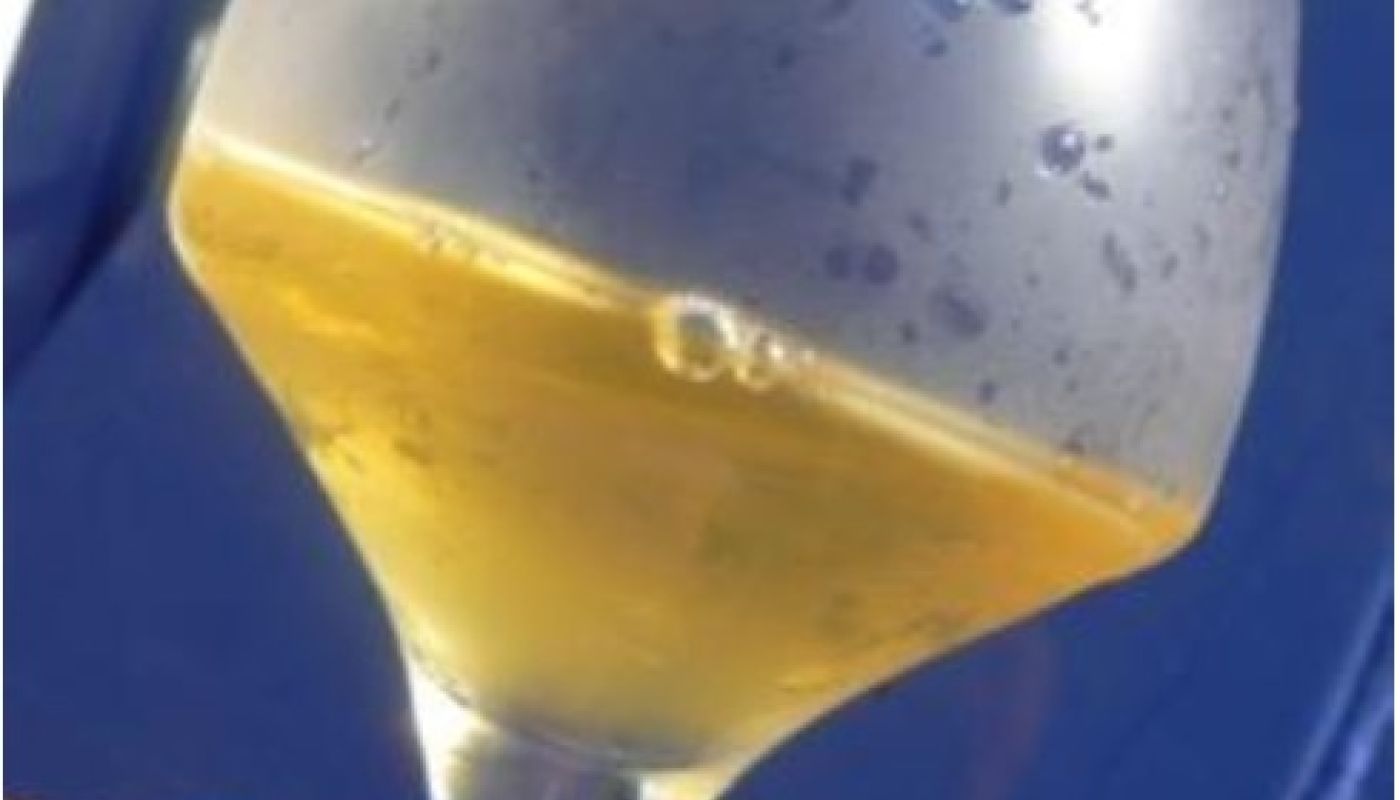
In Muscadet, 2014 is probably the best ever. Personally, I've a weakness for the hyper-mature 2003s – but this is better: we've got the maturity and the ripeness while keeping the freshness of acidity and the fresh aromas that make this such a great region. Picking started slowly after the ban des vendanges [official permission to start picking] on 10 September – Lieubeau started at la Fruitière on the 15th, Pierre Sauvion on the 17th. Over in the Côtes de Grandlieu, Jérôme Choblet needed a dérogation to go beyond the normal maximum of 12°... and averaged 12.48 across his entire harvest. The gold juice in the photo, that's not a moelleux, that's what sun-gorged Muscadet juice looks like at harvest!
The Sauvignons of the Touraine, Sancerre and Pouilly were pretty damn good too. This is where we started hearing growers like Philippe Trotignon suggesting you'd need to work hard to make a bad wine this year, where growers like Vincent Pinard coudn't 'rêver mieux', where Jean-Max Roger reckons it's 'plus que parfait' and our old-time guru Jean-Marie Bourgeois was comparing 2014 with the mythic 1996 and 1997 vintages. Philippe's cellar register told the story all on its own: first two days, 20-21 September, five trailers, all with 13° potential, all with 5.3 g/l total acidity.
Over chez Patrick Vauvy, the grapes were so ripe they tasted of lychees. No need to open a tin or break open those crinkly red-brown skins for your hit of exotic fruit – just pick Sauvignon grapes straight from the vine. His wines are fab too – really luscious – as near perfect as we could hope for.
The yields are a problem though. Partly they're low because of that September concentration, partly too they're low because of esca. That's a fungal disease that kills vines – rapidly. The only cure is a chemical that's banned, so look for missing vines and those little plastic tubes that dot the vineyards – they're protecting newly replanted vines. One recent study estimated 18% crop loss across the Loire from dead, missing or not-yet-back-in-production vines. The good news is that Joël Cirotte in Bué and his friend Pierre Jacolin in Menetou have pioneered a solution that involves cutting out all the esca rot with a small chainsaw. That works, but I'll leave you to do the calculations: 3-5% affected vines to treat, 6,000 vines per hectare, 10-15 minutes to treat each vine ...
Yes, there were problems of mildew too – that's the inevitable result of growers going on holiday, but even more so of growers being paid peanuts for their wines – less than they need to live on. The situation is becoming critical in the Touraine – despite potentially market-busting rises in bulk prices for anything Sauvignon – but it's beyond critical in Muscadet, where prices for AOC wines at 40 hectolitres per hectare are lower than bulk prices for Vins de France with yields potentially double that.
In Sancerre, we were a little bemused to see growers moving fast to pick their Pinots, really leaving the whites till October – and to see so many using tables de tri at reception. Degrees were fab and the grapes healthy – but there had been some outbreaks of pourriture acide and once you've been there (I picked a plot for a neighbour back in 2004) you don't want to go back!
That was a theme we were to come back to in the Anjou, where we first met our new friend, the suzukii fruit fly. But it's easy to blame a new problem on a new pest (we're immigrants too) – so it was interesting to see studies in the Layon showing outbreaks of pourriture acide even where suzukii wasn't present...
The plus side is an almost unprecedented care at harvest that adds even greater quality to a genuinely stunning vintage.
Back at the ranch in Chinon, the Cabernets were starting to come in. Mostly, we reckon great vintages are the ones growers start picking in September. This year, no panic. The weather was perfect (well, except for a touch of hail on 20 September to mock the local rag's headline 'l'été indien promet un bon millésime' the same day!) and the growers took their time, with Philippe Vatan and Edd Pisani starting around the 9th, Joguet 'delighted to have waited' and Arnaud Couly waiting till around the 20th before picking the Echo, and the plot across the lane from the house.

You can see why in the photos – the grapes are in perfect condition and the pips really hitting full ripeness – the brown shrivelled pips are the ripe grapes, the green 'normal' ones are from the unripe 2nd generation grapillon that won't be picked.
It's by looking closely at the bunches to see when the stems start to go red, it's by chewing the grapes, pips and skins that you see when the grapes are ripe – it's not just with a refractometer.
Just be warned – almost everyone made some pretty smart, ripe reds this year. The best growers – the ones we follow every year – went one better, gaining real concentration and complexity. You'll be able to buy inexpensive, tasty Cabernet Francs almost anywhere in 2014, but if you want a producer whose wines you'll enjoy every year, look for the stars. Vallée, Blot, Couly, Baudry, Joguet, Noblaie, Vatan ... these are the guys who've wowed us in the past and whose 2014s are the ones that sing.
Over in the Anjou, a jaw-dropping experience, a first for the record book. 15 November, tasting great Anjou-Villages that had finished its malolactic conversion. Jean-Hubert Lebreton is a superstar. Superb soft Cabernet Franc, super-ripe Cabernet Sauvignon ... and a round, opulent Malbec from the plot's first ever harvest. Magnificent. Great Anjou reds do exist!
He made some smart Chenin Blanc too, but so did everybody.
In Vouvray and Montlouis, timing was less great as rain in early October meant there aren't many stickies to be found – which is fine as the region needed to rebuild stocks after hail-hit 2013, with a special need for base wines for the sparkling that makes up the majority of the region's wines these days. But conditions were perfect for the better dry whites – Jacky Blot being ecstatic about quality – though a bit less re quantity as he barely made 25 hectolitres per hectare against an appellation average of around 50.
In the Anjou, the dry whites are great. Classic, ripe, super degrees, lovely concentration and plenty of freshness to make the wines hum. But after an unprecedented dearth of moelleux in 2012 and 2013, we wanted some stickies – and were a bit scared mid-October to see grim-faced pickers zapping 30% of the crop because of fears of pourriture acide. Then the sun came out at the end of October, the grapes dried, concentrated (again) and continued to concentrate.
So the locals can have their moelleux, the Chenins picked at 16° potential alcohol with 40 to 50 g/l of residual sugar. We're happy to 'bags' the liquoreux, the wines that Guegniard, Fesles, Branchereau, Papin and Lebreton brought in at over 20° potential alcohol. We're not talking 2009 or 2011 hyper-stickies, but when you've got cuvées coming in at 22°, you start seeing an awful lot of smileys on my tasting sheets.
So we'll call it the Five Smiley Vintage.
Charles Sydney, Chinon, January 2015