
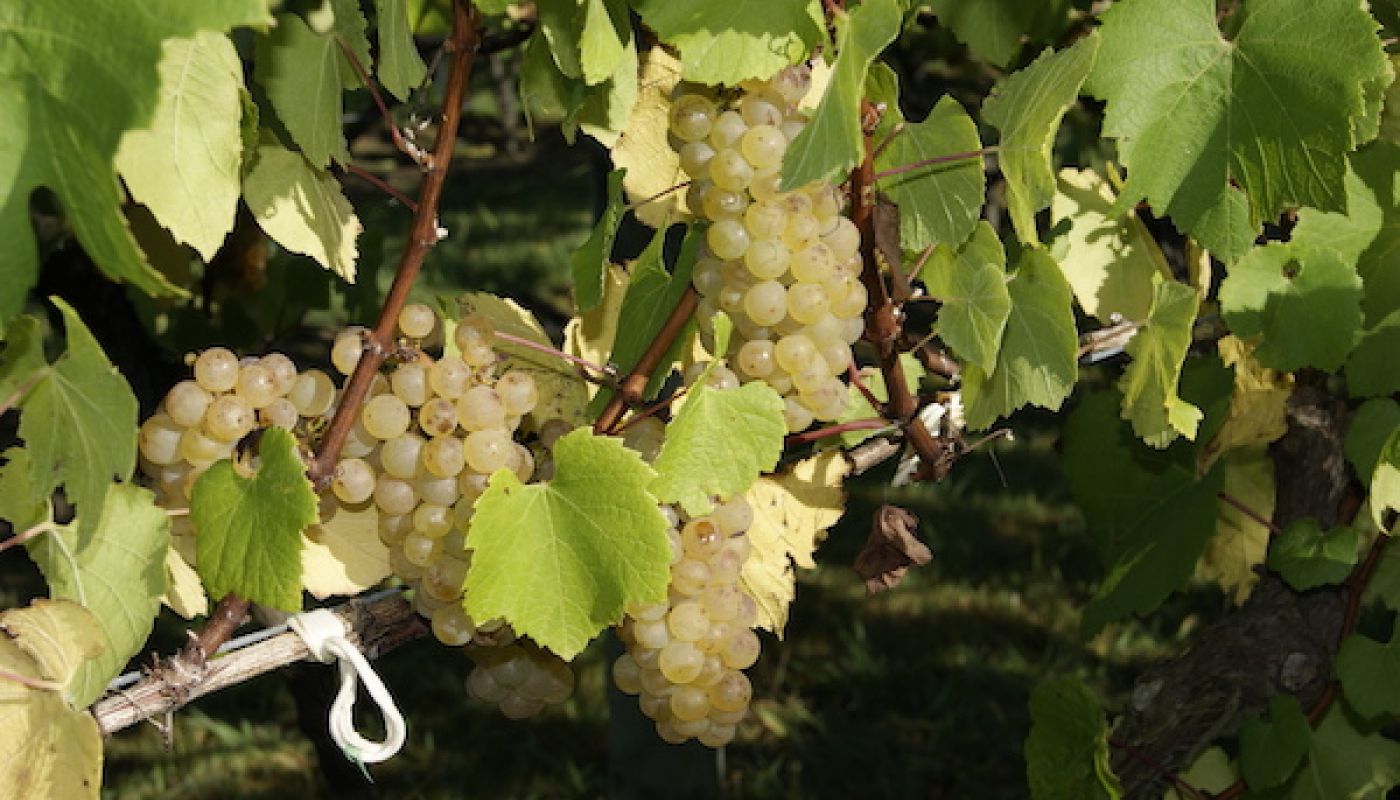
The only danger in the current fashion for more obscure grape varieties is that we forget why the famous international varieties are so widely planted.
There is a reason why Chardonnay is the most widely distributed white wine grape in the world. Its appeal is universal. It is supremely versatile, making potentially excellent wines both still and sparkling. As Jean Thévenet in Mâconnais has proved, nobly rotten Chardonnay can even produce superb sweet wine.
It adapts particularly well to being aged and often fermented in oak – classically in small French barriques – and what distinguishes it from the other popular international variety Sauvignon Blanc is that so many Chardonnays are designed to age and evolve into something even better after years in bottle.
Chardonnay is pretty versatile in terms of where it grows, except that because it’s a relatively early ripener, if it’s planted somewhere too warm there will be no time for flavour to develop before the grapes are ready to pick. This is why the best Chardonnay vineyards in California and Chile, for instance, are cooled by the Pacific.
Oregon’s viticultural heartland the Willamette Valley is much cooler than most California vineyards and can make some very pretty Chardonnay, even if it is much better known for its Pinot Noir. Ontario in eastern Canada is another potential hot spot – or do I mean cool spot? – for Chardonnay, both still and sparkling.
Argentina is unexpectedly good at Chardonnay. Winemaker Paul Hobbs, who has long commuted between California and Mendoza, thinks it is the combination of stony, mineral-rich Andean soils and the reliable day–night temperature variation in these particularly high-elevation vineyards that is responsible for what he describes as ‘the one-two punch of power balanced by elegance that makes Argentine Chardonnays so good’.
I have long thought that the other southern hemisphere wine-producing countries are particularly good at Chardonnay too. South African wine producers may prefer Sauvignon Blanc but their Chardonnays can be exceptionally good and long lasting, presumably at least partly thanks to the cold Benguela current from the Antarctic and cool breezes off the Atlantic.
Australian Chardonnay is at a particularly perfect stage in its evolution now, having gone from flabby to emaciated and more recently found an elegant, technically perfect, midway point. Margaret River in Western Australia and the many cool corners of other states, including the higher wine regions of New South Wales, are all churning out thoroughly reliable Chardonnays at friendly prices, particularly in comparison with the archetypal Chardonnay, white burgundy. But even in relatively warm Australia, such is local enthusiasm for Sauvignon Blanc that it is catching up on Chardonnay in terms of area planted.
It was arguably New Zealand that started the Sauvignon Blanc craze, in the form of Cloudy Bay and imitators. I have long argued that New Zealand makes even better Chardonnay than Sauvignon Blanc, but market forces are clearly a great deal more persuasive than my bleating. There is now seven times as much Sauvignon planted in the North and South Islands than the potentially much greater Chardonnay.
Thank goodness that the country’s finest exponent of Chardonnay, with Bell Hill, has not veered off course. Kumeu River somehow manages to make some of not just New Zealand’s but the world’s finest Chardonnay from vineyards in the Auckland suburbs. Three years ago I participated in a professional blind tasting in which Kumeu Chardonnays comprehensively knocked spots off some of the finest white burgundies.
Last month I had the pleasure of four vertical (non-blind) tastings of vintages 2017 back to 2006 of Kumeu River’s Estate Chardonnay and each of their single-vineyard bottlings: Coddington, Hunting Hill and Maté’s. With the possible exception of the 2011 Estate bottling, made in the most atrociously wet conditions, every single one of these wines was in mint condition. I expected them to be technically perfect, but had worried beforehand that they might be too similar to each other to be of serious interest, but not a bit of it.
What a contrast to the last major tasting of mature white burgundies I participated in, a look at 29 wines from the 2009 vintage. Of the 29 one wine was hopelessly oxidised and five seemed to me to be past their best. A big difference between these (indeed most) New Zealand wines and the burgundies was that all the New Zealand wines were sealed with screwcaps whereas a screwcapped burgundy is a rare beast indeed. It was serious disaffection with cork and how it robbed their wines of freshness that inspired Kumeu’s scientist winemaker Michael Brajkovich, New Zealand’s first Master of Wine, to adopt screwcaps.
Practically all of the many new wine-producing countries in Asia have tried some Chardonnay; it’s a rite of passage to show you are serious about modern wine production. And nowadays Chardonnay has spread from its Burgundian homeland to be grown in virtually all European wine regions. Even in Germany and Alsace, Riesling’s homeland, Chardonnay plantings have been increasing quite considerably. There is more Chardonnay planted in Germany than either Scheurebe or Traminer, for instance.
Although there are a few fine still wines made here and there, much of Italy’s Chardonnay is grown for the country’s increasingly accomplished traditional-method sparkling wines, notably Franciacorta and TrentoDoc, just as much of Spain’s Chardonnay ends up in Cava. Fine Spanish or Portuguese still Chardonnays are rare. Central and Eastern Europe and the eastern Mediterranean tend to have their own white wine grapes producing more interesting wines than yet another Chardonnay – although Greek wine producers often blended some Chardonnay (or Sauvignon) in with their indigenous varieties in an attempt to make them seem more glamorous.
In France Champagne and Burgundy are the two main centres of Chardonnay growing, and all-Chardonnay Blanc de Blancs champagnes can be some of the most refreshing wines in the world. But other French regions produce some outstanding Chardonnay too. Jura springs to mind most readily but Limoux in the far west of the Languedoc has shown that it can make seriously fine Chardonnay both still and sparkling, at a fraction of the price of white burgundy and champagne.
This is a canter round the world of Chardonnay. Let this great grape be celebrated, and Kumeu River in particular be given a massive pat on the back. I recommend virtually any of their wines but probably best value in the UK is the 2017 vintage of the Village bottling, their most basic level, at £9.95 from The Wine Society.
SOME OUTSTANDING CHARDONNAYS TASTED RECENTLY
Bell Hill 2010 and 2006 Canterbury, New Zealand
By Farr 2013 Geelong, Australia
Cap Maritime 2017 Upper Hemel-en-Aarde Valley, South Africa
Catena Zapata, Adrianna Vineyard White Stones Chardonnay 2014 Mendoza, Argentina
Curly Flat 2015 Macedon Ranges, Australia
De Martino, Legado 2017 Limari, Chile
DuMOL, Isobel 2013 Sonoma Coast, California
Failla 2014 Sonoma Coast, California
Kumeu River, Hunting Hill 2015, Mate’s 2016, 2015 and 2014 Kumeu, New Zealand
Lismore, Reserve 2016 Greyton, South Africa
Oakridge, 864 2013 Yarra Valley, Australia
Penfolds, Yattarna 2016 South Eastern Australia
Yabby Lake, Single Vineyard Chardonnay 2016 Mornington Peninsula, Australia
Plus all the Margaret River Chardonnays I recommended in January and the most successful white burgundies.
For reviews of specific wines, search our tasting notes database, and find stockists on Wine-Searcher.com.













