One of the first things wine students learn is that Australia’s Shiraz is the same grape as the Syrah of the northern Rhône. Most of the internationally famous grapes travel under one name only but this one, so popular of late that it has become the world’s sixth most planted, has two very distinct personalities.
Shiraz is typically bold, rich, dense and powerful – the sort of wine you imagine flexing its muscles beside a barbecue. Archetypal Syrah on the other hand is much drier, more perfumed, sometimes evanescent (as in Côte Rôtie just south of Lyon), sometimes cerebral (as in wines from the granitic hill of Hermitage further south), but generally fresher than Shiraz.
Those making wines from this schizophrenic variety have to decide whether to call them Shiraz or Syrah, ideally according to their style but in practice sometimes according to fashion. When Australian wines were top of the pops, Shiraz was by far the preferred option for the many producers in South Africa and Chile aiming their labels at northern European wine drinkers then in love with Barossa and McLaren Vale Shiraz exported from Australia.
Earlier in the century some of the more commercial wines grown in California, where Syrah is the usual name, were labelled Shiraz in an effort to ride the coat tails of what was then a love affair with all things Australian. Even the odd French wine, such as Wild Pig (admittedly, not a particularly French name), was once labelled Shiraz rather than Syrah.
But recently there has been a sea change in perceptions of the red wine platonic ideal so that even some Australian wine producers, notably those trying to make rather more refreshing versions of the grape, have started to call their wines Syrah rather than Shiraz, mirroring developments elsewhere in the southern hemisphere. Julian Castagna of Beechworth in Victoria was one of the first to call his nervy wine Syrah, in 1998.
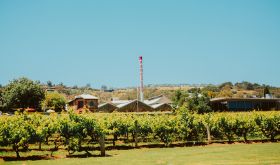
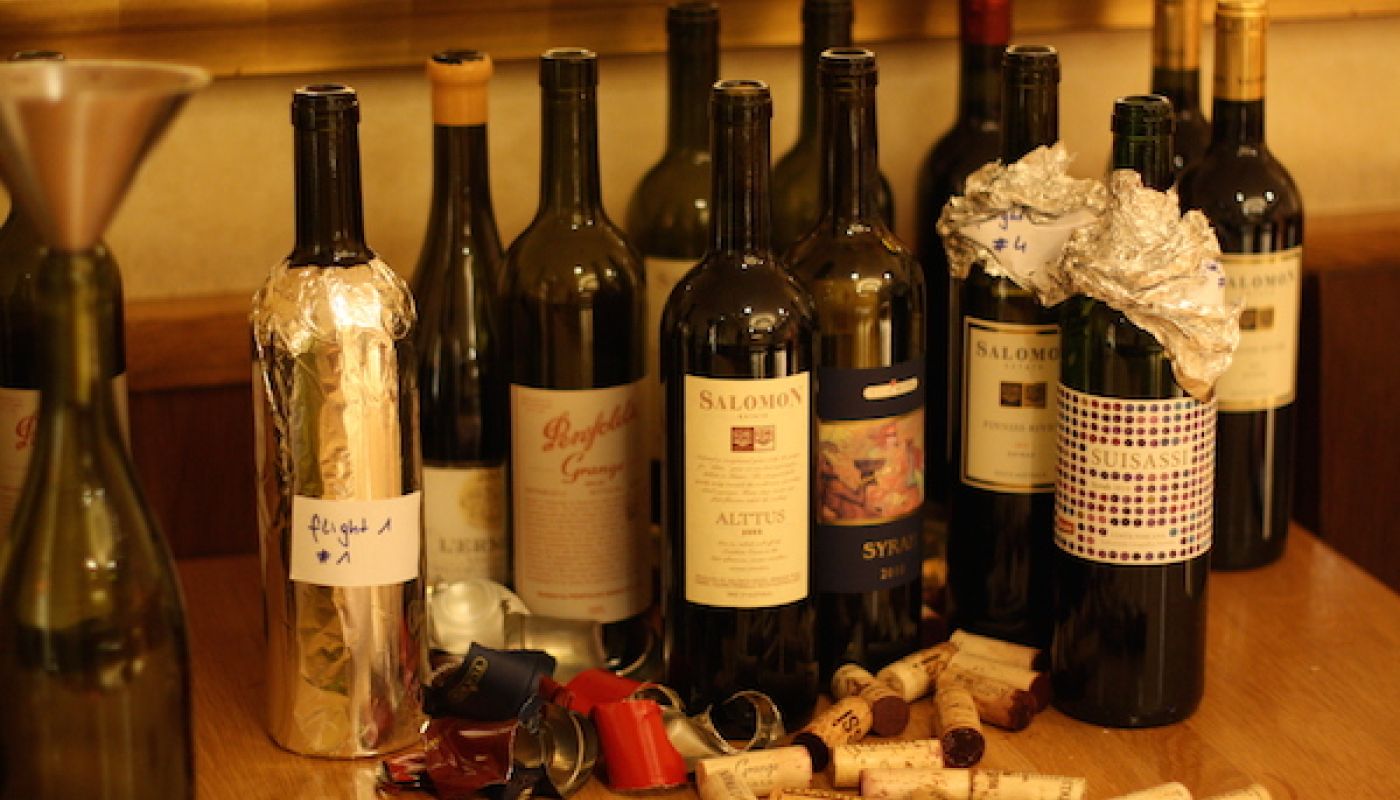
I thought of all this during a particularly interesting blind tasting comparison of some of the world’s most famous examples of both Syrah and Shiraz organised earlier this month in London by Bertold and Gertrud Salomon, Austrian wine producers who, also in 1998, planted a vineyard in the relatively cool Fleurieu Peninsula of South Australia 35 km south east of McLaren Vale. Bert had imported Australian wine into Austria since working for Schlumberger in the 1980s, and he and Gertrud nursed a dream of having their own Australian venture quite separate from the family’s Salomon Undhof estate in Kremstal.
Today they spend every Feburary and March in Australia and might even have moved there permanently had Bertold’s older brother Erich not died in 2007. Their Shiraz/Cabernet blend is called Norwood after the suburb of Adelaide where a nineteenth century kinsman of Bert’s, a Jesuit priest, founded a church.
The jewel in the crown of Salomon Estate, the Australian wine venture, is Alttus, based on the highest part of the vineyard they have planted with what they call Shiraz, even though the wine has more than a hint of northern Rhône finesse in cooler vintages. The idea of the tasting was to show three vintages of this wine blind mixed up with the same vintages – 2003, 2009 and 2010 – of Penfolds Grange, Australia’s most famous Shiraz, plus Hermitages and Côte Rôties from the northern Rhône’s most celebrated producers. As Bertold observed in an email beforehand, this was ‘an ambitious or almost suicidal line-up’.
And, just to ratchet up the pressure, the Salomons invited leading wine commentators from all over Europe and Australia to taste. Seated expectantly round the table in the private room of London’s Bar Boulud were Jens Priewe of Germany, Andreas Keller of Switzerland, Peter Moser of Austria, Michael Jamais of Sweden, Tomasz Prange-Barczynski of Poland and Sophie Otton of Australia with me, and Stephen Brook straight off a plane from a holiday in Phnom Penh, representing Britain’s wine writers. Below, going anti-clockwise round the table, are pensive blind tasters Priewe, Robinson, Moser, Otton, Jamais, Prange-Barczynski and Keller.

These sort of comparative tastings are far from novel. Next year sees the fortieth anniversary of the famous Judgment of Paris blind comparison of Old and New World contenders. But taste-offs including Grange and France’s grandest Syrahs have been relatively rare – perhaps because until very recently Australian versions of the grape have been so dissimilar to the great Hermitages and Côte Rôties.
We began with a limbering-up flight of the 2012 and 2010 vintages of the Salomons’ less ambitious bottling of Shiraz called Finniss River served with Duemani’s Tuscan Syrah and Petite Chapelle from Paul Jaboulet Aîné, the second wine of the famous Hermitage La Chapelle. In this lot it was pretty obvious which were the Australians because they were noticeably riper and sweeter. So far so predictable.
In the next three flights, the Penfolds Grange with its exceptional concentration, hint of eucalyptus and other anti-cough medicaments, was also obvious (and very good). But as for the Salomon Alttus, I found myself using the word ‘definitely’ in each of my tasting notes – in two of them the phrase being ‘this is definitely northern Rhône’. (The 2009 from a particularly warm vintage was, as it happens, the least successful and also most alcoholic and obviously Australian, of the three Austrian-Australian Altuss bottlings.)
Both of the northern Rhône wines I mistook for Australians – or rather equivocated and metaphorically placed them midway on the equator – were top-quality Hermitages (called by their old name Ermitage) made with great aplomb by Chapoutier. Perhaps this was not entirely surprising since Michel Chapoutier is well known for his partiality for Australia, running several Australian outposts, specialising in Shiraz, from his base in the northern Rhône.
The other European wines were pretty obvious, being rather lighter and drier than the rest, with varying degrees of success. Our bottle of Chave Hermitage, by far the most expensive wine in the 2003 flight and usually monolithic, was disappointingly evolved, even though it had been bought from the Norwegian liquor monopoly which presumably has irreproachable storage conditions. For the second time in a blind tasting I preferred Salomon Estate Alttus 2003 (£72.75 Lea & Sandeman) to Penfolds Grange 2003 (£332.46 plus delivery Lay & Wheeler), although the style is very different.
In addition to the Chapoutier wines, La Chapelle 2010 was looking very good – very much better than the 2003. As was Guigal’s Château d’Ampuis Côte Rôtie 2003 and 2009. We did not taste any of Guigal’s stratospherically priced single-vineyard ‘La La’ Côte Rôties and nor did we taste any Guigal 2010, even though in general 2010 looked a finer vintage than 2009 in both, decreasingly disparate, hemispheres.
I asked Bertold whether he had ever considered calling any of his wines Syrah. 'No', he said. 'Should I?' I noticed at our New Wave South African tasting earlier this week that some Cape producers make both a Shiraz and a Syrah, in recognition of the two different styles of which this grape variety is capable.
TOP SYRAH/SHIRAZ PERFORMERS
(with approximate prices per bottle)
Penfolds Grange 2010 South Australia £459
Paul Jaboulet Aîné, La Chapelle 2010 Hermitage £161
Tua Rita Syrah 2010 Toscana £109
Guigal, Château d’Ampuis 2009 Côte Rôtie £90
Salomon Estate, Alttus 2003 Fleurieu £72.75
See tasting notes in Salomon Syrah v Shiraz taste-off.