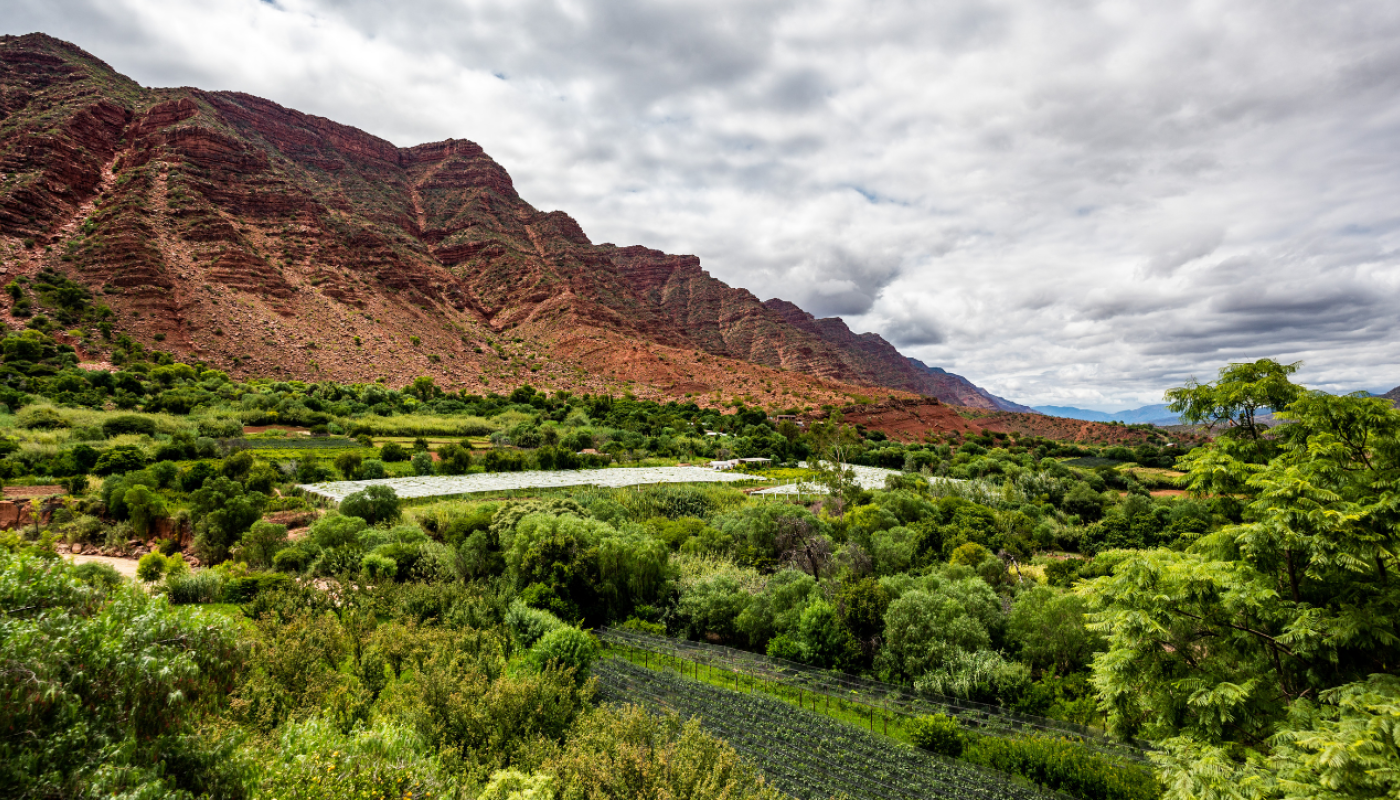
The history of grape-growing in Bolivia goes back to the 1530s, when it was part of what was then called Upper Peru. Today it is not a country associated with winemaking, although, as A Bolivian adventure demonstrates, the wines are rightly gaining more attention. Instead, its economy was based on silver mining, when the country was part of the Spanish Empire, and tin mining, which collapsed in the 1980s. Neither of these industries brought affluence to the general population, and Bolivia remains the least developed of South America’s countries. But Ramón Escobar of Chufly Imports, a US importer, believes wine can bring broad, long-lasting social and economic benefits to Bolivian society.
To put it at its simplest, wine is an agricultural product made by fermenting grape juice. But there are of course many processes involved in making wine: the work in the vineyard which requires labour throughout the year, especially during harvest; in the winery, physical work and long hours are required, as well as lab analysis; the bottling line is the all-important last step before the wine goes out into the world, with attention to fining, filtration and sanitation. Glass bottles have to be sourced, labels designed and printed, and the wine is packaged. And then the wine has to be sold, introducing importers, distributors, sales teams and restaurants into the mix.
That chain from farming the vineyard to drinking the wine involves an extraordinary number of people. In countries where a healthy economy offers many alternative work opportunities, that presents a problem. Here in California, for example, labour shortages can create logistical difficulties for producers, and immigrants have historically benefited from the many employment opportunities offered by the wine industry. Today in poorer countries the wine industry still has the potential to benefit the local economy due to the many links in the chain.
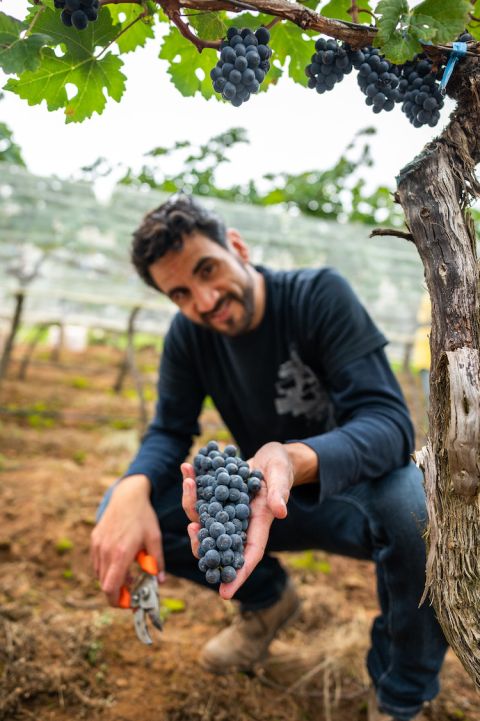
Ramón Escobar (pictured above by Andres MacLean, who is also responsible for the Bolivian landscape photo at the top of this article) is a US diplomat who has travelled around the world, participating in the Colombian peace process as well as working on sustainable economic development initiatives in Central and South America and Africa. Born in Milwaukee, Wisconsin, with Bolivian parentage, he didn’t have a wine upbringing but his global experience made him realise that wine expresses the culture it comes from like no other agricultural – or indeed, any – product. As he says, wine is far more reflective of a country’s culture than iron ore.
He returned from Baghdad to Washington DC in 2013, convinced that the unique identity of wine could be used for social and economic good. He recalls growing up in modest circumstances in Milwaukee, appreciating the advantages he had in the US only when visiting relatives in Bolivia. The potential he saw in improving people’s lives in Bolivia inspired him to establish Chufly Imports, with the first shipment of Bolivian wine into the US in 2016.
This wasn’t just a spur-of-the-moment decision: he wrote an impact thesis, which can be read on the Chufly Imports website, on how wine can have a positive social impact on impoverished communities, which was reviewed by friends and colleagues in various international financial institutions.
Escobar’s research found that ‘cluster development’ – the idea that each part of wine production benefits different economic sectors – ‘creates greater opportunities for upward social mobility. For example, while a young girl’s father might pick grapes, she might grow up to work in the bottle manufacturer that is expanding its facilities to accommodate rising wine and singani [Bolivia’s pisco-like spirit] exports.’ He also found that, ‘One study concluded 10 families are lifted from poverty for every 25 acres [10 ha] of grapevines planted for wine and singani in Bolivia.’ To emphasise how wine goes beyond production and into other industries, ‘Chufly regularly contracts with a family of Bolivian artisans, the Huallpas, to sew custom wine gift bags using traditional, vibrant Andean textiles.’
Bolivia has suffered greatly during the pandemic, which has badly affected an already-poor country which saw political unrest in late 2019. The country’s wines are currently not held in great esteem by the domestic market, which makes sales difficult and exports vital. As elsewhere in the world, restaurants have been hit hard and exports to markets such as the US are important for the country’s small wine industry to survive.
Escobar gives the example of a father–daughter team of grape-growers who sell their fruit to Aranjuez, a producer Chufly bring into the US. ‘Aranjuez is betting on increased demand in overseas markets for its remarkable wines, so we are hard at work creating that market. Javiel and Esmeralda’s story is particularly inspiring because the father has worked the land hard his whole life and grew his land from a couple of acres to more than a dozen. This success providing increasingly high-quality grapes to a winery that was increasing its exports allowed him to send his daughter Esmeralda to nursing school. Now, she hopes to earn a good income from a professional career, but continue to help run her father’s winery like a business. This generational social upward mobility is precisely what we hope to accomplish a thousand times over.’
Escobar also refers to Maria Eldy (pictured below by Alexandra Whitney) of the 1750 winery, who is ‘a trained chemist of indigenous heritage [and] learned how to make wine on the job. With each year her confidence grew and so did the quality. And now this incredible woman from humble beginnings makes wines featured in Michelin-starred restaurants. She is now head of the winery and continues to grow her all-women team.’

Another part of the cluster development is tourism in an economy naturally hurt by the pandemic but one which had been growing and which Escobar expects to recover strongly once the country is open again. He says that all of the wineries his company works with have expanded their tourism operations, with an emphasis on restaurants and traditional music, dance and costume. If wine brings tourists to Bolivia, then the knock-on effect for the country’s economy is clear.
Escobar is now taking his project further, having just started importing wine from Mexico, where he now lives, and Lebanon. His wife is Syrian-American, and he is motivated by the opportunity to support the one and a half million Syrian refugees living in Lebanon through a concept similar to that that has inspired him to import Bolivian wine. ‘Now’, he says, ‘with the significant economic challenges facing Lebanon, we recognise the wine industry could play a crucial role in bolstering its economic future.’
As all wine lovers know, unlike most other drinks, wine is special and inspires a sense of place. But it’s not just that wine reflects the land, nor even the people who make it, it can economically empower communities with long-lasting benefit. And, despite the pandemic and its disastrous effects on restaurants, Chufly Imports have just landed two containers of Bolivian wine into the US, their largest shipment yet.
You can listen to an extended interview with Ramón Escobar on Matthew’s podcast. Originally from Blackpool, Matthew has been living in northern California for the last seven years. In addition to his educational podcast, Matthew’s World of Wine and Drink, he teaches WSET for Grape Experience in San Francisco and has started an online wine club in the US, blackpoolmatt’s wine club.
See the entries on Bolivia and Lebanon in your online Oxford Companion to Wine.
















