Climate change and its effect on aszú production in Tokaj – the Homonna Winery from Erdőbénye
Tokaj is the cradle of some of the finest sweet wine in the world. Szamorodni, aszú and eszencia are all made of nobly rotten bunches, or selected aszú berries, and this whole process depends on highly particular conditions occurring in the historic Hungarian wine region. Climate change or even climate crisis has been a hot topic for decades. It affects agriculture and several industries, as well as grape growing. But how does it impact such a specific and unique mechanism of grape ripening like noble rot? And how can a small boutique winery in Erdőbénye react to it?
Botrytisation and the harvest
First of all, there’s the risky aspect of the so-called noble rot that comes about in Tokaj, which is a really specific form of botrytisation, both in terms of intensity and the complex conditions behind it. During an ideal summertime, Botrytis cinerea is hidden, but it is present on the plants (some people say that it infects the flowers of the grapes too, so it is already inside the berries and later can accelerate the rotting process from there too).
A huge controversy regarding cultivation nowadays is that during summertime, wineries in Tokaj try to protect the grapes from malign grey rot (from the exact same Botrytis sp.), and during late August and early September they ‘contra-select’ the crop for non-botrytised dry wine raw material (Furmint, Hárslevelű, Yellow Muscat, rarely Zéta, Kabar and Kövérszőlő). Then comes the real turning point: some wineries have to really hurry up for those dry wines. Sooner or later botrytis shows up on the berries thanks to the rivers nearby (Tisza, Bodrog, Hernád) and thanks to the cooler, foggy, autumn mornings.
Those special slopes and vineyards on the slopes of the Zemplén foothills retain the high humidity and then the magic happens: through several phases and with the loss of water content, super nobly rotten berries can be selected for aszú, then the remaining mixed bunches (noble rot, partly noble rot, healthy berries) go to szamorodni/late-harvest wines. This is how the three main wine styles of Tokaj are born in an average vintage, like 2017 was: TokajDry, TokajSweet and Tokaji Aszú. In poor aszú vintages only the big companies (with 30–100 hectares) have enough vines to play with the fruit and plan the eternal dilemma: how much shall we harvest (save) today for dry wine and how many grapes should be left out for aszú?
In every decade, there’s an average of three outstanding aszú vintages (three in the 90s, four in the 2000s, but only two in the 2010s). What if a warm period comes and small wineries cannot grow enough botrytised berries to make aszú wines for years, or even longer?
Global warming: more dry wines, less aszú?
There’s no other region in the wine world like Tokaj that can show the differences between one year and another through its wines (aszú wines have especially distinctive differences). In fact, 2000, 2003 and 2007 were the archetypes of extremely warm aszú vintages in Tokaj, but all of these three vintages saw perfect botrytization on the overripened berries. Classic non-botrytised hot vintages were 2009, 2012 and 2018, but 2019 was also hardly satisfying, with more TokajDry wines and much less aszú.
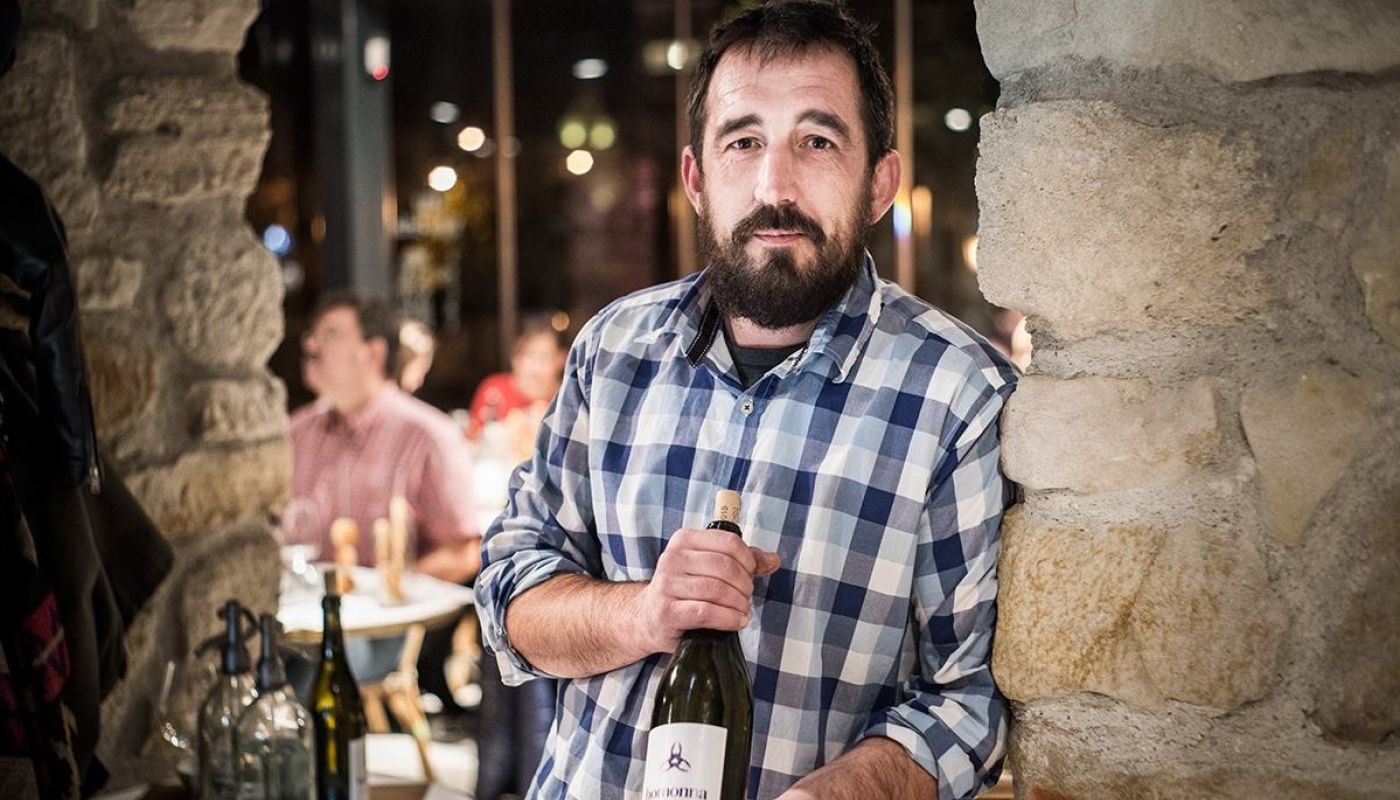
The first producer with whom I discussed this subject was Attila Homonna, from Erdőbénye (pictured above). Attila is well-known for his radical and honest opinions on any kind of topic, but strong beliefs always make a winemaker more exciting. Later on, several other producers referred to less rain and more hot days, resulting in less botrytisation in the vineyards. It comes as no surprise that Attila also played an important part in the reinvention of new-wave TokajDry wines in the early 2000s, and he makes mainly dry wines in three formats: estate wine (Furmint-Hárslevelű blend); and two single-vineyard selections, of the ‘northern benchmark’ Határi Furmint and the ‘newborn star’, called Rány Furmint (both of them were milestones in 2005 and in 2012 on the timeline of TokajDry wines). Elegance, a sophisticated style, high acidity and long ageing potential are typical in his dry wines that are sold mainly abroad (80+ %).
Nevertheless, the most important fact is that his is a classic, small winery within the region, among many others, with only a limited amount of fruit each year to play with. On his completely organic 4.5 hectares, he was able to make some super-limited aszú wines of top quality in 1999, in 2003 and in 2013 (still none of them are on the market). In an average vintage, he only makes a late-harvest blend, called ‘Édes Hármas’ (Threesome). And here comes the main point: during 20 years of making wine, there have only been three major opportunities for this small winery to bottle a big Tokaji Aszú. In the other 17 vintages, it would have been just too risky to leave the grapes out due to starlings, wild boar and diseases, and the grapes were better off picked and vinified to make new-wave dry wines. The summer of 2018 was the hottest ever all-around Europe, and because of hotter summers the environment just can’t be wet enough for the complete development of botrytis. This is good news for fans of TokajDry and TokajSweet wines (with less acidity), while Tokaji Aszú might become a real rarity.
Though 2020 is an unusual vintage with frequent rainy days (which means botrytis is all around now), the years are getting more and more extreme in Tokaj and the key factor in terms of aszú production – rainfall patterns – are totally unpredictable. New pests and diseases appear almost every year. The harvest abruptly comes weeks earlier, the style of wines is changing with decreasing acidity and increasing alcohol content.
One changeable factor could be the grape variety, but in Tokaj most of the plantings are of Furmint (approx. 65 %) and only a limited set of grapes can be planted. Vineyard classification becomes a huge question mark and not just in Tokaj: the grand cru southern slopes might become too hot for making balanced wines, and as a result the milder northern parts of the Tokaj region (Erdőbénye, Tolcsva, Sárospatak) become more and more exciting.
Homonna and sustainability
Attila does almost everything by hand and mainly on his own (he has one local full-time employee, but he supports poor local families in any possible way: giving them his used devices, employing them for seasonal jobs, etc.). The main sustainability measure is that he’s trying to be as simple as possible. He works for several other local wineries, so that he can realise his own dreams in his own cellar. As already mentioned, he is 100% organic (no weed killers or other chemicals used, but only sulphur, copper, baking powder, citrus oil and chamomile tea) – he cannot do anything else, but shape a bowl in the soil under each vine in order to save every drop of water on steep parcels.
He harvests low yields, and less is sometimes more: if a plant produces 0.5–1 kg of fruit annually, it will live much longer than an overloaded vine. Attila was one of the first winemakers who figured out the dry Furmint harvest in several rounds, in order to keep fresh acidity in his wines, which resulted in a predictable and constant style (while even the biggest names in the region are still changing their approach a lot in this category every year). The fermentation is carried out by natural yeast. He uses cooling in the cellar only for one or two weeks and overall low intervention in winemaking is essential. The marc of the grapes is recycled in the soil of the vineyard as compost, where they make only one turning of the soil during autumn. Natural, uninterrupted vegetation is used under the vines and only those methods are used that are allowed in organic cultivation. There is no certification, as Attila says: ‘The wine itself is the certification and it tells everything.’
Inspiration from a small producer can be effective
The Homonna Winery might not appear to be the most outstanding example of sustainability, but around 2004 and 2005, it was the very first example to show that anyone can do it from nothing. At that time, Erdőbénye was an abandoned and forgotten village. When Attila from Debrecen showed up from nowhere and he turned towards big, dry Furmints, it became a success and it attracted attention to this model from other adventurers with similar intentions: and today there is a working community of small producers in Erdőbénye. There are still dozens of houses for sale in the village, so anyone can try it. One good example was able to fulfil a forgotten village with energy in the last two decades: today Erdőbénye is one of the most romantic destinations for visitors; the village has the most popular summer festival in the region (Bor, Mámor, Bénye, in which Attila was also a catalyst); everyone respects the Határi vineyard thanks to Attila’s incredible wines; and it is also to his merit that it became prestigious to own parcels in Rány (thanks to the Homonna style).
Rány is actually the second oldest vineyard of the Tokaj region, but even Attila said at the very beginning: ‘Nobody wants to plant grapes there: it eats machinery, it eats man too.’ A vineyard can be much more successful if not one, but five or six wineries make benchmark wines from it year after year, and Attila was the one who reinvented these terroirs with his charisma, talent and his inspirational story. It is not just about the sustainability of a winery – it’s more than that. He has also been an essential ingredient in the success of a whole village.
















